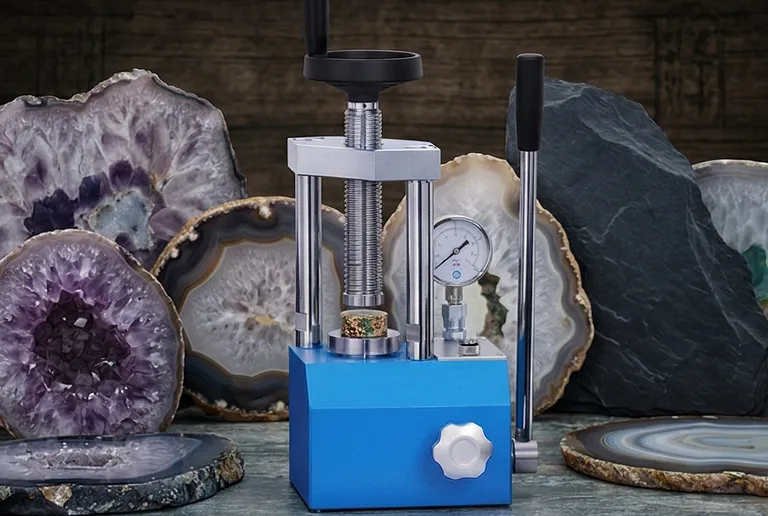
The Invisible Flaw in the Forge
In materials science, perfection is often a calculation, while reality is a sponge.
When we sinter a metal or a composite, we rely on the slow, silent dance of atomic diffusion. We heat the material until the particles begin to whisper to each other, bridging the gaps to form a solid mass. To the naked eye, the part looks finished. It is hard, it is heavy, and it is functional.
But inside, there are ghosts. These are micropores—tiny pockets of nothingness where atoms refused to travel. For a routine component, these voids are irrelevant. For a high-performance battery electrode or a refractory alloy, they are the seeds of catastrophic failure.
High-temperature hot pressing, or "repressing," is the process of refusing to accept these ghosts. It is the tactical application of force to finish what heat alone could not.
The Mechanical Collapse of Voids
Ordinary sintering reaches a plateau. Once the majority of the material has bonded, the "driving force" for further densification drops. The atoms stop moving because the energy required to close the final 2% of pores is too high.
Repressing breaks this stalemate.
By applying uniaxial pressure while the material is in a thermoplastic state, we physically force the internal voids to collapse. We are not waiting for diffusion; we are mandating it.
Why the "Last One Percent" Matters
- Thermal Conductivity: Voids act as insulators. If your goal is heat dissipation, a 2% porosity can reduce efficiency by a much larger margin.
- Structural Integrity: Every pore is a stress concentrator. In high-pressure environments, these tiny bubbles become the starting points for cracks.
- Vickers Hardness: The relationship between density and hardness is non-linear. Achieving near-theoretical density often results in a disproportionate jump in measurable hardness.
The Three Pillars of Repressing
1. Overcoming Diffusion Resistance
At temperatures approaching 2000°C, even refractory metals become workable. However, heat alone is slow. The addition of mechanical pressure accelerates the solid solution process, allowing complex metal carbonitride phases to homogenize in a fraction of the time.
2. Refining the Grain Architecture
Materials are like people: their strength is often determined by their boundaries. Prolonged sintering at high heat can lead to "grain growth," where individual crystals become large and brittle. Repressing allows for densification at lower temperatures or shorter durations, keeping the grain structure fine and the material tough.
3. Mechanical Interlocking
In fiber-reinforced composites, the matrix must "grip" the reinforcement. Repressing ensures the matrix material—be it a polymer or a ductile metal—fully encapsulates every fiber, eliminating the microscopic gaps that lead to delamination.
The Cost of Precision
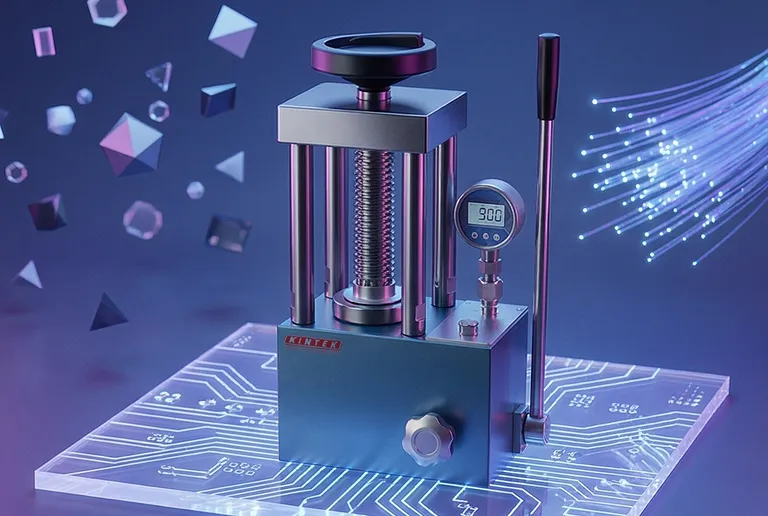
Engineering is always a trade-off. You do not get density for free.
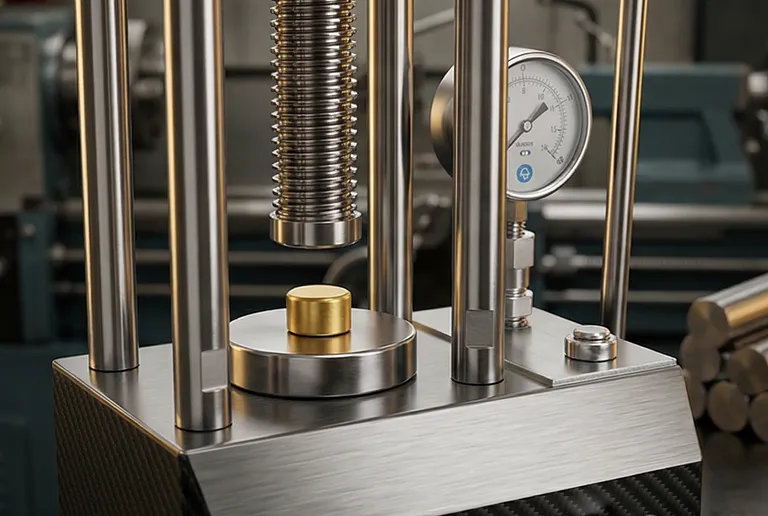
The repressing stage adds a secondary heating cycle, specialized hydraulic equipment, and significant wear on die sets. Because the pressure is typically uniaxial (applied from one direction), the geometry of the part is limited. You cannot easily repress a complex, three-dimensional lattice; you are generally limited to simpler, high-integrity shapes.
Furthermore, the cycle time must be managed with extreme care. Rushing the cooling phase of a fully densified part can induce thermal stresses that crack the material from the inside out.
Strategic Selection: A Summary Table
| Objective | Technical Lever | Resulting Property |
|---|---|---|
| Full Densification | Uniaxial Pressure | 98.5% to 99.9% Relative Density |
| Maximized Hardness | Pore Elimination | Significant increase in Vickers Hardness |
| Refractory Stability | 2000°C Thermal Force | Homogenized Solid Solutions |
| Composite Integrity | Matrix Infiltration | Superior Mechanical Interlocking |
The KINTEK Perspective: Tools for the Final Step
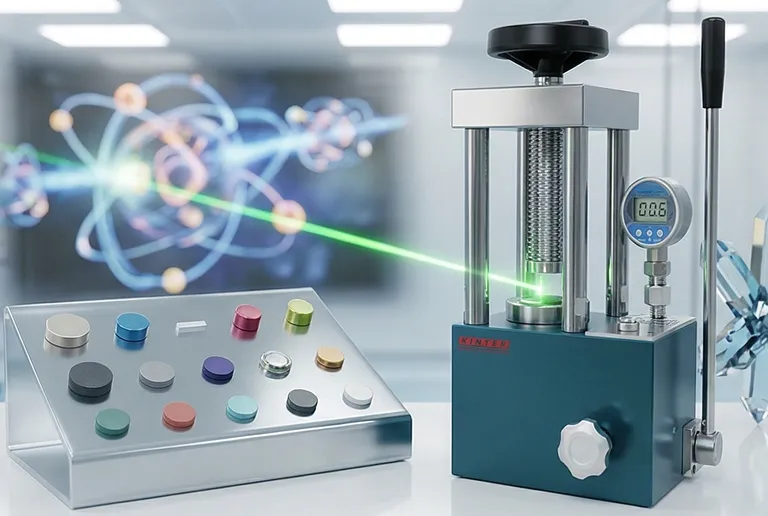
The difference between a "good" material and a "revolutionary" one often comes down to how you handle the final stages of pressing.
At KINTEK, we build the systems that bridge this gap. Whether you are developing the next generation of solid-state batteries or exploring high-melting-point alloys, our range of manual, automatic, and heated presses provides the precision required to eliminate porosity. From glovebox-compatible models for sensitive chemistries to isostatic solutions for uniform density, we provide the infrastructure for excellence.
If your research requires moving beyond the limits of standard sintering, our experts can help you select the pressing technology needed to reach theoretical maximums.
Related Products
- Automatic High Temperature Heated Hydraulic Press Machine with Heated Plates for Lab
- 24T 30T 60T Heated Hydraulic Lab Press Machine with Hot Plates for Laboratory
- Automatic Heated Hydraulic Press Machine with Hot Plates for Laboratory
- Heated Hydraulic Press Machine With Heated Plates For Vacuum Box Laboratory Hot Press
- Heated Hydraulic Press Machine with Heated Plates for Vacuum Box Laboratory Hot Press
Related Articles
- The Architecture of Slow: Why Physical Precision Dictates Chemical Destiny
- The Architecture of Certainty: Why the Laboratory Press is the Anchor of Material Science
- The Vanishing Boundary: The Hidden Thermodynamics of LTCC Lamination
- The Alchemy of 160°C: Why Precision Pressing is the Silent Backbone of Rubber Science
- The Invisible Forge: Why the Laboratory Press is the Soul of Nano-Composites
















