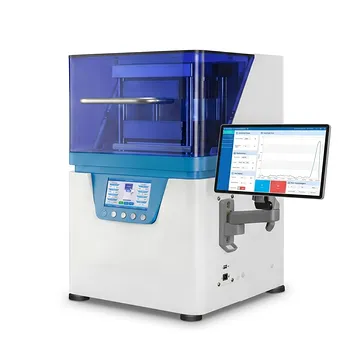
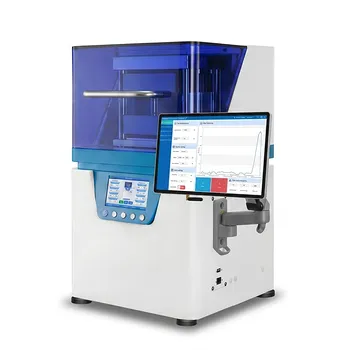
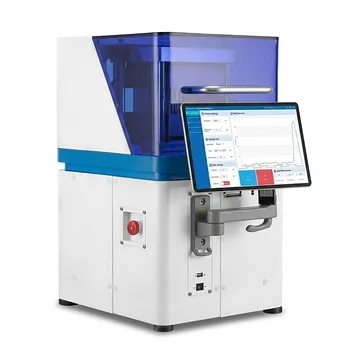
Precision pressure and temperature control are the primary mechanisms a laboratory pressing device uses to ensure thermal interface consistency. By applying a uniform clamping force and a stable thermal environment, the device minimizes the thickness of thermal interface materials, eliminates air bubbles, and ensures the homogenous distribution of conductive fillers within the PCM matrix. This rigorous control is essential for reducing thermal resistance and maximizing the Coefficient of Performance (COP) in integrated cooling systems.
Core Takeaway: A laboratory pressing device transforms material preparation from a variable-heavy manual process into a repeatable scientific standard. It achieves this by simultaneously managing mechanical pressure and thermal history to optimize the contact points between the TEC module, the phase change material, and the heat sink.
Achieving Minimal Thermal Interface Resistance
Precision Control of Clamping Force
The device applies a constant, axial clamping force (often ranging from 100 to 200 psig) to the thermoelectric module and its interfaces. This pressure forces the thermal grease into a minimal, ideal thickness, which is the most significant factor in reducing heat transfer resistance.
Elimination of Air Interstitial Gaps
High-precision pressure application actively pushes out trapped air between the TEC module and the heat sink. By eliminating air bubbles, the press ensures that the entire surface area is utilized for heat transfer, preventing localized "hot spots" that degrade system efficiency.
Consistent Sample Geometry
Using precision molds within the press produces samples with extremely flat surfaces and exact thicknesses, such as 1.0 mm. This geometric consistency is vital for obtaining reliable thermal conductivity data via the laser flash method, as it minimizes experimental error between different test batches.
Optimizing PCM Composite Morphology
Regulation of Thermal History
A laboratory hot press provides a constant temperature environment (typically between 150-160°C) during the curing or molding phase. This ensures that the phase change material and its binders, such as paraffin or polyethylene, reach a fully molten state for uniform distribution.
Optimization of Filler Orientation
The stable high-pressure environment induces an ordered arrangement of thermal fillers, such as boron nitride or alumina, within the polymer matrix. This controlled orientation enhances the density of the composite and creates more efficient pathways for thermal energy exchange during phase changes.
Internal Stress Reduction
By maintaining stable cooling rates and precise pressure holding times, the device helps eliminate internal stresses within the composite. This leads to a uniform crystallization environment, ensuring that the mechanical and thermal properties remain consistent throughout the material's lifecycle.
Understanding the Trade-offs
Risk of Mechanical Damage
While high axial pressure (up to 50 MPa) is beneficial for bonding, excessive force can crack the fragile ceramic plates of the thermoelectric module. Operators must balance the need for interface thinning with the structural limits of the TEC components.
Thermal Degradation of Components
Applying high temperatures to ensure the flow of binders or PCMs carries the risk of degrading sensitive polymers or reaching the flash point of certain paraffin binders. Precise digital temperature control is required to stay within the narrow "sweet spot" of optimal wetting without chemical breakdown.
Pressure-Induced Material Displacement
Over-pressuring can lead to "squeeze-out," where too much thermal grease or PCM binder is forced out of the interface. This results in dry spots or non-uniform density, which can paradoxically increase thermal resistance despite the thinner layer.
Applying This to Your Research Project
Recommendations for Success
- If your primary focus is maximizing COP: Prioritize the precision of the clamping force to achieve the thinnest possible thermal grease layer between the TEC and heat sink.
- If your primary focus is material characterization: Utilize precision molds and digital temperature regulation to ensure every sample has an identical thickness and thermal history for accurate laser flash testing.
- If your primary focus is PCM filler efficiency: Focus on the "wetting" phase by maintaining a stable high-pressure environment to ensure boron nitride or alumina particles are fully integrated into the matrix without bubbles.
A laboratory pressing device is the definitive tool for removing the "human element" from thermal assembly, ensuring that every interface performs at its theoretical maximum.
Summary Table:
| Feature | Mechanism | Research Benefit |
|---|---|---|
| Precision Pressure | Minimizes interface thickness & air gaps | Reduced thermal resistance & higher COP |
| Thermal Regulation | Stable history (150-160°C) curing | Uniform distribution of PCM binders |
| Morphology Control | Ordered arrangement of thermal fillers | Enhanced thermal conductivity pathways |
| Consistent Geometry | Precise mold-based sample creation | Repeatable laser flash test results |
Elevate Your Thermal Research with KINTEK Precision
Don't let manual inconsistency undermine your high-performance material development. KINTEK specializes in comprehensive laboratory pressing solutions designed to provide the precision control your TEC and PCM research demands.
Whether you need manual, automatic, heated, or multifunctional models, or specialized glovebox-compatible systems, our equipment ensures repeatable scientific standards. We also offer advanced cold and warm isostatic presses widely applied in cutting-edge battery and thermal research.
Ready to achieve the theoretical maximum performance for your interfaces?
Contact KINTEK Experts Today to find the perfect pressing solution for your lab!
References
- S. V. Patil. Enhanced Thermoelectric Cooling Performance through Phase Change Material Integration: Experimental and Numerical Investigation. DOI: 10.55041/ijsrem53912
This article is also based on technical information from Kintek Solution Knowledge Base .
Related Products
- Automatic Heated Hydraulic Lab Press with Programmable Touch Screen Controls and Precision Temperature Regulation
- Automatic Hydraulic Hot Press with Large Plate and Precision Temperature Control for Advanced Material Sample Preparation and Industrial Research
- Special Shape Lab Press Mold for Laboratory Applications
- 24T 30T 60T Heated Hydraulic Lab Press Machine with Hot Plates for Laboratory
- Automatic Heated Hydraulic Lab Press 120x120mm Plate Fully Automated Material Research Press
People Also Ask
- Why is a laboratory heated hydraulic press required? Ensure Precise Vulcanization for NBR/EPDM Nanocomposites
- What are the industrial applications of heated hydraulic presses? Master Heat & Force for Precision Manufacturing
- Why is an automatic heated lab press preferred for PEEK & CNT laminates? Achieve Precise Crystallization Control
- What is the necessity of a laboratory hydraulic press with heating functions? Master Rubber Vulcanization Precision
- How does a heated laboratory hydraulic press contribute to the formation of dense mycelium-based materials? Expert Tips