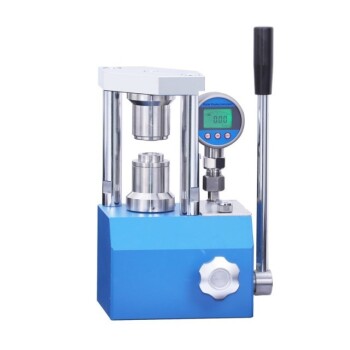
Effective pouch battery packaging relies on a distinct two-step sequence. The vacuum sealer first creates a chemically safe environment by evacuating air, protecting sensitive internal components from degradation. Immediately following this, the hot press applies thermo-mechanical force to physically bond the layers, ensuring the structural integrity required for high performance.
The vacuum sealer acts as the shield against chemical corrosion, while the hot press serves as the bridge for electrical connectivity. Together, they optimize the contact between layers and minimize internal voids, directly enhancing the battery's rate performance and cycle life.
The Role of Vacuum Sealing: Chemical Protection
Removing Atmospheric Contaminants
The primary function of the vacuum sealer is to evacuate air from the cell interior. This creates a controlled environment free from external atmospheric variables.
Preventing Material Degradation
Lithium metal and electrolytes are highly reactive to environmental factors. By removing air, the vacuum sealer protects these materials from corrosion caused by moisture and oxygen.
The Role of Hot Pressing: Structural Optimization
Applying Thermo-Mechanical Treatment
Once the environment is secured, the hot press applies a specific combination of heat and pressure. This treatment targets the internal stack, specifically the cathode, solid electrolyte layer, and anode.
Creating Robust Physical Bonds
The heat and pressure work together to fuse these layers. This creates a strong physical bond that holds the cell components firmly in place.
Reducing Internal Porosity
The mechanical pressure compresses the materials to increase density. This process significantly reduces internal porosity, eliminating voids that could hinder performance.
Optimizing Interfacial Contact
By forcing the layers together, the hot press maximizes surface contact between the solid electrolytes and electrodes. This intimate contact is critical for efficient energy transfer.
Understanding the Critical Trade-offs
The Necessity of Sequence
The order of operations is non-negotiable. Applying heat and pressure before fully removing contaminants would trap moisture inside the cell, accelerating corrosion rather than preventing it.
Balancing Heat and Pressure
While the reference highlights the benefits of this "thermo-mechanical treatment," precision is implied. The goal is optimum contact, not maximum force; excessive pressure could potentially damage the structure, while insufficient heat may fail to create a lasting bond.
Making the Right Choice for Your Goal
To maximize the efficacy of your packaging process, align your quality control focus with these specific objectives:
- If your primary focus is Chemical Stability: Ensure the vacuum sealing stage achieves a near-perfect vacuum to eliminate all traces of moisture and oxygen before any bonding occurs.
- If your primary focus is Rate Performance: Prioritize the hot press parameters to maximize layer density and minimize porosity, ensuring the path for ion transport is as efficient as possible.
By meticulously coordinating the protective vacuum stage with the structural hot press stage, you ensure the production of a durable, high-efficiency all-solid-state battery.
Summary Table:
| Process Step | Primary Function | Key Benefit |
|---|---|---|
| Vacuum Sealing | Atmospheric evacuation | Prevents moisture/oxygen corrosion |
| Hot Pressing | Thermo-mechanical bonding | Reduces porosity and optimizes contact |
| Combined Effect | Structural & Chemical integrity | Enhanced rate performance and cycle life |
Elevate Your Battery Research with KINTEK Precision
Maximize your lab's efficiency and battery performance with KINTEK’s comprehensive laboratory pressing solutions. From precision vacuum sealers to advanced hot presses, we offer manual, automatic, heated, and glovebox-compatible models designed specifically for high-stakes battery research. Whether you need cold or warm isostatic presses, our equipment ensures the chemical stability and structural density your solid-state projects require.
Ready to optimize your pouch battery packaging? Contact our experts today to find the perfect fit for your research goals.
References
- Yang Zhang, Zhenxing Liang. Garnet‐Type Solid‐State Electrolyte with Tailored Lithium Compatibility for High Performance All‐Solid‐State Lithium Batteries. DOI: 10.1002/adma.202509828
This article is also based on technical information from Kintek Solution Knowledge Base .
Related Products
- Warm Isostatic Press for Solid State Battery Research Warm Isostatic Press
- Button Battery Sealing Press Machine for Lab
- Laboratory Hydraulic Press Lab Pellet Press Button Battery Press
- Heated Hydraulic Press Machine with Heated Plates for Vacuum Box Laboratory Hot Press
- Heated Hydraulic Press Machine With Heated Plates For Vacuum Box Laboratory Hot Press
People Also Ask
- Why must composite cathodes be sealed in vacuum lamination bags for WIP? Ensure Battery Stability and Density
- How do sacrificial volume materials (SVM) maintain microchannels in isostatic pressing? Ensure Structural Integrity
- What is the function of elastic molds in warm isostatic pressing? Achieve Uniform Density in Composite Particles
- What is the significance of temperature control in Warm Isostatic Pressing? Unlock Uniform Densification and Process Stability
- What is the role of the flexible material in warm isostatic pressing? Key to Uniform Density & Precision