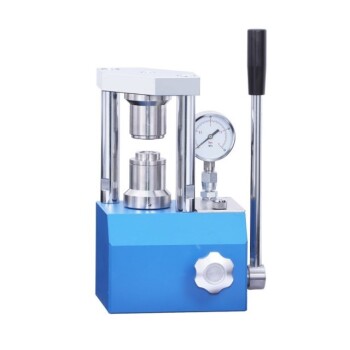
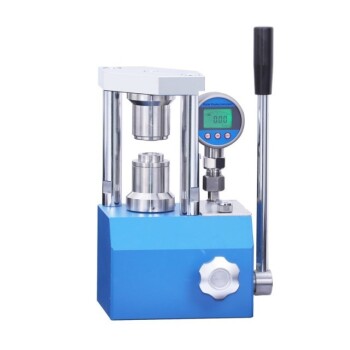
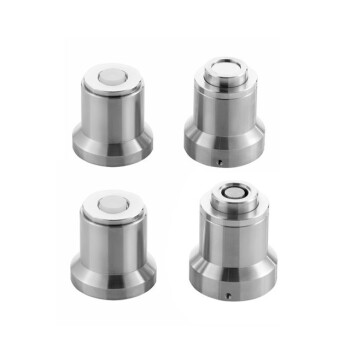
Heat press sealing machines ensure test effectiveness through the precise regulation of temperature and pressure. They firmly bond transparent Polylactic Acid (PLA) windows to the aluminum-plastic film openings of the battery pouch. This process creates a robust barrier that isolates the internal components while maintaining the necessary transparency for external monitoring.
Core Takeaway Success in in-situ battery observation relies on creating a "closed yet visible" system. The heat press machine guarantees this by preventing electrolyte leakage and moisture intrusion without compromising the optical clarity required for Structural Color Detectable Stress Diaphragm (CSDS) analysis.
Securing the Internal Environment
To conduct valid tests on lithium batteries, the internal chemistry must be completely isolated from the external environment.
Preventing Electrolyte Leakage
The heat press machine creates a hermetic bond between the transparent PLA window and the battery's aluminum-plastic packaging.
This containment is critical for safety and accuracy. It ensures that volatile electrolytes remain inside the pouch throughout the testing lifecycle.
Blocking Moisture Intrusion
External moisture is a primary contaminant that can degrade lithium battery performance.
By applying precise pressure during sealing, the machine eliminates gaps that could allow humidity to enter. This ensures that the test results reflect the battery's true performance, rather than the effects of environmental contamination.
Enabling Optical Precision
Beyond containment, the primary purpose of the observation window is to allow data collection via visual sensing.
Creating a Distortion-Free Path
The sealing process is engineered to secure the window without damaging its optical properties.
The machine ensures the PLA material remains flat and clear. A distortion-free optical path is necessary for cameras or sensors to capture accurate images of the internal state.
Facilitating CSDS Observations
This high level of clarity is specifically required for the implementation of Structural Color Detectable Stress Diaphragm (CSDS) technology.
CSDS relies on visual changes to indicate stress within the battery. Any clouding or warping caused by an improper seal would render these in-situ sensing observations impossible.
Understanding Process Sensitivities
While heat press sealing enables advanced observation, the process relies heavily on the strict control of operational variables.
The Balance of Temperature and Pressure
There is a narrow window of effectiveness for bonding PLA to aluminum-plastic films.
If the temperature or pressure is too low, the seal will fail, leading to leakage. If the temperature is too high, the PLA window may melt or warp, destroying the optical clarity needed for sensing.
Optimizing for Experimental Success
The effectiveness of your battery testing setup depends on prioritizing the right parameters during the sealing process.
- If your primary focus is Safety and Longevity: Prioritize the integrity of the bond to prevent electrolyte leakage and block moisture intrusion.
- If your primary focus is Data Accuracy: Ensure the sealing parameters preserve a distortion-free optical path for precise CSDS sensing.
The heat press sealing machine bridges the gap between physical containment and visual access, enabling safe and accurate in-situ analysis.
Summary Table:
| Feature | Impact on Test Effectiveness | Key Benefit |
|---|---|---|
| Hermetic Bonding | Prevents electrolyte leakage and moisture ingress | Ensures chemical stability and safety |
| Pressure Control | Eliminates gaps between PLA window and aluminum film | Maintains a robust, contamination-free barrier |
| Temperature Regulation | Prevents material warping or melting | Preserves optical clarity for CSDS sensors |
| Optical Integrity | Provides a distortion-free visual path | Enables accurate in-situ data collection |
Elevate Your Battery Research with KINTEK Precision
Achieving the perfect balance between a hermetic seal and optical clarity is vital for successful in-situ battery analysis. KINTEK specializes in comprehensive laboratory pressing solutions tailored for advanced material research. Whether you need manual, automatic, heated, or glovebox-compatible models, our equipment ensures the precise temperature and pressure regulation required for sensitive lithium battery pouch preparation.
From standard heat sealing to cold and warm isostatic presses, we provide the tools necessary to prevent leakage and ensure data accuracy in your lab. Contact us today to find the perfect pressing solution for your research!
References
- Satoshi Nishita, Hiroaki Onoe. Structural Color Polymer‐Based Colorimetric Sensor for Detecting Mechanical Stress in Lithium Batteries Separator. DOI: 10.1002/admt.202401874
This article is also based on technical information from Kintek Solution Knowledge Base .
Related Products
- Button Battery Sealing Press Machine for Lab
- Warm Isostatic Press for Solid State Battery Research Warm Isostatic Press
- Manual Button Battery Sealing Machine for Battery Sealing
- Button Battery Sealing Machine for Button Batteries
- Lab Button Battery Tablet Press Sealing Mold
People Also Ask
- Why use standardized CR2032 components & high-precision presses? Ensure reliability in lithium metal battery research.
- Why is a laboratory battery sealing press essential for desolvation energy testing? Ensure Reliable Kinetic Data
- Why is a laboratory hydraulic press or battery sealing machine essential? Ensure Coin Cell Data Integrity
- How do laboratory battery sealing machines ensure performance consistency? Master Your Lithium and LFP Battery Assembly
- What role does a laboratory sealing press play in thermal analysis of solid dispersion films? Ensure Data Integrity