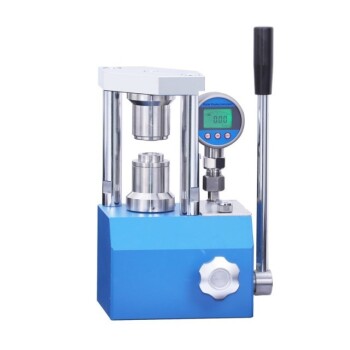
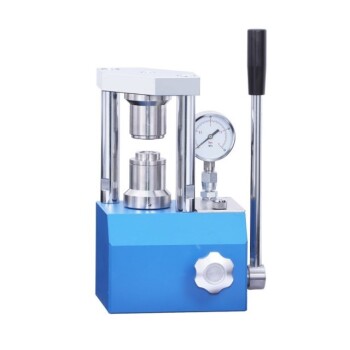
A high-precision sealing machine is the critical variable defining the mechanical and electrochemical stability of assembled lithium-sulfur (Li-S) batteries, particularly in CR2032 coin cell formats. By applying strictly controlled mechanical pressure, these machines ensure the airtight encapsulation required to prevent environmental contamination while establishing the uniform internal contact necessary to minimize impedance.
Core Takeaway The sealing process is not simply about closing the battery case; it is the fundamental step that determines interfacial impedance and hermetic integrity. High-precision sealing ensures the stable physical contact required for accurate cycle life data, preventing the high resistance and chemical degradation caused by inconsistent assembly pressure.
The Critical Role of Controlled Pressure
The performance of a Li-S battery is heavily dependent on the physical interface between its internal layers. A high-precision sealing machine standardizes this mechanical environment.
Optimizing Interfacial Contact
For lithium-sulfur batteries, and specifically PEO-based solid-state variants, the interface between the cathode, the electrolyte (bilayer or gel), and the lithium metal anode is the primary site of electrochemical activity.
Precision sealing applies uniform pressure to compress these layers together. This eliminates microscopic gaps that would otherwise impede ion flow.
Reducing Internal Impedance
Loose or uneven contact points within the coin cell lead to significant spikes in internal contact resistance (ohmic resistance).
By ensuring tight physical contact between the active electrodes, separators, and current collectors, the sealing machine directly reduces interfacial impedance. This allows for efficient electron transfer and accurate voltage readings during testing.
Ensuring Experimental Repeatability
Variations in manual sealing force can introduce massive experimental errors, making it impossible to tell if a performance drop is due to chemistry or assembly.
High-precision equipment removes this variable. It provides consistent pressure across every cell in a batch, ensuring that data regarding rate performance and cycle life reflects the true capability of the materials, not the quality of the crimp.
Protecting Electrochemical Integrity
Beyond mechanical contact, the sealing machine acts as the primary defense against chemical degradation.
Hermetic Encapsulation against Contaminants
Lithium metal anodes are highly reactive to moisture and oxygen. Even trace amounts of external air entering the cell can corrode the anode and destroy performance.
A high-precision crimper deforms the gasket and case with exact radial pressure to create a hermetic seal. This prevents the ingress of external impurities that would compromise the cell's lifespan.
Preventing Electrolyte Loss
For cells utilizing liquid or gel electrolytes, the seal must be absolute to prevent volatilization (evaporation).
If the seal is imperfect, the electrolyte dries out, leading to a rapid increase in resistance and eventual cell failure. A precise seal locks the electrolyte environment, enabling long-term testing scenarios, such as 2000+ hours of charge-discharge cycling.
Understanding the Trade-offs
While high-precision sealing is essential, it is important to recognize the limitations and potential pitfalls of the assembly process.
Pressure Calibration is Critical
"High precision" does not imply "maximum force." Excessive pressure can crush the porous separator or damage the internal structure of delicate solid-state electrolytes, leading to internal short circuits. The machine must be calibrated to apply optimal pressure, not just high pressure.
The Limits of Mechanical Fixing
A good seal minimizes contact resistance, but it cannot compensate for poor material chemistry or uneven electrode coating. If the electrode surfaces are inherently rough or non-uniform, even precise sealing pressure may result in "hot spots" of current density, leading to uneven lithium deposition.
Making the Right Choice for Your Goal
When configuring your assembly line or laboratory protocol, align your equipment usage with your specific data requirements.
- If your primary focus is obtaining accurate cycle life data: Ensure your sealing pressure is calibrated to maintain stable interfacial contact, as this prevents impedance growth over long-term cycling.
- If your primary focus is evaluating new electrolyte formulations: Prioritize the hermeticity of the seal to ensure that any observed degradation is due to the electrolyte chemistry itself, not evaporation or moisture contamination.
Ultimately, a high-precision sealing machine transforms a stack of raw materials into a unified, reliable electrochemical system capable of delivering consistent experimental results.
Summary Table:
| Feature | Impact on Li-S Battery Performance | Benefit for Research |
|---|---|---|
| Uniform Pressure | Minimizes interfacial impedance and ohmic resistance | Accurate, reproducible electrochemical data |
| Hermetic Sealing | Prevents ingress of moisture and oxygen | Protects reactive lithium anodes from degradation |
| Encapsulation | Prevents electrolyte volatilization and leakage | Enables long-term cycle life testing (2000+ hours) |
| Calibrated Force | Avoids separator crushing or internal short circuits | Maintains structural integrity of delicate materials |
Elevate Your Battery Research with KINTEK Precision
Achieve uncompromising accuracy in your electrochemical studies with KINTEK’s high-precision laboratory pressing and sealing solutions. Whether you are working on advanced Li-S chemistries or solid-state battery research, our range of manual, automatic, and glovebox-compatible crimpers ensures perfect hermetic integrity and optimized contact pressure every time.
Our value to your lab:
- Comprehensive Range: From standard coin cell crimpers to cold and warm isostatic presses.
- Built for Research: Specifically designed for battery R&D, including heated and multifunctional models.
- Repeatable Results: Eliminate assembly variables to focus purely on material performance.
Ready to optimize your cell assembly? Contact KINTEK today to find the perfect sealing solution!
References
- Kang Dong, Yongcheng Jin. Boosting Electrode Kinetics and Interfacial Stability via Multifunctional Additives in PEO-Based Double-Layer Electrolyte Membranes for High-Performance Solid-State Lithium-Sulfur Batteries. DOI: 10.2139/ssrn.5604187
This article is also based on technical information from Kintek Solution Knowledge Base .
Related Products
- Lab Button Battery Tablet Press Sealing Mold
- Button Battery Sealing Press Machine for Lab
- Button Battery Sealing Machine for Button Batteries
- Manual Button Battery Sealing Machine for Battery Sealing
People Also Ask
- How does a sealed battery mold facilitate the assembly and testing of asymmetric supercapacitors using VO2?
- Why use standardized CR2032 components & high-precision presses? Ensure reliability in lithium metal battery research.
- Why is a laboratory battery sealing press essential for desolvation energy testing? Ensure Reliable Kinetic Data
- What is the function of specialized battery molds and sealing consumables? Optimize Your In-situ XRD Testing Today
- What role does a laboratory sealing press play in thermal analysis of solid dispersion films? Ensure Data Integrity