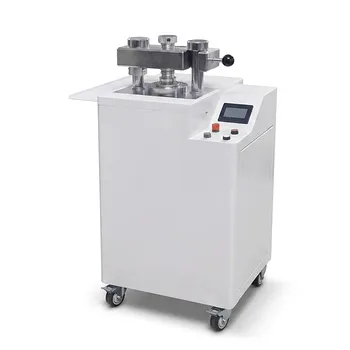
Isostatic pressing is a critical manufacturing process in the medical industry used to create high-performance components such as implantable devices, prosthetics, and pharmaceuticals. By applying equal pressure from all directions to a material—typically metal powder confined in a flexible membrane—manufacturers can achieve uniform density and produce complex, biocompatible shapes capable of surviving the human body.
Core Insight: The medical sector relies on isostatic pressing not just for shaping materials, but for guaranteeing structural reliability. Because the pressure is omnidirectional, it eliminates internal defects and inconsistencies. This ensures that critical items, like bone substitutes and surgical tools, possess the uniform strength required to endure the harsh, corrosive environment of the human body without failure.
Creating Implantable Devices and Prosthetics
Orthopedic and Dental Implants
The primary application of isostatic pressing is the production of implants where failure is not an option. Cold Isostatic Pressing (CIP) is frequently employed to manufacture orthopedic implants with precise dimensions and consistent material properties.
Similarly, the technique is standard for creating dental implants. The process ensures the material quality is uniform throughout the part, providing the necessary strength to withstand daily mechanical stress.
Bone Substitutes
The medical industry uses this method to fabricate bone substitutes. These components often require complex geometries to mimic natural bone structures.
Isostatic pressing allows for the creation of these intricate shapes while maintaining the high density required for the substitute to function effectively within the body.
Biocompatibility and Endurance
Implants must exist within the harsh environment of the human body. The materials processed through isostatic pressing are consolidated to be fully biocompatible.
The high density achieved through this method ensures the devices are robust enough to resist corrosion and wear over the patient's lifetime.
Enhancing Pharmaceutical Manufacturing
Improving Drug Stability
Beyond metal implants, isostatic pressing is applied to the production of pharmaceutical tablets and compounds.
The process enhances the mechanical properties of the drugs. This ensures tablets remain physically intact and stable during manufacturing, transportation, and storage, preventing breakage before they reach the patient.
Manufacturing Surgical Equipment
Precision Instruments
The industry uses this technique to produce surgical instruments. These tools require high precision and exceptional durability to maintain their edge and structural integrity during procedures.
Reliability Through Uniform Pressure
The key to the quality of these instruments lies in the process mechanics. Pressure (often up to 6000 bar) is applied via a liquid or gas medium to a hermetic container or flexible form.
This homogeneously compresses the powder inside, resulting in a tool with uniform density and no weak points.
Understanding the Process Requirements
Equipment Intensity
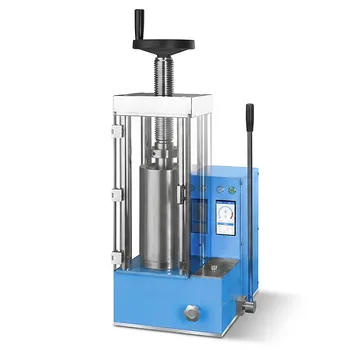
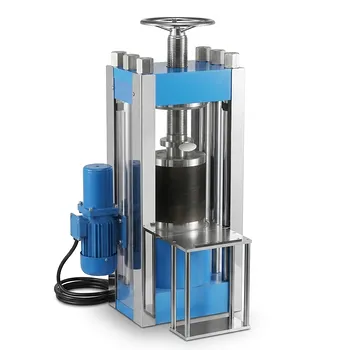
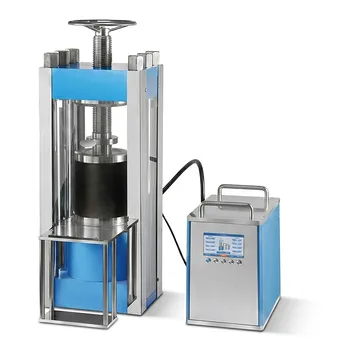
While highly effective, isostatic pressing is an intensive industrial process. It utilizes robust hydraulic-operated pressure multipliers to generate immense pressure.
This requires specialized flexible membranes or hermetic containers to confine the material (usually metal powder) accurately during compression.
The Necessity of Uniformity
For medical applications, the "trade-off" of using such heavy machinery is justified by the safety requirements. Standard pressing methods might leave density gradients (soft spots) in a part.
In a medical context, such inconsistencies could lead to catastrophic failure of an implant. Therefore, the complexity of isostatic pressing is a necessary investment for patient safety.
Making the Right Choice for Your Goal
- If your primary focus is Orthopedics or Dentistry: Utilize Cold Isostatic Pressing (CIP) to achieve the uniform density and precise dimensions necessary for load-bearing implants.
- If your primary focus is Pharmaceuticals: Apply this method to improve the mechanical stability of tablets, ensuring they withstand logistics and storage without degrading.
- If your primary focus is Surgical Tooling: Leverage the technique to create complex, high-strength metal instruments that will not fail under stress.
Isostatic pressing transforms raw powder into life-saving medical reliability through the power of uniform pressure.
Summary Table:
| Application | Process Used | Key Benefit for Medical Use |
|---|---|---|
| Orthopedic Implants | Cold Isostatic Pressing (CIP) | Uniform strength to survive corrosive bodily environments |
| Dental Implants | Isostatic Consolidation | High mechanical stress resistance and precision |
| Bone Substitutes | Precision Pressing | Complex geometries with high density and biocompatibility |
| Pharmaceuticals | Pressure Compaction | Improved tablet stability for transport and storage |
| Surgical Tools | Isostatic Compression | Elimination of internal defects and superior edge retention |
Elevate Your Medical Manufacturing Precision with KINTEK
Ensure the highest standards of patient safety and structural reliability with KINTEK’s advanced laboratory pressing solutions. Whether you are developing orthopedic implants, dental prosthetics, or life-saving pharmaceuticals, our specialized equipment delivers the uniform density and biocompatibility your research demands.
Our Comprehensive Solutions Include:
- Manual & Automatic Presses: Perfect for precise dental and surgical tool development.
- Heated & Multifunctional Models: Ideal for advanced material synthesis and bone substitute research.
- Cold & Warm Isostatic Presses (CIP/WIP): The gold standard for achieving defect-free, high-density medical components.
- Glovebox-Compatible Systems: Secure processing for sensitive pharmaceutical compounds.
Contact KINTEK Today to discover how our high-pressure technology can transform your medical manufacturing and battery research capabilities.
Related Products
- Electric Isostatic Pressing Machine 40 Tons Automatic Laboratory Powder Compacting Press
- Warm Isostatic Press for Solid State Battery Research Warm Isostatic Press
- Split Warm Isostatic Lab Press 200 Ton Powder Compaction Chamber for Battery Research and Material Science
- Electric Lab Cold Isostatic Press CIP Machine
- Split Hot Isostatic Pressing Machine 150 Ton Laboratory Heated Isostatic Press
People Also Ask
- What are the key characteristics of the isostatic pressing process? Unlock Uniform Density and Complex Geometries
- Why is vacuum-sealed packaging necessary before isostatic pressing of CuPc thin films? Protect Integrity & Uniformity
- How is pressure applied to the material during isostatic pressing? Master Uniform Density and Complex Geometries
- How does pressure distribute during isostatic pressing of aluminum? Achieve Uniform Density for Your Lab Materials
- What are the applications of isostatic pressing in the automotive industry? Precision Manufacturing for High-Performance Parts