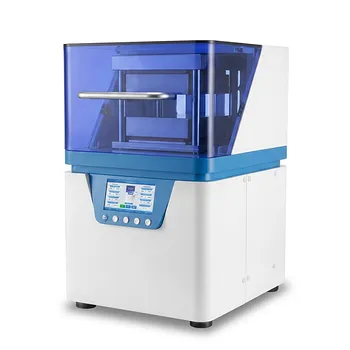
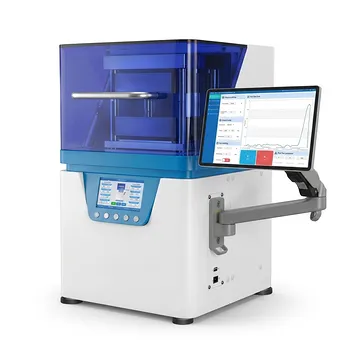
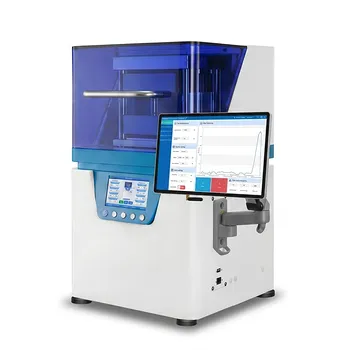
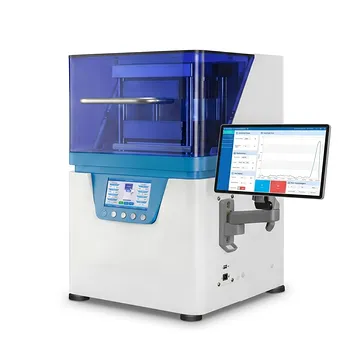
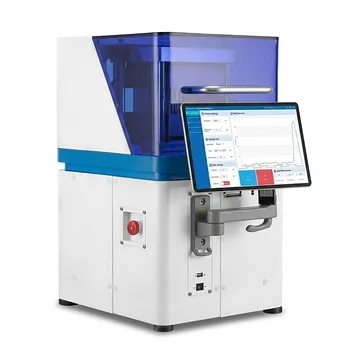
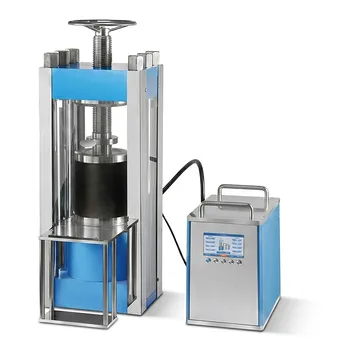
To optimize performance and safety, a vacuum hot press furnace extends beyond its core heating and pressure elements with several critical auxiliary systems. These include accurate temperature measurement tools like thermocouples or pyrometers, gas flow control systems, data logging for process analysis, and mandatory safety protocols such as interlocks and alarms.
While the primary components generate the necessary heat and force, these additional subsystems are what ensure process repeatability, precise atmosphere control, and the safety of the operator.
Enhancing Process Precision
To achieve the exacting standards required for sintering or hot forming, you need more than just raw power. You need granular control over the environment inside the chamber.
Temperature Measurement Systems
Precise thermal regulation is non-negotiable in materials processing. To achieve this, these furnaces utilize advanced thermocouples or pyrometers.
These devices provide real-time feedback to the control system. This ensures the material follows the exact heating profile required to prevent defects.
Gas Flow Control
While the vacuum system removes air, the gas flow control system is responsible for introducing specific gases.
This system regulates the input of inert gases, such as nitrogen or argon. This allows for the creation of a strictly controlled atmosphere, which is essential for preventing oxidation or achieving specific chemical reactions during the press.
Ensuring Data Integrity and Safety
Modern manufacturing requires rigorous documentation and protection for both the machinery and the personnel operating it.
Data Logging Systems
A robust data logging system is often integrated to record process data continuously.
This allows engineers to review temperature, pressure, and vacuum levels after the cycle is complete. This data is critical for failure analysis, quality control, and process optimization.
Essential Safety Features
Safety is paramount when dealing with high pressure and extreme heat. These furnaces are equipped with interlocks, alarms, and emergency shutdown systems.
Interlocks prevent the furnace from operating if unsafe conditions are met, such as an open door or cooling failure. Alarms provide immediate alerts to deviations, allowing operators to react before a catastrophic failure occurs.
Understanding the Trade-offs
Adding these sophisticated components increases the capability of the furnace, but it also introduces complexity.
Maintenance vs. Capability
While thermocouples provide direct measurement, they degrade over time and require replacement. Pyrometers are non-contact but can be affected by the emissivity of the material or dirty sight windows.
Complexity of Control
Advanced gas flow systems and data loggers require more sophisticated calibration and software management. Users must ensure their technical team is capable of interpreting the data and maintaining the calibration of these auxiliary sensors to prevent "garbage in, garbage out" scenarios.
Making the Right Choice for Your Goal
When specifying a vacuum hot press furnace, you must weigh the necessity of these additional components against your specific application requirements.
- If your primary focus is strict Quality Assurance: Prioritize a robust data logging system to ensure every cycle is traceable and verifiable.
- If your primary focus is complex metallurgy: Ensure you have a high-precision gas flow control system to manage partial pressure atmospheres effectively.
- If your primary focus is high-temperature accuracy: Choose the measurement system (thermocouple vs. pyrometer) that best suits your specific temperature range and material emissivity.
Successful material processing relies not just on applying heat and pressure, but on the intelligent monitoring and control of those forces.
Summary Table:
| Auxiliary Component | Primary Function | Key Benefit |
|---|---|---|
| Temperature Sensors | Real-time thermal monitoring (Thermocouples/Pyrometers) | Ensures precise heating profiles and prevents material defects |
| Gas Flow Control | Regulates inert gas input (Argon/Nitrogen) | Prevents oxidation and enables controlled atmosphere processing |
| Data Logging | Continuous recording of pressure, temp, and vacuum | Facilitates quality control, failure analysis, and process optimization |
| Safety Interlocks | Monitors door status, cooling, and pressure limits | Protects operators and prevents equipment damage from malfunctions |
Elevate Your Material Research with KINTEK Solutions
Maximize the precision and safety of your laboratory operations with KINTEK’s comprehensive laboratory pressing solutions. Whether you are working on advanced battery research or complex metallurgy, our range of manual, automatic, heated, and multifunctional models—including specialized cold and warm isostatic presses—are designed to meet the most rigorous standards.
Why choose KINTEK?
- Unmatched Versatility: Glovebox-compatible and customizable configurations.
- Process Control: Integrated high-precision gas flow and data logging systems.
- Expert Support: Solutions tailored specifically to your material processing goals.
Ready to enhance your lab's efficiency and data integrity? Contact KINTEK today to find your perfect pressing solution!
Related Products
- Heated Hydraulic Press Machine with Heated Plates for Vacuum Box Laboratory Hot Press
- Heated Hydraulic Press Machine With Heated Plates For Vacuum Box Laboratory Hot Press
- Automatic Hydraulic Heat Press Machine with Multi Stage Programmable Control and Integrated Water Cooling Plate Size 180x180mm
- Automatic Hydraulic Hot Press with Large Plate and Precision Temperature Control for Advanced Material Sample Preparation and Industrial Research
- Laboratory Manual Heated Hydraulic Press Machine with Hot Plates
People Also Ask
- What are the requirements for electrode pressing with high-viscosity ionic liquids like EMIM TFSI? Optimize Performance
- How does a laboratory heated hydraulic press facilitate PBN sample prep for WAXS? Achieve Precise X-Ray Scattering
- What are the industrial applications of heated hydraulic presses? Master Heat & Force for Precision Manufacturing
- Function of a Laboratory Hydraulic Press with Heated Platens in SSE? Enhance Battery Density & Conductivity
- How are heated hydraulic presses utilized in the preparation of thin films? Key Mechanisms and Applications