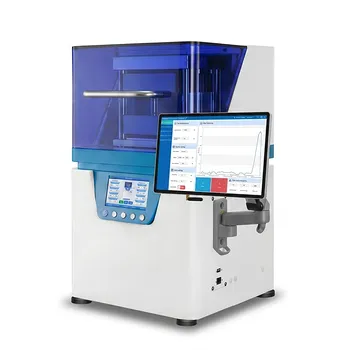
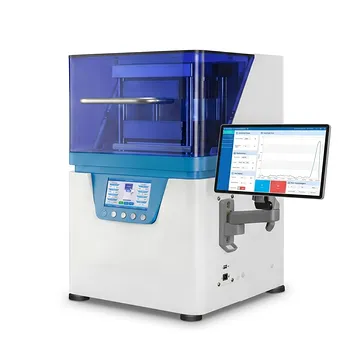
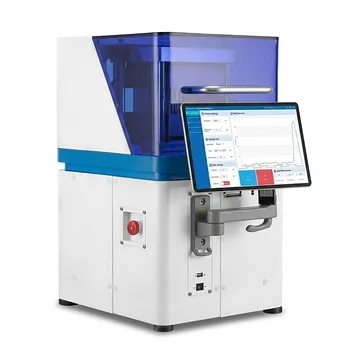
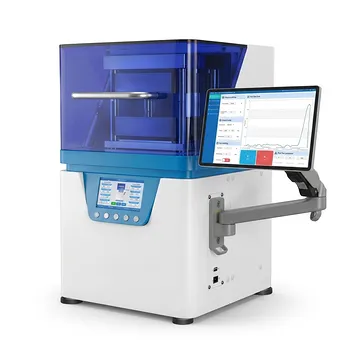
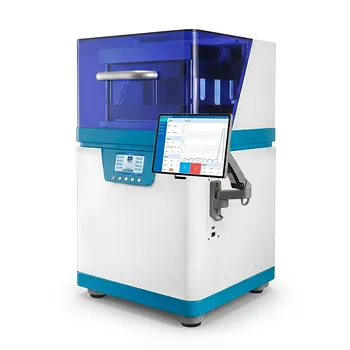
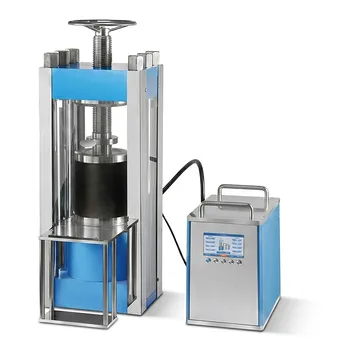
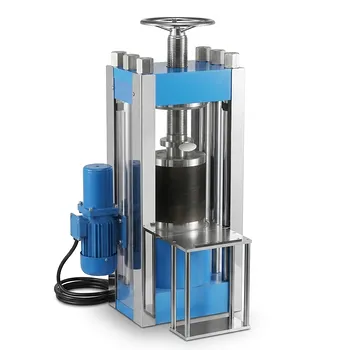
Heated lab presses offer superior process control through uniform temperature distribution and flat heating elements that enhance overall heating efficiency. By combining pressure with precise thermal regulation, these devices optimize processing times, ensure consistent workpiece quality, and minimize energy consumption for a safer, more sustainable laboratory environment.
The core value of a heated lab press is its ability to decouple heat generation from energy waste. It delivers precise thermal application for repeatable material characteristics while maintaining strict hygiene and environmental standards.
Optimizing Thermal Performance
To understand the utility of a heated lab press, one must look at how it manages energy and heat distribution.
Enhanced Heating Efficiency
These presses utilize flat heating elements designed specifically for maximum transfer efficiency.
This design ensures that heat is directed precisely where it is needed—into the workpiece—rather than being lost to the surrounding machine structure.
Uniform Temperature Distribution
A critical advantage is the ability to maintain a consistent temperature across the entire platen surface.
This uniformity eliminates cold spots that can cause structural weaknesses or warping in materials.
Minimized Heat Generation
Unlike older systems that radiate excessive heat, modern heated lab presses are designed to minimize ambient heat generation.
This reduces the load on laboratory HVAC systems and significantly lowers overall energy consumption.
Ensuring Workpiece Quality and Consistency
For research and quality control, the reliability of data is directly tied to the consistency of the equipment.
Repeatable Characteristics
Heated presses allow for the production of samples with identical thickness and physical properties every time.
This repeatability is essential for material testing, ensuring that variations in results are due to the material itself, not the equipment.
Optimized Processing Times
Because the heating elements are efficient and the distribution is uniform, materials reach their target state faster.
This optimization increases throughput, allowing for more cycles per shift without sacrificing quality.
Hygiene and Cleanliness
These presses are engineered to adhere to strict hygiene standards.
This makes them particularly suitable for sensitive applications, such as pharmaceutical pill making or food-grade polymer testing.
Operational Safety and Environment
Beyond performance, heated lab presses address the "Deep Need" of operator safety and environmental compliance.
Emission Control
Many heated presses feature a closed moulding area designed to contain fumes.
This is vital when processing hazardous substances or polymers that off-gas at high temperatures, protecting the operator from inhalation risks.
Enhanced Safety Mechanisms
To further protect the user, these units often include protection doors with safety locks.
This prevents accidental access to the moulding area while the unit is under pressure or at high temperatures (up to 500 °C).
Understanding the Trade-offs
While heated lab presses are powerful tools, they introduce specific complexities that must be managed.
Increased Variable Management
Adding heat to a hydraulic system introduces a new set of variables that must be precisely controlled.
Operators must be trained to manage temperature ramp rates and dwell times, which adds a layer of complexity compared to cold pressing.
Maintenance of Thermal Components
The heating elements and thermal sensors require regular calibration and inspection to maintain their efficiency.
Failure to maintain these components can lead to the very thermal gradients the machine is designed to avoid.
Making the Right Choice for Your Goal
The decision to utilize a heated lab press should be driven by the specific requirements of your material and workflow.
- If your primary focus is Material Research (R&D): Prioritize the press's ability to reach high temperatures (up to 500 °C) and its versatility in creating composite structures and analyzing material properties.
- If your primary focus is Quality Control: Rely on the machine's uniform temperature distribution to produce samples with highly repeatable characteristics and consistent thickness.
- If your primary focus is Safety and Sustainability: Leverage the closed moulding design and minimized heat generation to ensure a safe, energy-efficient working environment compliant with strict emission standards.
Heated lab presses bridge the gap between raw force and precision science, providing the necessary control to turn volatile materials into reliable data points.
Summary Table:
| Feature | Benefit | Impact on Research |
|---|---|---|
| Uniform Heat Distribution | Eliminates cold spots | Ensures structural integrity & prevents warping |
| Flat Heating Elements | Maximum transfer efficiency | Faster processing times & lower energy consumption |
| Closed Moulding Area | Fume containment | Enhanced operator safety & environmental compliance |
| Precise Thermal Regulation | Repeatable characteristics | Consistent sample thickness & reliable data points |
| High-Temp Capability | Reaches up to 500 °C | Versatility for composite structures & R&D |
Elevate Your Lab's Precision with KINTEK Pressing Solutions
Don't settle for inconsistent results. KINTEK specializes in comprehensive laboratory pressing solutions designed to meet the rigorous demands of battery research and material science. Whether you need manual, automatic, heated, or multifunctional models—including glovebox-compatible and isostatic presses—we provide the technology to ensure repeatable, high-quality outcomes.
Why choose KINTEK?
- Versatility: Solutions ranging from standard heated presses to advanced cold/warm isostatic models.
- Efficiency: Optimized thermal performance to reduce energy waste and cycle times.
- Safety: Integrated emission controls and safety locks for a secure workspace.
Ready to transform your material processing? Contact our technical experts today to find the perfect press for your application!
Related Products
- 24T 30T 60T Heated Hydraulic Lab Press Machine with Hot Plates for Laboratory
- Automatic Heated Hydraulic Lab Press 120x120mm Plate Fully Automated Material Research Press
- Automatic Heated Hydraulic Lab Press with Programmable Touch Screen Controls and Precision Temperature Regulation
- Automatic Heated Hydraulic Lab Press Machine 200x200 Plate Size for Battery Research and Materials Science
- Manual Heated Hydraulic Lab Press with Integrated Hot Plates Hydraulic Press Machine
People Also Ask
- Function of a Laboratory Hydraulic Press with Heated Platens in SSE? Enhance Battery Density & Conductivity
- Why is a laboratory hydraulic press with heating plates required for PLA/TEC films? Achieve Precise Sample Integrity
- What role does a laboratory heated hydraulic press play in LTCC? Essential for High-Density Ceramic Lamination
- What is the primary function of a laboratory heated hydraulic press? Mastering Thermoplastic Carbon Fiber Composites
- What is the critical role of a laboratory heated hydraulic press? Mastering PVC Sample Prep for Testing