
Operating a heated lab press safely is a matter of strict, non-negotiable procedure. The most critical protocols involve wearing appropriate thermal and eye protection, never placing hands near the platens during compression, adhering strictly to manufacturer-specified temperature and pressure limits, and conducting regular equipment inspections before every use.
True safety with heated presses goes beyond a simple checklist. It is a system built on understanding the core hazards—immense pressure and intense heat—and managing them proactively through disciplined operator training, diligent equipment maintenance, and an unwavering respect for the machine's design limits.
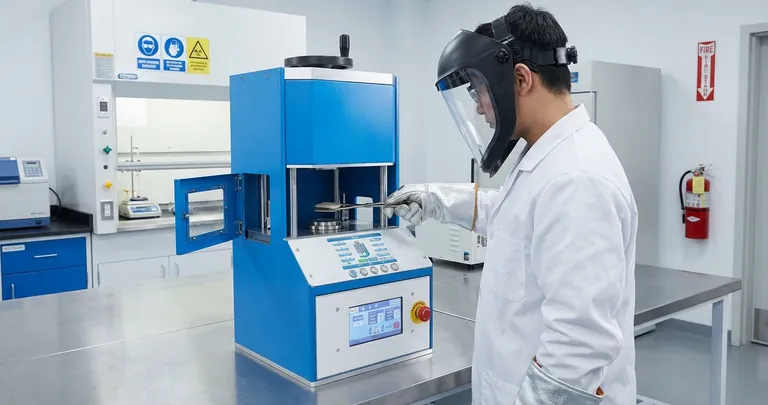
The Core Hazards: Understanding Heat and Pressure
To operate a press safely, you must first understand the primary forces you are controlling. The combination of high temperature and high pressure creates a significant potential for serious injury if not properly managed.
The Risk of High Temperatures
Heated platens can reach hundreds of degrees, posing a severe burn risk. Direct contact can cause instant and deep thermal injuries. This heat also introduces energy into the material being pressed, which can off-gas potentially hazardous fumes depending on the substance.
The Risk of High Pressure
The hydraulic systems in these presses generate immense compressive force. If this force is applied unevenly, exceeds the machine's structural limits, or encounters a flaw in the material, it can lead to catastrophic failure. This can result in the violent ejection of debris or machine components.
Operator Protocols: Your First Line of Defense
The most important safety feature is a well-trained and disciplined operator. Your actions and adherence to procedure are the first and most effective line of defense against accidents.
Mandatory Personal Protective Equipment (PPE)
PPE is not optional. Before approaching the press, you must be wearing the appropriate gear.
- Hand Protection: Wear thermal-resistant gloves when handling materials or working near the platens.
- Eye Protection: Use safety glasses or, preferably, a full-face shield to protect against potential projectiles.
- General Lab Attire: A lab coat and fully closed-toe shoes are the minimum requirement for the work area.
Maintaining a Safe Distance
The single most critical rule during operation is to keep your hands and fingers away from the platens during the compression cycle. Never attempt to adjust a sample once the press begins to close.
Adhering to Operational Limits
Every press is rated for a maximum temperature and pressure. These are not suggestions; they are absolute structural and operational limits. Exceeding them is the most common cause of equipment failure and accidents. Always consult the manufacturer's manual and operate well within the specified range.
Equipment Integrity: Proactive Safety Measures
A safe operator needs a safe machine. This requires a proactive approach to equipment inspection, maintenance, and understanding its built-in safety mechanisms.
Pre-Use Inspections
Before every run, perform a quick visual inspection. Check for hydraulic oil leaks on or around the machine, frayed electrical cords, and any visible damage to the press frame or platens. Ensure the workspace is clean and uncluttered.
Understanding Built-in Safety Features
Modern presses have several features designed to protect you.
- Safety Guards/Doors: If your press has a protective door or shield, ensure it is closed during operation. Many have interlocks that prevent the press from running if the guard is open.
- Emergency Stop: Locate the emergency stop button before you begin. Be prepared to use it instantly if you notice any sign of malfunction.
- Control Systems: Familiarize yourself with the control interface to ensure you can set and monitor pressure and temperature accurately.
The Role of Routine Maintenance
Long-term safety depends on regular maintenance. Following the manufacturer's schedule for cleaning, lubrication, and hydraulic oil replacement is essential. This ensures even pressure distribution and heating, preventing the stress points that can lead to failure.
Common Pitfalls to Avoid
Trust is built on recognizing potential failures. Even with established protocols, certain oversights can compromise safety.
Overlooking "Minor" Maintenance
A small hydraulic leak or a slight inconsistency in platen heating may seem minor, but these are often early indicators of a developing problem. Ignoring them can lead to a sudden and complete failure under pressure. Document and address all issues immediately.
Normalization of Risk
Operating the press daily without incident can lead to complacency. Operators may start taking small shortcuts, like forgoing PPE for a "quick" job or nudging the pressure slightly above the recommended limit. This gradual erosion of safety standards is a direct path to an accident.
Inadequate Ventilation
When working with polymers, composites, or other chemical compounds, heating can release volatile organic compounds (VOCs) or other fumes. Always operate the press in a well-ventilated area, and use a fume hood if specified by the material's safety data sheet (SDS).
Making the Right Choice for Your Goal
To ensure safety, your focus must align with your role and responsibility.
- If your primary focus is routine operation: Always perform a pre-use check and wear the correct PPE without exception.
- If your primary focus is managing a lab: Implement a formal training and certification program for all users and a strict maintenance log to track equipment health.
- If your primary focus is equipment longevity and performance: Adhere strictly to the manufacturer's maintenance schedule, focusing on hydraulic system integrity and platen calibration.
A systematic and disciplined approach transforms this powerful tool from a potential hazard into a safe and reliable asset for your work.
Summary Table:
| Protocol Category | Key Safety Measures |
|---|---|
| Operator Protocols | Wear thermal gloves, eye protection; keep hands away from platens; adhere to temperature/pressure limits |
| Equipment Integrity | Conduct pre-use inspections; use safety guards and emergency stops; follow routine maintenance schedules |
| Common Pitfalls | Avoid complacency; ensure adequate ventilation; address minor issues promptly |
Ensure your lab's safety and efficiency with KINTEK's reliable lab press machines, including automatic lab presses, isostatic presses, and heated lab presses designed for precise control and durability. Contact us today to discuss your specific needs and enhance your laboratory operations—reach out via our contact form for expert advice and tailored solutions!
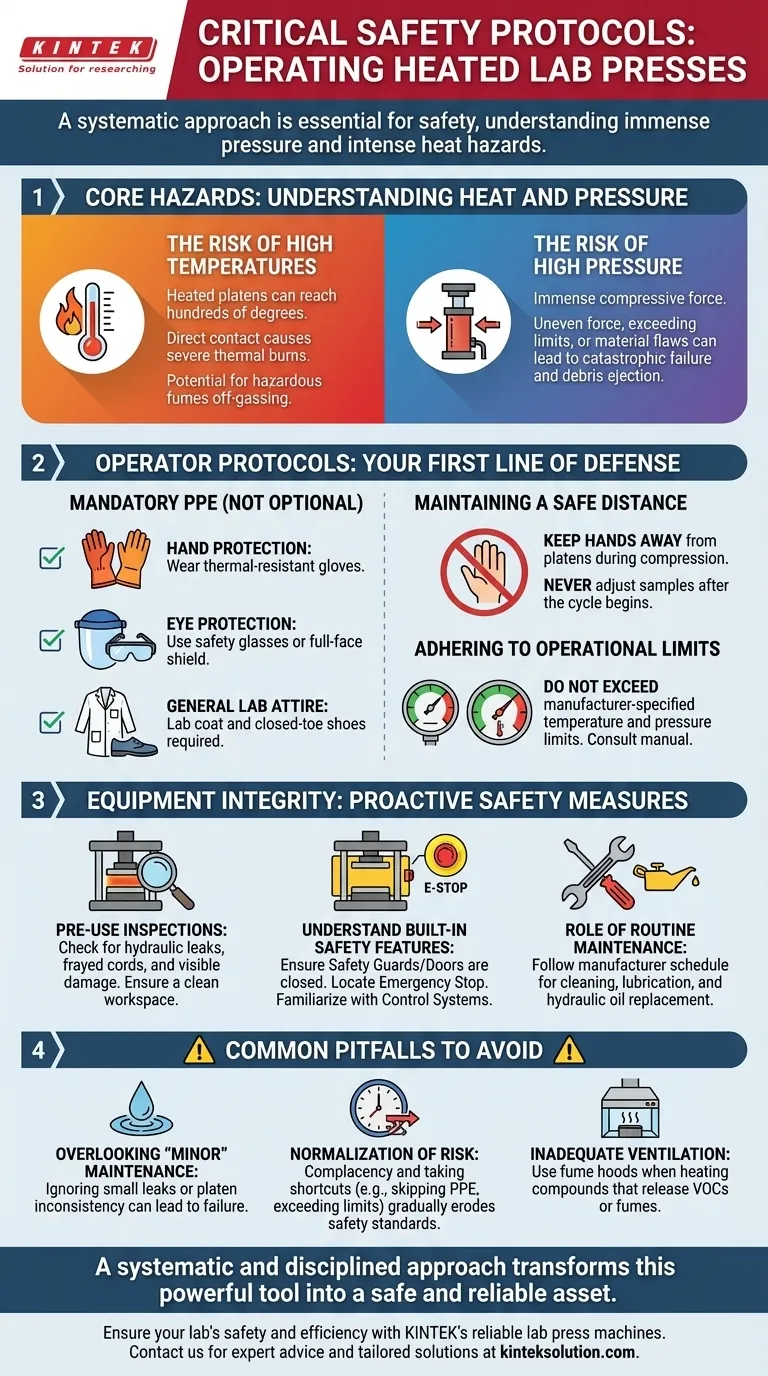
Visual Guide
Related Products
- 24T 30T 60T Heated Hydraulic Lab Press Machine with Hot Plates for Laboratory
- Manual Heated Hydraulic Lab Press with Integrated Hot Plates Hydraulic Press Machine
- Automatic High Temperature Heated Hydraulic Press Machine with Heated Plates for Lab
- Automatic Heated Hydraulic Press Machine with Hot Plates for Laboratory
- Heated Hydraulic Press Machine with Heated Plates for Vacuum Box Laboratory Hot Press
People Also Ask
- Function of a Laboratory Hydraulic Press with Heated Platens in SSE? Enhance Battery Density & Conductivity
- Why is a laboratory hydraulic press with heating plates required for PLA/TEC films? Achieve Precise Sample Integrity
- What role does a laboratory heated hydraulic press play in LTCC? Essential for High-Density Ceramic Lamination
- What is the primary function of a laboratory heated hydraulic press? Mastering Thermoplastic Carbon Fiber Composites
- Why is a laboratory heated hydraulic press utilized during the lamination stage of NASICON green tapes?



















