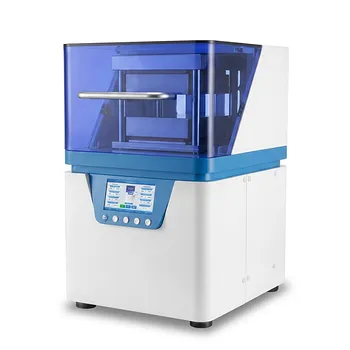
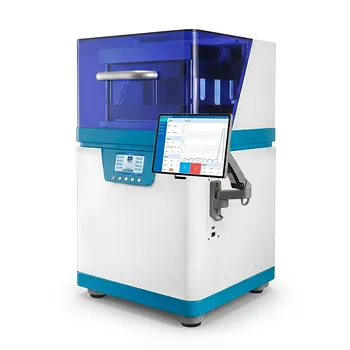
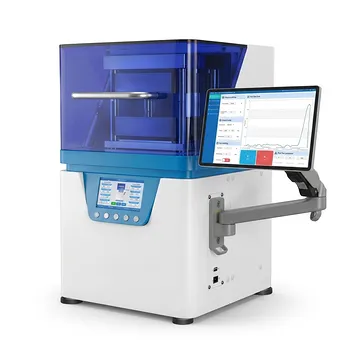
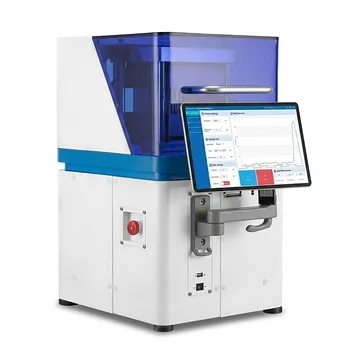
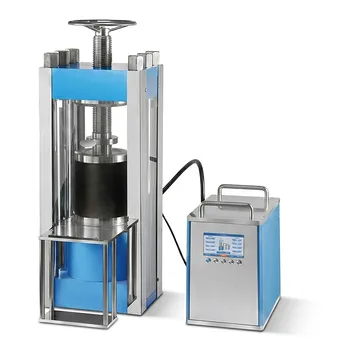
Vacuum hot press furnaces represent a critical leap in materials processing technology. They offer a distinct advantage over traditional methods by simultaneously applying heat and pressure within a vacuum environment, resulting in superior material density, the complete prevention of oxidation, and significantly improved production efficiency.
By eliminating gas interference and combining thermal and mechanical energy, vacuum hot pressing achieves material properties—such as high density and low porosity—that are often unattainable through standard sintering.
Maximizing Material Density and Strength
The primary value of a vacuum hot press lies in its ability to physically alter the microstructure of the material for the better.
Elimination of Trapped Gases
In traditional furnaces, pockets of gas can become trapped within the material. The vacuum environment in these furnaces actively removes these gases before and during the densification process.
Reduced Porosity
By combining the vacuum with mechanical pressure, the process forces particles together. This significantly reduces porosity and minimizes grain boundaries.
Enhanced Conductivity and Stability
The reduction in porosity directly impacts performance. The resulting materials exhibit enhanced electrical conductivity and superior thermal stability.
Precision and Environmental Control
Achieving high-quality results requires a processing environment that is both stable and chemically inert.
Prevention of Oxidation
Many high-performance metals and ceramics degrade when exposed to oxygen at high temperatures. The vacuum environment eliminates oxygen, preventing material oxidation and ensuring chemical purity.
Uniform Heating
Vacuum hot press furnaces are engineered to provide uniform heating across the workpiece. This eliminates thermal gradients that could cause cracking or warping in the final product.
Precise Temperature Regulation
These systems offer exacting control over thermal parameters. This precision ensures consistent results with minimal variation between batches.
Process Efficiency and Versatility
Beyond material quality, these furnaces offer significant operational benefits for manufacturing workflows.
Increased Production Efficiency
The technology improves efficiency by consolidating steps. Combining heat and pressure into a single process reduces overall production time and increases throughput.
Wide Material Compatibility
The technology is highly versatile. It is effective for processing a diverse range of materials, including complex metals, ceramics, and composites.
Operational Considerations and Safety
While the advantages are significant, successful operation requires strict adherence to safety and process parameters.
Critical Safety Protocols
Operating under high heat and vacuum requires specific safety measures. For example, oil diffusion pumps must cool to ambient temperature before maintenance to prevent dangerous reactions.
Parameter Optimization
The process is not "one size fits all." You must optimize temperature, pressure, and vacuum levels for each specific material to achieve the desired properties.
Heating Element Selection
Success depends on configuring the furnace correctly. Users must select the appropriate heating elements (such as graphite, molybdenum, or induction) based on temperature requirements.
Making the Right Choice for Your Goal
When deciding if a vacuum hot press is right for your application, consider your specific manufacturing targets.
- If your primary focus is Material Performance: Prioritize this technology to achieve maximum density, strength, and electrical conductivity by eliminating porosity.
- If your primary focus is Manufacturing Efficiency: Leverage the ability to combine heating and pressurization to reduce cycle times and increase throughput.
- If your primary focus is Material Purity: Use the vacuum environment to process reactive materials without the risk of oxidation.
Vacuum hot press furnaces provide the definitive solution for manufacturers requiring the intersection of high structural integrity and precise chemical control.
Summary Table:
| Feature | Advantage | Impact on Material |
|---|---|---|
| Vacuum Environment | Eliminates oxidation & trapped gases | High chemical purity & low porosity |
| Simultaneous Heat & Pressure | Faster densification at lower temperatures | Superior mechanical strength & density |
| Precise Temperature Control | Uniform thermal distribution | Reduced warping, cracking, and waste |
| Process Consolidation | Combined heating and pressing cycles | Increased throughput & shorter production time |
| Versatility | Compatible with metals, ceramics, & composites | Multi-industry application (Aerospace to Battery) |
Elevate Your Materials Research with KINTEK Precision
Unlock the full potential of your high-performance materials with KINTEK’s advanced laboratory pressing solutions. Whether you are developing next-generation battery components or advanced ceramics, our comprehensive range of manual, automatic, heated, and glovebox-compatible models—including specialized cold and warm isostatic presses—provides the precision and reliability your lab demands.
Why partner with KINTEK?
- Expert Solutions: Tailored equipment for superior material density and chemical stability.
- Versatile Applications: Trusted by industry leaders for battery research and composite manufacturing.
- Unmatched Support: Dedicated technical guidance to optimize your sintering and pressing workflows.
Ready to achieve maximum material performance and production efficiency? Contact our specialists today to find the perfect press for your application.
Related Products
- Heated Hydraulic Press Machine with Heated Plates for Vacuum Box Laboratory Hot Press
- Heated Hydraulic Press Machine With Heated Plates For Vacuum Box Laboratory Hot Press
- Automatic Hydraulic Heat Press Machine with Multi Stage Programmable Control and Integrated Water Cooling Plate Size 180x180mm
- Automatic Hydraulic Hot Press with Large Plate and Precision Temperature Control for Advanced Material Sample Preparation and Industrial Research
- Laboratory Manual Heated Hydraulic Press Machine with Hot Plates
People Also Ask
- What are the requirements for electrode pressing with high-viscosity ionic liquids like EMIM TFSI? Optimize Performance
- How does a laboratory heated hydraulic press facilitate PBN sample prep for WAXS? Achieve Precise X-Ray Scattering
- What are the industrial applications of heated hydraulic presses? Master Heat & Force for Precision Manufacturing
- Function of a Laboratory Hydraulic Press with Heated Platens in SSE? Enhance Battery Density & Conductivity
- How are heated hydraulic presses utilized in the preparation of thin films? Key Mechanisms and Applications