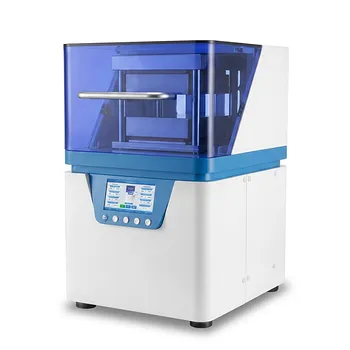
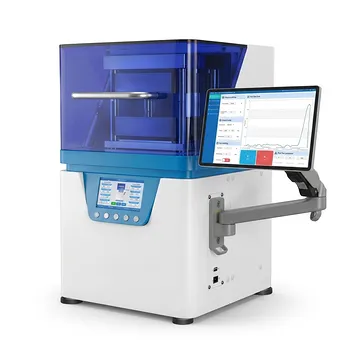
Hydraulic presses are defined by their ability to generate immense force through relatively low energy input. Their primary advantages lie in the decoupling of power and control, allowing operators to achieve high-tonnage output with extreme precision, versatility, and safety.
The Core Advantage While mechanical presses rely on fixed strokes, hydraulic presses offer full-force capability at any point in the stroke. This provides a level of control and consistency that is critical for applications ranging from delicate laboratory sampling to heavy-duty industrial forging.
Power and Precision Mechanics
High Force Output Efficiency
The most distinct capability of a hydraulic press is generating massive amounts of force without requiring a correspondingly massive power source. By utilizing fluid mechanics, these machines multiply input effort to perform heavy-duty tasks like forging, deep drawing, and crushing with high efficiency.
Granular Control
Unlike machinery that operates on a fixed cycle, hydraulic presses offer operators precise command over every variable. You can adjust the speed, pressure, and position of the ram independently. This ensures that the force applied is exactly what the application requires, reducing the risk of material failure.
Consistent Application
In precision environments, such as laboratories, the ability to maintain specific pressure is vital. Hydraulic systems can apply consistent force throughout the entire compression process. This eliminates variations in density or shape, ensuring accurate results in tasks like sample preparation or bonding.
Versatility and Adaptability
Broad Operational Range
Hydraulic presses are not limited to a single function. Because the pressure and tooling can be easily adjusted or swapped, a single machine can handle a spectrum of tasks. They are equally effective at simple pressing and punching as they are at complex molding, clinching, and blanking.
Material Compatibility
This equipment is designed to work with a diverse array of materials. From shaping rugged metals in the automotive and aerospace sectors to creating thin films from polymers or compressing biological samples in a lab, the hydraulic press adapts to the workpiece, not the other way around.
Programmable Automation
Modern electric hydraulic presses enhance versatility through automation. Features like LED touchscreens allow for custom programming of specific cycles, including timer functions and gradual load increases (step functions). This automation ensures high efficiency and repeatability for industrial XRF or hot embossing applications.
Safety and Durability
Built-in Overload Protection
Safety is intrinsic to the design of hydraulic systems. They are equipped with pressure relief valves that automatically prevent the machine from exceeding its maximum pressure rating. This "overload protection" safeguards both the operator and the expensive tooling from damage due to excessive force.
Reduced Failure Risk
Hydraulic presses are generally considered less prone to sudden, catastrophic mechanical failures compared to other press types. Their design is robust, capable of withstanding high-pressure conditions and heavy use over long periods.
Emergency Interventions
Standard safety configurations include emergency stop buttons and operational guards. These features allow for immediate cessation of force, minimizing the risk of accidents in high-risk industrial environments.
Understanding the Operational Trade-offs
The Necessity of Active Management
While the "high force" capability is an asset, it presents a risk if not managed correctly. The "precision control" mentioned is only as effective as the operator or program managing it. In laboratory settings, failure to correctly set the adjustable pressure can still result in sample damage despite the machine's capabilities.
Maintenance for Longevity
Although references cite "minimal maintenance" for certain lab presses, the reliance on valves, seals, and fluid dynamics means that system integrity is paramount. A hydraulic press relies on the containment of pressure; therefore, inspecting relief valves and seal integrity is a non-negotiable operational requirement to maintain safety and force output.
Making the Right Choice for Your Goal
When integrating a hydraulic press into your workflow, align the specific features with your primary objective:
- If your primary focus is Industrial Manufacturing: Prioritize force capacity and durability to handle heavy-duty tasks like deep drawing or forging without maximizing power consumption.
- If your primary focus is Laboratory R&D: Prioritize precision and adjustability, ensuring the press allows for exact force settings to protect delicate biological or ceramic samples.
- If your primary focus is High-Volume Consistency: Prioritize automation and programmability, utilizing electric hydraulic presses with auto top-up and cycle programming to remove human error.
Ultimately, the hydraulic press is the superior choice when your operation demands the specific combination of brute strength and delicate control.
Summary Table:
| Advantage | Key Benefit | Ideal Application |
|---|---|---|
| High Force Output | Immense pressure with low energy input | Forging, Crushing, Deep Drawing |
| Granular Control | Adjustable speed, pressure, and position | Delicate Sample Prep, Bonding |
| Versatility | Adaptable to diverse materials and tooling | XRF, Hot Embossing, Aerospace |
| Built-in Safety | Overload protection via relief valves | High-Pressure Industrial Tasks |
| Automation | Programmable cycles and touchscreens | High-Volume Repeatability |
Elevate Your Laboratory Precision with KINTEK
At KINTEK, we understand that whether you are conducting cutting-edge battery research or preparing delicate samples for XRF analysis, precision is non-negotiable. Our comprehensive range of laboratory pressing solutions—including manual, automatic, heated, and glovebox-compatible models, as well as cold and warm isostatic presses—is engineered to provide the perfect balance of brute strength and granular control.
Why choose KINTEK?
- Customized Solutions: From compact benchtop models to high-tonnage automated systems.
- Advanced Safety: Integrated overload protection and ergonomic designs to safeguard your team.
- Research-Ready: Specifically designed for consistency in battery research and material science.
Ready to enhance your lab's efficiency and accuracy? Contact our experts today to find the ideal hydraulic press for your specific application.
Related Products
- Automatic Hydraulic Hot Press with Large Plate and Precision Temperature Control for Advanced Material Sample Preparation and Industrial Research
- Automatic Hydraulic Heat Press Machine with Multi Stage Programmable Control and Integrated Water Cooling Plate Size 180x180mm
- Automatic High Temperature Heated Hydraulic Press Machine with Heated Plates for Lab
- Automatic Heated Hydraulic Lab Press with Programmable Touch Screen Controls and Precision Temperature Regulation
- Manual Heated Hydraulic Lab Press with Integrated Hot Plates Hydraulic Press Machine
People Also Ask
- What are the specific features and applications of hydraulic hot press machines? Precision Solutions for Modern Labs
- How does an automatic hydraulic press operate? Achieve Precision and Consistency in Lab Pelleting
- What are the advantages and common applications of an automatic hydraulic press? Elevate Your Lab's Precision
- What is the technical significance of setting a precise dwell time? Achieve Peak Material Density and Stability
- When is an automatic hydraulic press more suitable than a manual press? Scale Your Lab with Precision & Speed