
A straightening hydraulic press is a specialized industrial machine designed to correct geometric deformations in large metal components. It applies high-tonnage, strictly controlled pressure to restore long shafts, structural plates, and complex weldments to their original straightness and required tolerances.
The Core Insight: Unlike standard forging or stamping presses, a straightening press prioritizes restorative precision. It is designed not to change the shape of a material entirely, but to carefully reverse warping caused by thermal stress, machining, or wear, ensuring the component remains functional and safe.
Primary Industrial Applications
Correcting Rotational Components
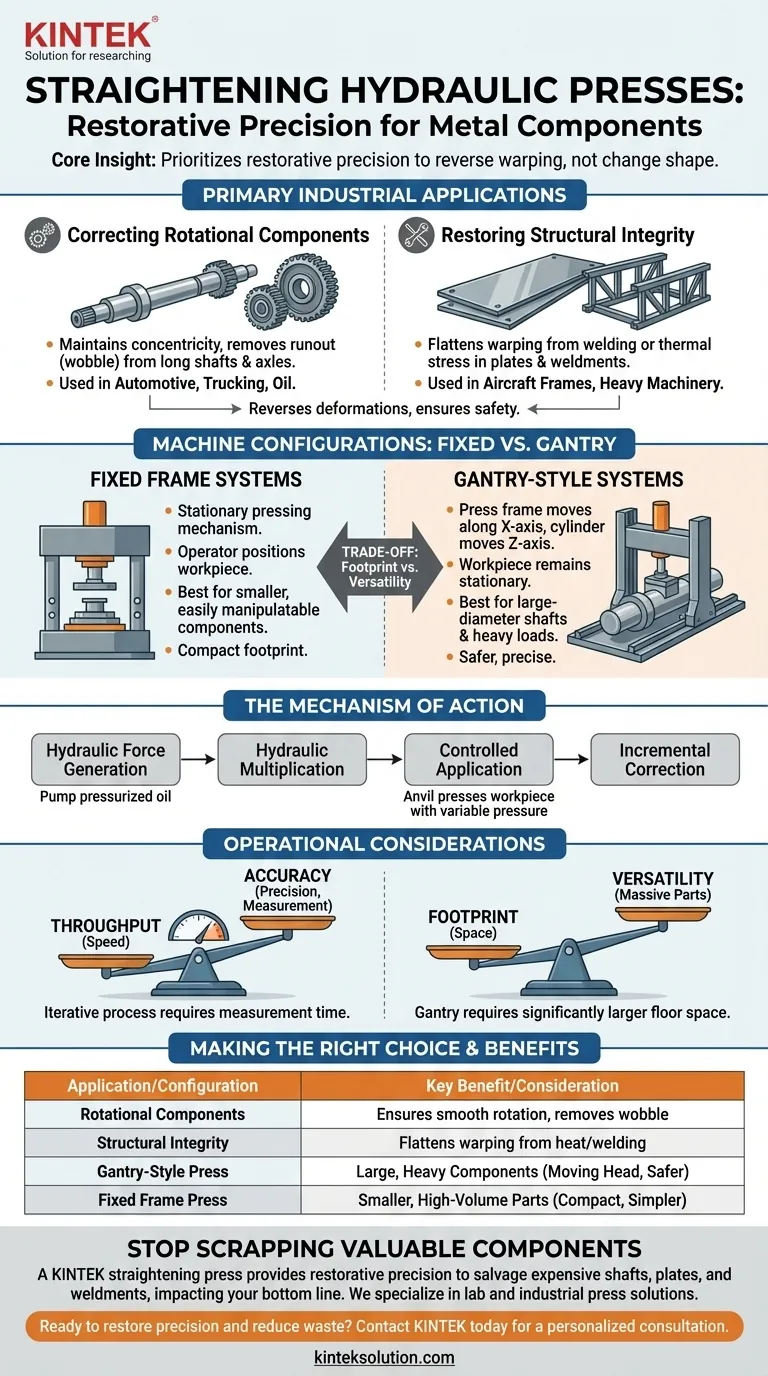
These presses are critical for maintaining the concentricity of long shafts and axles. They are frequently employed to repair components used in the automotive, trucking, and oil industries. By applying pressure to specific high points, the press removes runout (wobble) from large-diameter shafts to ensure smooth rotation.
Restoring Structural Integrity
Straightening presses are essential for flattening steel plates and large weldments. During manufacturing, the heat from welding often causes metal to warp or bow. This equipment flattens these deviations, which is vital for the structural assembly of aircraft frames and heavy industrial machinery.
Machine Configurations: Fixed vs. Gantry
Fixed Frame Systems
In a standard fixed-head configuration, the pressing mechanism remains stationary. The operator must position the workpiece underneath the ram. This setup is generally used for smaller components that are easy to manipulate manually or with light assistance.
Gantry-Style Systems
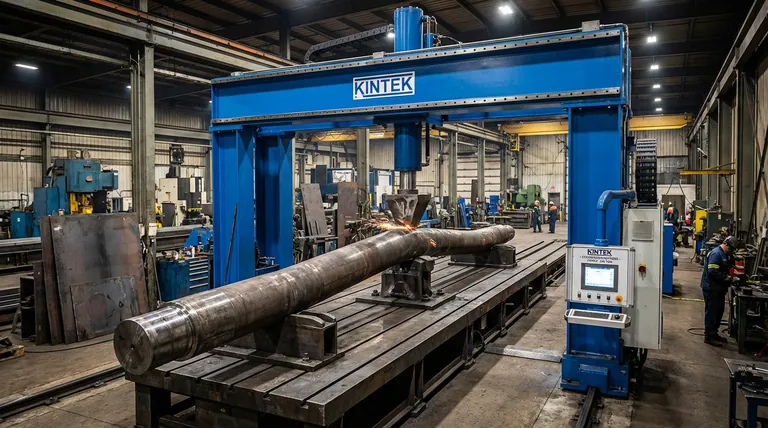
For large-diameter shafts and heavy loads, a gantry-style press is the superior choice. In this configuration, the workpiece remains stationary while the press frame moves along the X-axis. Simultaneously, the main cylinder moves downward along the Z-axis to engage the shaft. This eliminates the dangerous and difficult task of moving a heavy, unstable workpiece to align it with the ram.
The Mechanism of Action
Hydraulic Force Generation
The system relies on a hydraulic power unit comprising an oil reservoir, pump, and piston assembly. The pump pressurizes hydraulic fluid, forcing it from a small plunger cylinder into a larger ram cylinder. This hydraulic multiplication allows the machine to generate immense mechanical pressure with precise control.
Controlled Application
The pressure is transmitted through an anvil that presses directly onto the workpiece. The control system regulates this exchange, allowing the operator to apply varying degrees of force. This "variable pressure" is critical for incrementally correcting a bend without cracking the material or over-correcting the defect.
Operational Considerations and Trade-offs
Throughput vs. Accuracy
Straightening is an iterative, measurement-heavy process. Unlike a stamping press that produces parts rapidly, a straightening press requires time to measure the runout, apply pressure, and measure again. High precision inevitably reduces throughput speed.
Footprint vs. Versatility
Gantry presses offer maximum versatility for massive parts, but they require a significantly larger floor footprint to accommodate the travel of the frame. Fixed presses save space but limit the size of the workpiece you can effectively process.
Making the Right Choice for Your Goal
To select the correct straightening solution, you must evaluate the geometry and weight of your typical workpiece.
- If your primary focus is heavy, large-diameter shafts: Prioritize a moving gantry press, as moving the press head is safer and more precise than moving the workpiece.
- If your primary focus is smaller, high-volume parts: A fixed-frame press will offer a more compact footprint and a simpler operational workflow.
The ultimate value of a straightening press lies in its ability to salvage expensive components that would otherwise be scrapped due to warping.
Summary Table:
| Application | Typical Workpiece | Key Benefit |
|---|---|---|
| Correcting Rotational Components | Long Shafts, Axles | Ensures smooth rotation, removes wobble |
| Restoring Structural Integrity | Steel Plates, Large Weldments | Flattens warping from heat treatment or welding |
| Machine Configuration | Best For | Consideration |
| Gantry-Style Press | Large, Heavy Components (e.g., big shafts) | Press head moves; ideal for safety & precision |
| Fixed Frame Press | Smaller, High-Volume Parts | Compact footprint; simpler operation |
Stop Scrapping Valuable Components
Is warping or bending causing costly waste in your production line? A KINTEK straightening press provides the restorative precision needed to salvage expensive shafts, plates, and weldments, directly impacting your bottom line.
We specialize in lab and industrial press solutions. Whether you need the versatility of a gantry system for massive parts or the efficiency of a fixed-frame press for high-volume work, our experts will help you select the perfect machine for your specific goals.
Ready to restore precision and reduce waste? Contact KINTLAB today for a personalized consultation and discover the right straightening press for your application.
Visual Guide
Related Products
- Laboratory Hydraulic Press 2T Lab Pellet Press for KBR FTIR
- Automatic Laboratory Hydraulic Press for XRF and KBR Pellet Pressing
- Laboratory Hydraulic Press Lab Pellet Press Machine for Glove Box
- Automatic Laboratory Hydraulic Press Lab Pellet Press Machine
- Laboratory Hydraulic Pellet Press for XRF KBR FTIR Lab Press
People Also Ask
- What is the role of a laboratory pressure machine and KBr in FTIR? Master Sample Preparation for Flame Retardants
- What is the role of a laboratory hydraulic press in high-loading NCM811 cathode prep for solid-state batteries?
- Why is a laboratory hydraulic press necessary for sample preparation? Precise Pelleting for Spiro Heterocyclic Analysis
- What role does a laboratory hydraulic press play in reaction pellets? Optimizing Lunar Soil and Metal Fuel Density
- Why is the regulation of compression speed in a laboratory hydraulic press essential for oil extraction? Optimize Yield



















