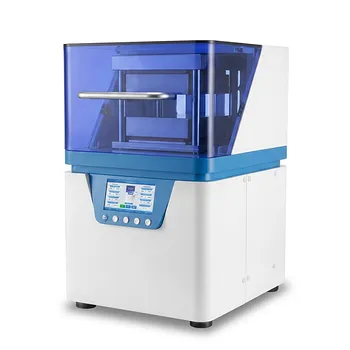
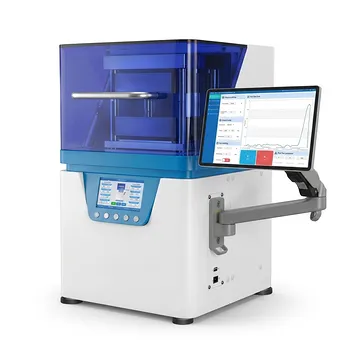
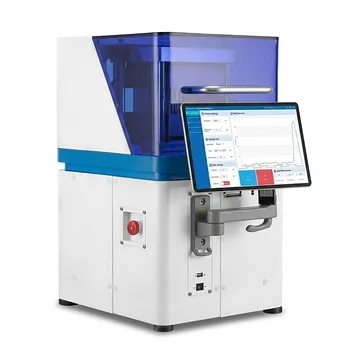
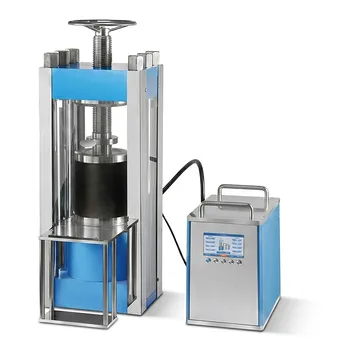
A vacuum hot press furnace is an advanced materials processing system that simultaneously applies heat and mechanical pressure within a vacuum or strictly controlled atmosphere. By integrating these three elements, the equipment enables specialized high-performance processes such as sintering, hot forming, and heat treatment for a wide variety of materials.
Core Takeaway: This technology addresses the challenge of achieving high density and purity in advanced materials. By combining thermal energy with mechanical force in a vacuum, it eliminates porosity and oxidation, delivering material properties that standard pressure-less sintering cannot achieve.
The Core Functional Components
A vacuum hot press furnace is a complex integration of several subsystems designed to work in unison. Understanding these components is key to grasping how the system delivers precise results.
The Containment Architecture
The foundation of the system is the furnace body and door. These components are engineered to contain the process environment, maintaining the structural integrity required for high-vacuum operations.
Thermal Generation
To achieve the necessary processing temperatures, the furnace utilizes specialized heating elements. Common materials for these elements include graphite or molybdenum, while some systems utilize induction-based heating methods to generate rapid, uniform heat.
Atmosphere Management
A robust vacuum system, equipped with pumps and gauges, creates and monitors the vacuum environment. When a specific chemical environment is required, the air charging system introduces controlled atmospheres, such as nitrogen or argon, regulated by a gas flow control system.
Thermal Regulation
Because these furnaces generate intense heat, a water cooling system is essential. This prevents the furnace body and peripheral components from overheating, ensuring long-term equipment safety and stability.
Pressure Application
The defining feature of a hot press is the pressure system. This mechanism applies direct mechanical force to the material during the heating cycle, facilitating densification and shaping.
Process Control and Safety
Modern vacuum hot press furnaces rely on sophisticated data and control loops to ensure repeatability and safety.
Precision Monitoring
The system tracks thermal conditions using a temperature measurement system, typically employing thermocouples or pyrometers. Simultaneously, a data logging system records all process variables, allowing engineers to analyze cycles for quality assurance.
Centralized Regulation
A master control system regulates the interaction between heat, pressure, and vacuum levels. This ensures the process follows the exact specific parameters required for the material being treated.
Safety Protocols
Given the high energies involved, these furnaces are equipped with essential safety features. These include interlocks, alarms, and emergency shutdown systems designed to protect both the operator and the expensive equipment in the event of an anomaly.
Understanding the Operational Trade-offs
While vacuum hot press furnaces offer superior material properties, the complexity of the components creates specific operational challenges.
System Interdependency
The reliability of the process depends on every subsystem functioning correctly. A minor issue in the vacuum pumps or water cooling system can halt production, making regular maintenance more critical than in simpler atmospheric furnaces.
Process Speed vs. Quality
The requirement to pump down to a vacuum, heat under pressure, and cool down safely typically results in a batch process. This yields exceptional quality but generally offers lower throughput compared to continuous sintering methods.
Making the Right Choice for Your Application
Selecting a vacuum hot press furnace implies a need for material properties that conventional methods cannot provide.
- If your primary focus is Material Density: Rely on the pressure system combined with heat to mechanically collapse pores and achieve near-theoretical density.
- If your primary focus is Purity and Oxidation Prevention: Leverage the vacuum and air charging systems to remove oxygen and introduce inert gases like Argon.
- If your primary focus is Process Repeatability: Prioritize a robust control and data logging system to ensure every batch meets strict industrial standards.
This equipment represents the intersection of thermal and mechanical engineering, designed specifically for applications where material failure is not an option.
Summary Table:
| Feature | Function & Component | Benefit to Material |
|---|---|---|
| Atmosphere Control | Vacuum & Gas Charging Systems | Prevents oxidation and ensures high purity |
| Thermal Energy | Graphite/Molybdenum Heating Elements | Enables uniform sintering and heat treatment |
| Mechanical Force | Hydraulic Pressure System | Eliminates porosity for near-theoretical density |
| Process Stability | Water Cooling & Control Systems | Ensures equipment safety and repeatable results |
Elevate Your Material Research with KINTEK Precision
As a leader in comprehensive laboratory pressing solutions, KINTEK provides the advanced technology required for high-performance material processing. Whether you are conducting cutting-edge battery research or developing new ceramics, our range of manual, automatic, heated, and isostatic presses—including specialized vacuum and glovebox-compatible models—delivers the precision your lab demands.
Ready to achieve superior material density and purity? Contact our specialists today to find the perfect pressing solution for your application.
Related Products
- Heated Hydraulic Press Machine with Heated Plates for Vacuum Box Laboratory Hot Press
- Heated Hydraulic Press Machine With Heated Plates For Vacuum Box Laboratory Hot Press
- Automatic Hydraulic Hot Press with Large Plate and Precision Temperature Control for Advanced Material Sample Preparation and Industrial Research
- Automatic Hydraulic Heat Press Machine with Multi Stage Programmable Control and Integrated Water Cooling Plate Size 180x180mm
- Automatic Heated Hydraulic Press Machine with Hot Plates for Laboratory
People Also Ask
- What are the requirements for electrode pressing with high-viscosity ionic liquids like EMIM TFSI? Optimize Performance
- How does a laboratory heated hydraulic press facilitate PBN sample prep for WAXS? Achieve Precise X-Ray Scattering
- What are the industrial applications of heated hydraulic presses? Master Heat & Force for Precision Manufacturing
- Function of a Laboratory Hydraulic Press with Heated Platens in SSE? Enhance Battery Density & Conductivity
- How are heated hydraulic presses utilized in the preparation of thin films? Key Mechanisms and Applications