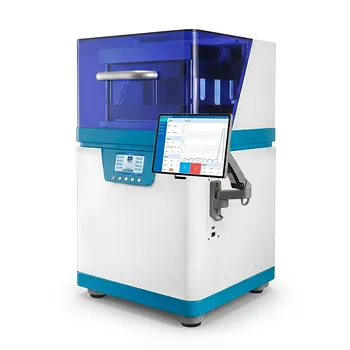
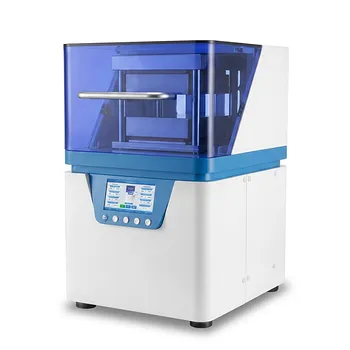
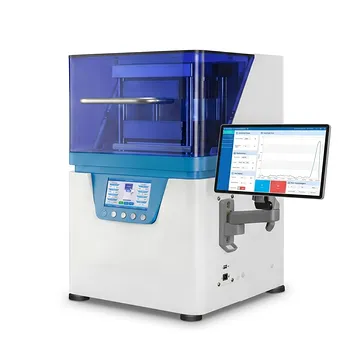
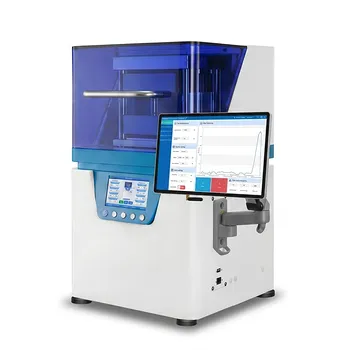
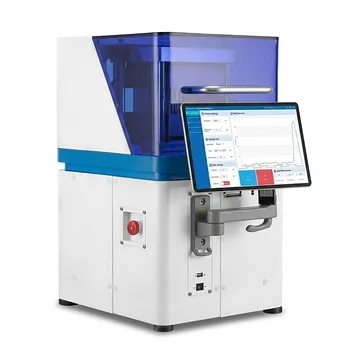
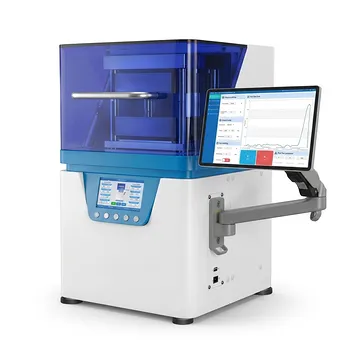
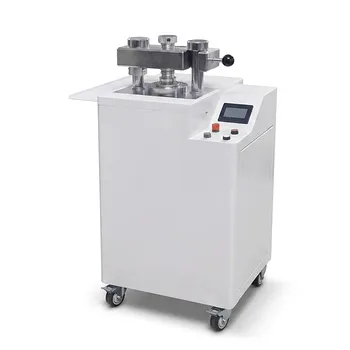
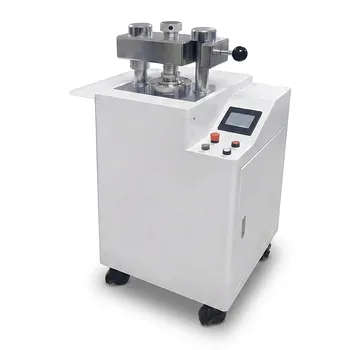
An automatic hydraulic press is the superior choice for high-frequency workflows requiring recurrent sample production. While manual presses are suitable for occasional tasks, automatic systems significantly accelerate the pace of work by eliminating the physical labor associated with repetitive pumping. This makes them the standard for environments where efficiency, throughput, and operator comfort are paramount.
The true value of automation extends beyond speed; it creates a controlled environment where pressure, dwell times, and release rates are mathematically consistent. This removes operator variability, ensuring that every sample produced is identical to the last.
Optimizing Workflow and Efficiency
Handling High-Volume Production
For laboratories or production floors dealing with recurrent sample preparation, the physical demands of a manual press become a bottleneck. An automatic press streamlines this process, allowing for a quicker pace of work without causing operator fatigue.
Reducing Labor Intensity
Manual presses require significant physical effort to generate high tonnage. In high-frequency situations, this is not only laborious but can lead to repetitive strain. Automation transforms this physical task into a button-press operation, allowing the operator to focus on sample preparation rather than mechanical exertion.
Achieving Scientific Precision
Eliminating Operator Variability
A critical flaw in manual pressing is that the applied load often varies slightly depending on the operator. An automatic laboratory press offers programmable pressure control, ensuring that the force applied is exact and repeatable, regardless of who is operating the machine.
Consistency in Dwell Times
For many experiments, the duration for which pressure is held (dwell time) is just as important as the pressure itself. Automatic presses maintain constant dwell times, eliminating the fluctuations common in manual operations where timing relies on human reaction.
Preserving Physicochemical Properties
Precision is vital when studying dispersed solid surfaces. Even minor deviations in compression pressure can alter a sample's porosity or surface morphology. Automated control prevents these unintended structural changes, significantly improving the reliability of your experimental data.
Improving Sample Integrity
Preventing Microscopic Defects
Advanced functional materials, particularly those that are brittle or pressure-sensitive, are prone to damage during the pressing process. Automatic presses utilize smooth, controlled pressurization and depressurization cycles.
Enhancing Yield Rates
By regulating the rate of pressure application, automatic systems prevent internal density gradients and microscopic cracks within the "green body" (the compacted powder). This precise control directly correlates to a higher yield rate of usable samples compared to the jerky or uneven application of force often found in manual pressing.
Understanding the Trade-offs
Assessing Cost Effectiveness
While automatic presses offer superior consistency and ease of use, they represent a larger capital investment. If your workflow involves only infrequent usage or simple prototyping where high precision is not critical, a manual press remains a cost-effective and logical solution.
Complexity of Maintenance
Automatic systems involve electronic controls and hydraulic pumps that may require more specialized maintenance compared to the purely mechanical simplicity of a manual press.
Making the Right Choice for Your Goal
To determine if an upgrade to automation is necessary, evaluate your specific requirements:
- If your primary focus is Scalability and Speed: Choose an automatic press to handle recurrent production without operator fatigue.
- If your primary focus is Data Reproducibility: Rely on automation to ensure constant pressure and dwell times, which are critical for consistent physicochemical analysis.
- If your primary focus is Material Integrity: Select an automatic system to prevent micro-cracks and density gradients in brittle or sensitive materials.
- If your primary focus is Budget for Low Volume: Stick to a manual press, which is cost-effective for infrequent, non-critical tasks.
Automation converts the variable art of sample preparation into a precise, repeatable science.
Summary Table:
| Feature | Manual Hydraulic Press | Automatic Hydraulic Press |
|---|---|---|
| Best For | Low-volume, infrequent tasks | High-frequency, recurrent production |
| Labor Intensity | High (physical pumping) | Low (button-press operation) |
| Precision | Variable (operator dependent) | High (programmable controls) |
| Dwell Time | Manual/Estimated | Automated/Constant |
| Sample Integrity | Potential for micro-cracks | Controlled cycles for high yield |
| Investment | Low initial cost | Higher capital investment |
Elevate Your Material Research with KINTEK
Is manual pressing creating a bottleneck in your laboratory? KINTEK specializes in comprehensive laboratory pressing solutions designed to convert variable sample preparation into repeatable science.
Whether you are conducting advanced battery research or exploring new material surface morphologies, our range of manual, automatic, heated, and multifunctional models—including specialized isostatic presses—provides the exact pressure control you need.
Our value to you:
- Precision: Eliminate operator variability with programmable cycles.
- Scalability: Accelerate high-volume workflows without operator fatigue.
- Integrity: Protect sensitive samples with controlled depressurization.
Ready to optimize your yield? Contact KINTEK today to find the perfect pressing solution for your application.
Related Products
- Automatic Hydraulic Hot Press with Large Plate and Precision Temperature Control for Advanced Material Sample Preparation and Industrial Research
- Automatic Hydraulic Heat Press Machine with Multi Stage Programmable Control and Integrated Water Cooling Plate Size 180x180mm
- Automatic Heated Hydraulic Lab Press with Programmable Touch Screen Controls and Precision Temperature Regulation
- Automatic Laboratory Hydraulic Press Lab Pellet Press Machine
- Automatic Heated Hydraulic Press Machine with Hot Plates for Laboratory
People Also Ask
- What are the specific features and applications of hydraulic hot press machines? Precision Solutions for Modern Labs
- How does an automatic hydraulic press operate? Achieve Precision and Consistency in Lab Pelleting
- What are the advantages and common applications of an automatic hydraulic press? Elevate Your Lab's Precision
- What is the technical significance of setting a precise dwell time? Achieve Peak Material Density and Stability
- How does a laboratory hydraulic heat press facilitate the molding of cellulose composite specimens? Precision Molding