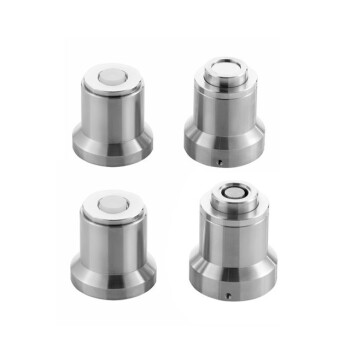
The primary function of zirconia lining plates is to serve as a robust chemical barrier. During the high-temperature reprocessing of zinc-doped garnet-type electrolytes, the material becomes highly reactive. Zirconia plates prevent the electrolyte from reacting with the underlying carrier, specifically avoiding the diffusion of contaminants like aluminum that would permanently degrade the material's performance.
High-temperature reprocessing significantly increases the reactivity of garnet-type electrolytes, making them vulnerable to cross-contamination. Zirconia lining plates provide the necessary chemical stability to prevent element diffusion, ensuring the electrolyte retains its intended composition and electrochemical properties.
The Challenge of High-Temperature Reactivity
The Sensitivity of Garnet Electrolytes
Garnet-type materials are not chemically inert when subjected to high thermal loads. As the temperature rises during reprocessing, the material becomes highly reactive.
This heightened state makes the electrolyte susceptible to interacting with any material it touches. The integrity of the sample depends entirely on the inertness of the surface it rests upon.
The Dangers of Diffusion
The primary reference highlights a specific risk: aluminum diffusion. If a garnet electrolyte is processed directly on an aluminum-based carrier, aluminum atoms can migrate into the electrolyte.
This is not a superficial change; it acts as cross-contamination. The introduction of foreign elements alters the chemical structure of the zinc-doped garnet, leading to a measurable degradation in electrolyte performance.
Why Zirconia is the Critical Solution
Superior Chemical Compatibility
Zirconia is selected specifically because it possesses excellent chemical compatibility with garnet electrolytes. It acts as an effective shield between the reactive sample and the furnace environment.
Unlike aluminum or other reactive carriers, zirconia does not facilitate the exchange of atoms with the sample. This ensures that the stoichiometry of the zinc-doped garnet remains pure.
Thermal Stability
Beyond chemical inertness, the lining plate must survive the physical stress of the process. Zirconia is capable of withstanding the high-temperature environments required for reprocessing without degrading.
This physical stability ensures that the lining plate does not break down or introduce particulate contamination into the experiment.
The Risks of Alternative Materials
The Consequence of Material Mismatch
Using a carrier material other than zirconia often leads to experimental failure. The reference explicitly warns against direct contact with aluminum-based carriers.
If a researcher attempts to cut costs or use available standard plates without considering reactivity, they invite chemical instability. The resulting data will likely reflect a contaminated sample rather than the true properties of the zinc-doped garnet.
Performance Degradation
The ultimate trade-off of using the wrong lining plate is a loss of function. The diffusion of contaminants compromises the ionic conductivity and overall utility of the electrolyte.
Making the Right Choice for Your Goal
To ensure the success of your high-temperature reprocessing, select your equipment based on your specific experimental needs:
- If your primary focus is Chemical Purity: You must use zirconia lining plates to act as a barrier against diffusion and prevent the introduction of foreign elements like aluminum.
- If your primary focus is Experimental Validity: You should avoid standard aluminum carriers, as their reactivity at high temperatures will alter your sample's composition and skew your results.
By isolating the reactive garnet electrolyte on a stable zirconia surface, you preserve the chemical integrity essential for high-performance battery materials.
Summary Table:
| Feature | Zirconia Lining Plates | Alternative Carriers (e.g., Aluminum) |
|---|---|---|
| Chemical Stability | High; inert during high-thermal loads | Low; highly reactive at high temperatures |
| Contamination Risk | Minimum; no atomic exchange | High; risk of aluminum diffusion |
| Thermal Resilience | Exceptional; withstands reprocessing heat | Variable; may degrade or introduce particulates |
| Impact on Sample | Preserves stoichiometry & performance | Causes cross-contamination & degradation |
Elevate Your Battery Research with KINTEK Precision Solutions
Don't let cross-contamination compromise your electrolyte performance. KINTEK specializes in comprehensive laboratory pressing and sintering solutions designed for advanced material science. Whether you require manual, automatic, heated, or glovebox-compatible models, or advanced cold and warm isostatic presses, our equipment ensures the chemical integrity of your samples.
Ensure experimental validity and achieve superior purity today. Contact our technical experts now to find the perfect zirconia-compatible solution for your battery research needs!
References
- Bo Dong, Peter R. Slater. Experimental and computational study of Zn doping in Li<sub>5+<i>x</i></sub>La<sub>3</sub>Nb<sub>2−<i>x</i></sub>Zr<sub><i>x</i></sub>O<sub>12</sub> garnet solid state electrolytes. DOI: 10.1039/d4ma00429a
This article is also based on technical information from Kintek Solution Knowledge Base .
Related Products
- Lab Double Plate Heating Mold for Laboratory Use
- Infrared Heating Quantitative Flat Plate Mold for Precise Temperature Control
- Lab Cylindrical Press Mold for Laboratory Use
- Split Automatic Heated Hydraulic Press Machine with Heated Plates
- Lab Round Bidirectional Press Mold
People Also Ask
- How does the geometry of laboratory molds influence mycelium-based composites? Optimize Density and Strength
- Why are precision laboratory molds essential for forming basalt-reinforced lightweight concrete specimens?
- Why are high-precision laboratory molds and specific compaction processes required? Ensure Data Integrity in Soil Research
- What is the purpose of using a laboratory hot plate and weight pressing? Mastering Cellulose Filament Bond Strength
- Why is low-temperature pre-drying on a laboratory hot plate necessary? Stabilize Silver Ink for Better Conductivity