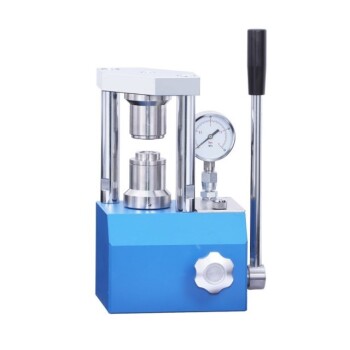
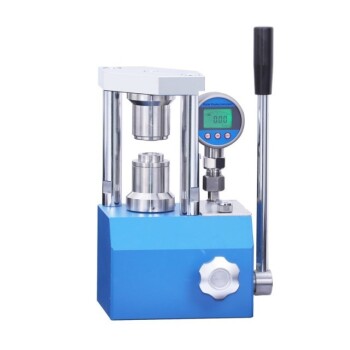
Standardized CR2032 coin cell components and high-precision sealing presses are essential for minimizing experimental variables in lithium metal battery research. By utilizing a consistent physical geometry and applying uniform sealing pressure, these tools ensure that performance data reflects the true properties of the materials being tested—such as electrolytes or electrodes—rather than inconsistencies in the assembly process.
Core Takeaway The combination of standardized components and precision sealing creates a controlled mechanical environment that ensures optimal interfacial contact and hermeticity. This reduces interfacial impedance and experimental error, enabling the generation of reliable, reproducible data for long-term cycling and material evaluation.
Achieving Experimental Consistency
Standardizing Physical Dimensions
Scientific rigor requires isolating variables. Standardized CR2032 components—including cases, springs, and spacers—provide a fixed internal volume and geometry.
This allows researchers to evaluate electrolyte performance without physical variations affecting the results. If the container geometry varies, it becomes impossible to determine if a performance drop is due to the chemistry or the cell construction.
Eliminating Assembly Errors
Manual assembly often introduces human error. High-precision sealing presses remove this variable by applying force in a mechanically controlled manner.
This repeatability reduces the margin of error between different test cells. It ensures that a cell assembled on Monday is mechanically identical to one assembled on Friday.
Optimizing Electrochemical Performance
Reducing Interfacial Impedance
For a battery to function efficiently, the internal layers must touch perfectly. A laboratory press ensures intimate physical contact between the lithium metal anode, the separator, and the cathode.
This pressure significantly reduces interfacial impedance (resistance). Lower resistance facilitates better ion flow, which is critical for achieving high-performance metrics like 5000-hour cycling stability.
Preventing Dendrite Growth
Lithium metal is prone to forming dendrites (spiky crystal growths) if current distribution is uneven. Uniform mechanical pressure promotes uniform ion distribution across the interface.
Any macroscopic unevenness during pressing can lead to non-uniform current density. This creates "hot spots" that accelerate dendrite nucleation, eventually causing the battery to fail.
Protecting the Chemistry
Ensuring a Hermetic Seal
Lithium metal is highly reactive to moisture and oxygen. A precision sealing machine creates a hermetic seal that prevents external environmental contaminants from infiltrating the cell.
This prevents the corrosion of the lithium anode. It also ensures the data collected is from the battery reaction, not a side reaction with humidity in the air.
Preventing Electrolyte Leakage and Dry-out
In systems like Lithium-Sulfur (Li-S) batteries, electrolytes are often volatile ether-based compounds. Proper sealing pressure prevents these electrolytes from leaking or drying out during testing.
Maintaining the electrolyte volume is vital for accuracy. If the electrolyte dries out, the interfacial resistance spikes artificially, rendering the electrochemical data useless.
Understanding the Trade-offs
The Dangers of Excessive Pressure
While pressure is necessary, more is not always better. Excessive force can destroy the microporous structure of the separator.
If the separator is crushed, it loses its ability to transport ions effectively or may physically fail, leading to a short circuit.
The Risks of Insufficient Pressure
Conversely, insufficient pressure leads to high interfacial impedance. This results in poor contact between the electrode and electrolyte.
This often manifests as unstable voltage platforms or erratic cycling data, falsely suggesting that the active materials are performing poorly when the issue is actually mechanical.
Making the Right Choice for Your Goal
To maximize the reliability of your lithium metal experiments, align your equipment usage with your specific research objectives:
- If your primary focus is electrolyte screening: Rely on standardized spacers and springs to ensure the internal volume remains constant across all samples, isolating the electrolyte as the single variable.
- If your primary focus is long-term cycle life: Prioritize high-precision pressure control during sealing to minimize interfacial impedance and prevent dendrite-causing current hotspots.
- If your primary focus is safety and stability: Ensure your press delivers a verified hermetic seal to prevent moisture ingress and electrolyte dry-out, particularly for volatile chemistries like Li-S.
Reliable data begins with the mechanical integrity of the cell; without precise assembly, even the most advanced chemistry will fail to perform.
Summary Table:
| Feature | Benefit for Battery Research |
|---|---|
| Standardized CR2032 Components | Ensures fixed geometry and internal volume to isolate material variables. |
| High-Precision Sealing Presses | Guarantees repeatable mechanical force and eliminates human assembly error. |
| Uniform Pressure Distribution | Reduces interfacial impedance and suppresses dendrite growth for stable cycling. |
| Hermetic Sealing | Prevents moisture/oxygen ingress and volatile electrolyte dry-out. |
| Optimized Force Control | Protects separator microporous structures from physical damage or crushing. |
Optimize Your Battery Research with KINTEK Precision Solutions
Don't let mechanical inconsistencies compromise your electrochemical data. KINTEK specializes in comprehensive laboratory pressing solutions tailored for advanced battery research. Whether you need manual, automatic, heated, or glovebox-compatible models—including cold and warm isostatic presses—our equipment ensures the hermeticity and precision required for 5000-hour cycling stability.
Ready to achieve superior interfacial contact and repeatable results?
Contact KINTEK Today to Find Your Perfect Pressing Solution
References
- Xiwang Chang, Yaofeng Zhu. Integrating Molecular Dynamics and Machine Learning for Solvation‐Guided Electrolyte Optimization in Lithium Metal Batteries. DOI: 10.1002/advs.202504997
This article is also based on technical information from Kintek Solution Knowledge Base .
Related Products
- Button Battery Sealing Press Machine for Lab
- Lab Button Battery Tablet Press Sealing Mold
- Manual Button Battery Sealing Machine for Battery Sealing
- Button Battery Sealing Machine for Button Batteries
- Warm Isostatic Press for Solid State Battery Research Warm Isostatic Press
People Also Ask
- Why is a laboratory battery sealing press essential for desolvation energy testing? Ensure Reliable Kinetic Data
- Why is a laboratory hydraulic press or battery sealing machine essential? Ensure Coin Cell Data Integrity
- How do laboratory battery sealing machines ensure performance consistency? Master Your Lithium and LFP Battery Assembly
- What role does a laboratory sealing press play in thermal analysis of solid dispersion films? Ensure Data Integrity
- Why is pressure control critical for HEPBA coin cell assembly? Achieve Precision Lab Sealing Results