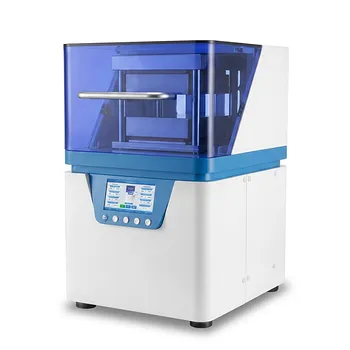
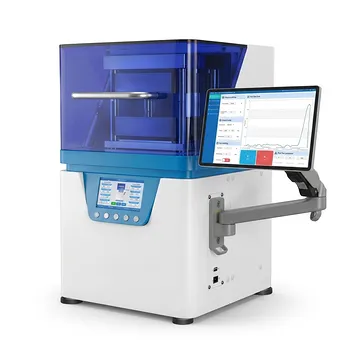
Proper sample preparation is the absolute prerequisite for generating reliable and reproducible data in FTIR analysis. It transforms raw material into a state compatible with optical physics, ensuring particles are well-mixed to reduce interference and allowing infrared radiation to interact effectively with the sample's vibrational modes.
Core Takeaway: The quality of an FTIR spectrum is determined before the sample ever enters the spectrometer. Proper preparation creates a homogeneous, transparent medium that minimizes light scattering and spectral distortion, ensuring that the resulting peaks represent the material's chemistry rather than physical artifacts.
The Physical Requirements for Accurate Spectra
To capture accurate mineral vibration spectra, the sample must physically accommodate the infrared beam. Preparation is not just about handling; it is about engineering the sample's optical properties.
Achieving Sample Homogeneity
For data to be reproducible, the sample must be uniform throughout.
Well-mixed particles ensure that the portion analyzed is representative of the whole. This homogeneity minimizes variations between scans and reduces noise, allowing for consistent detection of characteristic peaks.
Ensuring Optical Transparency
Infrared radiation must pass through the sample, not just bounce off it.
Preparation involves creating thin, transparent pellets that allow the spectral beam to penetrate the material. If the sample is too thick or opaque, the detector receives insufficient signal, degrading the quality of the measurement.
Reducing Light Scattering
Internal voids and air pockets within a sample pellet act as scattering centers for light.
Using a laboratory hydraulic press helps eliminate these defects. By applying high pressure—often up to 15 tons—the loose powder is compressed into a dense solid. This reduction in voids prevents light scattering, resulting in stable baselines and clearer spectral features.
The Role of the Binder (KBr)
Most solid samples are too dense to be analyzed pure; they must be diluted in a transparent matrix, typically Potassium Bromide (KBr).
Minimizing Spectral Interference
KBr acts as an appropriate binder because it is transparent to infrared light in the region of interest.
By suspending the sample in KBr, you reduce interference from the sample's own physical structure. This isolation allows the instrument to record the vibrational modes of the analyte without background noise from the matrix.
Optimizing the Sample-to-Binder Ratio
The proportion of sample to KBr is critical for signal fidelity.
You must achieve the correct sample-to-binder ratio. If the concentration of the sample is too high, it leads to spectral distortion, where peaks become "flat-topped" or shift position, making identification impossible.
Understanding the Trade-offs
While rigorous preparation is necessary, it requires a balance of technique and precision.
Pressure vs. Integrity
Applying sufficient pressure is vital to create a dense, translucent pellet that yields high-quality spectra.
However, the process relies on the high-pressure molding capabilities of a hydraulic press. Insufficient pressure leaves internal voids that scatter light, while inconsistent pressure can lead to pellets that fracture or lack the necessary transparency.
Preparation vs. Throughput
Proper preparation is time-consuming.
It requires meticulous grinding and mixing to ensure the sample is fine enough to avoid scattering IR light (the Christiansen effect). Rushing this step to increase throughput invariably leads to poor interaction with the spectral beam and compromised data quality.
Making the Right Choice for Your Goal
The specific nuances of your preparation method should align with your analytical objectives.
- If your primary focus is Reproducibility: Prioritize sample homogeneity by ensuring the particles are thoroughly mixed and the sample-to-binder ratio is mathematically consistent across every run.
- If your primary focus is Peak Resolution: Focus on optical transparency by using high-pressure compression (up to 15 tons) to eliminate internal voids and light scattering.
A spectrum is only as good as the sample it represents; precise preparation is the difference between data and noise.
Summary Table:
| Factor | Impact on FTIR Spectrum | Preparation Strategy |
|---|---|---|
| Homogeneity | Reduces noise and ensures scan reproducibility | Thorough grinding and representative mixing |
| Transparency | Minimizes light scattering and baseline shifts | Use of high-pressure hydraulic pressing (up to 15 tons) |
| Sample/KBr Ratio | Prevents peak distortion and "flat-topping" | Precise measurement of sample-to-binder dilution |
| Particle Size | Eliminates the Christiansen effect | Fine grinding to a size smaller than IR wavelength |
Elevate Your FTIR Accuracy with KINTEK Pressing Solutions
Don’t let poor sample preparation compromise your research data. KINTEK specializes in comprehensive laboratory pressing solutions designed for precision and reliability. Whether you require manual, automatic, heated, or multifunctional models, our equipment ensures optimal transparency and homogeneity for your pellets.
From battery research to mineralogy, our glovebox-compatible, cold, and warm isostatic presses provide the consistent high-pressure molding needed to eliminate voids and light scattering.
Ready to achieve superior spectral resolution? Contact KINTEK today to find your perfect laboratory press!
Related Products
- Automatic Hydraulic Hot Press with Large Plate and Precision Temperature Control for Advanced Material Sample Preparation and Industrial Research
- Automatic Hydraulic Heat Press Machine with Multi Stage Programmable Control and Integrated Water Cooling Plate Size 180x180mm
- Automatic High Temperature Heated Hydraulic Press Machine with Heated Plates for Lab
- Automatic Heated Hydraulic Lab Press with Programmable Touch Screen Controls and Precision Temperature Regulation
- Manual Heated Hydraulic Lab Press with Integrated Hot Plates Hydraulic Press Machine
People Also Ask
- What are the specific features and applications of hydraulic hot press machines? Precision Solutions for Modern Labs
- How does an automatic hydraulic press operate? Achieve Precision and Consistency in Lab Pelleting
- What are the advantages and common applications of an automatic hydraulic press? Elevate Your Lab's Precision
- What is the technical significance of setting a precise dwell time? Achieve Peak Material Density and Stability
- When is an automatic hydraulic press more suitable than a manual press? Scale Your Lab with Precision & Speed