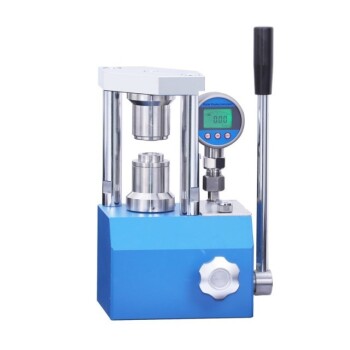
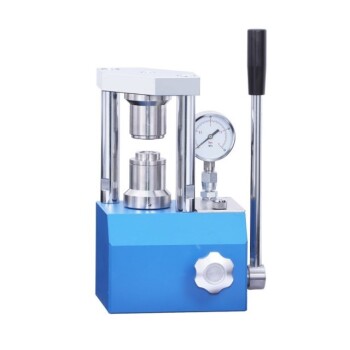
Warm Isostatic Pressing (WIP) is the definitive method for establishing conductivity in all-solid-state pouch batteries. Unlike liquid electrolyte batteries that rely on wetting, solid-state batteries require high external force—specifically a high-pressure liquid medium (often around 450 MPa) combined with heat (e.g., 80°C)—to physically fuse the solid layers together. This process eliminates microscopic voids, ensuring the battery can actually cycle energy efficiently.
The core challenge in solid-state batteries is the "solid-solid interface." Without the extreme, uniform pressure provided by WIP, the cathode, anode, and electrolyte layers remain physically separated at a microscopic level, resulting in high resistance and rapid failure.
The Critical Role of Interface Densification
Eliminating Microscopic Voids
In a solid-state battery, any gap between layers is a dead zone where ions cannot travel. WIP treatment subjects the encapsulated pouch to massive hydraulic pressure.
This forces the materials to close these gaps, eliminating voids that naturally occur during stacking. The result is a dense, cohesive structure where layers are physically pressed into contact.
Achieving Nano-Scale Interlocking
Mere touching is not enough; the materials must interlock at the atomic or nano-scale.
WIP drives the cathode and anode sheets into the solid electrolyte membrane. This creates a "seamless" interface that mimics the atomic-level contact required for efficient ion transfer.
Reducing Interfacial Impedance
Voids and poor contact create impedance (resistance), which throttles battery performance.
By densifying the layers, WIP drastically reduces this interfacial impedance. This reduction is the primary driver for improved rate performance (how fast the battery can charge/discharge) and energy density.
Why Isotropic Pressure Matters
Uniformity vs. Stress Concentration
Standard pressing methods often use uniaxial pressure (pressing from top and bottom only). The supplementary data indicates this can lead to stress concentrations, which may damage the battery components.
Isotropic pressure, applied via the WIP liquid medium, exerts equal force from every direction simultaneously. This ensures uniform densification without crushing or warping the delicate internal structure.
The Synergy of Heat and Pressure
Pressure alone is often insufficient for perfect lamination. WIP equipment operates at elevated temperatures, typically around 80°C.
This thermal energy softens the materials slightly, allowing the high pressure (e.g., 450–500 MPa) to mold the layers together more effectively. This synergy is particularly vital for high-loading cathode materials, ensuring they integrate fully with the electrolyte.
Understanding the Operational Trade-offs
The Necessity of High Pressure
Achieving the required "atomic-level dense contact" demands pressures significantly higher than standard manufacturing processes.
You must utilize equipment capable of sustaining roughly 300 to 500 MPa. Lower pressures may fail to achieve the necessary interface density, leaving voids that compromise long-term stability.
Post-Encapsulation Timing
It is critical to note that this process occurs post-encapsulation.
Applying this treatment before the battery is sealed could damage the layers or fail to maintain the pressure once removed. Treating the sealed pouch ensures the vacuum and internal structure are locked in permanently.
Making the Right Choice for Your Goal
To maximize the potential of all-solid-state pouch batteries, align your processing parameters with your specific performance targets:
- If your primary focus is Cycle Life: Prioritize Isotropic Pressure to prevent stress concentrations and ensure uniform contact that withstands repeated expansion and contraction.
- If your primary focus is High Energy Density: Prioritize High Pressure (450+ MPa) to maximize material packing and ensure full capacity utilization of high-loading cathodes.
- If your primary focus is Rate Performance: Prioritize Thermal Integration (approx. 80°C) during pressing to minimize interfacial impedance and allow faster ion transport.
WIP is not merely a finishing step; it is the fundamental enabler that turns a stack of solid materials into a functioning, high-performance energy storage device.
Summary Table:
| Feature | WIP Benefit | Battery Performance Impact |
|---|---|---|
| Pressure Type | Isotropic (Uniform 360°) | Prevents stress damage & structural warping |
| Pressure Level | High (300 - 500 MPa) | Eliminates microscopic voids for dense contact |
| Temperature | Elevated (approx. 80°C) | Softens materials for nano-scale interlocking |
| Interface | Reduced Impedance | Enables faster ion transfer and higher rate performance |
Elevate Your Battery Research with KINTEK
Transitioning from lab-scale stacks to high-performance solid-state batteries requires precision and power. KINTEK specializes in comprehensive laboratory pressing solutions, offering manual, automatic, heated, multifunctional, and glovebox-compatible models, as well as cold and warm isostatic presses widely applied in battery research.
Whether you need to eliminate interfacial impedance at 500 MPa or achieve uniform densification through thermal integration, our expert team is here to help you select the ideal WIP equipment for your specific goals.
Ready to optimize your solid-state pouch battery production? Contact KINTEK today for a tailored solution!
References
- Seunggoo Jun, Hanvin Kim. Electron-conductive binder for silicon negative electrode enabling low-pressure all-solid-state batteries. DOI: 10.1038/s41467-025-66851-0
This article is also based on technical information from Kintek Solution Knowledge Base .
Related Products
- Warm Isostatic Press for Solid State Battery Research Warm Isostatic Press
- Laboratory Hydraulic Press Lab Pellet Press Button Battery Press
- Button Battery Sealing Press Machine for Lab
- Lab Isostatic Pressing Molds for Isostatic Molding
- Electric Lab Cold Isostatic Press CIP Machine
People Also Ask
- Why must composite cathodes be sealed in vacuum lamination bags for WIP? Ensure Battery Stability and Density
- What is the function of elastic molds in warm isostatic pressing? Achieve Uniform Density in Composite Particles
- How do sacrificial volume materials (SVM) maintain microchannels in isostatic pressing? Ensure Structural Integrity
- How does Warm Isostatic Pressing differ from traditional pressing methods? Unlock Uniform Density for Complex Parts
- What is the mechanism of a Warm Isostatic Press (WIP) on cheese? Master Cold Pasteurization for Superior Safety