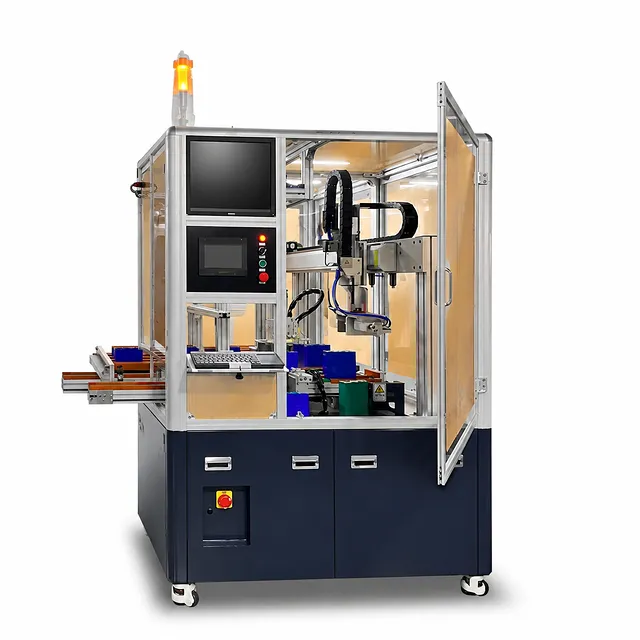
Prismatic Cell Equipment
Prismatic Battery Barcode Scanning Inspection Eight Bin Sorting Machine
Item Number : FX09
Price varies based on specs and customizations
- Capacity / Speed
- ≥20PPM
- Sorting Configuration
- 8+1 grades
- Voltage Measurement Resolution
- 0.1mV

Shipping:
Contact us to get shipping details Enjoy On-time Dispatch Guarantee.
Why Choose Us
Easy ordering process, quality products, and dedicated support for your business success.
Product Overview
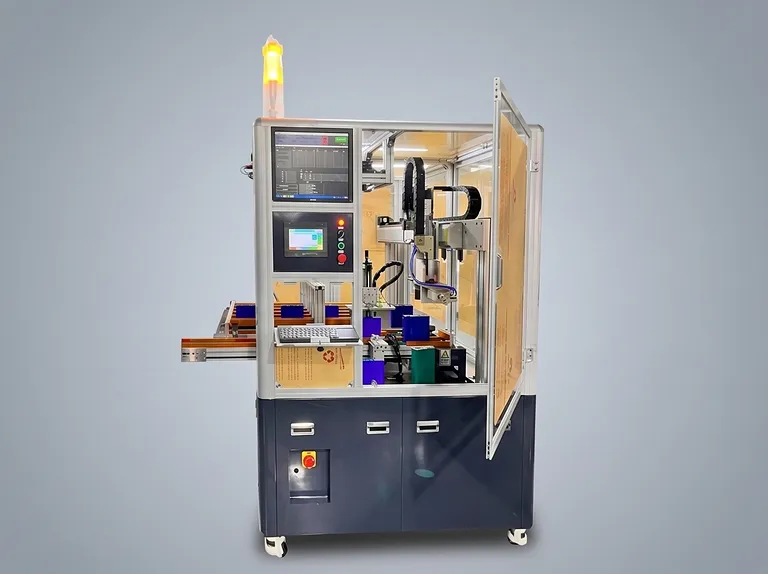
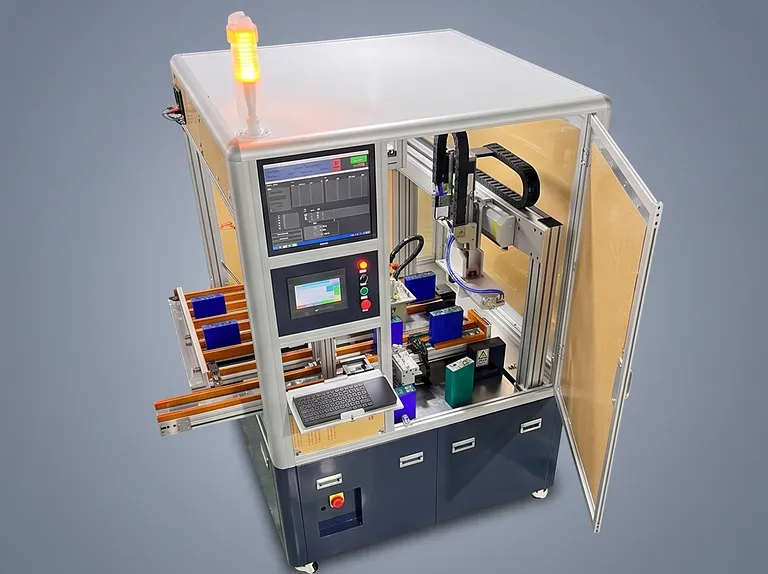
This system is an automated 8+1-bin OCV sorting solution for prismatic aluminum-shell batteries. It integrates battery barcode scanning, voltage measurement, internal-resistance measurement, result recording, and process-directed classification in one connected workflow. By linking each measured cell with its scanned identity, the equipment supports controlled quality decisions before downstream pairing, grouping, or assembly operations.
The equipment is intended for battery manufacturing lines that process prismatic cells and require barcode-based inspection with defined voltage and resistance sorting criteria. Operators load cells onto the infeed belt, while the system handles pickup, scanning, testing, transfer to the sorting station, and placement into the assigned process grade. It can test product voltage and internal resistance without distinguishing positive and negative terminals.
Built around an industrial computer, touchscreen operation, guarded enclosure, and welded structural base, this unit is designed for routine production use. Recorded test results can be uploaded to a database and connected to MES for real-time monitoring and retrieval, helping production teams maintain traceable measurement and sorting records under demanding operating conditions.
Key Features
-
Integrated Barcode-to-Result Traceability: The equipment scans each prismatic battery before electrical testing, associating the cell identity with its voltage and internal-resistance result. Measurement data are recorded by the tester to the industrial control computer and can be uploaded to a database.
-
8+1 Process-Directed Sorting: After testing, the conveyor transfers the cell to the sorting position, where a motion sorting manipulator places it into the applicable one of eight process grades plus one additional grade. Grade assignment is executed from PC instructions to support defined production grouping logic.
-
OCV and Internal-Resistance Inspection: This system performs voltage and internal-resistance testing as part of the automated handling sequence. It supports product testing without requiring positive and negative terminal differentiation, simplifying the inspection flow for applicable cells.
-
High-Resolution Voltage Measurement: Voltage measurement resolution is 0.1 mV. The measurement instrument provides a 20 V voltage range with accuracy of ±0.01%rdg.±3dgt, supporting fine discrimination where voltage-based sorting criteria are important.
-
Dual Resistance Measurement Ranges: The measurement instrument provides 3Ω and 30mΩ resistance ranges with accuracy of ±0.5%rdg.±5dgt. This provides the specified measurement capability for resistance-based grading and matching processes.
-
Production-Oriented Throughput: Rated capacity is ≥20 PPM, with actual output influenced by operator loading proficiency. The automatic sequence begins when an operator places a battery on the cell loading belt, enabling a practical operator-to-automation workflow.
-
MES and Database Connectivity: Test records can be uploaded to a database, and the equipment can connect with MES for real-time monitoring and data retrieval. This supports manufacturing teams that need inspection data available beyond the local station.
-
Guarded Structural Construction: The load-bearing base frame uses welded square-tube construction. The upper sealed frame uses aluminum-alloy profiles with acrylic sealing, combining a rigid support structure with an enclosed upper working area.
-
Independent Industrial Control Interface: Each unit is equipped with an independently operated industrial control computer and touchscreen. The interface is intended to keep operation straightforward and maintenance convenient while retaining PC-based grade-setting capability.
-
Defined Maintenance Requirement: Probe replacement is recommended once per month. Establishing this recurring maintenance action helps preserve the intended electrical contact condition for repeatable voltage and internal-resistance inspection.
Applications
| Application | Description | Key Benefit |
|---|---|---|
| Prismatic aluminum-shell cell final inspection | Scan and electrically inspect prismatic aluminum-shell batteries after loading them onto the infeed belt. | Combines cell identification, voltage testing, resistance testing, and sorting within one operating sequence. |
| OCV-based cell grading | Direct cells into the configured process grades after voltage measurement. | Supports organized handling of cells according to defined voltage sorting requirements. |
| Internal-resistance classification | Use the specified resistance measurement ranges to support resistance-related selection or pairing criteria. | Provides an automated route from resistance measurement to instructed grade placement. |
| Battery cell matching preparation | Inspect cells before downstream grouping or matching operations where different voltage and internal-resistance conditions must be managed. | PC settings can be changed when the required detection and matching criteria differ. |
| MES-connected production monitoring | Connect the station with MES for real-time monitoring and retrieval of uploaded testing data. | Makes inspection and sorting information available to connected manufacturing systems. |
| Database-backed quality records | Record measurement results from the tester to the industrial control computer and upload the data to a database. | Supports retained, cell-associated records for review and production traceability. |
| Operator-loaded automated sorting lines | Use the system where personnel load cells and automated mechanisms perform pickup, inspection, conveying, and sorting. | Delivers a clear division between manual loading and automated processing steps. |
| Battery process grade management | Configure sorting grades in the PC when different voltage and internal-resistance products require different matching settings. | Enables the sorting layout to follow changing process requirements without altering the core handling sequence. |
Technical Specifications
| Parameter | Specification |
|---|---|
| Site-facing item number | FX09 |
| Equipment function | Battery barcode scanning, inspection, database upload, MES connection for real-time monitoring and retrieval, and sorting to corresponding 8+1 grades according to process requirements |
| Applicable battery type | Prismatic aluminum-shell battery |
| Sorting configuration | 8+1 grades |
| Operating sequence | Operator places battery on cell loading belt; front-end detection identifies the battery; pickup cylinder clamps the cell; barcode scanning and voltage/internal-resistance testing are completed; conveyor transfers the cell to the sorting station; PC-commanded sorting manipulator assigns the grouping grade |
| Polarity requirement for voltage and internal-resistance testing | Product voltage and internal resistance can be tested without distinguishing positive and negative terminals |
| Grade-setting adjustment | When voltage and internal-resistance products requiring detection and matching differ, grade settings must be changed on the PC |
| Recommended probe replacement interval | 1 month |
| Product yield | 99.5% (only refers to product scrap caused by equipment reasons) |
| Capacity / speed | ≥20PPM (varies slightly according to employee operating proficiency) |
| Equipment utilization rate | ≥95% (only failures caused by the equipment) |
| Electrical supply voltage | 220V 60Hz |
| Permitted voltage fluctuation | Less than ±10% |
| Equipment power | 2.5KW |
| Air source requirement | ≥0.6Mpa (provided by customer) |
| Voltage measurement resolution | 0.1mV |
| Voltage measurement range | 20V |
| Voltage measurement accuracy | ±0.01%rdg.±3dgt |
| Resistance measurement ranges | 3Ω and 30mΩ |
| Resistance measurement accuracy | ±0.5%rdg.±5dgt |
| Applicable battery width | 100-180mm |
| Applicable battery thickness | 20-60mm |
| Applicable battery height | 50*120mm |
| Base-frame construction | Load-bearing base frame with square-tube welded structure |
| Upper-frame construction | Sealed frame using aluminum-alloy profile structure with acrylic sealing |
| Operating interface | Independently operated industrial control computer and touchscreen for each unit |
| Layout and installation direction | Designed according to the layout drawing in the technical-agreement appendix |
| Ergonomic requirement | Machine design should provide good ergonomic performance |
Why Choose This Product
-
Integrated inspection architecture: Barcode scanning, electrical testing, result recording, data upload, conveying, and multi-grade sorting are coordinated in a single equipment sequence, reducing the need to manage these process steps as separate manual activities.
-
Measurement capability for controlled sorting: A 0.1mV voltage resolution, 20V voltage range, and specified 3Ω and 30mΩ resistance ranges provide the reference-backed electrical measurement capability needed to support configured process grades.
-
Production-focused availability targets: The specified ≥20PPM capacity and ≥95% equipment utilization rate address the operational priorities of manufacturing teams, while the stated 99.5% product yield is specifically defined for scrap caused by equipment reasons.
-
Industrial construction and maintainable operation: A welded square-tube base, aluminum-alloy upper frame, acrylic sealing, industrial control computer, touchscreen, and recommended monthly probe replacement support a disciplined approach to routine production operation and maintenance.
-
Connected process control: Database upload and MES connectivity support real-time monitoring and retrieval, while PC-adjustable grade settings allow the station to align with different voltage and internal-resistance detection and matching requirements.
Contact us for a quote or a custom solution aligned with your prismatic battery dimensions, sorting process, data-management requirements, and production-line layout.
Trusted by Industry Leaders

REQUEST A QUOTE
Our professional team will reply to you within one business day. Please feel free to contact us!
Related Products
Pouch Prismatic Battery OCV DCIR Testing Machine with Barcode Scanning and Inkjet Coding
Automated pouch prismatic battery OCV and DCIR testing machine with barcode scanning, voltage resistance measurement, data traceability, and OK NG sorting for high throughput cell production across pouch cell manufacturing lines with reliable server integration
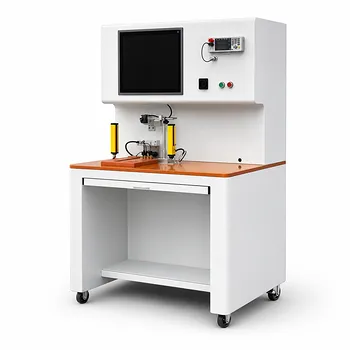
Manual OCV Multifunction Test Sorting Machine
Manual OCV multifunction test sorting machine for pouch lithium ion prismatic cells combines voltage and internal resistance grading data binding database storage and operator guided handling for controlled battery production inspection with computer display and configurable audible grade notification.
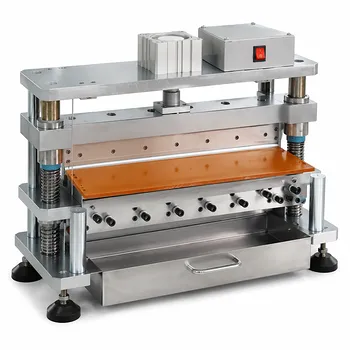
Pneumatic Battery Electrode Sheet Trimming Machine Edge Cutting Machine
Pneumatic battery electrode sheet trimming machine delivers accurate top side seal edge cutting after aluminum plastic film pocket forming with foot pedal operation custom width control and durable high speed steel blades for reliable pouch cell production workflows.
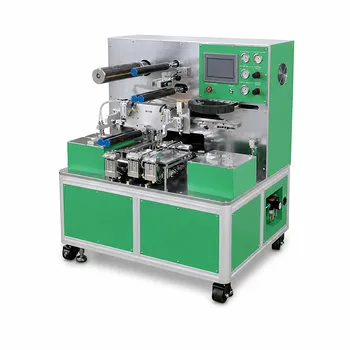
Lithium Ion Battery Semi Automatic Stacking Machine
Semi automatic lithium ion battery stacking machine delivers precise Z folding electrode and separator assembly with automatic alignment tension control and programmable layers for flexible cell research sample fabrication in advanced laboratory development workflows and pilot production tasks.
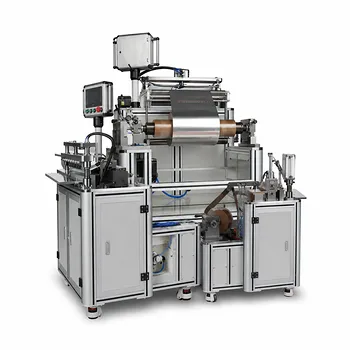
Automatic Battery Electrode Sheet Cutting Machine
Automatic battery electrode sheet cutting machine delivers programmable length cutting or fiber sensor tracking, 500 mm maximum width, adjustable 1–8 m/min speed, and precise pneumatic cutting for consistent electrode preparation in battery research, laboratory, and pilot-line production environments.
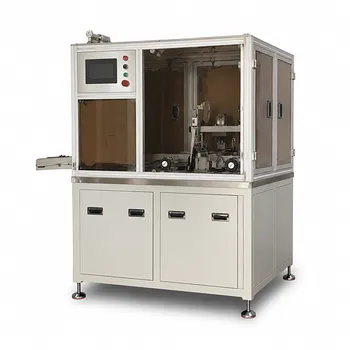
Fully Automatic Mechanical Battery Sealing Machine
Fully automatic mechanical battery sealing machine automates first second third and height-setting seals for liquid-filled cylindrical cells, delivering at least 45PPM throughput with 99% equipment-related yield, 98% equipment uptime, pneumatic height control, and corrosion-resistant industrial construction for production lines.
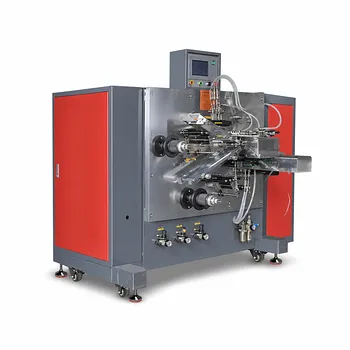
Semi Automatic Cylindrical Lithium Battery Winding Machine
Precision semi-automatic cylindrical lithium battery winding machine for consistent cell assembly, adjustable winding speed, controlled diaphragm tension, accurate alignment, reliable tape application, automatic needle exchange, and efficient unloading across battery research and advanced materials manufacturing workflows with repeatable results.
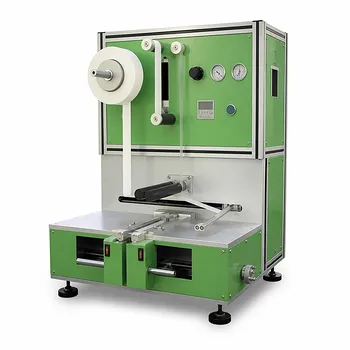
Lithium Ion Battery Z Type Semi Automatic Stacking Machine
Lithium ion battery Z type semi automatic stacking machine combines controlled separator tension, foot pedal operation, precise alignment, and digital timing for efficient research sample preparation and small batch cell prototyping.
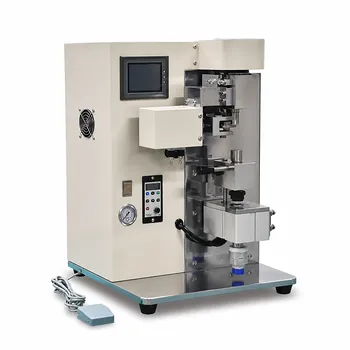
Vertical Cylindrical Battery Grooving Machine
Vertical cylindrical battery grooving machine with adjustable 1.2–2.0 mm depth, ±0.1 mm precision, PLC touchscreen control, and 400 EA/H semi-automatic capacity for stable cell production and compact 220 V operation across battery research and capacitor shell processing applications.
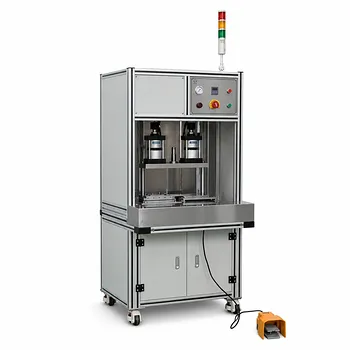
Battery Cell Tab Cutting And Flattening Machine Manual Loading Unloading
Manual loading and unloading battery cell tab cutting and flattening machine for stacked cell tab processing, pneumatic trimming, controlled flattening, automatic counting and dependable laboratory production workflows with foot pedal control and guarded operation for consistent throughput across demanding battery research environments
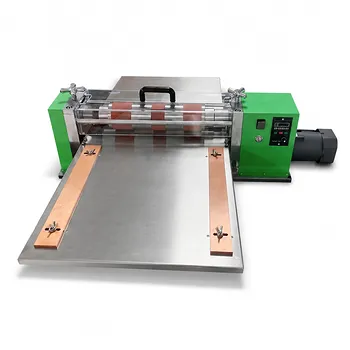
Polymer Battery Lithium Battery Positive Negative Electrode Sheet Electric Slitting Machine
Electric roll slitting machine for polymer battery and lithium battery positive and negative electrode sheets, delivering adjustable positioning, synchronized circular cutters, high precision cutting, and guarded operation for 50-400 μm electrode materials.
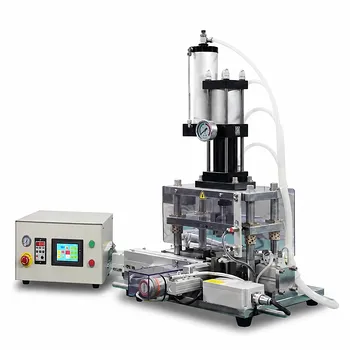
Glove Box Compatible Automatic Cylindrical Battery Sealing Machine
Automatic cylindrical battery sealing machine for glove box operation, three-stage sealing, precise molding, strong airtightness, high consistency, and reliable production of 18650 and 21700 cells with PLC touchscreen control, adjustable parameters, compact construction, and efficient automated loading and unloading
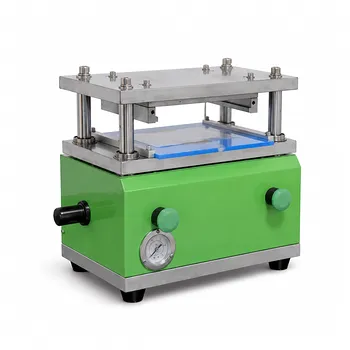
Laboratory Pneumatic Battery Electrode Sheet Die Cutting Machine
Laboratory pneumatic battery electrode sheet die cutting machine delivers clean precise cuts for battery research with configurable tooling glovebox compatible pneumatic operation long die life and controlled burr performance for dependable electrode preparation in demanding laboratory workflows every day.
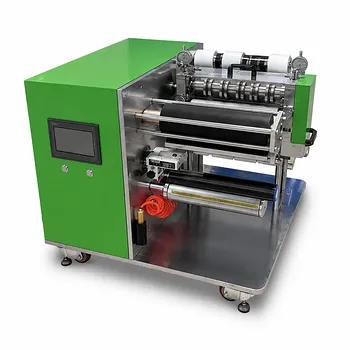
Lithium Battery Electrode Roll to Roll Slitting Machine
Precision roll to roll slitting machine for lithium battery electrode sheets delivers burr controlled foil cutting adjustable widths automatic winding tension and PLC operated production consistency across thin coated materials and functional film converting lines with tungsten carbide blades.
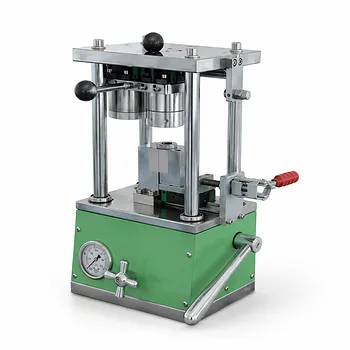
Laboratory Manual Cylindrical Battery Sealing Machine
Laboratory manual cylindrical battery sealing machine with two stage sealing hydraulic drive embedded pressure gauge and 8 ton maximum force for precise 18650 research
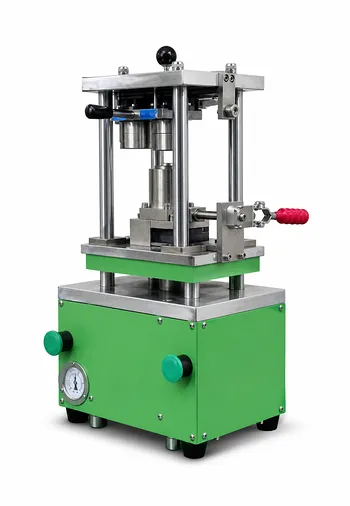
Pneumatic Cylindrical Battery Sealing Machine for Laboratory Cell Research
Pneumatic cylindrical battery sealing machine for 18650 cells delivers two station precision sealing, adjustable 0.4 to 0.5 MPa operation, inert gas compatibility, external exhaust, low gas consumption, compact construction, and reliable laboratory sample preparation for battery and capacitor research.
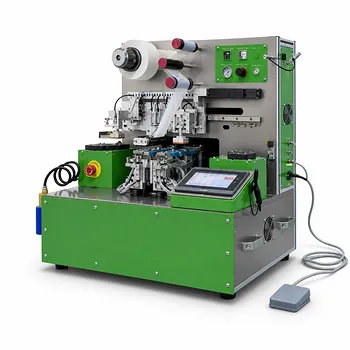
Z Shaped Semi Automatic Stacking Machine
Z shaped semi automatic stacking machine for lithium ion cell research delivers automated electrode alignment controlled separator tension and accurate programmable Z stacking for flexible prototype assembly in glovebox compatible laboratory workflows with adjustable fixtures vacuum pickup HMI operation.
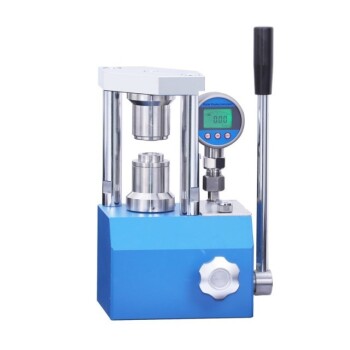
Button Battery Sealing Machine for Button Batteries
KINTEK's Manual Button Battery Sealer ensures precise, airtight sealing for CR2032, LR44 batteries. Ideal for labs, R&D, and small production. Boost efficiency now!
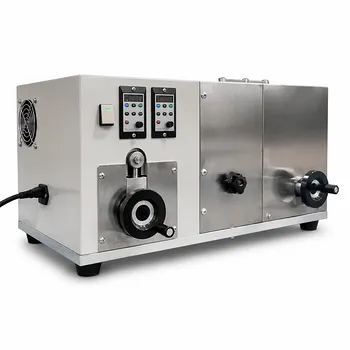
18650 21700 Series Laboratory Cylindrical Battery Case Opening Machine
Precision 18650 and 21700 cylindrical battery case opening machine with interchangeable tooling, tungsten carbide blade, accurate disassembly, compact design, and safe operation for laboratory research validation in advanced battery development environments with consistent results
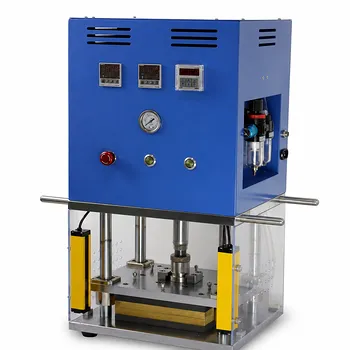
Manual Battery Cell Hot Press Flattening Shaping Machine
Manual battery cell hot press flattening shaping machine delivers adjustable 1T pressure and 250°C heating for consistent wound cell thickness reduced rebound safer casing insertion and reliable lithium battery production.