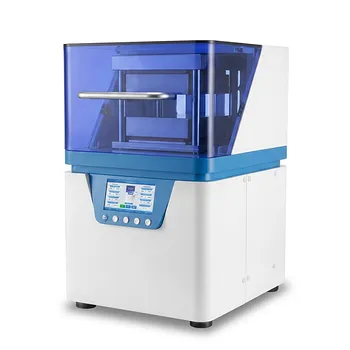
Hydraulic presses are the fundamental engines of high-force industrial manufacturing, specifically utilized to mold, shape, and test materials where immense pressure and precision are required. Their primary applications span the aerospace and automotive sectors, driving critical operations such as molding thermoplastics, forging metal components, and executing complex forming tasks like deep drawing and clinching.
The Core Utility While hydraulic presses are capable of raw crushing power, their industrial significance lies in controlled precision. They are the standard for operations that require applying substantial, consistent compressive force to shape advanced materials like carbon fiber or to verify the structural integrity of concrete and metals.
Precision Metal Forming and Fabrication
High-Force Shaping
Hydraulic presses are essential for forging, a process where metal is shaped using localized compressive forces. This capability extends to shaping metal billets into desired forms and even specialized crafts like sword-making.
Cutting and Deformation
Beyond simple shaping, these machines handle precision deformation tasks. This includes blanking (cutting out a piece of metal), punching (creating holes), and deep drawing (pulling sheet metal into a die to form a cup-like shape).
Assembly and Joining
In assembly lines, presses are used for clinching, which joins sheets of material without external fasteners. They are also widely used for press-fitting components together, such as assembling wiper blades or gear housings in the automotive industry.
Advanced Molding and Composites
Thermoplastics and Composites
According to primary industry data, hydraulic presses are critical for molding thermoplastics and composites. This is particularly vital in modern manufacturing where lightweight, durable materials are required.
Carbon Fiber Components
The aerospace and automotive industries rely heavily on hydraulic presses to mold carbon fiber. The ability to apply uniform pressure ensures the structural integrity of these high-performance parts.
Powder Compacting
Hydraulic systems are used to compress powdered materials into solid shapes. Applications range from creating ceramics (like tiles and bricks) to specialized food processing, such as producing fat-free cocoa powder.
Testing and Reduction Applications
Material Testing
In laboratory and quality control settings, hydraulic presses serve as testing rigs. They apply controlled destructive force to verify the tensile strength of materials like concrete or to prepare pellets for sample analysis.
Scrap Baling and Recycling
On the heavier end of the spectrum, presses are used for scrap baling. They crush large metal objects, including entire automobiles, into dense blocks for efficient transport and recycling.
Understanding the Operational Trade-offs
Force vs. Speed
Hydraulic presses are selected when the priority is immense force rather than rapid cycle speed. While pneumatic systems operate around 100 psi, hydraulic systems can exceed 10,000 psi, making them the only viable choice for heavy-duty compression.
Precision vs. Complexity
While versatile, the use of hydraulic systems implies a higher level of complexity regarding fluid dynamics compared to mechanical presses. They are best suited for applications where the control of pressure profile is more critical than simple mechanical speed.
Making the Right Choice for Your Goal
To determine the best application of hydraulic press technology for your specific needs, consider the primary material and the desired outcome:
- If your primary focus is Advanced Manufacturing: Prioritize presses capable of molding composites and carbon fiber, as these are standard for aerospace and high-end automotive parts.
- If your primary focus is Metal Fabrication: Ensure the system is tooled for specific operations like deep drawing and clinching to handle complex geometries without material failure.
- If your primary focus is Quality Assurance: Utilize smaller, precision-calibrated presses designed for destructive testing and sample preparation.
Ultimately, the utility of a hydraulic press is defined by its tooling: the same machine that crushes a car can, with the right die, mold a delicate electronic component.
Summary Table:
| Application Category | Primary Processes | Key Materials & Industries |
|---|---|---|
| Metal Fabrication | Forging, Deep Drawing, Punching, Clinching | Aerospace parts, Automotive gears, Sheet metal |
| Advanced Molding | Composite Molding, Powder Compacting | Carbon fiber, Ceramics, Thermoplastics |
| Material Testing | Destructive testing, Pelletizing | Concrete strength, Laboratory sample prep |
| Waste Management | Scrap baling, Crushing | Automobile recycling, Industrial scrap metal |
Maximize Your Manufacturing Precision with KINTEK
Ready to elevate your production capabilities? KINTEK specializes in comprehensive laboratory and industrial pressing solutions designed for the most demanding environments. Whether you are conducting advanced battery research or high-stakes material testing, our range of manual, automatic, heated, and multifunctional models—including specialized cold and warm isostatic presses—ensures you have the exact pressure control you need.
Don't settle for standard force; achieve precision with a partner who understands your workflow. Contact KINTEK today to find the perfect press for your laboratory or production line.
Related Products
- Automatic Hydraulic Hot Press with Large Plate and Precision Temperature Control for Advanced Material Sample Preparation and Industrial Research
- Automatic Hydraulic Heat Press Machine with Multi Stage Programmable Control and Integrated Water Cooling Plate Size 180x180mm
- Automatic High Temperature Heated Hydraulic Press Machine with Heated Plates for Lab
- Automatic Heated Hydraulic Lab Press with Programmable Touch Screen Controls and Precision Temperature Regulation
- Manual Heated Hydraulic Lab Press with Integrated Hot Plates Hydraulic Press Machine
People Also Ask
- What are the specific features and applications of hydraulic hot press machines? Precision Solutions for Modern Labs
- How does an automatic hydraulic press operate? Achieve Precision and Consistency in Lab Pelleting
- What are the advantages and common applications of an automatic hydraulic press? Elevate Your Lab's Precision
- What is the technical significance of setting a precise dwell time? Achieve Peak Material Density and Stability
- When is an automatic hydraulic press more suitable than a manual press? Scale Your Lab with Precision & Speed