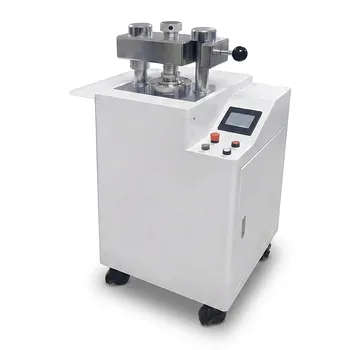
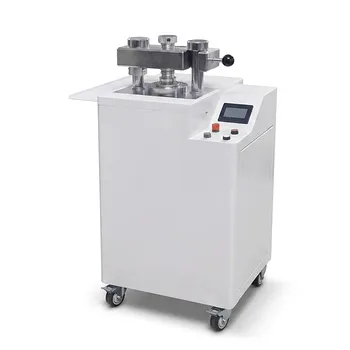
Laboratory pellet presses are engineered to deliver superior control and consistency in sample preparation. They offer precise regulation of pressure and temperature, high adjustability for various experiments, and the capability for batch production to maximize laboratory efficiency.
The fundamental value of a laboratory pellet press is its ability to eliminate variable error during sample preparation. By ensuring high reproducibility and consistency, these tools provide the reliable foundation necessary for accurate analytical results, while simultaneously reducing operational time and costs.
Ensuring Data Integrity and Precision
Unmatched Reproducibility
The primary advantage of a high-quality pellet press is consistency. By compacting materials into uniform pellets, the press ensures that every sample has identical physical characteristics. This high reproducibility is critical for obtaining reliable results in sensitive analyses like XRF and FTIR spectroscopy.
Precise Parameter Control
These instruments offer granular control over pressure and temperature. This allows researchers to fine-tune the environment to suit the specific chemical and physical properties of the material being tested.
Advanced Thermal Capabilities
For applications involving biomass or thermoplastic materials, heated presses offer distinct advantages. They utilize controlled thermal fields to activate material properties, such as lignin in biomass, resulting in pellets with higher calorific values and lower hygroscopicity.
Maximizing Laboratory Efficiency
Scalable Batch Production
Efficiency is a major benefit of modern pellet presses. They are designed to support batch production, allowing laboratories to process multiple samples in quick succession. This capability significantly increases throughput compared to manual or less sophisticated methods.
Reductions in Time and Cost
By streamlining the sample preparation workflow, these presses offer substantial savings in both time and cost. The speed of the process—particularly in hydraulic systems that allow for fast sample switching—frees up personnel for other critical tasks.
User-Friendly Operation
Despite their high force capabilities, these presses are designed for ease of operation. They generally require relatively little physical effort to exert large amounts of force, and many feature safety mechanisms to prevent overloading.
Versatility and Long-Term Reliability
Broad Material Adaptability
A laboratory pellet press is highly versatile and capable of preparing a wide variety of sample types. Whether for basic research, new material development, or routine quality control, the high adjustability of parameters ensures the tool adapts to the experiment, not the other way around.
Durability and Construction
Investment in a pellet press is protected by excellent reliability and durability. High-quality construction ensures these machines can withstand the rigors of repeated high-pressure use with minimal maintenance requirements.
Understanding the Trade-offs
Parameter Sensitivity
While adjustability is a strength, it requires careful optimization. Incorrect settings—such as insufficient pressure or incorrect dwell times—can lead to unstable pellets that break during storage or transportation.
Manual vs. Automated Complexity
Simple hydraulic presses are cost-effective but may require more manual intervention and physical effort compared to fully automated systems. Conversely, automated systems offer higher ease of use but often come with a higher initial capital cost and a steeper learning curve for programming specific cycles.
Making the Right Choice for Your Goal
To maximize the benefits of a laboratory pellet press, align the machine's capabilities with your specific research objectives.
- If your primary focus is Analytical Accuracy (XRF/FTIR): Prioritize a press with high precision and reproducibility to ensure ultra-smooth, consistent sample surfaces for spectroscopy.
- If your primary focus is Material Development (Biomass/Polymers): Choose a press with heated platens and precise thermal controls to exploit thermoplastic properties and ensure structural stability.
- If your primary focus is High-Throughput Testing: Opt for a system designed for batch production and fast sample switching to minimize downtime between preparations.
Ultimately, a well-chosen pellet press acts not just as a preparation tool, but as a critical safeguard for the validity of your analytical data.
Summary Table:
| Benefit | Key Advantage | Typical Applications |
|---|---|---|
| Reproducibility | Eliminates variable errors in samples | XRF, FTIR Spectroscopy |
| Parameter Control | Precise regulation of pressure & temperature | Material Science Research |
| Efficiency | Batch production & rapid sample switching | High-throughput QC Labs |
| Versatility | Adaptable to biomass, polymers & powders | Battery Research, Biofuels |
| Durability | Long-term reliability with minimal maintenance | Industrial & Academic Labs |
Elevate Your Sample Preparation with KINTEK
Maximize your laboratory's analytical integrity with KINTEK’s premium laboratory pressing solutions. Whether you are conducting cutting-edge battery research or routine spectroscopy, our comprehensive range—including manual, automatic, heated, and multifunctional models, as well as isostatic presses—is engineered to provide the consistency your data demands.
Why choose KINTEK?
- Precision Engineering: Eliminate sample variability and ensure data integrity.
- Scalable Solutions: From glovebox-compatible models to high-pressure isostatic systems.
- Expert Support: Our team helps you optimize pressure and thermal parameters for your specific materials.
Ready to enhance your research throughput and accuracy? Contact our specialists today to find the perfect press for your lab!
Related Products
- Laboratory Hydraulic Pellet Press for XRF KBR FTIR Lab Press
- Automatic Laboratory Hydraulic Press Lab Pellet Press Machine
- Laboratory Hydraulic Press Lab Pellet Press Machine for Glove Box
- Manual Laboratory Hydraulic Pellet Press Lab Hydraulic Press
- Laboratory Hydraulic Split Electric Lab Pellet Press
People Also Ask
- Why is a laboratory pellet press used to pre-press BaSnF4 samples? Ensure Precision in High-Pressure Studies
- What is the necessity of a laboratory pellet press for alcohol by-product fuels? Maximize Energy Density & Consistency
- Why Use a Laboratory Pellet Press for PXRD Anode Material Prep? Standardize Samples for Precise Analysis
- What are the different types of pellet-making tools available for labs? Choose the Right Press for Your Sample
- Why is a professional laboratory pellet press required for XRF of silica sand? Achieve +/- 0.10% Precision