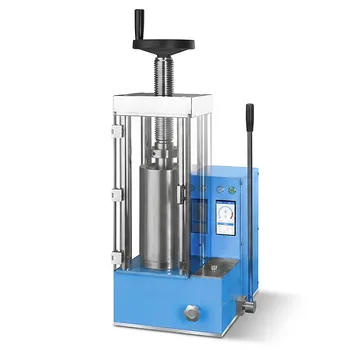
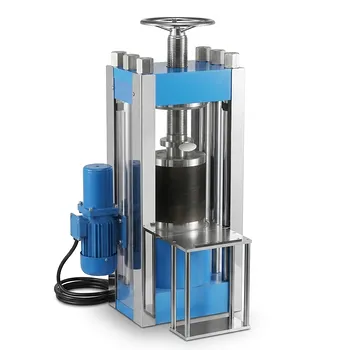
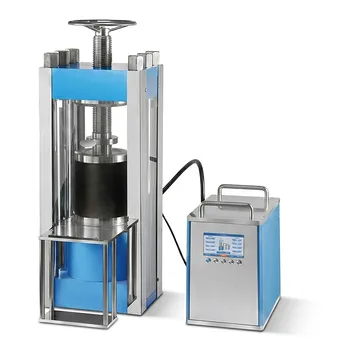
Cold Isostatic Pressing (CIP) provides superior density uniformity and structural integrity compared to conventional dry pressing. By applying equal pressure from all directions through a liquid medium, CIP eliminates the internal density gradients and mold wall friction inherent in mechanical die pressing. This results in an alumina green body with a high relative density—often reaching 68%—which significantly reduces the risk of warping, cracking, or non-uniform shrinkage during the high-temperature sintering process.
Core Takeaway: Cold Isostatic Pressing replaces unidirectional or bidirectional mechanical force with isotropic pressure, ensuring that alumina ceramic samples achieve a high, uniform green density that is critical for dimensional stability and defect-free sintering.
Achieving Isotropic Pressure and Uniform Density
Eliminating Internal Density Gradients
Conventional dry pressing relies on rigid dies that create mold wall friction, leading to uneven pressure distribution and internal stress imbalances. In contrast, CIP utilizes a flexible mold submerged in a hydraulic fluid to apply omnidirectional pressure, ensuring every surface of the alumina powder receives equal force. This mechanism effectively eliminates density gradients, providing a consistent internal structure that is vital for accurate moisture diffusion analysis and material testing.
Reaching Superior Green Density
High-pressure CIP systems can reach pressures between 300 MPa and 500 MPa, facilitating a tight rearrangement of alumina and nano-powder particles. This intense, uniform compression allows the green body to achieve a much higher relative density (averaging 68%) than standard dry pressing. A higher initial density reduces the amount of air trapped between particles, creating a more robust "green" sample that is easier to handle before it is fired.
Enhancing Structural Integrity and Sintering Outcomes
Preventing Non-Uniform Shrinkage and Cracking
The primary cause of failure in ceramic manufacturing is differential shrinkage during sintering, where different parts of a component contract at different rates. Because CIP ensures a uniform density distribution, the alumina sample shrinks evenly in all directions when placed in a kiln. This uniformity is the most effective way to prevent distortion, macroscopic cracking, and microstructure heterogeneity in the finished product.
Accelerating Phase Transition Kinetics
The high-pressure environment of CIP does more than just compact the powder; it shortens the incubation time for phase transitions during heating. By increasing phase transition kinetic constants, CIP helps prevent issues related to insufficient sintering that often plague lower-activity powders. This is particularly critical for advanced applications, such as achieving high transparency in Yb:YAG ceramics or maintaining the integrity of aluminate bulk materials at 1500°C.
Understanding the Trade-offs
Process Complexity and Cycle Time
While CIP offers superior material properties, it is generally a slower process than high-volume dry pressing. Each sample must be sealed in a flexible membrane, loaded into a pressure vessel, and then removed and dried, which increases the labor intensity and cycle time per part.
Cost and Tooling Limitations
The equipment for isostatic pressing is more expensive and requires sophisticated hydraulic systems to maintain high pressures safely. Additionally, while flexible molds allow for complex shapes, they do not provide the same level of dimensional precision "out of the mold" as rigid steel dies, often necessitating secondary machining or grinding after sintering.
How to Apply This to Your Project
Selecting the Right Method for Your Goals
The choice between Cold Isostatic Pressing and dry pressing depends on the required performance of your final alumina component.
- If your primary focus is high-volume production of simple shapes: Use conventional dry pressing, as it offers faster cycle times and lower costs for parts where slight density gradients are acceptable.
- If your primary focus is structural integrity or transparency: Use Cold Isostatic Pressing to eliminate internal defects and ensure the sample can withstand high-temperature sintering without cracking.
- If your primary focus is accurate material characterization (e.g., Master Sintering Curve): Use CIP to ensure the sample is physically uniform, as this provides the necessary foundation for reliable scientific analysis.
By prioritizing isotropic pressure over mechanical convenience, you ensure that your alumina ceramics achieve the highest possible density and long-term reliability.
Summary Table:
| Feature | Cold Isostatic Pressing (CIP) | Conventional Dry Pressing |
|---|---|---|
| Pressure Direction | Omnidirectional (Isotropic) | Unidirectional / Bidirectional |
| Density Uniformity | High (Eliminates internal gradients) | Low (Subject to mold wall friction) |
| Relative Green Density | Superior (~68%) | Moderate |
| Sintering Outcome | Uniform shrinkage, defect-free | Risk of warping and cracking |
| Process Speed | Slower (Batch-oriented) | High (Mass production) |
Optimize Your Alumina Ceramics with KINTEK
Achieve industry-leading structural integrity and density uniformity with KINTEK’s comprehensive laboratory pressing solutions. Whether you are working on advanced material characterization or battery research, our range of equipment ensures your samples survive the most rigorous sintering processes without defects.
Our Specialized Solutions Include:
- Cold & Warm Isostatic Presses (CIP/WIP): Ideal for isotropic pressure and high-density alumina molding.
- Versatile Lab Presses: Manual, automatic, heated, and multifunctional models.
- Specialized Integration: Glovebox-compatible designs for sensitive research environments.
Don't let density gradients compromise your research. Contact KINTEK today to find the perfect pressing solution for your lab!
References
- Mehran Dadkhah, Majid Jafari. Investigating the Physical Properties of Sintered Alumina in the Presence of MgO Nanopowder. DOI: 10.1155/2014/496146
This article is also based on technical information from Kintek Solution Knowledge Base .
Related Products
- Manual Cold Isostatic Pressing CIP Machine Pellet Press
- Automatic Lab Cold Isostatic Pressing CIP Machine
- Electric Split Lab Cold Isostatic Pressing CIP Machine
- Electric Lab Cold Isostatic Press CIP Machine
- Lab Isostatic Pressing Molds for Isostatic Molding
People Also Ask
- Why is Cold Isostatic Pressing (CIP) necessary for SBN ceramics? Achieve High-Density and Crack-Free Sintering
- What are the process advantages of using Cold Isostatic Pressing (CIP) for LSMO? Achieve Defect-Free Density
- Why is Cold Isostatic Pressing (CIP) applied after uniaxial pressing? Optimize Superconductor Precursor Density
- What types of equipment are available for cold isostatic pressing? Explore CIP Solutions for Labs and Production
- What are the technical advantages of cold isostatic pressing equipment compared to uniaxial compression equipment? Learn More!