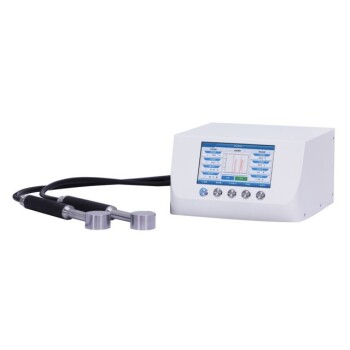
The primary function of high-precision constant temperature heating equipment in this context is to guarantee the stable thermal environment necessary for extracting specific bioactive compounds from plant materials.
By maintaining deionized water at a precise 80°C for a continuous 30-minute period, this equipment ensures the thorough leaching of organic reducing agents—specifically gallic acid, quercetin, and rutin—from seeds like Zanthoxylum armatum. This process transforms the water into a high-activity reaction medium required for the subsequent green synthesis of silver-iron nanocomposites.
Precision heating is not merely about reaching a boiling point; it is about sustaining a specific thermodynamic state that maximizes the yield of reducing agents while ensuring the reproducibility of the chemical environment for nanomaterial synthesis.
The Mechanics of Extraction
Controlled Thermal Energy
The equipment provides a stable input of thermal energy that is critical for breaking down plant cell structures.
This controlled heating increases the kinetic energy of the solvent (deionized water), allowing it to penetrate the plant matrix effectively.
Optimizing Solubility
maintaining the temperature at exactly 80°C is strategic.
This temperature is sufficient to maximize the solubility of target organic components without subjecting them to excessive heat that might cause degradation.
Continuous Leaching Duration
The equipment allows for a sustained 30-minute processing window.
This duration ensures that the extraction is comprehensive, leaching out the maximum amount of organic reducing components rather than just surface-level residues.
The Role in Green Synthesis
Creating the Reaction Medium
The extract produced is not just a byproduct; it serves as the primary chemical reactor.
The high-precision heating ensures the water contains a high concentration of gallic acid, quercetin, and rutin.
Facilitating Reduction
These specific organic compounds act as natural reducing agents.
Their presence, secured by the heating process, enables the chemical reduction of silver and iron ions into their nanocomposite forms without the need for harsh industrial chemicals.
Understanding the Trade-offs
The Risk of Temperature Fluctuation
If the heating equipment lacks precision, temperature dips can lead to incomplete extraction.
Insufficient heat results in a low concentration of reducing agents, leading to poor nanoparticle formation and low reactivity.
The Danger of Overheating
Conversely, exceeding the optimal 80°C threshold presents a risk to the organic components.
Excessive heat can degrade delicate compounds like quercetin, rendering the extract ineffective for green synthesis.
Lifecycle Versatility
While the primary focus here is extraction, it is worth noting that this equipment often serves a dual purpose.
According to supplementary data, similar constant temperature devices (set to 70°C) are used later to regenerate the nanocomposites by desorbing pollutants, allowing for material reuse.
Making the Right Choice for Your Goal
To maximize the quality of your silver-iron nanocomposites, you must view temperature control as a chemical reagent, not just a physical step.
- If your primary focus is Extraction Efficiency: Ensure your equipment can hold 80°C with minimal deviation to maximize the concentration of gallic acid and rutin.
- If your primary focus is Material Sustainability: Select equipment that is also capable of lower-temperature operation (70°C) to facilitate the regeneration and reuse of your nanocomposites after synthesis.
Precision in thermal control is the foundational step that determines the chemical viability of the entire synthesis project.
Summary Table:
| Parameter | Targeted Value | Specific Function in Extraction |
|---|---|---|
| Temperature | 80°C | Maximizes solubility of gallic acid, quercetin, and rutin without degradation. |
| Duration | 30 Minutes | Ensures comprehensive leaching of organic reducing agents from plant matrix. |
| Solvent | Deionized Water | Acts as a high-activity reaction medium for nanoparticle reduction. |
| Equipment Role | Thermal Stability | Prevents temperature fluctuations that cause incomplete extraction or chemical damage. |
Elevate Your Material Research with KINTEK Precision
Precise thermodynamic control is the cornerstone of successful green synthesis. At KINTEK, we specialize in comprehensive laboratory solutions designed to meet the rigorous demands of battery research and nanotechnology. From high-precision heating equipment to manual, automatic, and multifunctional presses, as well as cold and warm isostatic presses, our tools ensure your extraction and synthesis processes are repeatable and efficient.
Ready to optimize your lab’s output? Contact us today to discover how our specialized equipment can enhance your extraction yields and material performance!
References
- Nadia Bashir, Salma Shad. Green synthesis of silver and iron nano composites using aqueous extract of zanthoxylum armatum seeds and their application for removal of acid black 234 dye. DOI: 10.3389/ftox.2024.1288783
This article is also based on technical information from Kintek Solution Knowledge Base .
Related Products
- Infrared Heating Quantitative Flat Plate Mold for Precise Temperature Control
- Automatic High Temperature Heated Hydraulic Press Machine with Heated Plates for Lab
- Lab Double Plate Heating Mold for Laboratory Use
- 24T 30T 60T Heated Hydraulic Lab Press Machine with Hot Plates for Laboratory
- Automatic Heated Hydraulic Press Machine with Heated Plates for Laboratory
People Also Ask
- How do precision temperature-controlled heating plates function in electrolyte thermal stability storage experiments?
- What is the importance of a precision temperature-controlled heating module? Ensure Aluminum-Cadmium Thermal Stability
- How does heating platen precision affect rubber specimens? Achieve uniform density and reliable testing results.
- How are thin polymer films produced for spectroscopic analysis? Expert Guide to Heat and Low-Pressure Methods
- What accessories and field services can be used to optimize the capabilities of presses? Maximize Your Lab Performance