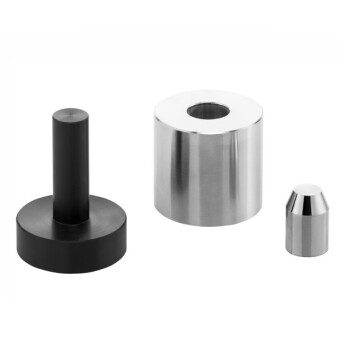
The primary value of CR2032 assembly equipment lies in its ability to provide a standardized, hermetically sealed environment that isolates material performance. By using a consistent form factor, researchers can accurately quantify how cellulose composite membranes (CCM) influence electrochemical behavior compared to traditional metal foils. This equipment ensures that data regarding cycle stability, rate capability, and gravimetric energy density is both reproducible and scientifically valid.
Using CR2032 assembly equipment transforms experimental cellulose materials into a measurable battery format by providing mechanical precision and airtight integrity. This standardization is essential for verifying whether the lightweight properties of CCMs actually translate into superior gravimetric energy density.
Establishing a Standardized Testing Foundation
Control Over Experimental Variables
CR2032 equipment allows for strict control over electrode mass loading and electrolyte volume. This precision is vital when testing cellulose composite membranes, as even slight variations in these parameters can skew data regarding energy density.
Facilitating Objective Comparisons
The CR2032 acts as a standard test vehicle that enables an "apples-to-apples" comparison between CCMs and traditional aluminum or copper current collectors. Without this benchmark, it is nearly impossible to isolate the specific benefits of the cellulose substrate from other cell components.
Reproducibility Across Laboratories
Standardized components and assembly processes ensure that experimental data is comparable across different research settings. This consistency allows the scientific community to verify claims regarding CCM performance, such as discharge specific capacity and coulombic efficiency.
Ensuring Mechanical and Electrochemical Integrity
The Critical Role of Hermetic Sealing
Automatic crimping machines apply precisely controlled mechanical force to create an airtight seal. This prevents internal electrolyte evaporation and stops the ingress of atmospheric moisture or oxygen, which would otherwise degrade the cellulose components and invalidate results.
Optimizing Interfacial Contact
Laboratory presses use uniform die pressure to ensure excellent physical contact between the CCM, active materials, and spacers. Maintaining this tight mechanical bond is fundamental to achieving low interfacial impedance, which is necessary for accurate Electrochemical Impedance Spectroscopy (EIS) results.
Dimensional Precision in Component Fabrication
Precision punching dies allow for the cutting of CCM coatings into uniform discs with clean edges. Consistent disc diameters are required to calculate the exact active material area, which directly impacts the accuracy of current density and capacity measurements.
Understanding the Trade-offs and Limitations
Mechanical Stress on Fragile Substrates
While high pressure is required for sealing, excessive mechanical force can damage the porous structure of cellulose composite membranes. Researchers must carefully calibrate equipment to ensure a tight seal without compromising the structural integrity of the CCM.
Divergence from Industrial Form Factors
The internal dynamics of a CR2032 coin cell—such as heat dissipation and ion diffusion paths—differ significantly from larger pouch or prismatic cells. While excellent for material screening, coin cell data may not perfectly predict how CCMs will behave in high-capacity industrial applications.
Sensitivity to Assembly Torque
Inconsistent manual pressure during the sealing process can lead to internal voids or poor electrical contact. This introduces "noise" into the data, making it difficult to determine if a performance drop is due to the CCM material or a flaw in the assembly technique.
Applying This Equipment to Your Research Goals
How to Apply This to Your Project
To maximize the value of CR2032 equipment when evaluating new membrane technologies, consider the following strategic focuses:
- If your primary focus is validating lightweight materials: Use the standardized volume of the CR2032 to calculate the actual contribution of CCMs to the total gravimetric energy density of the cell.
- If your primary focus is kinetic performance: Utilize precision hydraulic presses to minimize interfacial resistance, ensuring that your rate capability and EIS data reflect the material’s true electrochemical limits.
- If your primary focus is long-term stability: Rely on automatic crimpers to ensure a hermetic seal, preventing external contamination from masking the natural degradation profile of the cellulose composite.
By utilizing standardized CR2032 equipment, you provide the rigorous mechanical framework necessary to prove the viability of advanced cellulose composite membranes.
Summary Table:
| Feature | Benefit for CCM Testing | Key Equipment Required |
|---|---|---|
| Hermetic Sealing | Prevents electrolyte evaporation and moisture ingress | Automatic/Manual Crimper |
| Pressure Control | Optimizes interfacial contact for lower impedance | Precision Hydraulic Press |
| Dimensional Accuracy | Ensures precise active material area calculations | Precision Punching Dies |
| Standardization | Enables reproducible data across different laboratories | Standard CR2032 Components |
Elevate Your Battery Research with KINTEK Precision Solutions
At KINTEK, we understand that the integrity of your research depends on the precision of your assembly. As specialists in comprehensive laboratory pressing solutions, we provide the tools necessary to transform your cellulose composite membranes (CCM) and advanced battery materials into reliable, scientifically valid data.
Our extensive range of equipment is specifically designed for the nuances of battery research:
- Manual & Automatic Crimpers: Ensure perfect hermetic seals for long-term stability studies.
- Heated & Multifunctional Presses: Achieve optimal material density and interfacial contact.
- Glovebox-Compatible Models: Maintain an inert environment for sensitive electrochemical testing.
- Cold and Warm Isostatic Presses (CIP/WIP): Advanced solutions for superior material consistency.
Whether you are focusing on gravimetric energy density or kinetic performance, KINTEK provides the mechanical framework to prove your material's viability.
Contact KINTEK Today to Find Your Perfect Lab Solution
References
- Chenchen Li, Xiaogang Luo. Cellulose composite membranes induced by multiple hydrogen bonds as lightweight current collectors for high-performance batteries. DOI: 10.1038/s43246-025-00802-6
This article is also based on technical information from Kintek Solution Knowledge Base .
Related Products
People Also Ask
- How does a sealed battery mold facilitate the assembly and testing of asymmetric supercapacitors using VO2?
- Why use standardized CR2032 components & high-precision presses? Ensure reliability in lithium metal battery research.
- Why is a laboratory battery sealing press essential for desolvation energy testing? Ensure Reliable Kinetic Data
- What is the function of specialized battery molds and sealing consumables? Optimize Your In-situ XRD Testing Today
- What role does a laboratory sealing press play in thermal analysis of solid dispersion films? Ensure Data Integrity