Battery supporting materials
LiTFSI Lithium Bis Trifluoromethanesulfonyl Imide Electrolyte for Lithium Sulfur Battery Applications
Item Number : FZ51
Price varies based on specs and customizations
- Lithium Salt Concentration
- 1.0 M LiTFSI
- Solvent Formulation
- DME : DOL (1:1 Volume Ratio)
- Functional Additive
- 1.0 wt% LiNO3 (Optional)

Shipping:
Contact us to get shipping details Enjoy On-time Dispatch Guarantee.
Why Choose Us
Easy ordering process, quality products, and dedicated support for your business success.
Product Overview
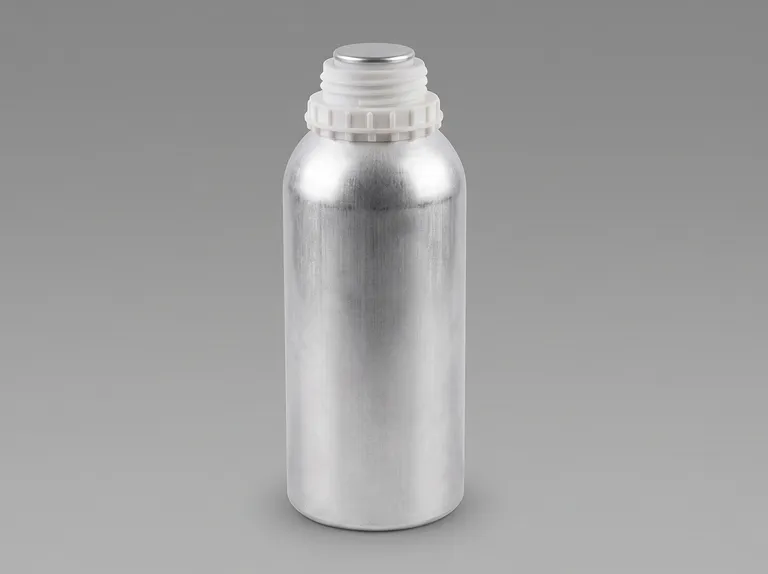
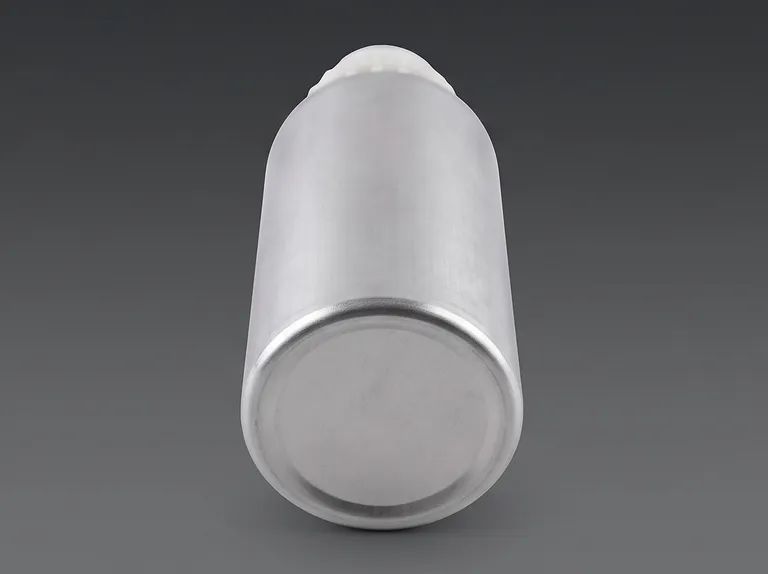
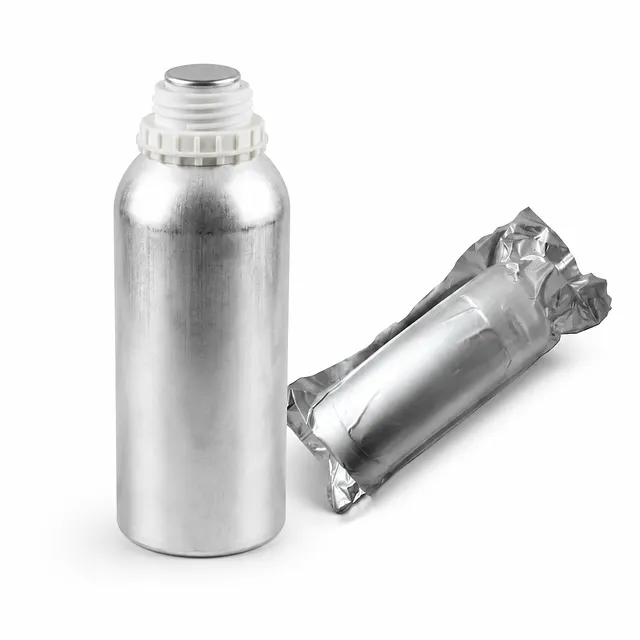
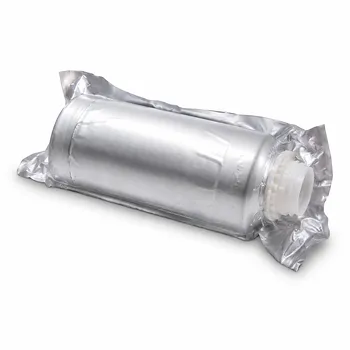
This high-purity battery electrolyte is specifically formulated for lithium-sulfur (Li-S) and next-generation lithium metal battery research. Composed of lithium bis(trifluoromethanesulfonyl)imide (LiTFSI) dissolved in a precision-blended binary ether solvent mixture of 1,2-dimethoxyethane (DME) and 1,3-dioxolane (DOL), this chemical solution provides the ideal solvating environment for complex sulfur cathode electrochemistry. The specialized formulation promotes high lithium-ion mobility and suppresses excessive concentration polarization during charge-discharge cycling.
Engineered to address the fundamental challenges of sulfur utilization and polysulfide intermediate dynamics, this electrolyte system is essential for electrochemical laboratories, academic research centers, and energy storage pilot lines. The baseline ether solvent composition provides the required dielectric constant and low viscosity to facilitate rapid ion transport across porous sulfur-carbon composite electrodes and separators.
Manufactured under stringent moisture-controlled protocols, this liquid electrolyte guarantees exceptional reproducibility across coin cells, split test cells, and multi-layer pouch cells. To maintain optimal electrochemical properties and prevent ambient moisture contamination, all handling and cell fabrication operations must be conducted strictly within vacuum, dry room, or inert-gas glovebox environments.
Key Features
- Superior Anion Delocalization and Ion Dissociation: The large, flexible bistriflimide anion [N(SO2CF3)2]− features extensive negative charge delocalization across its sulfonyl groups, effectively reducing ion-pairing tendencies and delivering remarkably high lithium cation transference numbers compared to conventional inorganic lithium salts.
- Optimized Binary Ether Solvent Matrix: The 1:1 volumetric blend of 1,2-dimethoxyethane (DME) and 1,3-dioxolane (DOL) combines high polysulfide solubility with low bulk viscosity, facilitating rapid wetting of thick cathode structures and lowering interfacial charge-transfer resistance.
- Effective Lithium Anode Passivation: Available with standard 1 wt% lithium nitrate (LiNO3) additive, this formulation promotes the formation of a robust, protective solid electrolyte interphase (SEI) on metallic lithium anodes, effectively suppressing the parasitic polysulfide shuttle effect and extending cell cycle life.
- Enhanced Thermal and Electrochemical Stability: Unlike legacy salts such as LiClO4 or LiAsF6, this imide salt structure exhibits exceptional resistance to thermal degradation and oxidative decomposition, ensuring stable operation across standard Li-S operating voltage windows.
- Reduced High-Rate Polarization: The combination of elevated ionic conductivity and low ionic association minimizes concentration gradients across the inter-electrode gap, allowing high-rate cycling without premature voltage cutoff in demanding test protocols.
- Ultra-Low Trace Moisture Content: Prepared under strictly controlled dry conditions, the solution maintains trace water and impurity levels below critical detection thresholds to prevent premature lithium foil corrosion and active material degradation.
- Flexible Tailored Formulations: Available in standard optimized concentrations or fully customizable ratios, allowing battery researchers to adjust salt molarity, ether proportions, and additive chemistries to target specific electro-catalytic, low-temperature, or high-areal-capacity benchmarks.
Applications
| Application | Description | Key Benefit |
|---|---|---|
| Lithium-Sulfur (Li-S) Coin Cell Testing | Baseline electrolyte for evaluating novel sulfur-carbon composite cathodes, sulfurized polyacrylonitrile (SPAN), and functional separator coatings in CR2032/CR2016 architectures. | Maximizes active sulfur conversion kinetics and provides reproducible Coulombic efficiency data. |
| Lithium Metal Anode Interphase Research | Investigation of symmetric Li|Li and asymmetric Li|Cu stripping/plating overpotentials and dendrite morphology under ether-based solvation. | Forms a stable, uniform passivating SEI that minimizes continuous electrolyte consumption. |
| Polysulfide Shuttle Mitigation Studies | Quantitative analysis of intermediate lithium polysulfide (Li2Sx) dissolution, migration, and retention mechanisms in liquid-cell configurations. | High solvent compatibility enables accurate bench testing of physical polysulfide-trapping barrier layers. |
| Multi-Layer Pouch Cell Assembly | Scaled evaluation of free-standing sulfur cathodes and ultra-thin lithium metal foils under uniform stack pressures in prototype pouch cells. | Low surface tension ensures thorough electrolyte penetration and complete separator wetting across large electrode areas. |
| In-Situ Electrochemical Characterization | Liquid medium for operando UV-Vis, Raman spectroscopy, electrochemical impedance spectroscopy (EIS), and cyclic voltammetry (CV) during redox reactions. | Minimizes background spectral interference and provides stable baseline response across cyclic scans. |
| Solid-Liquid Hybrid Cell Interfacial Wetting | Interfacial modifying agent applied between solid-state electrolyte membranes and porous composite cathodes to eliminate high contact resistance. | Bridges solid-solid interfacial voids, facilitating smooth Li-ion transport across hybrid cell architectures. |
Technical Specifications
| Specification Parameter | Standard Formulation (FZ51-A) | Passivated Formulation (FZ51-B) | Custom Formulation (FZ51-C) |
|---|---|---|---|
| Product Item Number | FZ51-A | FZ51-B | FZ51-C |
| Main Lithium Salt | Lithium bis(trifluoromethanesulfonyl)imide (LiTFSI) | Lithium bis(trifluoromethanesulfonyl)imide (LiTFSI) | LiTFSI / Specified Lithium Salts |
| Salt Concentration | 1.0 M (mol/L) | 1.0 M (mol/L) | 0.5 M – 2.0 M (Customizable) |
| Solvent Composition | 1,2-Dimethoxyethane (DME) : 1,3-Dioxolane (DOL) | 1,2-Dimethoxyethane (DME) : 1,3-Dioxolane (DOL) | DME:DOL or Alternate Ether/Carbonate Solvents |
| Solvent Ratio | 1:1 Volume Ratio (V%) | 1:1 Volume Ratio (V%) | Customizable Volumetric/Weight Ratios |
| Functional Additives | None | 1.0 wt% Lithium Nitrate (LiNO3) | LiNO3 / Film-Forming Additives per Requirement |
| Electrochemical Window | 0.0 V – 3.0 V vs. Li/Li⁺ (Li-S Typical) | 0.0 V – 3.0 V vs. Li/Li⁺ (Li-S Typical) | Dependent on Custom Matrix Composition |
| Moisture Content (H₂O) | ≤ 20 ppm | ≤ 20 ppm | ≤ 10 – 20 ppm (Ultra-Dry Standard) |
| Current Collector Compatibility | Carbon-coated Al / Nickel / Stainless Steel | Carbon-coated Al / Nickel / Stainless Steel | Substrate-dependent Configuration |
| Operating Environment | Inert Gas Glovebox / Dry Atmosphere | Inert Gas Glovebox / Dry Atmosphere | Inert Gas Glovebox / Dry Atmosphere |
| Storage Conditions | Sealed airtight under Ar/N₂, cool & dry space | Sealed airtight under Ar/N₂, cool & dry space | Sealed airtight under Ar/N₂, cool & dry space |
| Packaging Options | 100 mL / 250 mL / 500 mL / 1 L Bottles | 100 mL / 250 mL / 500 mL / 1 L Bottles | Research Scale to Pilot Bulk Volumes |
Why Choose This Product
- Consistent High-Purity Synthesis: Each batch undergoes rigorous dehydration and purification processes to guarantee minimal trace water and ionic impurities, preventing unpredictable cell polarization and premature side reactions.
- Engineered Specifically for Sulfur Redox Systems: The balanced DME:DOL formulation maximizes sulfur utilization by establishing an optimal equilibrium between polysulfide dissolution for active conversion and viscosity control for high ionic throughput.
- Proven Anode Compatibility: Inclusion of precisely measured LiNO3 additive passivates the lithium metal substrate, enabling dependable cycle life testing and mitigating hazardous dendritic growth.
- Flexible Custom Batch Formulation: Our chemical formulation capabilities accommodate customized molarities, solvent ratios, and functional additive packages tailored to specialized research parameters.
Contact our technical team today to request a quote or discuss tailored electrolyte formulations for your advanced battery research projects.
Trusted by Industry Leaders

REQUEST A QUOTE
Our professional team will reply to you within one business day. Please feel free to contact us!
Related Products
Silicon Carbon Anode Electrolyte High Performance Formulation for Lithium Ion Battery Research and Manufacturing
High performance silicon carbon anode electrolyte engineered for next generation lithium battery development delivering ultra low moisture minimal free acidity superior ionic conductivity robust solid electrolyte interphase formation exceptional capacity retention and extended cycle life in research and industrial prototyping.
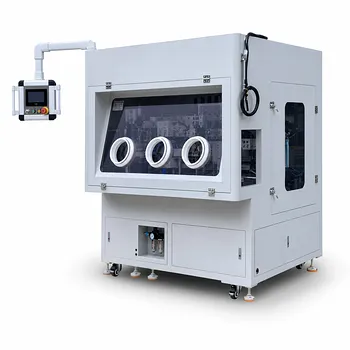
Isobaric High Precision Aluminum Shell Battery Liquid Injection Machine
Isobaric aluminum shell battery liquid injection machine for lithium battery production, supporting primary and secondary filling, vacuum pressure cycling, sealed positive pressure glovebox operation, accurate dosing, weighing, and stable high yield for demanding laboratory manufacturing workflows and advanced materials research.
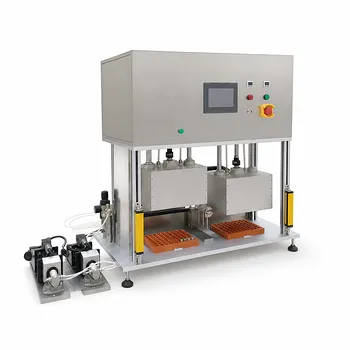
Dual Station Vacuum Automatic Electrolyte Filling Machine
Dual-station vacuum automatic electrolyte filling equipment for lithium battery production integrates two 16 dual-head pumps, automated positioning, vacuum processing, PLC control, safety protection, and fault alarms for controlled repeatable cell filling in demanding manufacturing workflows every day.
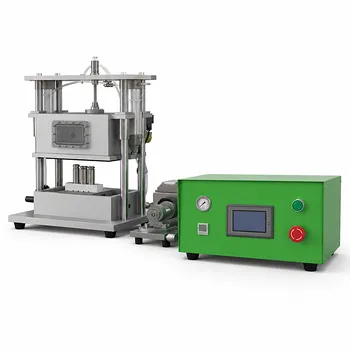
Vacuum Electrolyte Filling And Standing Integrated Machine For Battery Capacitor Cells
Vacuum electrolyte filling and standing integrated machine for battery and capacitor production, delivering adjustable vacuum, precise dosing, consistent absorption, corrosion resistant construction, PLC touchscreen control, and reliable operation in gloveboxes or dry rooms for demanding research and pilot manufacturing.
Lithium Battery Cathode Material Lithium Iron Phosphate LiFePO4 Powder LFP
Premium lithium battery cathode material lithium iron phosphate LiFePO4 powder LFP delivers superior thermal safety high discharge capacity low moisture and consistent electrochemical stability for advanced energy storage pouch cell fabrication and coin cell battery research testing workflows
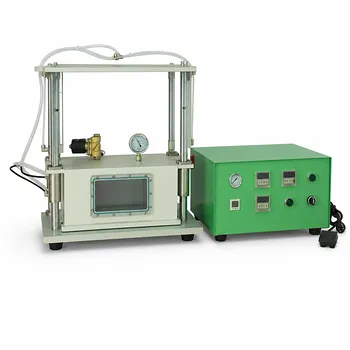
Laboratory Battery Vacuum Standing Box for Electrolyte Soaking
Laboratory battery vacuum standing box supports electrolyte absorption in pouch and cylindrical cells, using stable deep vacuum, programmable cycle operation, adjustable resting time, and a compact split control design for flexible research workflows and pilot-scale battery preparation tasks.
Lithium Rich Cathode Lithium Compensation Additive LNO LFO Powder for NCM NCA LFP Lithium Ion Batteries
High performance lithium rich cathode lithium compensation additives including LNO and LFO powders engineered to dramatically improve first cycle coulombic efficiency offset initial capacity loss and extend cycling stability across high energy density NCM NCA and LFP battery chemistries
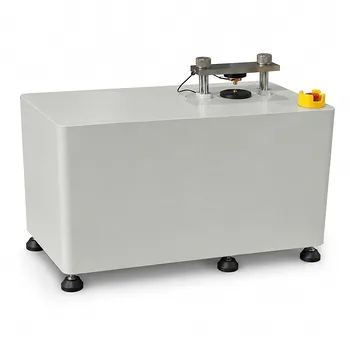
Automatic Lithium Battery Electrode Sheet Resistance Tester and Electrical Conductivity Meter
Streamline battery R&D quality control with our automatic lithium battery electrode sheet resistance tester, featuring programmable pressure loading up to 200kg, high-precision thickness monitoring, wide measurement ranges, and comprehensive real-time PC curve analytics.
Carbon Coated Silicon Anode Material Silicon Carbon Composite Powder for Lithium Ion Batteries
High performance carbon coated silicon anode material engineered for next generation lithium ion battery development delivering exceptional discharge capacity low surface area optimized tap density superior initial coulombic efficiency and reliable cycle life stability across demanding electrochemical testing protocols.
Lithium Cobalt Oxide LCO Cathode Material for Lithium Ion Secondary Batteries
High performance lithium cobalt oxide LCO cathode powder engineered for lithium ion secondary batteries featuring exceptional tap density high first cycle efficiency superior rate capability and tight chemical purity for advanced commercial and research energy storage cell manufacturing
Electrolyte Vacuum Filling and Soaking Integrated Machine
Electrolyte vacuum filling and soaking integrated machine delivers ±0.5% dosing accuracy for cylindrical, coin, and pouch battery cells, combining programmable vacuum, inert-gas filling, and controlled resting to improve electrolyte uptake consistency in advanced battery manufacturing and laboratory research workflows.
Energy Regenerative Lithium Battery Automatic Formation and Capacity Grading Testing System
Discover high precision energy regenerative lithium battery automatic formation and capacity grading testing systems featuring independent 128 channel architecture four wire measurement grid energy feedback and seamless MES database integration for advanced cell production.
Lithium Battery Current Collector Metal Foil Nickel Zinc Titanium Stainless Steel Foils
Premium lithium battery current collector metal foils including high purity nickel zinc titanium and 316 stainless steel engineered for electrochemical stability high tensile strength and superior electrical conductivity in advanced battery research and energy storage.
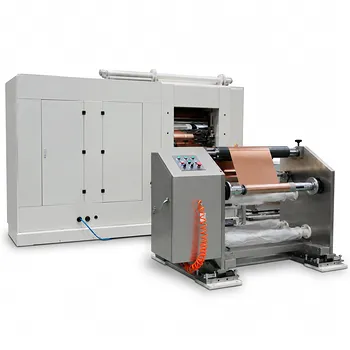
High Precision Lithium Battery Electrode Sheet Calendering Machine
High precision lithium battery electrode sheet calendering machine delivers controlled compaction, adjustable roll gaps, 4000 kN line pressure, accurate tension handling, and consistent electrode density for demanding cell manufacturing lines.
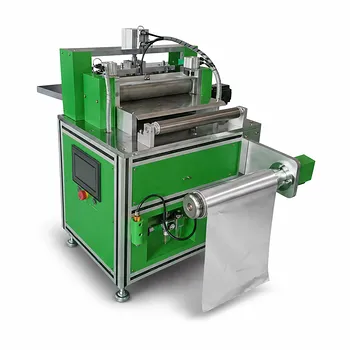
Automatic Lithium Battery Electrode Sheet Cross Cutting Slitting Machine
Automatic lithium battery electrode sheet cross cutting slitting machine provides programmable fixed length or optical tracking cuts, constant tension unwinding, adjustable speed, and low burr processing for positive and negative electrode production.
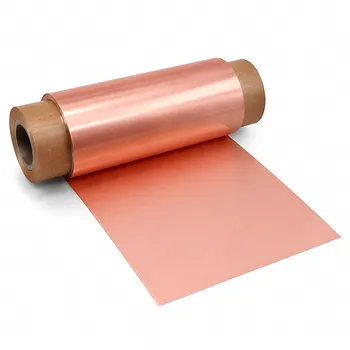
8μm Double Sided Smooth Battery Copper Foil for Anode Current Collectors
Engineered for advanced lithium battery production, this ultra-thin 8μm double sided smooth copper foil provides exceptional electrical conductivity, zero pinholes, high tensile strength, and controlled roughness for superior negative electrode active material adhesion and cell energy density.
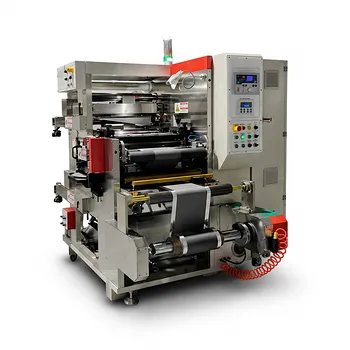
Lithium Battery Electrode Sheet Continuous Slitting Machine 200 to 560 mm Slitting Width
Continuous lithium battery electrode sheet slitting machine processes rolled coated electrodes across 200 to 560 mm widths with closed loop tension control precision web guiding dust removal and dual differential shaft rewinding.
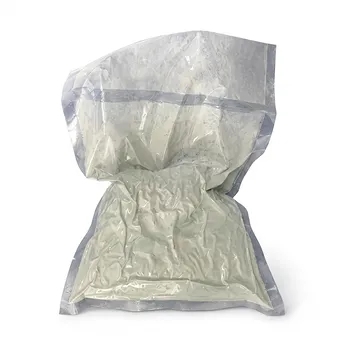
Carbon Coated and Uncoated LTO Lithium Titanate Powder Li4Ti5O12 LiTiO Battery Anode Material
High purity carbon coated and uncoated LTO lithium titanate powder Li4Ti5O12 LiTiO anode material delivers exceptional thermal safety ultra long cycle life and high rate capability for advanced energy storage systems electric vehicles specialty power supplies and hybrid supercapacitors.
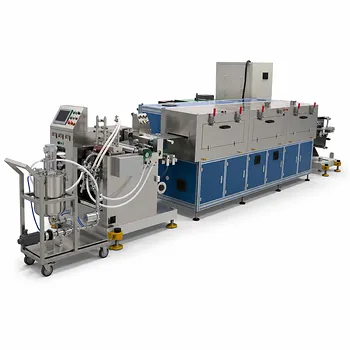
Single Sided Battery Electrode Extrusion Coating Machine
Single-sided battery electrode coating machine delivers precise intermittent and continuous slurry application, stable web tension, controlled electric drying, and consistent coatings for lithium-ion battery research, pilot production, and advanced materials development across demanding laboratory and development workflows every day.

Battery Cathode Material Lithium Manganese Iron Phosphate LMFP Powder
High performance lithium manganese iron phosphate LMFP battery cathode material powder engineered for next generation energy storage delivering 154.4 mAh per gram discharge capacity exceptional thermal safety superior voltage plateau stability and high first cycle efficiency for demanding electrochemical applications