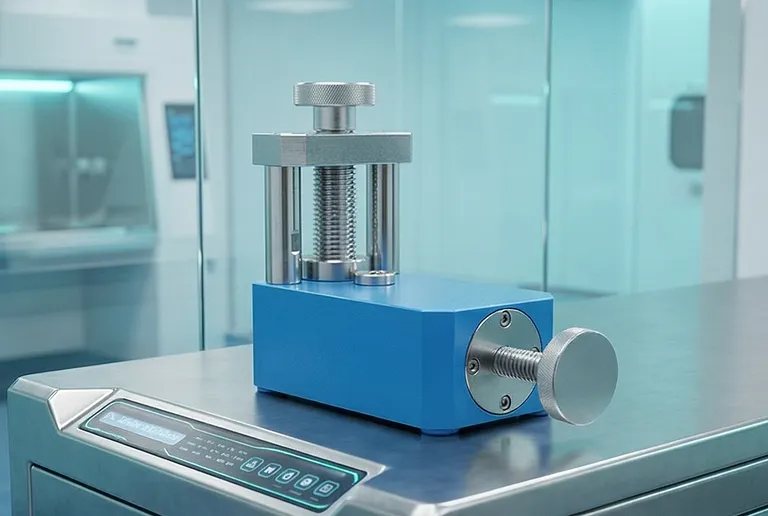
The Chaos of Bulk Solids
Biomass, in its raw state, is an exercise in inefficiency. It is light, porous, and chaotic. To transform it into biocoke—a high-energy, stable fuel—we must force order upon these particles.
This is not merely a matter of "squeezing" material. It is a orchestrated transformation.
Mechanical densification is the process of eliminating the space between things. It requires a systemic application of force, temperature, and time to turn loose waste into a structural asset.
Rearrangement: The First Negotiation
When a laboratory hydraulic press begins its stroke, the first phase is movement. Under pressures often reaching 22 MPa, woody particles and biochar grains are forced out of their static, loose configurations.
This is particle displacement.
The press effectively negotiates the voids between grains. As these particles shift into a tightly packed configuration, the bulk density of the material shifts. If this rearrangement is incomplete, the resulting biocoke remains brittle—a collection of parts rather than a whole.
Plasticity: The Permanent Change
Pressure is a forceful architect. Once the particles have rearranged themselves, they begin to undergo plastic deformation.
- Flattening: The sharp edges of individual particles deform.
- Conformity: Surfaces mold against one another, increasing the interfacial contact area.
- Bonding: At this point, the material begins to form a "green body."
This deformation is vital. Without it, the material would simply spring back once the pressure is released. By forcing the particles to change their shape, we ensure that the physical bonds formed during compression are permanent.
The Ghost in the Gaps: Air and Moisture
Density is defined as much by what is taken away as what is added. Air and moisture are the primary obstacles to energy density.
- Air Expulsion: Trapped air creates internal porosity. This weakness leads to fracturing during transport. A constant, uniform pressure forces this air out, creating a bubble-free composition.
- Moisture Reduction: When pressure is synchronized with heating (ranging from 160°C to 190°C), moisture is driven off.
The true magic happens with Lignin. As heat and pressure work in tandem, natural binders like lignin melt. This creates a molecular fuse, transforming separate particles into a high-strength, energy-dense solid.
The Engineering Friction: Risks of Precision

High pressure is necessary, but it is also dangerous to the sample. Engineering a perfect biocoke requires managing several technical trade-offs:
- Stress Gradients: If pressure is applied unevenly, the core of the sample differs from the exterior. This leads to structural failure.
- Over-Pressurization: Exceeding the material's threshold causes micro-cracking. You achieve density at the cost of toughness.
- Calibration Sensitivity: Any fluctuation in the pressure cycle can cause "spring-back," where the material expands as it cools, ruining the precision of the mold.
Strategic Selection: Matching Tool to Task
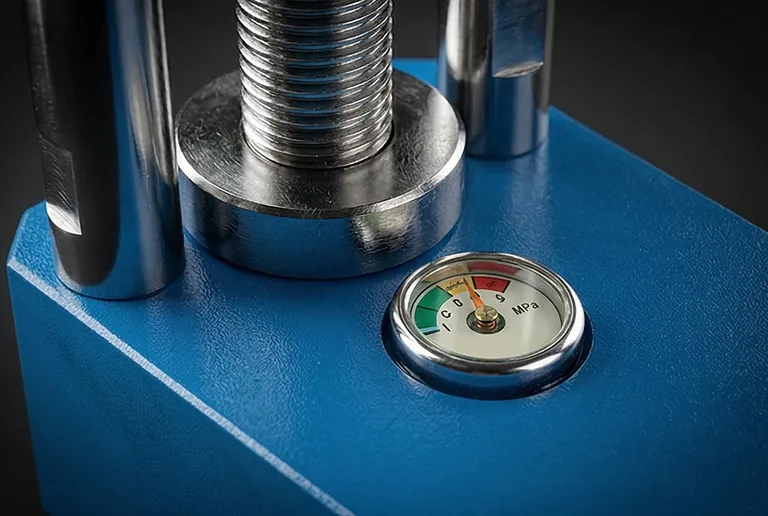
The choice of pressing technology determines the limitations of your research.
| Objective | Primary Mechanism | Required Tooling |
|---|---|---|
| Energy Density | Max compression & heat | Heated Automatic Press |
| Structural Integrity | Sustained cycle time | Precision Manual/Auto Press |
| Research Consistency | Uniform multidirectional force | Isostatic Press (CIP/WIP) |
| Sensitive Environments | Controlled atmosphere | Glovebox-compatible Press |
Mastering the Press
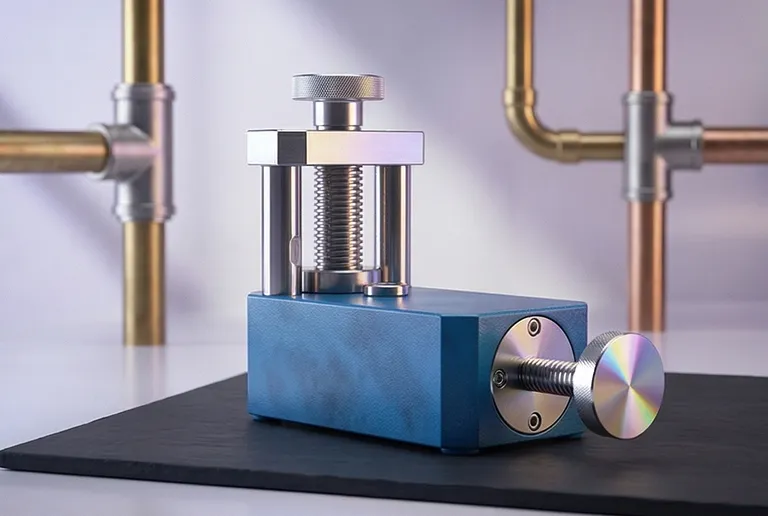
In the laboratory, the press is the bridge between a raw hypothesis and a viable fuel. Whether you are using manual control for tactile feedback or automatic systems for repeatable precision, the goal remains the same: a perfect densification cycle.
KINTEK specializes in these points of transition. From manual and automatic presses to specialized heated models and cold/warm isostatic presses, we provide the hardware necessary to bring order to your biomass research.
Success in biocoke molding is found in the balance of pressure and thermal fusion. To explore our range of laboratory pressing and isostatic solutions, Contact Our Experts.
Related Products
- Automatic High Temperature Heated Hydraulic Press Machine with Heated Plates for Lab
- 24T 30T 60T Heated Hydraulic Lab Press Machine with Hot Plates for Laboratory
- Laboratory Hydraulic Press Lab Pellet Press Machine for Glove Box
- Automatic Heated Hydraulic Press Machine with Hot Plates for Laboratory
- Laboratory Split Manual Heated Hydraulic Press Machine with Hot Plates
Related Articles
- The Architecture of Slow: Why Physical Precision Dictates Chemical Destiny
- The Architecture of Certainty: Why the Laboratory Press is the Anchor of Material Science
- The Vanishing Boundary: The Hidden Thermodynamics of LTCC Lamination
- The Alchemy of 160°C: Why Precision Pressing is the Silent Backbone of Rubber Science
- The Invisible Forge: Why the Laboratory Press is the Soul of Nano-Composites



















