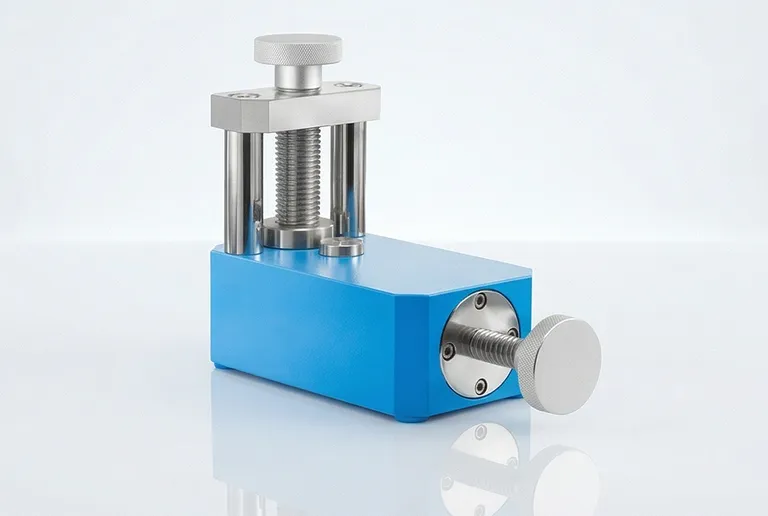
The Hidden Variable in Material Chaos
In the world of High-Entropy Alloys (HEAs), complexity is the goal. We mix five or more elements in near-equal proportions, hoping to find a "cocktail effect" that defies traditional metallurgy.
But complexity has a price: chaos.
Most researchers focus their intellectual energy on the sintering temperature or the cooling rate. Yet, the fate of an alloy is often decided long before it hits the furnace. It is decided in the silence of the press.
The Psychology of the "Soft Spot"
Manual pressing is an exercise in human variability. Even the most disciplined technician cannot replicate the exact force, dwell time, and release speed across fifty samples.
In metallurgy, this inconsistency manifests as "soft spots"—internal density gradients that are invisible to the naked eye but catastrophic under the heat of a furnace.
When a green body has uneven density, it shrinks unevenly. It warps. It develops micro-cracks. In the pursuit of high-performance materials, the manual lever is often the weakest link in the chain of discovery.
Engineering the Green Body
The "green body" is a fragile intermediate state. It is a promise of what the material will become. To ensure that promise is kept, an automatic hydraulic press addresses three systemic physical challenges:
1. Breaking the "Powder Bridge"
Particles are stubborn. They resist packing through a phenomenon called the "bridging effect," where grains lock together, leaving microscopic voids. Automatic presses apply the sustained, high-tonnage force (often exceeding 100 MPa) required to collapse these bridges and force a dense rearrangement.
2. Maximizing Atomic Contact
For an HEA to form its characteristic single-phase structure, the disparate metal atoms must be in intimate contact. By maximizing the particle contact area and expelling trapped air, the press creates the physical foundation for uniform phase formation during subsequent thermal processing.
3. Eliminating the Human Signature
Automation transforms powder molding from a craft into a repeatable data point. By standardizing the holding time and pressure, researchers ensure that any variation in the final alloy is a result of the chemistry, not the technician's fatigue.
Precision as a Research Accelerator
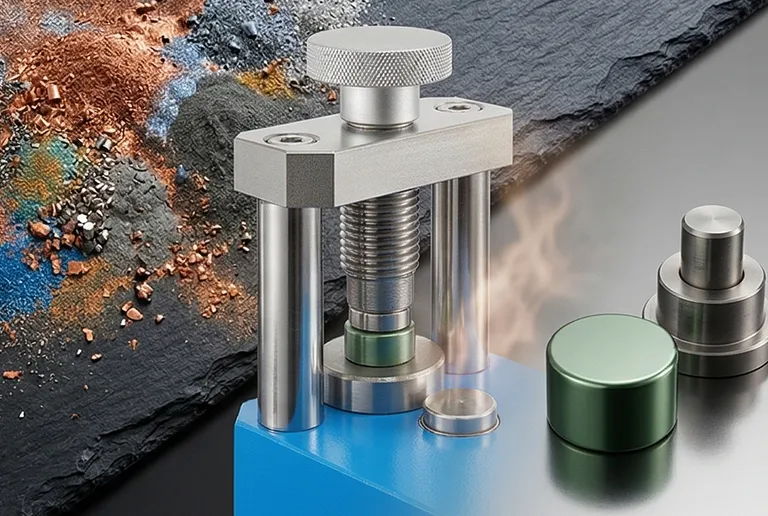
The discovery of new HEAs is a race. High-throughput screening requires the rapid preparation of hundreds of unique compositions.
An automatic system doesn't just provide better samples; it provides a faster validation cycle. When the molding process is a constant, the researcher can focus entirely on the variables that matter: composition and performance.
| Feature | Technical Impact | Research Outcome |
|---|---|---|
| Uniform Pressure | Eliminates density gradients | Prevents warping/cracking during sintering |
| Automated Dwell Time | Ensures maximum air expulsion | Enhances phase homogeneity |
| Digital Repeatability | Standardizes the "Green" state | Enables valid high-throughput screening |
| Controlled Release | Reduces "Capping" risks | Higher yield of intact samples |
The Limits of Pressure
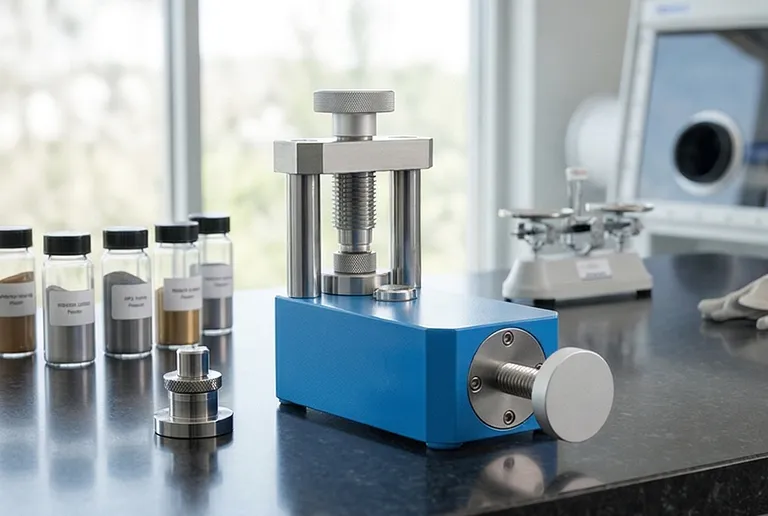
Even the most advanced system has its boundaries. Engineers must remain romantic about the science but realistic about the physics:
- Geometry Constraints: Laboratory presses are masters of the pellet and the disc, but complex 3D geometries still require more advanced industrial forming.
- The Over-Compaction Trap: Too much pressure can lead to lamination, where the sample splits into layers like a deck of cards.
- Tooling Fatigue: High-precision molds are subject to wear. A microscopic scratch on a steel die can reintroduce the very gradients we seek to eliminate.
The KINTEK Philosophy of Precision
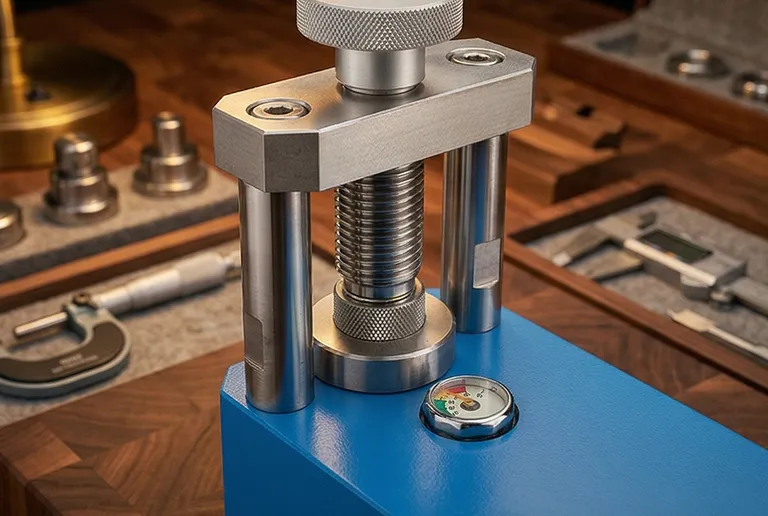
At KINTEK, we believe that the most advanced materials require the most stable foundations. Our laboratory pressing solutions are engineered to remove the "noise" from your experiments, allowing the true signal of your research to shine through.
From glovebox-compatible units for sensitive battery chemistry to automatic isostatic presses for ultimate density uniformity, we provide the tools that bridge the gap between loose powder and high-performance alloys.
Related Products
- Automatic Laboratory Hydraulic Press Lab Pellet Press Machine
- Automatic Heated Hydraulic Press Machine with Hot Plates for Laboratory
- Automatic Heated Hydraulic Press Machine with Heated Plates for Laboratory
- Automatic Laboratory Hydraulic Press for XRF and KBR Pellet Pressing
- Automatic High Temperature Heated Hydraulic Press Machine with Heated Plates for Lab
Related Articles
- The Architecture of Density: Why Pressure is the Silent Architect of Solid-State Batteries
- The Physics of Transparency: Why Pressure is the Silent Architect of Spectroscopic Clarity
- The Architecture of Density: Why Pressure is the Foundation of Precision
- The Geometry of Electrons: Why Surface Precision is the Silent Partner in SECM Research
- The Architecture of Heat: Why Sample Density Dictates the Truth in Metal Hydride Research



















