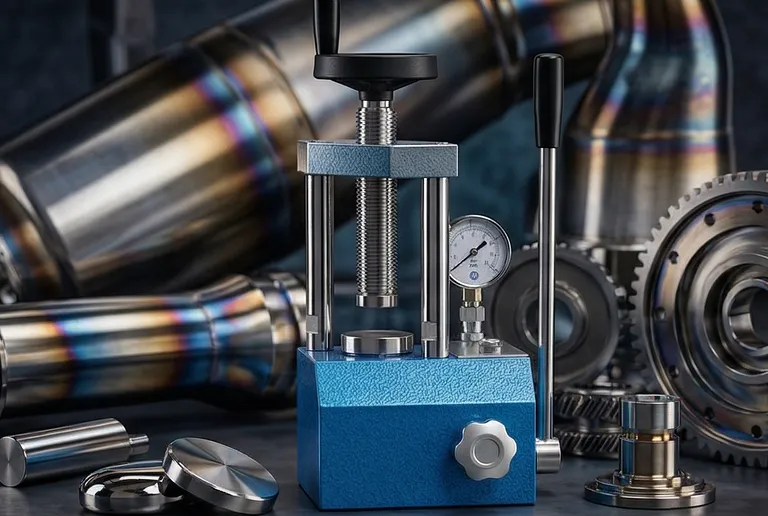
The Invisible Wall of Aluminum
In materials science, aluminum is a paradox. It is the backbone of aerospace and high-performance engineering, yet it is fundamentally "nervous." The moment raw aluminum encounters air, it creates an invisible, stubborn oxide shield.
This shield is a miracle for corrosion resistance in your kitchen, but a catastrophe in a laboratory.
When trying to bond aluminum with reinforcing fibers—like silicon carbide or graphene—this oxide layer acts as a wall. To build a composite that doesn't fail under stress, you cannot simply mix ingredients. You must force a molecular conversation between substances that, by nature, refuse to touch.
The Vacuum as a Chemical Eraser
The first step in high-performance consolidation isn't adding heat; it’s removing the environment.
In a standard atmosphere, heating aluminum powder only thickens its oxide skin. By introducing a high-vacuum environment, we aren't just "cleaning" the air—we are removing the possibility of reaction.
- Purity Insurance: The vacuum extracts oxygen and moisture before they can interfere.
- Surface Preparation: It ensures that the metal surfaces remain receptive at a molecular level.
- Volatile Extraction: Residual processing agents, like ethanol or moisture, are pulled out before they can be trapped forever.
The Solid-State Dance: Pressure Meets Heat
There is a specific "Engineer’s Romance" in achieving density without melting. If you melt the aluminum matrix, you risk damaging the delicate fibers and triggering unwanted chemical reactions.
Vacuum hot pressing (VHP) relies on Solid-State Bonding. It’s a process of persuasion rather than destruction.
The Mechanics of Synergy
| Mechanism | The "Why" | The Result |
|---|---|---|
| Axial Pressure | Reaches up to 500 MPa to drive plastic flow. | Fills every microscopic gap around the fibers. |
| Sub-Melting Heat | Activates atoms without liquifying the bulk. | Preserves the structural integrity of the reinforcement. |
| Power-Law Creep | Slow, deliberate movement of metal under stress. | Near-full densification (99.9%+) is achieved. |
By synchronizing heat and pressure, the aluminum matrix begins to "flow" around the short fibers. This isn't a mechanical grip; it is a metallurgical bond. The atoms move across the interface, creating a single, unified structure.
The Psychology of Hidden Voids
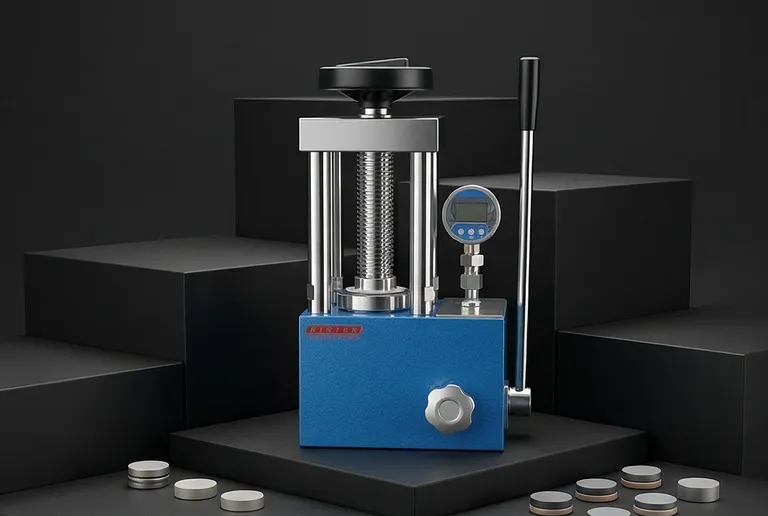
In engineering, what you can’t see is usually what kills the project.
If a composite is pressed without proper degassing, tiny pockets of air and moisture remain trapped. Under the high-pressure environment of operation, these voids act as stress concentrators. They are the seeds of future cracks.
Vacuum hot pressing acts as a systemic audit. By pulling a vacuum while the material is porous, you ensure that once the pressure is applied, there is nothing left inside but the material itself. You are "exorcising" the internal catastrophes before they have a chance to form.
The Necessary Trade-offs
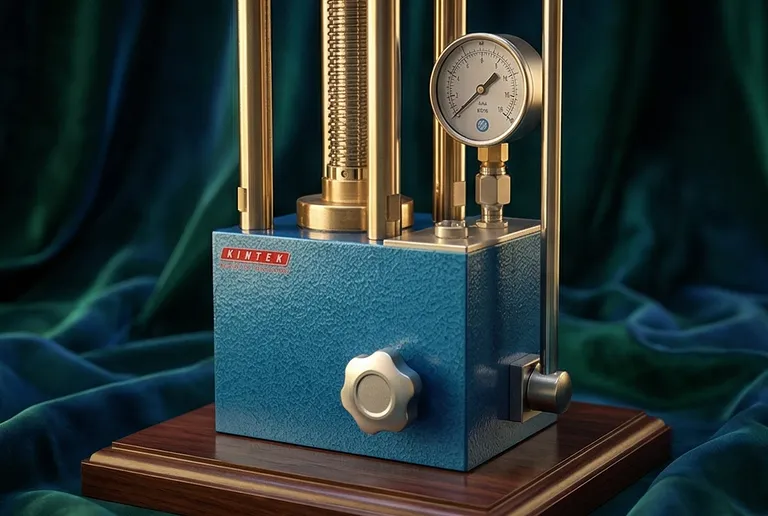
True performance rarely comes with convenience. As Morgan Housel might suggest, everything has a price that isn't always reflected on a price tag.
- Time as a Variable: Unlike continuous extrusion, VHP is a batch process. It requires patience. The ramp-up of vacuum and heat is measured in hours, not minutes.
- Complexity as a Tax: Maintaining vacuum seals at 500°C requires precision equipment and specialized maintenance.
- Scale Constraints: Your output is physically limited by the size of the vacuum chamber and the pressing platens.
However, for those in battery research or aerospace, these trade-offs are the "insurance premiums" paid for a material that will not fail.
Choosing the Path Forward
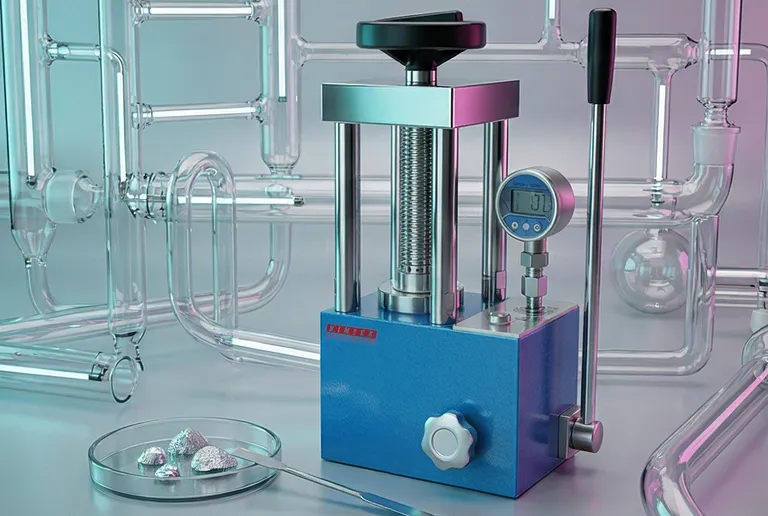
If your goal is maximum mechanical strength and chemical purity, the vacuum hot pressing system is the definitive solution. It transforms a collection of powders and fibers into a high-performance reality by solving the dual problems of reactivity and density.
At KINTEK, we understand the nuance of this "molecular conversation." We provide the specialized tools required to navigate these trade-offs:
- Heated & Multifunctional Presses for total thermal control.
- Glovebox-Compatible Models for the most reactive materials.
- Isostatic Solutions (CIP/WIP) for uniform densification across complex geometries.
In the pursuit of the perfect composite, don't let oxidation or internal voids dictate your results. Contact Our Experts
Related Products
- Heated Hydraulic Press Machine with Heated Plates for Vacuum Box Laboratory Hot Press
- Heated Hydraulic Press Machine With Heated Plates For Vacuum Box Laboratory Hot Press
- Automatic High Temperature Heated Hydraulic Press Machine with Heated Plates for Lab
- Automatic Heated Hydraulic Press Machine with Hot Plates for Laboratory
- Laboratory Manual Heated Hydraulic Press Machine with Hot Plates
Related Articles
- The Architecture of Slow: Why Physical Precision Dictates Chemical Destiny
- The Architecture of Certainty: Why the Laboratory Press is the Anchor of Material Science
- The Vanishing Boundary: The Hidden Thermodynamics of LTCC Lamination
- The Alchemy of 160°C: Why Precision Pressing is the Silent Backbone of Rubber Science
- The Invisible Forge: Why the Laboratory Press is the Soul of Nano-Composites



















