All Questions
Why Is Interfacial Resistance A Key Challenge In All-Solid-State Lithium Batteries, And How Does Proper Cell Assembly Equipment Address It?
Learn how precision cell assembly equipment reduces interfacial resistance by improving solid-solid contact, densifying electrolytes, and optimizing pressure.
What Role Do Molecular Interactions Play In Ionic Liquid Gel Polymer Electrolytes, And How Does Laboratory Cell Fabrication Equipment Ensure Their Reliable Performance? Discover Key Insights For Optimizing Gel Electrolytes.
Molecular interactions govern ion transport; precise lab equipment ensures uniform films, good contact, and reliable performance.
What Causes Surface Impurity Formation On Garnet-Type Oxide Solid Electrolytes Like Llzo, And How Does Laboratory Handling Impact Their Performance In Cell Assembly? Learn Key Handling Practices.
Discover how moisture and CO2 form surface impurities on LLZO, and why handling affects cell assembly performance.
What Are The Structural Differences Between Full-Flow And Semi-Flow Lithium Redox Flow Battery Configurations, And What Equipment Considerations Are Critical During Laboratory Cell Assembly?
Learn the key structural differences between full-flow and semi-flow lithium redox flow batteries, and discover critical equipment considerations for lab cell assembly.
How Does The Morphology And Layer Spacing Of Molybdenum Disulfide (Mos2) Impact Its Electrochemical Performance In Sodium-Ion Battery (Sib) Electrodes, And What Laboratory Equipment Is Required To Process These Nanostructured Materials Into Functional Tes
Discover how MoS2 morphology and spacing affect SIB performance, and the essential lab equipment for electrode processing.
What Key Material Properties And Modification Methods Are Essential When Engineering High-Performance Polymer Separators For Lithium-Ion Cell Assembly? Explore Surf
Learn essential polymer separator properties and modification methods for high-performance lithium-ion cells, including safety and durability.
What Are The Primary Strategies For Suppressing Sodium Dendrite Growth In Sodium-Oxygen Battery Research, And How Do Laboratory Cell Assembly Tools Impact The Evaluation Of These Anode Modifications?
Explore strategies to suppress sodium dendrites in Na-O2 batteries, including separator modification, protective layers, electrolyte optimization, and more.
What Key Approaches Are Used To Suppress Sodium Dendrite Formation On The Anode, And How Does Laboratory Cell Assembly Equipment Ensure Reliable Testing Of These Protective Strategies?
Discover effective methods to suppress sodium dendrites and how precision cell assembly equipment ensures accurate testing.
Why Is Custom Electrolyte And Cell Composition Design Necessary In Sodium-Ion Battery Research, And How Does Laboratory Cell Fabrication Equipment Support This Process?
Explore why tailored electrolyte and cell design is key for sodium-ion batteries and how lab equipment enables precise fabrication and testing.
Why Are Ultra-Thin Pan-Based Composite Polymer Electrolytes Advantageous For High-Temperature Lithium Metal Batteries, And Which Laboratory Cell Assembly Equipment Is Required To Test Them Effectively?
Discover the benefits of ultra-thin PAN composite electrolytes for high-temp Li-metal batteries and the essential lab equipment for testing.
What Primary Degradation Mechanisms Affect Metallic Sodium Anodes In Sodium-Oxygen Battery Development, And Why Are Advanced Surface Protection Strategies Necessary During Cell Assembly? Key Insights For Stable Na-O2 Cells
Discover the main degradation mechanisms of sodium anodes in Na-O2 batteries and why advanced surface protection is critical for stable cell assembly and performance.
What Key Electrochemical Challenges Do Hard Carbon Anodes Face In Sodium-Ion Batteries, And How Do Laboratory Processing And Cell Assembly Equipment Help Address Them?
Discover solutions to low initial coulombic efficiency and limited rate capability in hard carbon anodes through advanced lab equipment.
Why Does Initial Coulombic Efficiency (Ice) Impact Full-Cell Battery Assembly Performance Differently Than Half-Cell Testing? Unlock The Key To Optimizing Lithium Inventory For Higher Energy Density And Longer Cycle Life.
Discover how ICE affects full-cell performance, why half-cell tests can mislead, and how to design better batteries with our expertise.
What Handling And Operational Constraints Affect Sulfide Solid Electrolytes Like Li10Gep2S12 (Lgps) During Solid-State Cell Assembly And Testing? Key Considerations For Safe And Reliable Testing.
Learn about the critical handling constraints of LGPS, including moisture sensitivity, pressure control, and electrochemical stability, for successful solid-state battery testing.
What Factors Are Critical When Assembling Laboratory-Scale Zinc-Air Test Cells, And How Do Precision Cell Assembly Tools Ensure Reliable Data?
Learn key assembly factors for reliable zinc-air cell testing, including alignment, sealing, pressure, and precision tools.
Why Are Binder-Free Integrated Carbon/Sulfur Arrays Advantageous? Boost Sulfur Utilization And Cycle Stability
Discover how binder-free arrays enhance electron pathways, confine polysulfides, and accommodate volume expansion for better battery performance.
What Are The Standard Cell Assembly Specifications And Electrochemical Testing Conditions For Evaluating Carbon/Sulfur Cathode Arrays In Li-S Batteries? A Complete Lab Protocol
Learn the standard Li-S half-cell assembly and testing conditions for carbon/sulfur cathodes, including electrolyte, voltage windows, and cycling parameters.
What Key Material Properties Make Graphite Felt And Carbon Paper Effective Electrode Choices For Vrfb Cell Assembly?
Explore the essential properties—chemical stability, conductivity, porosity—that make carbon-based electrodes ideal for flow batteries.
What Are The Primary Components Of A Vanadium Redox Flow Battery (Vrfb) Cell Stack, And Why Are Carbon-Based Materials Selected For The Electrodes?
Learn about VRFB cell stack components and the crucial role of carbon electrodes for durability and performance.
Why Is Precision Cell Fabrication Equipment Essential For Minimizing Cell-To-Cell Variability In Battery Pack Soc And Soh Management? Improve Pack Reliability And Performance
Learn how precision fabrication reduces cell variability, enhancing SOC/SOH accuracy, balancing efficiency, and pack longevity.
What Safety Risks Are Associated With Thermal Runaway And Dendrite Growth In Potassium-Ion Battery Development, And How Do Precision Electrode Pressing And Cell Assembly Equipment Help Mitigate These Issues?
Learn about thermal runaway and dendrite risks in potassium-ion batteries and how precision electrode pressing and assembly improve safety.
How Does Polymer Crystallization Affect The Ionic Conductivity Of Peo-Based Solid Polymer Electrolytes, And What Processing Considerations Apply During Cell Assembly? Optimize Your Solid Electrolyte Process
Learn how crystallization reduces PEO conductivity and get key processing tips to maintain amorphous electrolytes for better performance.
How Do Biopolymer Electrolyte Additives Suppress Dendrite Growth In Zinc-Ion Batteries? Enhance Performance With Precise Cell Assembly And Testing.
Discover how biopolymers suppress zinc dendrites via solvation regulation and surface adsorption, and why controlled cell assembly and testing validate their effects.
What Are The Key Technical Challenges Associated With Potassium-Ion Batteries (Kibs), And How Do Laboratory Cell Assembly And Preparation Tools Support Kib Electrode Research?
Explore KIB challenges like structural strain, SEI instability, and how lab tools like slurry mixers and presses enable reliable electrode research.
How Do Zinc/Bromine Flow Batteries Mitigate Self-Discharge And Dendrite Growth? Key Stack Assembly Factors For Lab Prototyping
Learn how bromine complexation and uniform deposition control self-discharge and dendrites, plus critical stack assembly factors for prototyping.
What Performance Capabilities Characterize Aluminum/Air Batteries, And How Do Cell Fabrication And Electrode Pressing Equipment Assist In Their Research? Discover Key Metrics.
Explore aluminum/air battery performance, energy density, and how precision fabrication equipment enhances research.
What Role Do Surface Plating And Binder Pressing Play In Preparing Metal Hydride Powder Electrodes For Laboratory Cell Fabrication?
Discover how surface plating and binder pressing enhance metal hydride electrodes for reproducible lab cells.
How Do Lattice Parameters And Equilibrium Plateau Pressures In Metal Hydride Alloys Guide Laboratory Cell Assembly And Electrochemical Testing Of Negative Electrodes?
Learn how lattice parameters and plateau pressures guide alloy selection, electrode assembly, and testing for optimal negative electrode performance.
What Are The R&D Challenges And Processing Requirements When Pairing Graphite Anodes With Pre-Lithiated Sulfur Cathodes (Li2S) In Lithium-Sulfur Battery Fabrication? Key Insights For Scalable Production.
Explore the critical challenges and processing steps for graphite/Li2S batteries, including Li2S activation, lithium inventory, and electrolyte design.
What Primary Failure Mechanisms Affect Lithium Metal Anodes During Cycling In Li-S Batteries, And Why Is Precise Cell Assembly Critical?
Learn about lithium dendrite growth, SEI instability, dead lithium, polysulfide corrosion, and why controlled assembly/testing are vital.
What Advantages Do Inorganic Solid-State Electrolytes Offer In Lithium-Sulfur Battery Research, And What Key Fabrication Factors Must Be Considered During Laboratory Cell Assembly?
Discover benefits of inorganic solid electrolytes in Li-S batteries and key lab fabrication factors for cell assembly.
What Factors Cause Ohmic Internal Resistance In Lithium-Ion Cells? Optimize Electrode Pressing & Assembly To Minimize It
Learn key causes of ohmic resistance in Li-ion cells and how precision pressing and assembly equipment reduce it for better performance.
What Are The Key Electrode Fabrication Requirements For Liquid Positive Electrode Primary Batteries Such As Li/So2? Achieve Optimal Performance With Proper Carbon Electrode Engineering
Learn the essential requirements for fabricating porous carbon electrodes in Li/SO2 batteries, focusing on slurry, coating, pressing, and sealing.
Why Is Surface Elemental Segregation Beneficial For High-Voltage Cathode Materials, And How Does It Influence Battery Electrode Processing? Optimize Your Battery R&D With Precision Processing Equipment.
Learn how surface elemental segregation stabilizes high-voltage cathodes and discover processing tips to preserve it for better battery performance.
What Internal Lattice Distortions Occur Within Cathode Particles During High-Voltage Charging? Optimize Electrode Pressing For Better Cycling Stability
Discover key lattice distortions like bending, twisting, and dislocations, and how to mitigate them with optimized electrode pressing.
What Role Do Sample Processing Methods, Such As Freeze-Drying Versus Film Casting, Play In Controlling The Phase Stability And Performance Of Vanadium Pentoxide Nanocomposites For Battery Research?
Learn how film casting and freeze-drying influence phase stability, uniformity, and ionic transport in V2O5 nanocomposites for battery research.
Why Are Polymer-Intercalated Vanadium Pentoxide Cast Films Unsuitable As Solid Electrolytes For Lithium-Ion Batteries?
Learn why mixed conductivity disqualifies V2O5-POEGO films as solid electrolytes and how testing systems evaluate them for alternative battery components.
How Do Hard Carbon And Titanium-Based Oxide Anodes Differ In Sodium-Ion Batteries? Achieve Optimal Compact Density With Precision Pellet Presses
Discover key differences between hard carbon and titanium oxide anodes, and learn how lab pressing equipment helps evaluate compact density for better battery performance.
What Role Do Separators Play In Lithium Battery Cell Assembly, And How Are Wet-Process Versus Dry-Process Separators Selected For Different Battery Designs? Key Differences And Selection Criteria.
Learn the critical role of separators in battery cells and how to choose between wet-process and dry-process types for optimal performance and safety.
What Causes The Shuttle Effect In Lithium-Sulfur Cells And Which Structural Cell Assembly Strategies Suppress Polysulfide Dissolution?
Learn what causes the shuttle effect in Li-S cells and how interlayers and separator coatings can suppress polysulfide dissolution.
How Do Material Properties Of Sulfur-Carbon Composite Cathodes Dictate Electrode Pressing And Cell Assembly Requirements? Optimize Your Battery Manufacturing Process
Discover how sulfur-carbon cathode material properties dictate pressing and assembly for optimal battery performance. Essential guide for R&D.
How Does Intercalation Chemistry In Vanadium Pentoxide Xerogel (V2O5·Nh2O) Contribute To Advanced Cathode Material Synthesis? Discover Strategies For Lithium Battery R&D.
Explore how V2O5·nH2O intercalation enables tunable cathodes, balancing ion transport and structural stability for advanced lithium batteries.
What Structural And Electrochemical Degradation Mechanisms Affect Lithium-Ion Power Batteries, And How Does Precision Cell Fabrication Equipment Help Mitigate These Aging Issues?
Learn about lithium-ion battery degradation mechanisms and how precision fabrication equipment can mitigate aging for improved performance.
How Does The 'Rocking Chair' Operating Principle Function In Lithium Rechargeable Batteries, And What Key Components Are Necessary For Assembling These Cells? Optimize Your Battery Assembly With Kintek
Understand the rocking-chair mechanism and essential components for Li-ion cells. Build reliable batteries with our precision equipment.
What Are The Electrochemical Characteristics Of Tih2 Conversion Anodes Combined With Libh4 Solid Electrolytes, And Why Is Precision Cell Assembly And Pressing Equipment Required For Testing Them?
TiH2 anodes offer high capacity but require precise solid-state cell assembly to ensure reliable testing and performance.
Why Is High-Precision Battery Cell Assembly Equipment Critical For Reliable Operando Synchrotron Micro-Tomography On Cycling Batteries? Achieve Stable Imaging With Precision!
Learn why precision assembly is vital for operando synchrotron micro-tomography, ensuring stable, leak-free, and reproducible battery cells for accurate imaging.
How Do Multi-Modal Synchrotron X-Ray Characterization Techniques Reveal Battery Failure Mechanisms, And What Role Does Precision Laboratory Cell Assembly Play In These Studies? Uncover The Secrets To Reliable Battery Failure Analysis.
Explore how synchrotron X-ray techniques uncover battery failure and why precision cell assembly is crucial for accurate operando studies.
How Does Graphene Improve Lto In Hybrid Supercapacitors? Key Lab Steps For Cell Assembly
Graphene boosts LTO's conductivity, enhancing capacity and rate capability. Learn critical lab processing steps for reliable cell assembly.
What Role Does Synchrotron X-Ray Characterization Play In Diagnosing Battery Degradation? Unlock Real-Time Insights With Advanced Cell Assembly & Testing Systems
Discover how synchrotron X-ray techniques reveal battery degradation mechanisms and how lab systems enable operando experiments.
How Does Synchrotron-Based Multi-Modal X-Ray Imaging Enhance Battery Material Research, And Why Is Precision Electrode Pressing And Preparation Equipment Essential?
Discover how multi-modal synchrotron imaging reveals battery structure/chemistry and why precision electrode pressing is crucial for accurate data.
What Causes Capacity Degradation In Metal Hydride Anodes When Paired With Liquid Electrolytes, And How Does Solid-State Cell Assembly Equipment Help Resolve This Issue?
Learn why liquid electrolytes cause rapid capacity fade in metal hydride anodes and how solid-state assembly equipment like hydraulic presses helps improve stability and performance.
What Thermodynamic And Kinetic Criteria Must Be Evaluated When Selecting Matrix Materials For Advanced Solid Composite Anodes? Optimize Your Anode Performance With The Right Matrix
Learn the thermodynamic and kinetic criteria for selecting matrix materials in solid composite anodes, including phase stability and ion transport.
How Do Cell Assembly And Pressing Equipment Assist Researchers In Overcoming Performance Degradation In Lithium-Sulfur Battery Systems? Achieve Reliable, High-Energy Battery Research
Learn how precision cell assembly and pressing equipment reduce variability, improve interfaces, and enable credible lithium-sulfur degradation studies.
What Laboratory Cell Assembly And Testing Equipment Are Necessary To Evaluate The Rate Capability And Long-Term Cycling Stability Of Advanced Silicon-Based Anodes? Essential Tools For Accurate Assessment
Discover the essential lab equipment for accurate silicon anode testing, covering electrode fabrication, assembly, and high-precision cycling.
What Mechanical Performance Standards Are Required For Lithium-Ion Battery Separators, And How Does Cell Assembly Equipment Prevent Separator Damage During Fabrication?
Discover separator strength benchmarks (puncture >300 g/mil) and how precision equipment prevents damage for reliable cells.
How Does Non-Uniform Stripping And Passivation Affect Magnesium Metal Anodes, And Why Is Precision Battery Assembly And Testing Equipment Essential For Evaluating These Interfacial Properties In Rechargeable Magnesium Batteries?
Learn how non-uniform stripping and passivation impact Mg anodes, and why precision assembly/testing is crucial for accurate interfacial evaluation.
What Key Separator Parameters Must Be Evaluated During Battery Assembly To Ensure Optimal Safety And Low Internal Resistance?
Evaluate separator thickness, porosity, pore size, permeability, wettability, strength, and thermal stability for safe, low-resistance batteries.
What Are The Primary Stages In The Electric Vehicle Battery Manufacturing Value Chain, And How Do Laboratory Cell Assembly And Testing Systems Support This Workflow?
Explore the 7-stage EV battery value chain and learn how lab cell assembly and testing systems ensure quality and performance.
What Role Do Multi-Dimensional Models (Ntgk And Msmd) Play When Scaling Up Lithium-Ion Cells From Laboratory Formats To Large-Format Battery Prototypes? Discover Key Insights For Efficient Design And Validation.
Learn how NTGK and MSMD models bridge lab-scale and large-format battery design, optimizing performance and reliability.
What Key Cell Components And Assembly Considerations Are Involved In Fabricating Cr2025 Coin Cells For Lithium-Sulfur (Li-S) Battery Laboratory Research? Optimize Your Assembly For Reliable Data
Learn the essential components and assembly steps for CR2025 coin cells in Li-S battery research. Ensure consistent, reliable results.
What Are The Key Performance Limitations Of Perovskite-Type (Llto) Solid Electrolytes When Contacting Lithium Metal, And How Can Material Substitution Address Them In Solid-State Battery Research?
Explore LLTO's instability with lithium metal, its causes, and how Sr substitution can help.
What Key Performance Advantages Do Magnesium-Ion Batteries Hold Over Lithium-Ion Batteries, And What Cell Assembly Equipment Is Required For Prototyping Them? Discover Higher Capacity And Safe Prototyping
Explore magnesium-ion battery advantages in volumetric capacity, cost, safety, and the essential equipment for prototyping. Contact us for lab solutions.
What Causes The Low Initial Coulombic Efficiency In Tin Oxide (Sno₂)-Based Conversion-Alloying Anodes, And How Can Lab-Scale Cell Assembly And Pressing Equipment Facilitate Performance Optimization?
Discover key causes of low ICE in SnO₂ anodes and how precision pressing and cell assembly improve performance.
Why Are Ceramic Coatings Applied To Battery Separators? Enhance Lab Cell Assembly And Safety Testing
Learn how ceramic coatings improve thermal and mechanical stability of separators, ensuring consistent lab cell assembly and reliable safety testing.
What Are The Key Separator Specs For Thermal Safety In Lithium-Ion Cell Assembly?
Discover critical thermal and mechanical requirements for battery separators to prevent thermal runaway and ensure safe cell assembly.
What Key Electrochemical Properties Define Ideal Alternative Anode Materials For Magnesium-Ion Batteries, And Why Is Precision Density Control Essential During Laboratory Test Cell Assembly?
Learn the essential electrochemical properties of Mg-ion anodes and why precision density control in test cells is critical for accurate results.
Why Is Carbon Interlayer Expansion Critical For Sodium-Ion Battery Anodes, And How Are These Materials Evaluated Using Laboratory Battery Assembly Equipment?
Learn why expanded carbon layers improve sodium storage and how lab equipment ensures reliable electrode testing.
How Does Defect Propagation Impact Productivity During Lithium-Ion Battery Cell Assembly, And Why Are Intermediate Quality Inspections Necessary?
Learn how defect propagation in battery cell assembly reduces productivity and why early inspections are crucial for yield and efficiency.
Why Do Magnesium-Ion Batteries Offer Volumetric Capacity And Safety Advantages Over Lithium-Ion Batteries, And Why Is Controlled Cell Assembly And Pressing Equipment Critical For Testing Mib Cell Configurations?
Discover why MIBs can provide higher volumetric capacity and safety, and how precision pressing and assembly are vital for reliable testing.
What Degradation Issues Affect Chloride-Ion Battery (Cib) Cathodes, And Why Is Standardized Cell Assembly Equipment Vital For Cib Material Characterization?
Learn about CIB cathode degradation and how standardized assembly equipment ensures reliable material characterization.
What Key Side Reactions And Technical Challenges Occur In Zinc-Air (Zn-O2) Batteries, And How Do Laboratory Processing Tools Assist In Mitigating Them? Explore Advanced Solutions.
Uncover zinc-air battery challenges like dendrites and hydrogen evolution, and how lab equipment improves performance.
What Are The Primary Functions Of A Battery Separator? Optimize Lab Cell Assembly For Safety & Performance
Learn key roles of battery separators and best practices for lab assembly to ensure safety, low resistance, and reliable test results.
What Key Manufacturing And Assembly Factors Influence The Quality And Performance Of Lithium-Ion Battery Cells? Unlocking Consistent Cell Performance
Learn how electrode uniformity, joining, sealing, and formation impact battery quality. Optimize your cell manufacturing for reliability and safety.
How Do Sodium Storage Mechanisms In Amorphous Carbon Anode Materials Compare To Graphitized Carbon? Unlock Higher Capacity With The Right Lab Equipment
Amorphous carbon offers superior sodium storage vs. graphite. Learn the key differences and the lab equipment needed for electrode fabrication.
How Do Series And Parallel Cell Configurations Affect Total Voltage And Capacity During Laboratory Battery Assembly? Learn To Optimize Your Battery Pack Design
Discover how series vs parallel connections impact voltage and capacity in lab battery assembly, and learn key matching and balancing tips.
How Does Electrode Plate Spacing And Separator Selection Prevent Internal Short Circuits In High-Current Battery Cell Assembly, And What Factors Should Be Considered During Laboratory Prototyping? Optimal Spacing And Separators Ensure Safety.
Learn how electrode spacing and separator choice prevent internal shorts in high-current cells, plus key factors for lab prototyping.
Why Are Separators Critical During Thin-Plate Battery Cell Assembly, And What Material Characteristics Must They Exhibit? Essential Guide
Discover why separators are vital in thin-plate cells and the key material traits needed for safety and performance.
How Do Porous Containers Or Ceramic Matrix Separators Facilitate Chemical Isolation And Ion Transport In Electrochemical Cell Assembly?
Learn how porous ceramic separators isolate electrode solids while enabling ion flow through electrolyte-filled pores for stable cell assembly.
How Do Conductors And Insulators Function In Battery Cell Assembly, And Why Is Moisture Control Critical For Insulating Components? Discover Key Strategies For Reliable Cell Assembly.
Learn how conductors and insulators work in battery assembly and why moisture control is vital for preventing failures and ensuring performance.
Why Is Maintaining Constant Pressure Necessary For Spe-Ncm811 Battery Assembly? Optimize Interface & Cycle Stability
Discover why constant pressure is essential for SPE-NCM811 solid-state batteries to ensure low interfacial resistance and prevent delamination.
Why Is A High-Pressure Laboratory Hydraulic Press Necessary For Pm Ti-3Al-2.5V? Achieve Superior Alloy Densification
Explore why high-pressure presses are essential for PM Ti-3Al-2.5V alloy compaction to optimize green density, interlocking, and sintering performance.
What Is The Function Of A Laboratory Hydraulic Press In Aslmb Assembly? Optimize Interface & Battery Performance
Learn how laboratory hydraulic presses ensure solid-solid contact, reduce impedance, and prevent dendrites in all-solid-state lithium batteries.
Why Is A Precision Press Utilized For Gradient Cathodes? Enhance Ion Transport With Layer-By-Layer Molding
Learn how precision pressing optimizes thick electrode density and creates ion-conducting gradients to overcome kinetic limitations in batteries.
How Do Laboratory Precision Press Machines And Assembly Equipment Ensure The Performance Of Flexible Zinc-Ion Batteries?
Learn how precision pressing optimizes flexible zinc-ion batteries by reducing contact resistance and preventing delamination during deformation.
Why Is It Critical To Apply Constant Stack Pressure In Solid-State Batteries? Ensure Interface Stability & Performance
Learn why constant stack pressure is essential for solid-state batteries to maintain contact, suppress voids, and prevent dendrite growth.
Why Is It Necessary To Use A Precision Hydraulic Press For Pressure Maintenance? Optimize Solid-State Battery Assembly
Learn why precision pressure maintenance is essential for solid-state batteries to reduce resistance and prevent delamination.
What Are The Key Functions Of A Constant Stack Pressure Fixture? Optimize Your All-Solid-State Battery Assembly
Learn how constant stack pressure fixtures manage volume changes, reduce interfacial resistance, and suppress dendrites in solid-state batteries.
How Do Laboratory Hydraulic Presses And Cylindrical Insulating Molds Contribute To Assb Assembly? Optimize Densification
Learn how hydraulic presses and PEEK molds enable high-density pellet formation and reduce interfacial resistance in solid-state battery research.
What Is The Importance Of Maintaining Constant Stack Pressure For Li-S Batteries? Ensure Stability And Ion Transport
Learn why constant stack pressure is vital for all-solid-state lithium-sulfur batteries to prevent delamination and maintain ion transport.
Why Is A Laboratory Hydraulic Press Essential For Pouch Cell Stacks? Master High-Performance Battery Assembly
Learn how precision laboratory hydraulic presses eliminate voids and reduce resistance to optimize pouch cell performance and energy density.
What Role Does A Laboratory Hydraulic Press And A Peek Mold Play In The Assembly Of All-Solid-State Batteries?
Learn how laboratory hydraulic presses and PEEK molds eliminate voids and reduce impedance to optimize all-solid-state battery assembly.
Why Is A High Heating Temperature Required For Dry-Process Cathode Lamination? Achieve 120 °C For Superior Adhesion
Learn why 120 °C is critical for dry-process battery cathode lamination to ensure mechanical interlocking and low contact resistance.
What Role Does A Laboratory Press Play In Mea Assembly? Optimize Pemfc Performance With Precision
Discover how laboratory presses enhance PEMFC efficiency by minimizing contact resistance and protecting MEA structural integrity.
What Is The Significance Of Applying Precise Laboratory Stacking Pressure? Optimize Li-Metal Anode Performance
Learn how precise stacking pressure (350 kPa) controls lithium morphology, reduces electrolyte depletion, and extends battery cycle life.
What Role Does Stack Pressure Play In All-Solid-State Battery Research? Optimizing Lithium Metal Interfaces
Learn how stack pressure from laboratory presses regulates interface kinetics, suppresses dendrites, and densifies all-solid-state batteries.
Why Is A Stack Pressure Of 70 Mpa Applied To All-Solid-State Sodium Batteries? Optimizing Interface Stability
Learn why 70 MPa pressure is vital for all-solid-state sodium batteries to maintain contact, manage material expansion, and prevent delamination.
Why Is The Use Of High-Precision Pressing And Stacking Vital For Prismatic Sodium-Ion Cells? Optimize Battery Density
Learn how high-precision pressing and stacking maximize volumetric energy density and cycle life in prismatic sodium-ion battery cell assembly.
Why Is Stable Pressure Control Necessary When Assembling Sc-Ncm83/Plm-3/Li Batteries? Optimize Solid-State Interfaces
Learn why precise pressure control is vital for SC-NCM83/PLM-3/Li all-solid-state batteries to reduce impedance and ensure structural integrity.
How Does The Lamination Process Contribute To The Long-Term Stability Of 0.2 Ah Li@P||Licoo2 Pouch Cells During Assembly?
Learn how lamination ensures interfacial integrity, protects the Li3P layer, and optimizes charge distribution in Li@P||LiCoO2 pouch cells.
How Does The Application Of Stable Stacking Pressure Improve P(Vec-Dpha) Batteries? Enhance Interface And Cycle Life
Learn how precise stacking pressure from a laboratory press eliminates voids and inhibits dendrite growth in solid-state P(VEC-DPHA) batteries.
Related Products
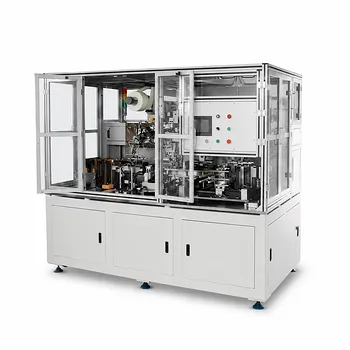
Semi Automatic Lithium Ion Battery Z Fold Stacking Machine for Prismatic and Pouch Cell Stacking
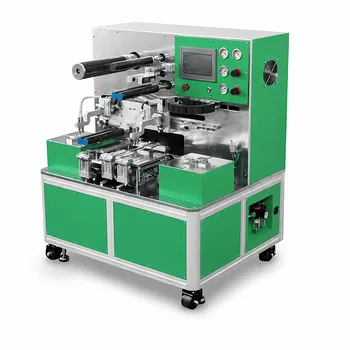
Semi Automatic Stacking Machine Laboratory Stacking Machine for Lithium Pouch Cell Assembly
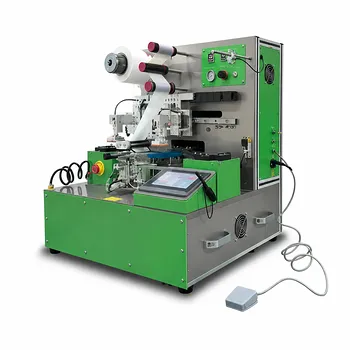
Laboratory Semi Automatic Stacking Machine for Lithium Battery Cell Assembly

Lithium Ion Battery Z Fold Semi Automatic Stacking Machine for Pouch Cell Fabrication and Battery Research
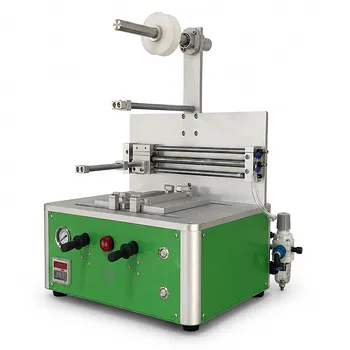
Semi Automatic Z Fold Stacking Machine for Sodium Ion and Advanced Battery Cell Prototyping