The core requirement for constant pressure in solid-state battery assembly stems from the fundamental lack of "wetting" inherent in solid-solid interfaces.
Maintaining constant pressure during the assembly and operation of SPE-NCM811 cathode pellets is essential to establish and preserve intimate physical contact between rigid components. This mechanical force eliminates microscopic gaps at the interface between the cathode and the solid electrolyte, effectively reducing interfacial resistance and allowing for efficient lithium-ion transport. Without this sustained pressure, the battery’s rate performance and cycle life would degrade rapidly due to poor connectivity.
Central Takeaway: Constant pressure acts as a mechanical bridge in all-solid-state batteries, ensuring that rigid components maintain a seamless, low-impedance connection. This sustained force is necessary to overcome the lack of liquid wetting and to accommodate the physical volume changes that occur during the charge and discharge process.
Overcoming the Challenges of Rigid Interfaces
Bridging Microscopic Gaps
Unlike traditional batteries where liquid electrolytes flow into every pore, solid-state components are inherently rigid and cannot naturally "wet" one another. Applying constant pressure forces the SPE-NCM811 cathode particles into tight contact with the solid electrolyte layer.
This process eliminates the microscopic voids that would otherwise block the movement of lithium ions. By creating a seamless interface, you ensure that the entire surface area of the active material is electrochemically active.
Reducing Interfacial Impedance
The point where the cathode meets the solid electrolyte is typically the area of highest resistance in the cell. High external pressure minimizes this contact resistance, facilitating a smoother flow of ions across the boundary.
Lowering this impedance is a prerequisite for achieving high rate performance. Without it, the battery cannot discharge or charge quickly enough to be practically useful.
Managing Dynamic Volumetric Changes
Accommodating Material Expansion
During the lithiation and delithiation process, electrode materials undergo significant volumetric changes, expanding and contracting as ions move in and out. If the assembly is not held under constant pressure, these changes can cause the layers to physically pull apart.
Sustained pressure acts as a restorative force, ensuring the solid-solid interface remains intact even as the materials shift. This prevents the formation of cracks that would otherwise terminate the electrochemical pathway.
Preventing Delamination and Cracking
When an interface separates, it is known as delamination, a common failure point in solid-state systems. Constant stack pressure (often ranging from 5 MPa to 50 MPa) provides the mechanical constraint necessary to prevent this separation.
By maintaining structural integrity throughout the battery's life, you ensure long-term cycling stability. This mechanical stability is what ultimately enables the battery to reach its intended lifespan.
Understanding the Trade-offs
System Weight and Complexity
The requirement for high stack pressure necessitates the use of heavy, specialized fixtures or testing molds to maintain the load. In a commercial application, this adds significant "dead weight" and volume to the battery pack, which can offset the energy density gains of solid-state technology.
Risks of Mechanical Stress
If pressure is applied unevenly or exceeds the material's tolerance, it can lead to internal short circuits. Extreme pressure may cause the solid electrolyte to crack or lead to lithium dendrite penetration, posing a safety risk and destroying the cell.
How to Apply This to Your Project
When assembling or testing all-solid-state cells, your approach to pressure management should align with your specific research or production goal:
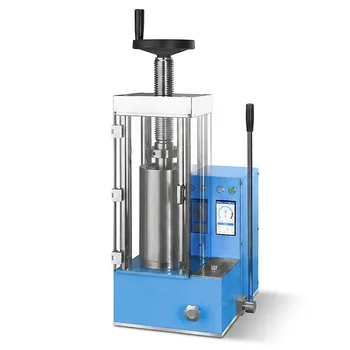
- If your primary focus is accurate data acquisition: Use a laboratory press to apply precise, constant pressure (e.g., 50 MPa) to ensure reproducible results for ionic conductivity and electrochemical impedance.
- If your primary focus is maximizing cycle life: Implement specialized fixtures or spring-loaded molds that can maintain a stable stack pressure (typically 5–25 MPa) to compensate for the continuous volume expansion of the electrodes.
- If your primary focus is optimizing energy density: Investigate the minimum effective pressure required to maintain contact, as reducing the weight of the pressure-applying hardware is key to pack-level performance.
Integrating precise pressure management is not merely a secondary detail, but a fundamental pillar of successful all-solid-state battery engineering.
Summary Table:
| Key Challenge | Role of Constant Pressure | Impact on Battery Performance |
|---|---|---|
| Rigid Interfaces | Eliminates microscopic gaps & ensures "wetting" | Lower interfacial resistance & higher rate performance |
| Volumetric Changes | Accommodates expansion/contraction during cycling | Prevents delamination, cracking, and loss of contact |
| Lithium-Ion Transport | Acts as a mechanical bridge between components | Facilitates efficient and smooth ion flow |
| Structural Integrity | Provides necessary mechanical constraint | Ensures long-term cycling stability and battery life |
Elevate Your Battery Research with KINTEK Precision Pressing
Achieving the perfect interface in SPE-NCM811 solid-state batteries requires uncompromising pressure control. KINTEK specializes in comprehensive laboratory pressing solutions designed to meet the rigorous demands of advanced energy research.
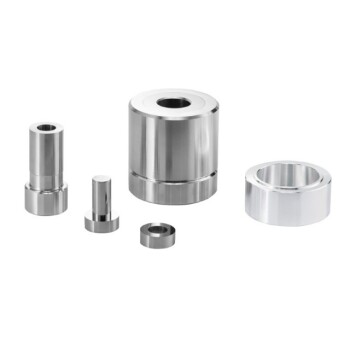
Whether you need to maintain precise stack pressure or achieve high-density pelletization, our range includes:
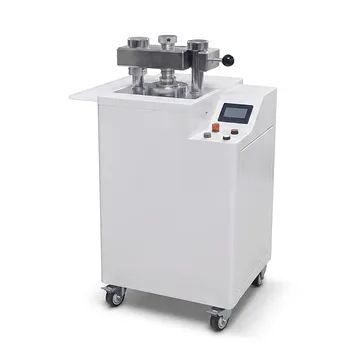
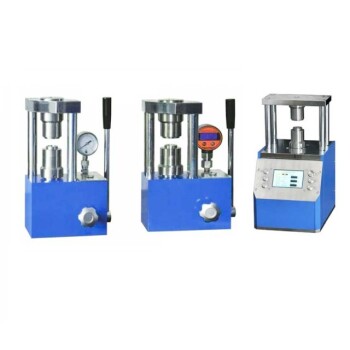
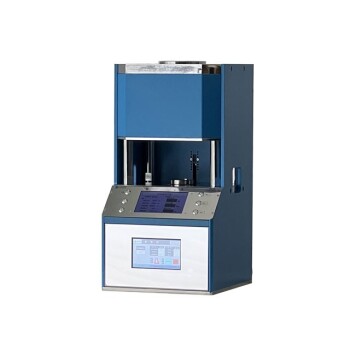
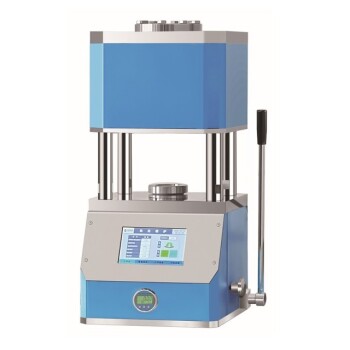
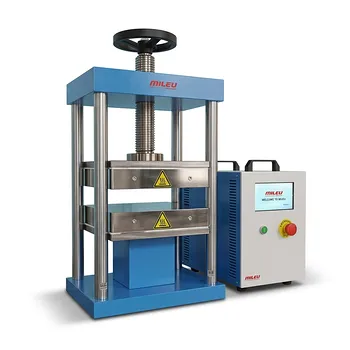
- Manual & Automatic Presses: For versatile lab-scale cell assembly.
- Heated & Multifunctional Models: To explore temperature-dependent electrochemical behavior.
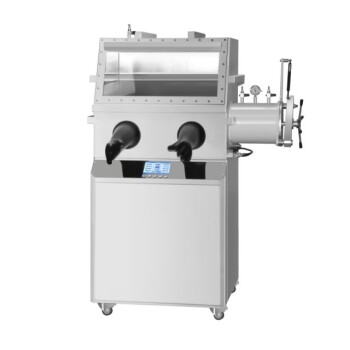
- Glovebox-Compatible Systems: For moisture-sensitive solid-state material processing.
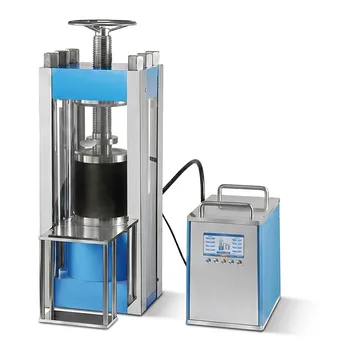
- Cold & Warm Isostatic Presses (CIP/WIP): Widely applied in high-performance battery research to ensure uniform density.
Ready to optimize your battery assembly process? Contact KINTEK today to find the ideal pressing solution for your lab and ensure the structural integrity of your next-generation solid-state cells.
References
- Guo Zhang Tang, Xinping Ai. Solid–Polymer–Electrolyte Interphase Inductively Formed by Surface Chemistry to Stabilize the High Ni Cathode in Sulfide‐Based All‐Solid‐State Lithium Batteries. DOI: 10.1002/cey2.70076
This article is also based on technical information from Kintek Solution Knowledge Base .
Related Products
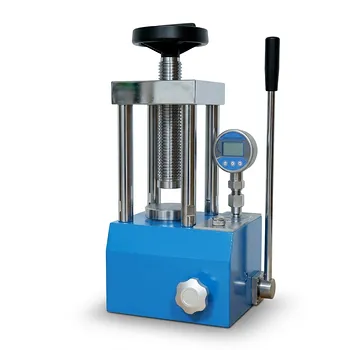
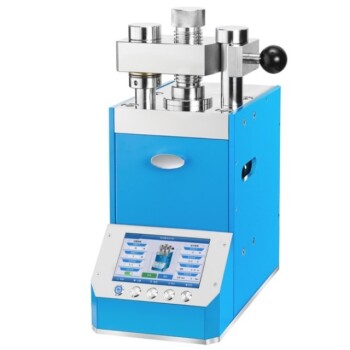
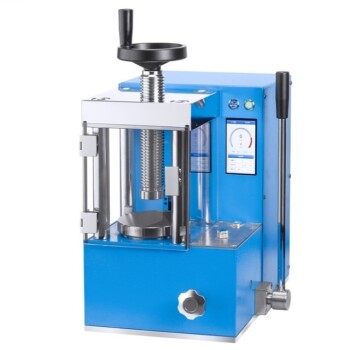
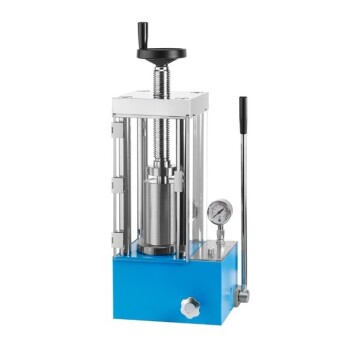
- Manual Laboratory Hydraulic Pellet Press Lab Hydraulic Press
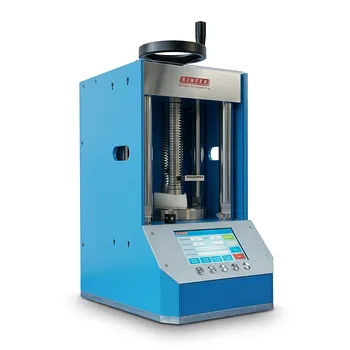
- Automatic Laboratory Hydraulic Press Lab Pellet Press Machine
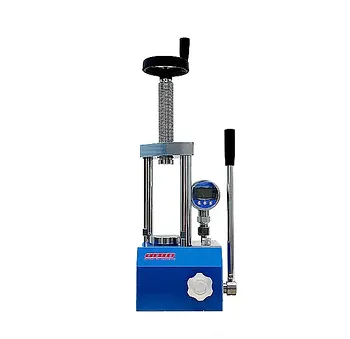
- Manual Laboratory Hydraulic Press Lab Pellet Press
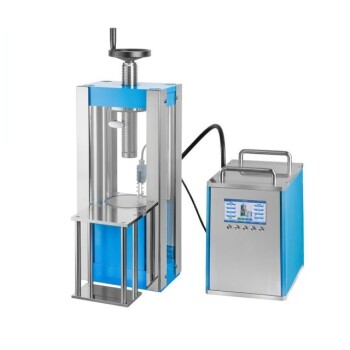
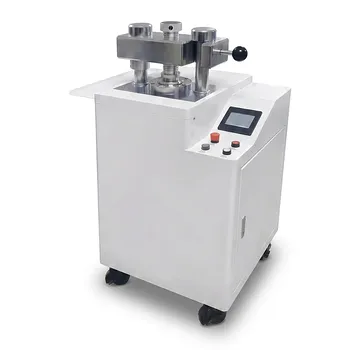
- Laboratory Hydraulic Split Electric Lab Pellet Press
- Automatic Laboratory Hydraulic Press for XRF and KBR Pellet Pressing
People Also Ask
- What is the primary purpose of manual lab hydraulic pellet presses? Achieve High-Precision Sample Preparation for Spectroscopy
- What is the primary purpose of a manual lab hydraulic pellet press? Ensure Accurate Sample Prep for XRF and FTIR
- What is the purpose of initial axial molding using a lab hydraulic press? Optimizing Electrolyte Green Bodies
- What role does a lab hydraulic press play in researching squishy granular matter? Expert Insights into Material Physics
- What is the primary function of a laboratory hydraulic press in evaluating the ionic conductivity of Li6PS5X (LMSX)?