All Questions
What Are The Advantages Of Using A Laboratory Automatic Press Machine To Shape Co-Doped Zinc Ferrite Powder For Awh Tests?
Discover how automatic laboratory presses ensure consistency, prevent material loss, and standardize diffusion paths for AWH testing.
Why Is A Laboratory Hydraulic Press Used For Ce-Ysz Ceramic Green Bodies? Achieve Maximum Green Density And Strength
Learn how laboratory hydraulic presses apply high axial pressure to Ce-YSZ powder to eliminate voids and ensure high-performance ceramic sintering.
How Does A High-Precision Laboratory Press Contribute To Evaluating Liquid Metal Electrodes? Map Phase Transitions.
Learn how high-precision presses validate phase transition theories by quantifying hardness variations in Liquid Metal Electrodes (PTE).
How Does The Application Of High Pressure Via A Laboratory Press Machine Affect The Microstructural Integrity Of Llzt?
Learn how high-pressure lab pressing optimizes LLZT ceramic density to eliminate voids, boost conductivity, and prevent battery short circuits.
Why Is A Laboratory Press Machine Essential For Llzt Preparation? Optimize Your Solid Electrolyte Performance
Learn how laboratory presses consolidate LLZT powders into green bodies, reducing porosity and ensuring high ionic conductivity for batteries.
Why Is A Laboratory Hydraulic Press Critical For Evaluating Cemented Sand And Gravel? Test Csg Deformation Resistance
Learn why hydraulic presses are essential for measuring the elastic modulus and tensile strength of CSG to prevent structural temperature cracks.
What Is The Necessity Of Using A Secondary Cooling Press With Steel Plates? Ensuring Flatness In Composites
Learn why a secondary cooling press with steel plates is vital for preventing warping and ensuring dimensional stability in composite manufacturing.
Why Is A High-Precision Laboratory Hydraulic Press Necessary For Nickel-Based Powder Metallurgy? Optimize Your Green Body
Learn why precision hydraulic presses are critical for densification, particle rearrangement, and green strength in nickel-based powder metallurgy.
What Function Does A Hydraulic Bench Press Perform? Essential Shaping For Y-Tzp & Stainless Steel Green Bodies
Learn how hydraulic bench presses provide initial densification and geometric shaping for Y-TZP and stainless steel composite green bodies.
How Does Solid Electrolyte Aggregation Affect Compression Efficiency? Solve Porosity Issues In Battery Electrodes
Learn how electrolyte particle aggregation creates mechanical resistance during compression, reducing density and ionic conductivity in batteries.
Why Is A Laboratory Hydraulic System With Precise Pressure-Holding Required For Composite Electrode Compression?
Learn why precise pressure-holding is essential for solid-state battery electrode density, interface stability, and crack prevention.
What Core Function Does A Laboratory High-Pressure Press Serve In Battery Composite Electrodes? Optimize Densification
Learn how high-pressure presses enable solid-state battery performance by eliminating voids and creating vital ion transport channels.
How Do A Specialized Metallographic Mounting Press And Its Resins Assist In Lpbf Analysis? Ensure Edge Integrity
Learn how metallographic mounting presses and thermosetting resins protect LPBF samples from edge rounding for accurate microstructural analysis.
What Is The Significance Of Using A Lab Press Machine For Zno@Sio2 Rubber Testing? Achieve Precision In Vulcanization
Learn how lab press machines enable precise vulcanization and standardized testing to evaluate ZnO@SiO2 activators in rubber nanocomposites.
Why Must A Laboratory Hydraulic Press Be Used For Biomass Sem? Achieve Precise Sample Preparation
Learn how laboratory hydraulic presses optimize biomass for SEM/EDS by creating flat, dense pellets for superior imaging and elemental analysis.
What Is The Function Of A Precision Laboratory Press In Fabric Actuator Production? Achieve Durable Layer Bonding
Learn how precision laboratory presses bond driving films to fabric substrates through uniform pressure and heat for multi-layer composite actuators.
What Role Does A Pressure Device Play Regarding Current Collectors? Key For Solid-State Pouch Cell Integration
Learn how pressure devices maintain contact, reduce resistance, and prevent delamination between current collectors and active materials.
Why Is Pressure Uniformity In A Laboratory Press Critical For Llzto? Master Solid-State Electrolyte Quality
Learn why uniform pressure is vital for LLZTO electrolytes to prevent micro-cracks, maximize density, and block lithium dendrites in batteries.
Why Is A Laboratory Hydraulic Press Required For Solid-State Batteries? Engineer High-Performance Ionic Interfaces
Learn how laboratory hydraulic presses eliminate voids and reduce interfacial resistance to enable ion transport in solid-state battery assembly.
What Is The Primary Role Of High-Precision Pressing Equipment In The Multilayer Assembly Of All-Solid-State Batteries?
Learn how high-precision pressing ensures ionic conductivity in all-solid-state batteries by eliminating voids and reducing interfacial impedance.
What Is The Function Of A Laboratory Manual Hydraulic Press In Layered Composite Preforms? Ensure Structural Integrity
Learn how laboratory manual hydraulic presses provide green strength, densification, and interfacial contact for layered composite preforms.
Why Is A Lab Press Used To Compact Llzto Mixed Powders Prior To Sintering? Ensure High Ionic Conductivity
Learn how laboratory presses optimize LLZTO powder compaction to maximize green density, reduce shrinkage, and prevent battery short circuits.
What Is The Necessity Of A Lab Press For Composite Cathodes? Master Solid-State Battery Microstructure
Learn why lab presses are vital for creating three-phase interfaces, reducing contact impedance, and enabling high-density solid-state batteries.
What Role Does Laboratory Pressure Assembly Equipment Play In Setting Stacking Pressure For Silicon-Based Batteries?
Learn how precise 0.5 MPa stacking pressure from lab assembly equipment suppresses silicon expansion and boosts battery Coulombic efficiency.
What Is The Importance Of A Laboratory Manual Press Or Precision Disc Cutter In Lmro Coin Cell Assembly?
Learn how precision disc cutters and laboratory presses ensure geometric consistency and data integrity in LMRO battery research and assembly.
Why Must Precision Thermocouples Be Placed Near The Specimen? Optimize Inconel 718 Vacuum Hot Pressing Accuracy
Learn why proximity sensor placement is vital for Inconel 718 vacuum hot pressing to prevent thermal lag and ensure microstructural integrity.
Why Use A Uniaxial Powder Press For All-Solid-State Batteries? It Creates The Essential Solid-Solid Contact.
Learn how uniaxial pressing compacts cathode materials to minimize interfacial resistance & enable ion transport in solid-state batteries.
What Is The Function Of A Lab Press In The Assembly Of 2032-Type Coin Cells For Solid-State Battery Testing? Ensure Data Validity And Performance
Discover how a lab press ensures uniform compaction and hermetic sealing for reliable solid-state battery testing, minimizing interfacial resistance.
What Is The Purpose Of Applying Pressure With A Lab Press To A Self-Supporting Solid-State Electrolyte Membrane? Achieve High-Density, High-Performance Components
Learn how lab press pressure transforms porous electrolytes into dense, functional membranes by reducing voids, enhancing ionic conductivity, and improving mechanical integrity for solid-state batteries.
Why Is Precise, Graded Pressure Control Critical When Constructing The Multi-Layer Structure Of Sulfide-Based All-Solid-State Batteries Using A Lab Press?
Learn how graded pressure control in lab presses optimizes density, prevents damage, and reduces impedance in solid-state battery layers.
What Is The Primary Function Of A Laboratory Hydraulic Press In The Fabrication Of All-Solid-State Batteries? Achieve Dense, High-Performance Solid-State Cells
Learn how a lab hydraulic press applies high, uniform pressure to compact powders and create seamless solid-solid interfaces, essential for functional all-solid-state batteries.
What Is The Essential Role Of A Laboratory Hydraulic Press In The Preparation Of Llzo Solid-State Electrolyte Pellets? It Dictates Final Pellet Performance
Learn how a lab hydraulic press compacts LLZO powder into dense green pellets, a critical step for achieving high ionic conductivity and structural integrity.
What Is The Purpose Of Applying Multi-Step, Precisely Controlled Pressure With A Laboratory Hydraulic Press During The Stack Assembly Of An All-Solid-State Battery? To Engineer High-Performance Battery Interfaces
Learn how multi-step hydraulic pressing minimizes interfacial impedance in solid-state batteries by creating void-free, low-resistance solid-solid contacts.
Why Apply Different Pressures To Battery Layers? Master Multi-Layer Solid-State Battery Assembly
Learn why staged pressure application is critical for solid-state battery assembly, preventing material damage while ensuring optimal ionic conductivity.
Why Are Different Pressures Applied To The Electrolyte, Cathode, And Anode? A Key To Reliable All-Solid-State Battery Assembly
Learn why a variable-pressure strategy is essential for assembling solid-state batteries, balancing densification of rigid cathodes with the safety of soft lithium anodes.
Why Must A Continuous And Precise Stack Pressure Be Applied During The Electrochemical Performance Testing Of Assembled All-Solid-State Batteries?
Learn why precise stack pressure is critical for solid-state battery testing, ensuring low interfacial resistance, dendrite suppression, and reproducible data.
What Is The Function Of The Multi-Step Precision Pressing Process? Achieve Optimal Performance In All-Solid-State Battery Assembly
Learn how a multi-step hydraulic press process creates dense, void-free interfaces in solid-state lithium-sulfur batteries, drastically reducing impedance.
Why Must A Precise Stack Pressure, Such As 3.3 Mpa, Be Applied When Assembling Li|Llzo|Li Symmetric Cells For Electrochemical Testing?
Learn how precise stack pressure reduces interfacial resistance, enables uniform ion flux, and is critical for reliable solid-state battery testing.
Why Is A Multi-Step Pressing Process Necessary For All-Solid-State Sodium-Ion Batteries? Unlock Optimal Battery Performance
Learn how multi-step pressing with varying pressures is essential for creating high-density, low-resistance interfaces in solid-state sodium-ion batteries.
What Is The Role Of A Hydraulic Press During The Assembly Of An All-Solid-State Battery Stack? Achieve Superior Solid-Solid Interface Contact
Learn how a hydraulic press applies precise pressure to eliminate voids and ensure ion transport in solid-state battery assembly, reducing internal resistance.
What Is The Role Of A Laboratory Press In The Assembly Of Battery Prototypes? Ensure Precise, High-Performance Cell Assembly
Learn how a lab press ensures uniform sealing and densification for reliable battery prototyping, from standard cells to solid-state batteries.
Related Products
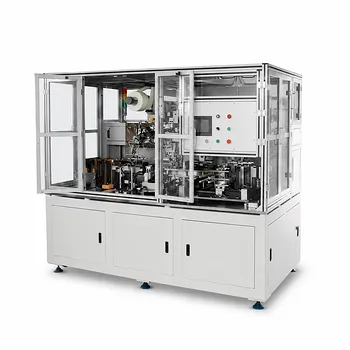
Semi Automatic Lithium Ion Battery Z Fold Stacking Machine for Prismatic and Pouch Cell Stacking
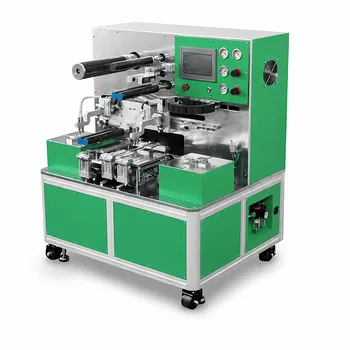
Semi Automatic Stacking Machine Laboratory Stacking Machine for Lithium Pouch Cell Assembly
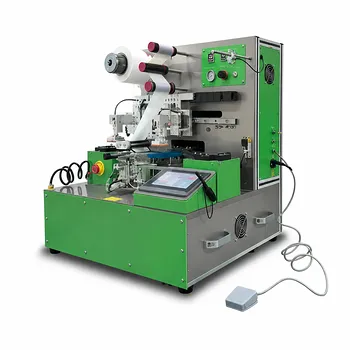
Laboratory Semi Automatic Stacking Machine for Lithium Battery Cell Assembly

Lithium Ion Battery Z Fold Semi Automatic Stacking Machine for Pouch Cell Fabrication and Battery Research
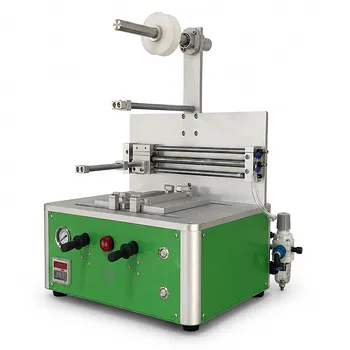
Semi Automatic Z Fold Stacking Machine for Sodium Ion and Advanced Battery Cell Prototyping