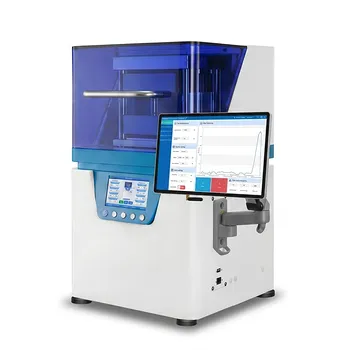
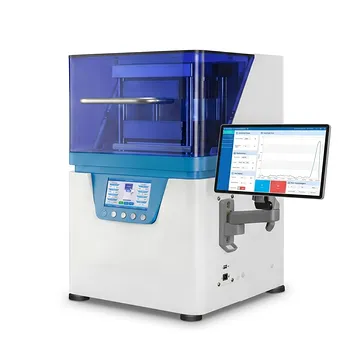
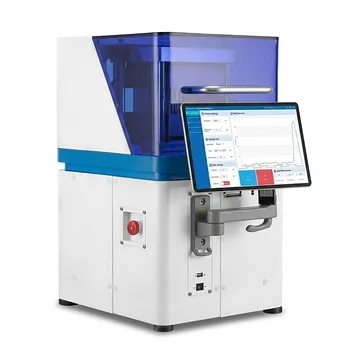
Vacuum hot pressing sintering furnaces are classified into three distinct categories based on their operational service environment. These categories are Atmospheric Hot Press Sintering Furnaces for standard air conditions, Atmosphere Hot Pressing Sintering Furnaces for controlled gas environments, and Vacuum Hot Press Sintering Furnaces for high-vacuum applications.
The specific classification you choose dictates the chemical interaction between the furnace environment and your material, determining whether the process promotes oxidation, specific chemical reactions, or complete isolation from contaminants.
Classification by Service Environment
To select the right equipment, you must understand how the service environment interacts with the sintering process. The three classifications offer varying levels of atmospheric control.
1. Atmospheric Hot Press Sintering Furnace
This equipment is designed to operate under oxygen or standard atmospheric conditions.
It is the simplest form of the technology, utilizing the ambient air naturally present in the environment.
This classification is typically suitable for oxide ceramics or materials that are chemically stable when exposed to oxygen at high temperatures.
2. Atmosphere Hot Pressing Sintering Furnace
Distinct from the "atmospheric" type, this category utilizes controlled atmospheres.
These furnaces allow for the introduction of specific gases to induce desired chemical reactions or provide a protective shield during sintering.
This environment is essential when the material requires a specific gaseous medium to achieve the correct phase or density without oxidation.
3. Vacuum Hot Press Sintering Furnace
This classification functions under high vacuum conditions.
It is specifically engineered for materials that are anaerobic (require the absence of air) or highly reactive with oxygen.
By removing gases from the chamber, this furnace prevents oxidation and contamination, making it the standard for high-purity metals and sensitive ceramics.
Understanding the Trade-offs
Choosing a furnace environment involves balancing material requirements against complexity and cost.
Complexity vs. Protection
Atmospheric furnaces are generally less complex because they do not require vacuum pumps or elaborate gas management systems. However, they offer zero protection against oxidation, severely limiting the types of materials you can process.
Purity vs. Chemical Interaction
Vacuum furnaces offer the highest level of purity by eliminating environmental variables. The trade-off is that they cannot support processes that require a specific gas pressure to prevent sublimation or induce a reaction, which is where Atmosphere furnaces excel.
Making the Right Choice for Your Material
The decision ultimately relies on the chemical sensitivity of the material you intend to sinter.
- If your primary focus is processing stable oxides: Choose an Atmospheric Hot Press Sintering Furnace, as these materials do not degrade in oxygen.
- If your primary focus is inducing specific chemical reactions: Choose an Atmosphere Hot Pressing Sintering Furnace to leverage controlled gases for the sintering process.
- If your primary focus is high purity or oxygen-sensitive materials: Choose a Vacuum Hot Press Sintering Furnace to ensure an anaerobic environment that prevents contamination.
Match the furnace environment to your material's reactivity to ensure optimal structural integrity.
Summary Table:
| Furnace Classification | Service Environment | Key Feature | Best For |
|---|---|---|---|
| Atmospheric | Standard Air / Oxygen | Ambient pressure, simple design | Oxide ceramics and stable materials |
| Atmosphere | Controlled Gas (Ar, N2, etc.) | Induces reactions or provides protection | Specific chemical phases or shielding |
| Vacuum | High Vacuum (Anaerobic) | Removes all gases and contaminants | High-purity metals and oxygen-sensitive materials |
Elevate Your Material Research with KINTEK Precision
Ready to achieve unmatched purity and structural integrity in your sintering processes? KINTEK specializes in comprehensive laboratory pressing solutions tailored for high-stakes research. Whether you need manual, automatic, heated, or glovebox-compatible models—or advanced cold and warm isostatic presses—we provide the specialized equipment essential for cutting-edge battery research and material science.
Don't compromise on your environment. Contact KINTEK today to consult with our experts and find the perfect hot pressing solution for your lab!
Related Products
- Automatic High Temperature Heated Hydraulic Press Machine with Heated Plates for Lab
- Heated Hydraulic Press Machine With Heated Plates For Vacuum Box Laboratory Hot Press
- Heated Hydraulic Press Machine with Heated Plates for Vacuum Box Laboratory Hot Press
- Automatic Hydraulic Heat Press Machine with Multi Stage Programmable Control and Integrated Water Cooling Plate Size 180x180mm
- Laboratory Manual Heated Hydraulic Press Machine with Hot Plates
People Also Ask
- Function of a Laboratory Hydraulic Press with Heated Platens in SSE? Enhance Battery Density & Conductivity
- What are the requirements for electrode pressing with high-viscosity ionic liquids like EMIM TFSI? Optimize Performance
- How does a laboratory heated hydraulic press facilitate PBN sample prep for WAXS? Achieve Precise X-Ray Scattering
- What are the industrial applications of heated hydraulic presses? Master Heat & Force for Precision Manufacturing
- Why is a laboratory hydraulic press with heating plates required for PLA/TEC films? Achieve Precise Sample Integrity