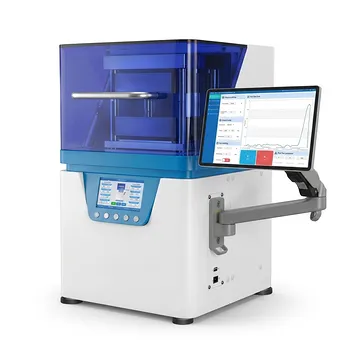
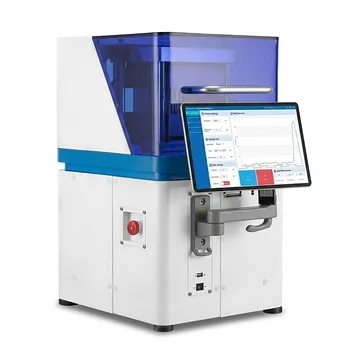
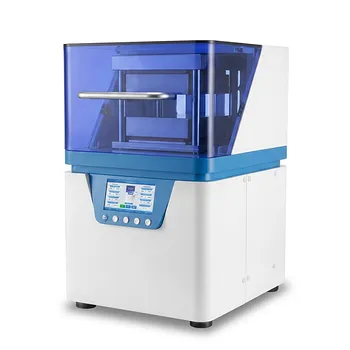
A laboratory electric heating hydraulic press facilitates the preparation of EPDM composite test specimens by simultaneously applying precisely controlled high temperatures and high pressures to a raw rubber mixture. This environment triggers the vulcanization cross-linking reaction, transforming the material from a pliable thermoplastic state into a durable thermoset elastomer while ensuring the mold is filled completely without internal defects.
Core Takeaway: The heated hydraulic press is the critical tool for converting raw EPDM into standardized test specimens by using heat to drive chemical cross-linking and pressure to ensure a dense, void-free physical structure necessary for accurate mechanical testing.
The Role of Thermal Energy in Vulcanization
Triggering the Chemical Cross-Linking
EPDM (Ethylene Propylene Diene Monomer) requires a specific thermal threshold, often around 165°C, to initiate the vulcanization process.
The heat provided by the electric platens supplies the energy needed for sulfur or peroxide bridge formation between polymer chains. This chemical shift is what gives the final specimen its elastic memory and thermal stability.
Achieving a Viscous Flow State
Before the material cures, the heat reduces the viscosity of the EPDM composite, allowing it to reach a viscous flow state.
In this state, the polymer matrix can effectively integrate with inorganic fillers or reinforcement agents. This ensures that the final composite is homogeneous, preventing weak spots that could skew subsequent tensile or hardness tests.
The Function of High Hydraulic Pressure
Eliminating Internal Voids and Air Pockets
Applying high pressure, typically up to 300 KN, is essential for degassing the material during the molding process.
By compressing the mixture, the press forces out entrapped air and prevents the formation of microscopic voids. Eliminating these defects is vital for ensuring the specimen has a uniform density and consistent physical properties.
Ensuring Mold Conformity and Dimensional Precision
High hydraulic pressure ensures that the softened rubber flows into every corner of the mold cavity.
This creates specimens with precise dimensions and smooth surfaces that meet strict international standards (like ASTM or ISO). Without this pressure, the specimen might suffer from "short shots" or uneven thickness, making standardized testing impossible.
Precision Control and Material Rearrangement
Managing the Cooling and Pressure-Holding Cycle
Modern laboratory presses allow for precise control over the pressure-holding and cooling phases.
Holding the material under pressure while it begins to cool allows polymer chains to rearrange within the confined space of the mold. This controlled transition minimizes residual stresses and prevents warping once the specimen is removed.
Consistency Across Multiple Samples
The ability to replicate identical temperature and pressure cycles (e.g., 10 minutes at 165°C) ensures reproducibility.
Consistency between batches is the foundation of scientific inquiry; it ensures that differences in test results are due to the material composition rather than variations in the fabrication process.
Understanding the Trade-offs and Pitfalls
The Risk of Thermal Degradation
While heat is necessary for curing, excessive exposure or "hot spots" on the platens can lead to over-curing.
Over-cured EPDM becomes brittle and loses its elastomeric properties, which will lead to inaccurate data during elongation tests. Regular calibration of the electric heating elements is required to maintain a uniform thermal profile.
Pressure Spikes and Mold Flash
Applying pressure too rapidly can cause "flash," where material is forced out of the mold seams.
This not only wastes material but can also lead to a drop in effective pressure within the cavity, resulting in under-densified sections. A gradual, programmed pressure application is usually preferred to allow for air escape before final compaction.
How to Optimize Your Specimen Preparation
To achieve the highest quality EPDM specimens, you must balance the chemical requirements of the rubber with the mechanical capabilities of the press.
- If your primary focus is Data Accuracy: Ensure the press is equipped with digital controls for both temperature and pressure to maintain strict adherence to your established curing profile.
- If your primary focus is Composite Development: Prioritize a press with a robust degassing (bumping) cycle to ensure inorganic fillers are perfectly integrated without air interference.
- If your primary focus is High-Throughput Testing: Opt for a system with integrated cooling plates to reduce the "mold-to-strip" time, allowing for faster sample turnover without compromising structural integrity.
By mastering the synergy of heat and pressure, you ensure that every EPDM specimen is a perfect representation of the material's true potential.
Summary Table:
| Parameter | Role in EPDM Preparation | Key Benefit |
|---|---|---|
| Thermal Energy | Triggers vulcanization at ~165°C | Ensures elastic memory & material stability |
| Hydraulic Pressure | Degassing & mold filling (up to 300 KN) | Eliminates internal voids & ensures dimensions |
| Precision Control | Manages cooling & pressure-holding | Minimizes residual stress & ensures repeatability |
Optimize Your Specimen Preparation with KINTEK
Achieve unparalleled precision in your material characterization with KINTEK’s comprehensive laboratory pressing solutions. Whether you are conducting cutting-edge battery research or standard elastomer testing, our robust equipment ensures consistent vulcanization and void-free EPDM specimens every time.
Our specialized lineup includes:
- Manual & Automatic Heated Presses for streamlined workflows.
- Multifunctional & Glovebox-Compatible Models for sensitive environments.
- Cold and Warm Isostatic Presses for advanced material compaction.
Ready to elevate your lab's data accuracy? Contact KINTEK today to find the perfect pressing solution tailored to your research needs!
References
- Mihaela Niţuică, Ştefania Stoleriu. Development and characterization of biodegradable compound based on EPDM and wood waste. DOI: 10.24264/icams-2020.iv.14
This article is also based on technical information from Kintek Solution Knowledge Base .
Related Products
- 24T 30T 60T Heated Hydraulic Lab Press Machine with Hot Plates for Laboratory
- Automatic Heated Hydraulic Press Machine with Hot Plates for Laboratory
- Automatic Heated Hydraulic Press Machine with Heated Plates for Laboratory
- Automatic Heated Hydraulic Lab Press with Programmable Touch Screen Controls and Precision Temperature Regulation
- Automatic Heated Hydraulic Lab Press 120x120mm Plate Fully Automated Material Research Press
People Also Ask
- Function of a Laboratory Hydraulic Press with Heated Platens in SSE? Enhance Battery Density & Conductivity
- Why is a laboratory hydraulic press with heating plates required for PLA/TEC films? Achieve Precise Sample Integrity
- What role does a laboratory heated hydraulic press play in LTCC? Essential for High-Density Ceramic Lamination
- Why Use a Laboratory Heated Hydraulic Press for SSAB CCM? Optimize Solid-State Battery Interfacial Bonding
- Why is a laboratory heated hydraulic press utilized during the lamination stage of NASICON green tapes?