Desktop selective laser sintering (SLS) offers a fundamental shift in pharmaceutical manufacturing by enabling the creation of intricate, self-supporting geometries that are physically impossible to produce via traditional compression. By using the surrounding powder bed as a natural scaffold, SLS allows for the fabrication of overhanging structures and internal voids. This precision control over a tablet's physical form directly translates to more sophisticated and customizable drug release profiles.
Core Takeaway: SLS technology removes the geometric constraints of traditional mechanical dies by using unsintered powder as a built-in support system. This allows developers to engineer complex tablet shapes that precisely dictate how a drug dissolves and is absorbed by the body.
The Mechanics of Geometric Freedom
Self-Supporting Powder Beds
Unlike many other 3D printing methods, SLS does not require the addition of sacrificial support structures to create "overhangs." The unsintered powder surrounding the part acts as a natural cushion, holding the solidified layers in place during the build.
This enables the production of hollow cylinders, truncated cones, and porous lattices without the need for post-processing to remove support material. This is a critical advantage in pharmaceuticals, where the purity and integrity of the dosage form are paramount.
Beyond the Limitations of the Die
Traditional tablet manufacturing relies on mechanical compression, where powder is pressed between two metal punches. This process is inherently limited to relatively simple shapes that can be easily ejected from a mold.
SLS bypasses these physical "mold-release" constraints entirely. Because the laser precisely controls the sintering area, manufacturers can create internal channels or complex external textures that would break or jam in a traditional tablet press.
Impact on Therapeutic Efficacy
Precise Control of Drug Release
The geometry of a tablet is one of the primary drivers of its dissolution rate. By manipulating the surface-area-to-volume ratio through complex shapes, engineers can fine-tune exactly when and where a drug is released in the digestive tract.
Desktop SLS allows for the creation of multi-phasic release profiles within a single tablet. For example, a tablet with a complex internal architecture can be designed to release an initial burst of medication followed by a steady, controlled flow.
Optimization for Personalized Medicine
Desktop SLS printers provide a level of design flexibility that is ideal for small-batch, personalized dosages. Researchers can iterate on tablet designs rapidly, testing how different geometric configurations impact the drug's performance for specific patient populations.
This capability is particularly valuable for drugs with narrow therapeutic windows, where the timing of the release is as important as the dosage itself. SLS ensures that the physical structure of the tablet is perfectly aligned with the desired clinical outcome.
Understanding the Trade-offs
Thermal Sensitivity and Material Stability
One critical consideration is that SLS utilizes a laser to generate heat for sintering the powder particles. Not all active pharmaceutical ingredients (APIs) are thermally stable, meaning some drugs may degrade if the laser intensity or duration is not perfectly calibrated.
Production Speed vs. Complexity
While SLS offers unmatched geometric freedom, it generally operates at a lower throughput than industrial-scale tablet presses. Traditional compression can produce hundreds of thousands of tablets per hour, whereas SLS is currently better suited for complex, high-value, or patient-specific applications.
How to Apply This to Your Project
Making the Right Choice for Your Goal
- If your primary focus is rapid mass production of simple dosages: Traditional tablet compression remains the industry standard for speed and cost-efficiency.
- If your primary focus is achieving highly specific drug release kinetics: Desktop SLS is the superior choice, as it allows for the creation of complex surface areas that regulate dissolution.
- If your primary focus is creating tablets with internal voids or overhangs: SLS is essential, as the powder bed technology eliminates the need for manual support removal.
- If your primary focus is personalized medicine or small-batch R&D: Desktop SLS provides the necessary agility to print and test multiple geometric iterations without the cost of custom tooling.
By leveraging the unique self-supporting nature of SLS powder beds, manufacturers can move beyond basic tablet shapes to create sophisticated drug delivery systems tailored to individual patient needs.
Summary Table:
| Feature | Desktop SLS 3D Printing | Traditional Tablet Compression |
|---|---|---|
| Geometric Capability | Intricate (hollows, lattices, overhangs) | Simple shapes limited by mold release |
| Support Structure | Self-supporting (powder bed scaffold) | Not applicable (mechanical die) |
| Release Control | Highly tunable via surface area manipulation | Limited to simple diffusion/erosion |
| Production Speed | Ideal for R&D and small batches | High-volume mass production |
| Tooling Cost | Zero (digital design) | High (custom metal dies and punches) |
Revolutionize Your Dosage Design with KINTEK
Whether you are pioneering complex drug release profiles or refining material properties, having the right equipment is essential. KINTEK specializes in comprehensive laboratory pressing solutions tailored for high-precision research. We offer a diverse range of manual, automatic, heated, and multifunctional models, as well as cold and warm isostatic presses widely used in pharmaceutical and battery research.
Ready to enhance your lab's manufacturing capabilities? Contact KINTEK today to find the perfect solution for your specific application and accelerate your path from R&D to production!
References
- Valerie R. Levine, Jonas Lindh. Geometry impact on fundamental properties of theophylline-containing SLS printed pharmaceutical tablets. DOI: 10.3389/fddev.2024.1358336
This article is also based on technical information from Kintek Solution Knowledge Base .
Related Products
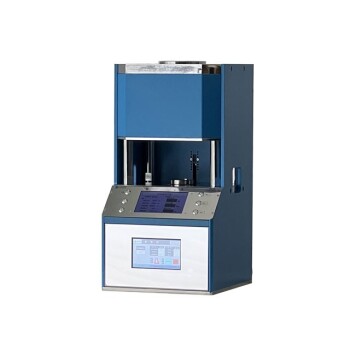
- Automatic High Temperature Heated Hydraulic Press Machine with Heated Plates for Lab
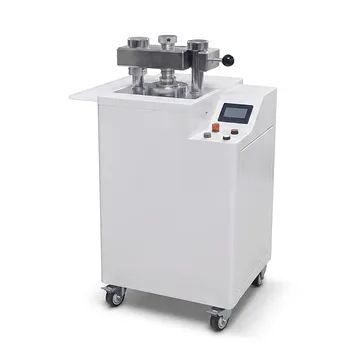
- Automatic XRF Pellet Press for Laboratory Spectrometry Sample Preparation
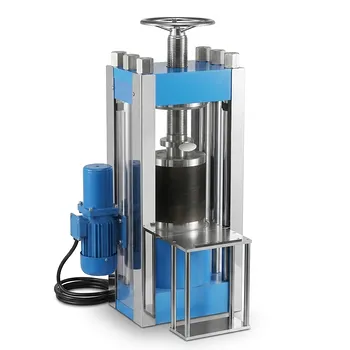
- Split Warm Isostatic Lab Press 200 Ton Powder Compaction Chamber for Battery Research and Material Science
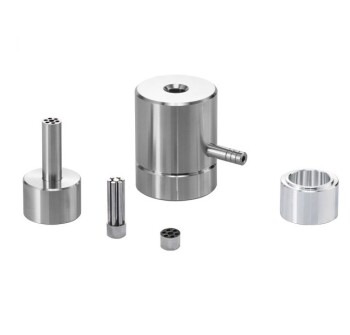
- Special Shape Lab Press Mold for Laboratory Applications
People Also Ask
- Function of a Laboratory Hydraulic Press with Heated Platens in SSE? Enhance Battery Density & Conductivity
- What are the requirements for electrode pressing with high-viscosity ionic liquids like EMIM TFSI? Optimize Performance
- How does a laboratory heated hydraulic press facilitate PBN sample prep for WAXS? Achieve Precise X-Ray Scattering
- What are the industrial applications of heated hydraulic presses? Master Heat & Force for Precision Manufacturing
- Why is a laboratory hydraulic press with heating plates required for PLA/TEC films? Achieve Precise Sample Integrity