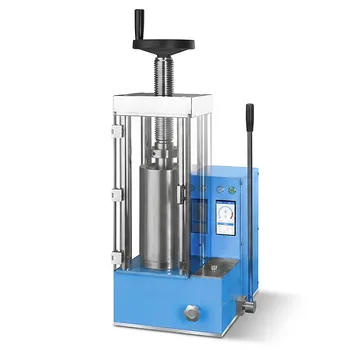
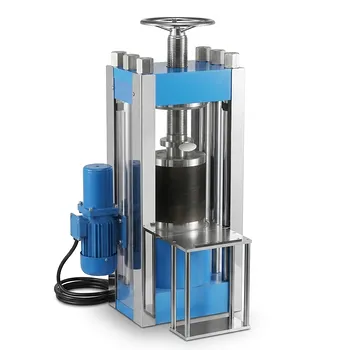
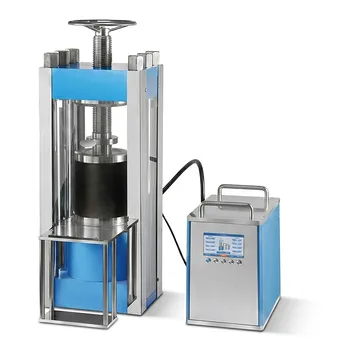
Cold Isostatic Pressing (CIP) provides superior microstructural integrity for zirconia ceramics by utilizing a liquid medium to apply high pressure uniformly from all directions. This omnidirectional approach eliminates the friction losses and internal density gradients inherent in uniaxial pressing. By ensuring every part of the powder experiences the same stress state, CIP produces a green body with exceptional density uniformity, which is critical for preventing deformation or cracking during the subsequent sintering phase.
Core Takeaway: CIP leverages hydrostatic principles to achieve isotropic densification, which significantly reduces porosity and ensures uniform shrinkage. This process is essential for producing high-strength zirconia components with complex geometries that would otherwise fail due to the uneven stress distribution typical of uniaxial pressing.
Eliminating Internal Density Gradients
Isotropic Pressure Application
Unlike uniaxial pressing, which applies force along a single axis, CIP uses a fluid medium to transmit pressure equally across the entire surface of the mold. This omnidirectional compression ensures that the principal stresses are perfectly matched throughout the powder mass.
Removal of Die-Wall Friction
In uniaxial pressing, friction between the powder and the rigid die walls leads to significant energy loss and uneven pressure distribution. CIP eliminates these friction losses, resulting in a highly consistent internal structure that is free from the "pressure cones" common in traditional die pressing.
Prevention of Delamination
Because the pressure is applied equally from all sides, the risk of delamination defects—where layers of the material separate—is virtually eliminated. This isotropic state allows for the production of large or deep components, such as high-quality ceramic pistons, without internal structural flaws.
Enhancing Green Body Quality and Strength
Optimized Particle Packing
The high pressure applied during CIP, often ranging from 140 MPa to 200 MPa, forces zirconia particles into a much tighter alignment. This results in a higher packing density and a significant reduction in internal porosity compared to uniaxial methods.
Superior Mechanical Properties
The tighter molecular and particle alignment achieved through CIP translates directly to the final product's performance. Zirconia processed this way exhibits higher hardness and mechanical strength after sintering because the starting microstructure is more refined and uniform.
Capability for Complex Geometries
CIP utilizes flexible molds rather than rigid steel dies, allowing for the creation of intricate and complex shapes. This flexibility enables engineers to produce near-net-shape components that would be impossible to extract from a standard uniaxial press.
Ensuring Stability During Sintering
Uniform Shrinkage Control
Because the green body has a uniform density, it undergoes consistent shrinkage in all directions during high-temperature sintering. This predictability is vital for maintaining dimensional tolerances and preventing the warping or irregular shrinkage that plagues uniaxially pressed parts.
Mitigation of Micro-cracks
Uniaxial pressing often leaves residual stress concentrations that manifest as micro-cracks or fractures when the ceramic is heated. The isotropic nature of CIP ensures a stable 8YSZ framework, allowing pore-forming agents to be removed without compromising the structural integrity of the ceramic.
Improved Microstructural Uniformity
The final sintered product of a CIP process features a uniform microstructure with no significant density variations. This homogeneity is the primary reason CIP-processed zirconia is preferred for high-performance industrial and medical applications where reliability is paramount.
Understanding the Trade-offs
Process Speed and Complexity
While CIP offers superior quality, it is generally a slower process than uniaxial pressing due to the time required to load flexible molds and cycle the pressure vessel. Uniaxial pressing remains more efficient for high-volume production of simple, flat geometries where slight density gradients are tolerable.
Dimensional Precision of the Green Body
Flexible molds used in CIP do not provide the same initial dimensional precision as rigid steel dies. While the final sintered part is more stable, the "green" (unsintered) part may require more extensive machining if tight tolerances are needed before the final firing.
Increased Operational Costs
The equipment for CIP, including the high-pressure containment vessels and fluid handling systems, represents a higher capital investment. Additionally, the maintenance of seals and flexible tooling adds a layer of operational complexity not found in simple mechanical presses.
How to Apply This to Your Project
When deciding between pressing methods for zirconia composites, consider the final application's structural requirements and geometric complexity.
- If your primary focus is maximum mechanical strength and reliability: Utilize Cold Isostatic Pressing to ensure a defect-free, high-density microstructure that resists cracking.
- If your primary focus is producing complex, non-cylindrical shapes: Choose CIP with flexible tooling to achieve near-net-shape components that uniaxial dies cannot accommodate.
- If your primary focus is preventing warping in large components: Implement CIP to eliminate the density gradients that cause uneven shrinkage during the sintering process.
- If your primary focus is high-volume production of simple, thin disks: Uniaxial pressing may be the more cost-effective choice, provided the resulting density gradients do not compromise the part's function.
By prioritizing isotropic pressure through CIP, you ensure that the inherent material advantages of zirconia are fully realized in the final sintered component.
Summary Table:
| Feature | Cold Isostatic Pressing (CIP) | Uniaxial Pressing |
|---|---|---|
| Pressure Direction | Omnidirectional (Isotropic) | Single Axis (Uniaxial) |
| Density Uniformity | High (No internal gradients) | Low (Subject to friction losses) |
| Shape Complexity | High (Near-net complex shapes) | Low (Simple, flat geometries) |
| Risk of Cracking | Minimal (Uniform shrinkage) | Higher (Residual stresses) |
| Mechanical Strength | Superior post-sintering hardness | Standard mechanical properties |
| Production Speed | Slower (Batch process) | Fast (High-volume automation) |
Optimize Your Ceramic Processing with KINTEK
Unlock the full potential of your zirconia composites and battery research with KINTEK’s comprehensive laboratory pressing solutions. From manual and automatic models to advanced cold and warm isostatic presses, our equipment is designed to eliminate density gradients and ensure the structural integrity of your high-performance materials.
Why choose KINTEK?
- Versatility: Solutions for heated, multifunctional, and glovebox-compatible applications.
- Precision: High-pressure systems (CIP/WIP) tailored for battery research and advanced ceramics.
- Excellence: Durable designs that prevent delamination and warping in complex geometries.
Ready to achieve superior microstructural uniformity? Contact our technical experts today to find the ideal pressing solution for your lab!
References
- Kelvin Chew Wai Jin, S. Ramesh. Mechanical Characterization of Zirconia Ceramic Composite. DOI: 10.1051/matecconf/201815202006
This article is also based on technical information from Kintek Solution Knowledge Base .
Related Products
- Manual Cold Isostatic Pressing CIP Machine Pellet Press
- Electric Split Lab Cold Isostatic Pressing CIP Machine
- Automatic Lab Cold Isostatic Pressing CIP Machine
- Electric Lab Cold Isostatic Press CIP Machine
- Lab Isostatic Pressing Molds for Isostatic Molding
People Also Ask
- Why is Cold Isostatic Pressing (CIP) necessary for SBN ceramics? Achieve High-Density and Crack-Free Sintering
- What are the process advantages of using Cold Isostatic Pressing (CIP) for LSMO? Achieve Defect-Free Density
- Why is Cold Isostatic Pressing (CIP) applied after uniaxial pressing? Optimize Superconductor Precursor Density
- What types of equipment are available for cold isostatic pressing? Explore CIP Solutions for Labs and Production
- What are the technical advantages of cold isostatic pressing equipment compared to uniaxial compression equipment? Learn More!