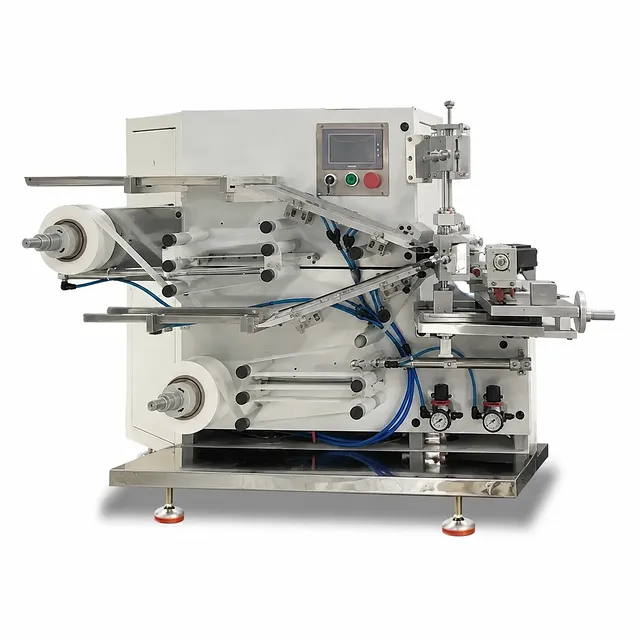
Prismatic Cell Equipment
Semi Automatic Cylindrical Prismatic Lithium Ion Battery Winding Machine
Item Number : FX02
Price varies based on specs and customizations
- Winding Accuracy
- <=0.5 mm
- Production Pace
- 5-7 ppm (cylindrical); 3-5 PPM (prismatic)
- Qualified Rate
- >=98%

Shipping:
Contact us to get shipping details Enjoy On-time Dispatch Guarantee.
Why Choose Us
Easy ordering process, quality products, and dedicated support for your business success.
Product Overview
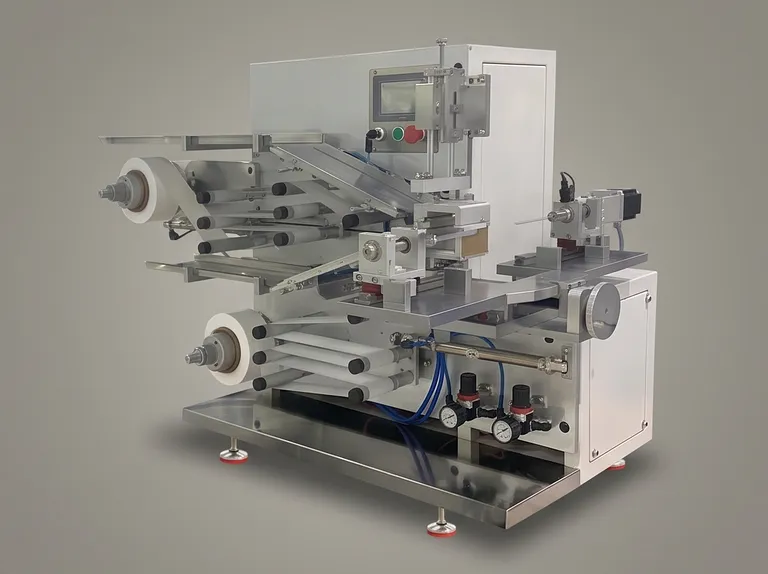
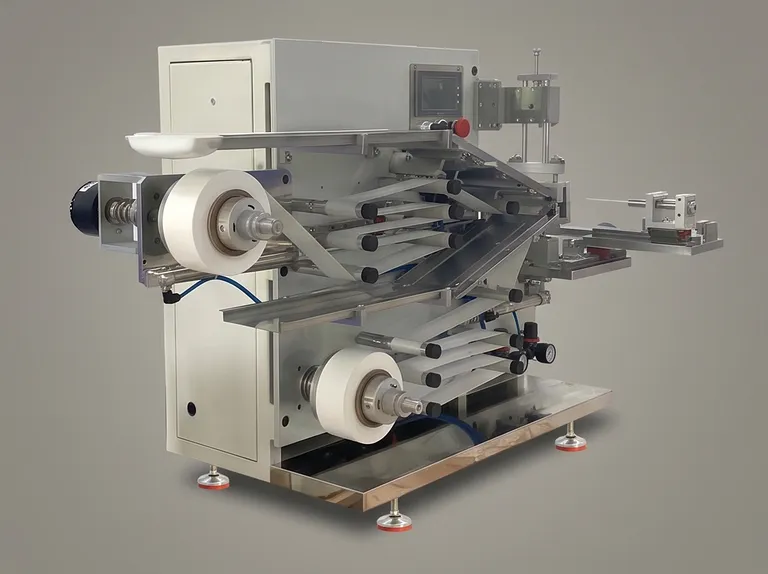
This semi-automatic winding system is designed for forming cylindrical and prismatic lithium-ion battery cells with a controlled, repeatable winding process. Operators manually load the electrode sheets, while the equipment performs automatic winding and automatic mandrel withdrawal. Interchangeable mandrel assemblies allow one unit to support both cell formats, providing practical flexibility for changing battery development requirements.
The equipment is suited to lithium-ion cell research, process development, and pilot-scale production where reliable electrode positioning and controlled winding tension are critical. It accommodates oil-based electrode sheets, water-based electrode sheets, and various separator materials. Process routes can be selected for positive-electrode-first or negative-electrode-first loading, as well as separator-overwrap or electrode-overwrap endings.
A stepper-motor-driven winding shaft maintains constant winding speed, while the electrode and separator tensions remain relatively stable through the winding cycle. This supports consistent cell tension, electrode alignment, and separator positioning. With a qualified rate of at least 98% and utilization of at least 95%, the unit is built for stable, efficient operation under defined laboratory production conditions.
Key Features
-
Dual Cell-Format Capability: Replaceable mandrel assemblies support cylindrical cells with a Phi3.5-Phi5 mm mandrel range and prismatic cells using a combined width range of 38-60. This enables the equipment to be configured around the required cell geometry rather than limiting operation to one format.
-
Controlled Winding Accuracy: Winding accuracy of <=0.5 mm supports controlled electrode and separator placement during cell formation. This level of positional control is important where repeatable internal layer registration is required across a production run.
-
Stable Stepper-Motor Drive: The winding shaft is driven by a stepper motor to maintain a constant winding speed. Stable rotational control helps the system deliver a consistent winding cycle and supports repeatable handling of electrode and separator materials.
-
Consistent Material Tension: Electrode tension and separator tension remain relatively constant during winding. The resulting consistency in cell tension, electrode position, and separator position is intended to improve uniformity of cell capacity and internal resistance.
-
Continuous Separator Handling: The separator remains continuous throughout the winding process, reducing manual contact during this stage. Reduced handling helps limit opportunities for internal short circuits and self-discharge associated with unnecessary human contact.
-
Process-Selectable Loading Sequence: The unit can be operated with the positive electrode loaded first followed by the negative electrode, or with the negative electrode loaded first followed by the positive electrode. This allows the winding sequence to be selected according to the applicable process requirement.
-
Configurable End-Wrap Method: Select separator outer wrapping or electrode-sheet outer wrapping according to the required cell process. This provides a defined choice for the finished winding configuration without changing the core operating principle.
-
Adjustable Feeding Guide: The feed-slot or guide-plate width is adjustable on one side. This adjustment helps accommodate material widths and supports controlled entry of electrode sheets into the winding area.
-
Touchscreen Parameter Setting: A touchscreen operating interface allows working parameters to be set directly at the equipment. The operator can use the interface to establish the required process settings in a straightforward, accessible format.
-
Stable Production Performance: For cylindrical cells, the stated production pace is 5-7 ppm; for prismatic cells, it is 3-5 PPM, based on a 750 mm electrode-sheet length. Actual cycle time remains dependent on electrode length, material quality, and operator proficiency, providing a realistic basis for process planning.
Applications
| Application | Description | Key Benefit |
|---|---|---|
| Cylindrical lithium-ion cell development | Forms wound cylindrical cells using interchangeable Phi3.5-Phi5 mm mandrel assemblies. Operators load electrode sheets, and the system performs the winding and mandrel-withdrawal stages. | Supports cylindrical-format process development with a stated output of 5-7 ppm at the 750 mm electrode-length reference condition. |
| Prismatic lithium-ion cell development | Configures the winding process for prismatic cells through a combined winding-width range of 38-60. The selected mandrel assembly adapts the equipment to the required cell format. | Provides a defined prismatic winding configuration with a stated output of 3-5 PPM at the reference electrode length. |
| Oil-based electrode processing | Winds cells using oil-based electrode sheets together with applicable separator materials. The adjustable guide plate supports material entry into the winding process. | Allows the unit to be applied to electrode processing routes that use oil-based sheets. |
| Water-based electrode processing | Processes water-based electrode sheets within the same semi-automatic operating sequence. The loading order can be selected according to the process requirement. | Extends applicability to water-based electrode workflows without changing the core winding system. |
| Separator-integrity-focused cell assembly | Maintains a continuous separator through winding while controlling its tension relative to the electrode sheets. | Reduces manual contact during winding and supports consistent separator placement in the cell roll. |
| Capacity and resistance uniformity studies | Produces wound cells with relatively consistent electrode tension, separator tension, and material positions. | Supports evaluation of cell capacity and internal-resistance uniformity by improving consistency in the winding stage. |
| Process-route evaluation | Enables positive-electrode-first or negative-electrode-first sheet entry, with separator-overwrap or electrode-overwrap ending options. | Lets teams compare reference-backed loading and end-wrap configurations according to their established process requirements. |
Technical Specifications
| Parameter | FX02 Specification | Notes |
|---|---|---|
| Equipment application | Semi-automatic winding machine for cylindrical or prismatic lithium-ion batteries | Mandrel assemblies are changed to adapt to cylindrical or prismatic cell winding. |
| Operating sequence | Manual electrode-sheet loading, automatic mandrel withdrawal, automatic winding, manual tape application, and manual unloading | |
| Applicable electrode sheets | Oil-based electrode sheets; water-based electrode sheets | |
| Applicable separator materials | Various separator materials | |
| Feed-slot or guide-plate width | Adjustable, single-side adjustment | |
| Winding-shaft drive | Stepper motor drive | Maintains constant winding speed. |
| Winding accuracy | <=0.5 mm | |
| Control parameter setting | Touchscreen operating interface; working parameters can be set | |
| Electrode entry method | Positive electrode first then negative electrode, or negative electrode first then positive electrode | Select according to process requirements. |
| Outer-wrap ending method | Separator outer wrapping or electrode-sheet outer wrapping | Select according to process requirements. |
| Cylindrical mandrel | Phi3.5-Phi5 mm | Cylindrical cell configuration. |
| Prismatic winding range | Combined width 38-60 | Prismatic cell configuration. |
| Cylindrical production pace | 5-7 ppm | Based on an electrode-sheet length of 750 mm. Actual cycle time depends on electrode length, operator proficiency, and electrode-sheet quality. |
| Prismatic production pace | 3-5 PPM | Based on an electrode-sheet length of 750 mm. Actual cycle time depends on electrode length, operator proficiency, and electrode-sheet quality. |
| Qualified rate | >=98% | |
| Utilization rate | >=95% | |
| Equipment appearance color | International standard warm gray 1C | Customer-specified color is available. |
| Operating interface language | Chinese | |
| Equipment noise | 80 dB | Measured 1 m from the equipment; excludes noise caused by materials, such as tape-peeling sound. |
| Equipment nameplate | Includes equipment name, model, power supply, and factory serial number | |
| Safety standard | Reference GB 5226.1 | Mechanical, electrical, and protective safety requirements. |
| Compressed air | 0.4 ~ 0.8Mpa, flow rate 50L/min | Required operating utility. |
| Ambient temperature | 20 ~ 35℃ | Required operating environment. |
| Relative humidity | 5 ~ 55%HR | Required operating environment. |
| Environmental cleanliness | Not lower than Class 100,000 | Site must be free of corrosive gases, liquids, and explosive gases. |
| Power supply | AC220V, single phase | |
| Voltage fluctuation | Less than +/-10% | |
| Power | 1.0KVA | |
| Equipment weight | Approximately 200 kg | Subject to actual weight; total weight-to-load-bearing-area ratio <=500kg/m2. |
Why Choose This Product
-
Repeatable winding control: The combination of stepper-motor-driven constant-speed winding and relatively stable electrode and separator tension is engineered around consistency in each wound cell.
-
Format and process flexibility: Interchangeable cylindrical and prismatic mandrel assemblies, selectable electrode-loading order, and selectable outer-wrap methods allow the unit to align with defined battery-cell process requirements.
-
Production-oriented performance: Stated qualified-rate and utilization-rate targets of >=98% and >=95% position the equipment for stable operation where repeatability and operational continuity matter.
-
Defined installation requirements: Clear compressed-air, power, cleanliness, temperature, humidity, noise, and floor-loading requirements make it easier for technical teams to assess site readiness before deployment.
-
Practical equipment specification: The adjustable material guide, touchscreen parameter setting, Chinese operating interface, standard warm gray 1C appearance, and customer-specified color option provide a defined operating and integration package.
Contact us for a quote or a configuration discussion based on your cylindrical or prismatic lithium-ion battery winding process.
Trusted by Industry Leaders

REQUEST A QUOTE
Our professional team will reply to you within one business day. Please feel free to contact us!
Related Products
Semi Automatic Cylindrical Lithium Battery Winding Machine
Precision semi-automatic cylindrical lithium battery winding machine for consistent cell assembly, adjustable winding speed, controlled diaphragm tension, accurate alignment, reliable tape application, automatic needle exchange, and efficient unloading across battery research and advanced materials manufacturing workflows with repeatable results.
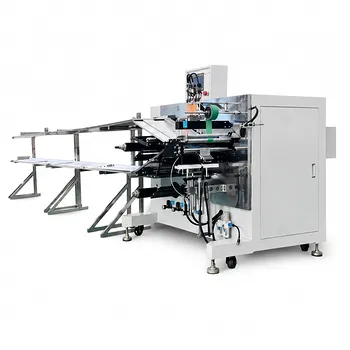
Semi Automatic Cylindrical Battery Winding Machine
Semi automatic cylindrical battery winding machine for lithium ion cell production with precision alignment adjustable winding speed automatic termination tape application active diaphragm tension control dust removal and reliable unloading for consistent high yield performance in demanding research environments.
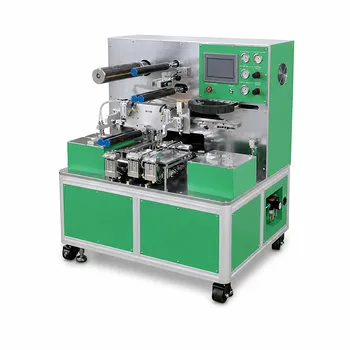
Lithium Ion Battery Semi Automatic Stacking Machine
Semi automatic lithium ion battery stacking machine delivers precise Z folding electrode and separator assembly with automatic alignment tension control and programmable layers for flexible cell research sample fabrication in advanced laboratory development workflows and pilot production tasks.
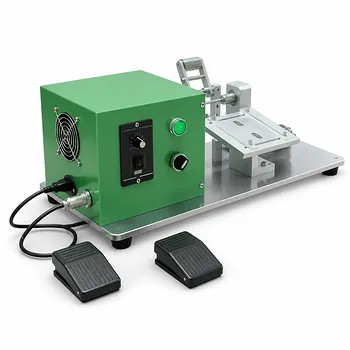
Manual Lithium Battery Electrode Sheet Winding Machine
Manual lithium battery electrode sheet winding machine for supercapacitor cylindrical and pouch cell fabrication featuring adjustable guides bidirectional variable speed winding support rollers and compact foot-pedal operation for dependable laboratory electrode assembly and repeatable cell winding workflows.
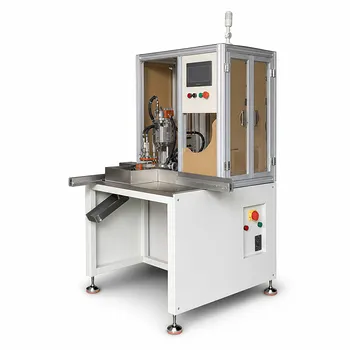
Semi Automatic Bottom Spot Welding and Groove Rolling Machine for Cylindrical Batteries
Semi automatic bottom spot welding and groove rolling machine for cylindrical battery production with adjustable tooling consistent dimensions production counting safety protection and efficient operation for reliable 21700 processing and flexible 18650 workflow integration across demanding manufacturing environments.
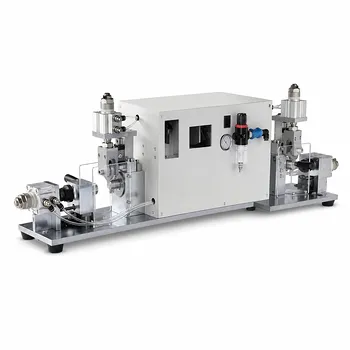
Semi Automatic Cylindrical Battery Grooving Machine
Semi automatic cylindrical battery grooving equipment delivers adjustable 1.2 to 2.0 mm depth precision for steel cell cases and aluminum capacitor shells with PLC touchscreen control dependable 400 EA per hour production and stable adjustable speed operation performance.
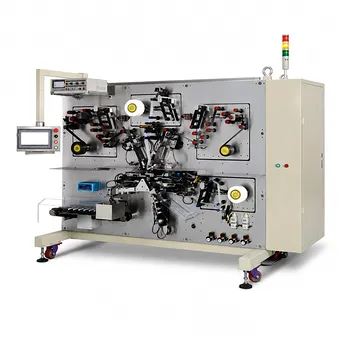
Fully Automatic Cylindrical Lithium Battery Winding Machine
Fully automatic cylindrical lithium battery winding machine delivers servo indexed positioning dual half pin winding automatic tension control edge correction short circuit testing defect rejection and gentle cell transfer for consistent high efficiency cylindrical cell production across laboratory and industrial workflows.
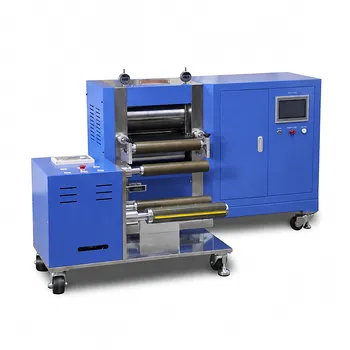
Automatic Laboratory Unwind Rewind Machine and Unwind Rewind Device for Battery Electrodes Optical Films and Functional Materials
Automatic laboratory unwind rewind machine with servo tension control optical web guiding and split structure for lithium battery electrodes optical films and functional roll materials delivering accurate continuous rewinding and slitting performance for demanding research and production workflows.
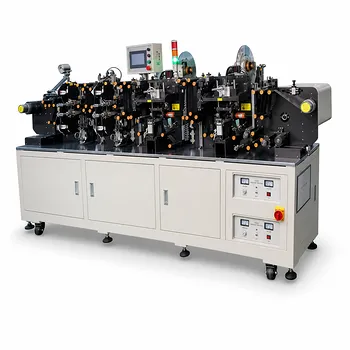
Fully Automatic Lithium Battery Positive and Negative Electrode Sheet Making Machine with Tab Welding and Automatic Rewinding
Fully automatic lithium battery electrode sheet making machine integrates ultrasonic tab welding protective tape application inspection dust collection and precision rewinding for positive and negative electrode production with reliable alignment high yield and consistent cell manufacturing performance.
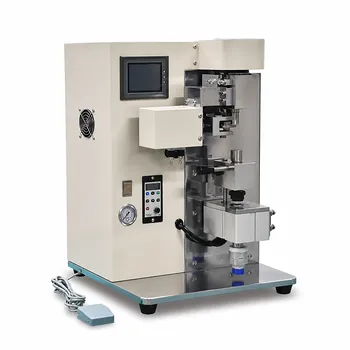
Vertical Cylindrical Battery Grooving Machine
Vertical cylindrical battery grooving machine with adjustable 1.2–2.0 mm depth, ±0.1 mm precision, PLC touchscreen control, and 400 EA/H semi-automatic capacity for stable cell production and compact 220 V operation across battery research and capacitor shell processing applications.
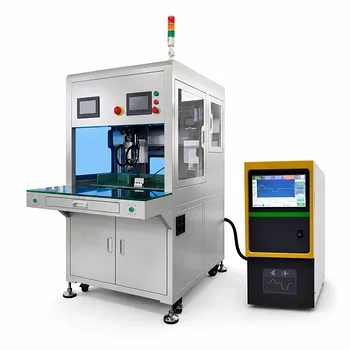
Single Sided Automatic Battery Spot Welding Machine
Automated single-sided battery spot welding equipment with rotating servo head delivers fast, consistent nickel strip connections for cylindrical cell packs, supporting flexible layouts, monitored welding quality, and efficient production for energy storage, mobility, and power-tool manufacturers worldwide operations.
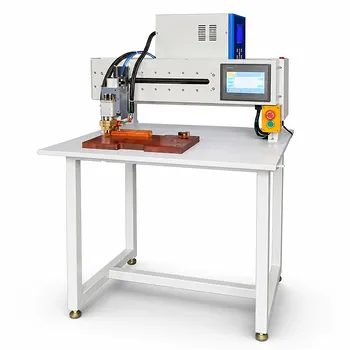
Fully Automatic Single Sided Spot Welding Machine for Cylindrical Lithium Battery Packs
Automated single-sided spot welding machine for cylindrical lithium battery packs delivers servo-controlled precision, 0.30-second weld cycles, CAD pattern import, fault alarms, and production-ready throughput for energy storage, mobility, and power-tool assembly with configurable fixtures, touchscreen PLC control, repeatable nickel-tab placement.
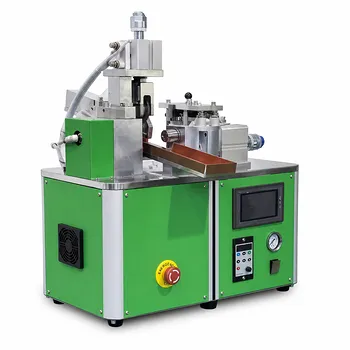
Automatic Cylindrical Battery Grooving Machine for 18650 21700 and 26650 Steel Shells
Automatic cylindrical battery grooving machine for 18650 21700 and 26650 steel shells with adjustable groove depth PLC touch control 6 PCS per minute output precision feeding stable dimensions efficient production for battery research and pilot line manufacturing
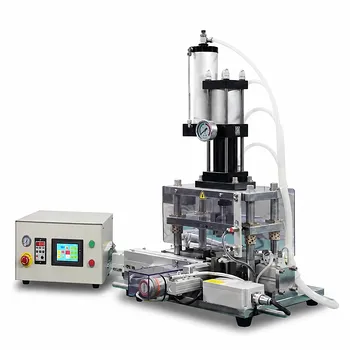
Glove Box Compatible Automatic Cylindrical Battery Sealing Machine
Automatic cylindrical battery sealing machine for glove box operation, three-stage sealing, precise molding, strong airtightness, high consistency, and reliable production of 18650 and 21700 cells with PLC touchscreen control, adjustable parameters, compact construction, and efficient automated loading and unloading
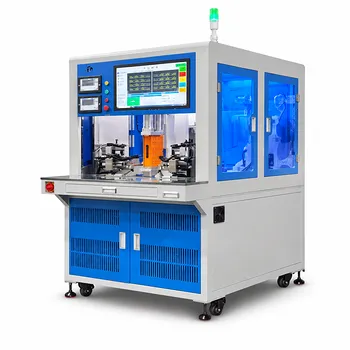
Double Sided Automatic Spot Welder for Lithium Ion Battery Pack Production
Double sided automatic spot welder for lithium-ion battery pack production, delivering synchronized resistance welding, 0.02mm positioning accuracy, AI inspection, traceable process data, and configurable high-throughput automation for EV, energy storage, power tool, and consumer battery manufacturing lines worldwide.
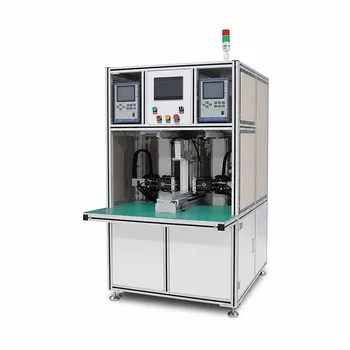
Five Axis Double Sided Automatic Servo Spot Welding Machine
Five axis double sided automatic servo spot welding machine delivers monitored high speed welding for lithium battery packs with programmable points arrays and graphic import supporting 18650 21700 26650 and 32650 cells plus configurable 5000A 6000A or 8000A transistor power.
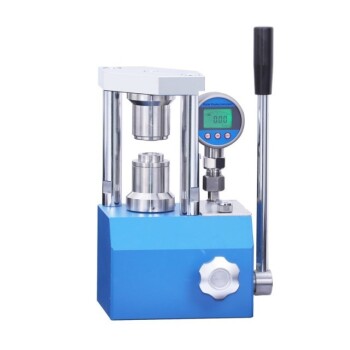
Button Battery Sealing Machine for Button Batteries
KINTEK's Manual Button Battery Sealer ensures precise, airtight sealing for CR2032, LR44 batteries. Ideal for labs, R&D, and small production. Boost efficiency now!
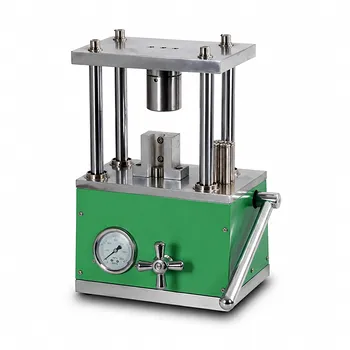
Laboratory Manual Cylindrical Battery Third Seal Crimping Machine
Laboratory manual cylindrical battery crimping sealing machine for 18650 third sealing delivers precise pressure control, smooth edges, strong airtightness, stable forming, compact operation, and glovebox compatible battery research performance with reliable consistency and convenient maintenance for demanding laboratory workflows
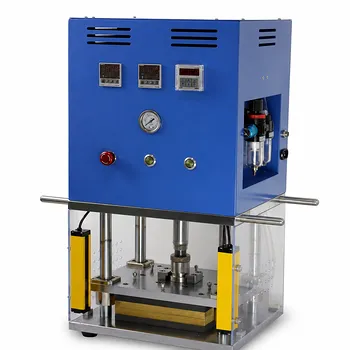
Manual Battery Cell Hot Press Flattening Shaping Machine
Manual battery cell hot press flattening shaping machine delivers adjustable 1T pressure and 250°C heating for consistent wound cell thickness reduced rebound safer casing insertion and reliable lithium battery production.
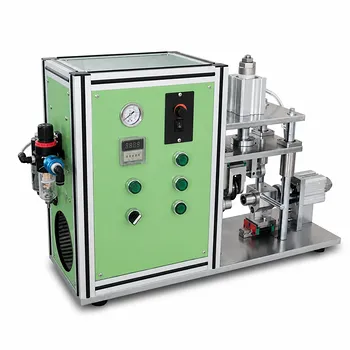
Cylindrical Battery and Capacitor Case Grooving Machine
Adjustable cylindrical battery and capacitor case grooving machine for precise laboratory sample preparation and low volume pilot production with manual automatic operation adjustable depth width speed accurate repeatable groove forming glovebox compatible design for advanced electrochemical development applications.