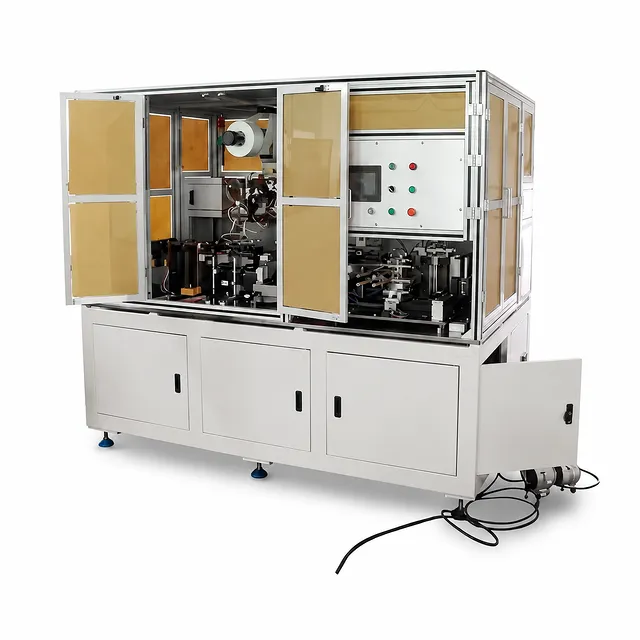
Prismatic Cell Equipment
Semi Automatic Z Fold Stacking Machine for Prismatic Lithium Ion Power Batteries
Item Number : FX05
Price varies based on specs and customizations
- Stacking Speed
- 1.3-1.6 s/pcs
- Electrode-to-Separator Alignment Accuracy
- Center deviation +/-0.4 mm
- Qualification Rate
- 99% (defects caused only by this machine)

Shipping:
Contact us to get shipping details Enjoy On-time Dispatch Guarantee.
Why Choose Us
Easy ordering process, quality products, and dedicated support for your business success.
Product Overview
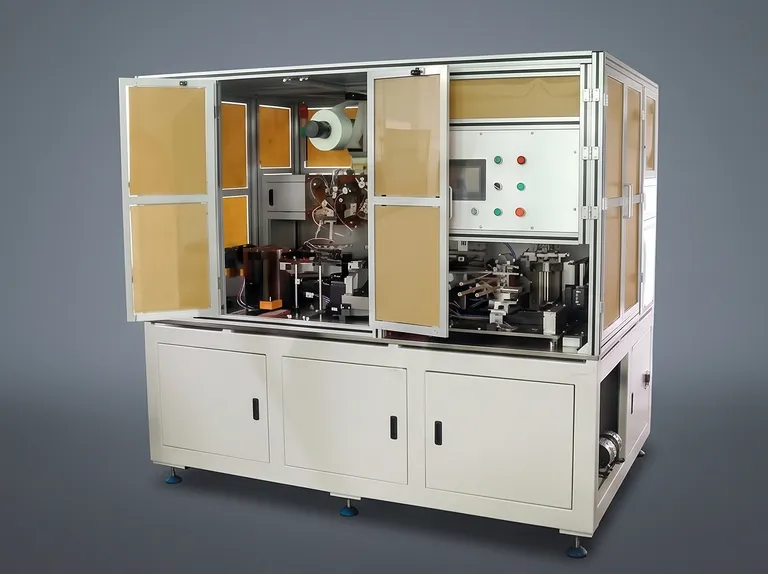
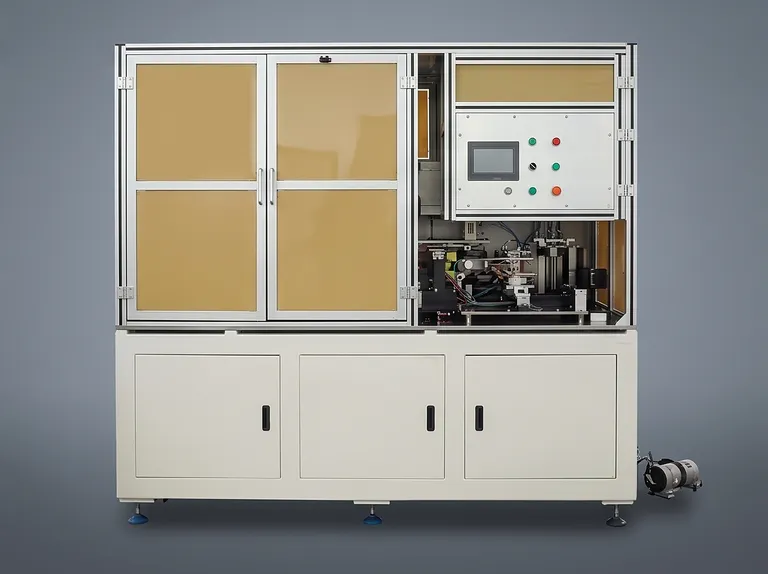
This system is a semi-automatic Z-fold stacking solution engineered for the stacking process of prismatic lithium-ion power cells. It combines motor-driven separator unwinding, tension control, web correction, electrode pickup, secondary positioning, stacking-table compression, separator cutting, and cell transfer in one coordinated workflow. The result is controlled layer placement for manufacturers that need repeatable electrode and separator registration rather than a purely manual stacking operation.
The equipment is suited to lithium-ion power battery production where positive and negative electrodes must be alternately stacked with separator material in a Z-fold pattern. It supports pilot-line work, process development, and production operations for prismatic cells, including programs serving electric mobility, stationary energy storage, and industrial battery applications. Manual tape application and manual cell removal remain integrated parts of the defined operating sequence.
Built around active separator handling, multi-stage electrode positioning, and four cross-operating pressing blades, this unit is designed to maintain orderly stack formation under demanding cell-manufacturing conditions. Measures for sheet separation, dust extraction, and blade withdrawal help protect electrodes, support stable operation, and reduce process-related defects attributable to the machine.
Key Features
-
Z-Fold Separator Handling: The separator is motor-unwound and routed through tension-control and correction mechanisms before reaching the stacking table. This controlled web path supports separator alignment while the stack position changes from side to side.
-
Alternating Electrode Placement: Left and right reciprocating manipulators use suction cups to retrieve positive and negative electrodes from material boxes. Each electrode passes through a secondary positioning platform before placement, providing a defined positioning step before stacking.
-
Precision Registration Control: The equipment is specified for center deviation between electrodes and separator of +/-0.4 mm, separator end-face alignment of +/-0.3 mm, adjacent-electrode alignment of +/-0.2 mm, and overall electrode alignment of +/-0.3 mm. These values give process teams clear reference points for stack geometry control.
-
Four-Set Cross-Acting Compression: Four pressing-blade mechanisms operate in a cross pattern on the stacking table to compact the electrode layers. Controlled pressing helps keep the layer sequence in place as the Z-fold stack is formed.
-
Electrode-Protective Blade Buffering: Before a pressing blade retracts, it lifts slightly away from the electrode. This buffered withdrawal is designed to prevent the blade from pulling or damaging the electrode surface during the stacking cycle.
-
Multi-Measure Sheet Separation: Material-box air blowing, sheet-separating brushes, and external-suction-cup manipulator shaking are used to control multiple-sheet pickup and missed-sheet events. These mechanisms address common feed-stage risks before the electrode reaches the positioning platform.
-
Integrated Dust Extraction Points: Effective dust-extraction provisions are installed at both the material boxes and the secondary positioning area. This supports cleaner electrode handling at two locations where loose particles can affect material management and positioning work.
-
Defined Cell Completion Sequence: Once stacking is complete, the separator is cut and a cell transfer mechanism removes the cell from the stacking table. The operator applies tape and removes the cell while the equipment begins automatic stacking of the next cell, supporting a practical semi-automatic workflow.
-
Configurable Layer Count: The number of stacked layers can be set within the applicable thickness range. This allows process setup to follow the thickness limits of the intended cell stack rather than forcing a fixed layer count.
-
Production-Focused Availability Targets: The specified qualification rate is 99% for defects caused only by the machine, while the specified operating rate is 98% for failures caused only by the machine. These defined boundaries help procurement and manufacturing teams assess equipment performance in the proper operating context.
Applications
| Application | Description | Key Benefit |
|---|---|---|
| Prismatic lithium-ion power cell manufacturing | Alternately stacks positive and negative electrodes with separator material in a Z-fold configuration for rectangular power-cell construction. | Controlled electrode and separator registration supports consistent stack formation. |
| Electric mobility battery pilot lines | Supports semi-automatic stack preparation during development and pilot production of prismatic cells intended for electric mobility programs. | Configurable layer count accommodates stacks within the applicable thickness range. |
| Stationary energy-storage cell production | Forms electrode/separator stacks for prismatic lithium-ion cells used in stationary storage manufacturing workflows. | Separator tension control and correction help maintain an orderly separator path. |
| Industrial battery process development | Provides a defined stacking sequence for teams evaluating electrode handling, stack alignment, and separator management in power-cell development. | Secondary positioning gives a repeatable electrode-location step before placement. |
| Cell assembly process validation | Enables process teams to review stack geometry and operational handling through specified alignment values for adjacent, overall, and separator-related registration. | Measurable alignment specifications provide clear process reference criteria. |
| Electrode handling with particulate-control requirements | Handles electrodes from material boxes through secondary positioning with dust-extraction provisions at both stages. | Localized extraction supports cleaner handling around feed and positioning operations. |
| Semi-automatic cell assembly stations | Integrates automatic stacking with manual tail winding, tape application, and finished-cell removal in a defined operator-supported sequence. | Balances automated stack formation with controlled manual completion tasks. |
Technical Specifications
| Parameter | Specification |
|---|---|
| Product Item Number | FX05 |
| Stacking method | Z-fold stacking |
| Applicable process | Stacking process for prismatic lithium-ion power batteries |
| Stacking speed | 1.3-1.6 s/pcs |
| Auxiliary time | 15-20 s |
| Electrode-to-separator alignment accuracy | Center deviation +/-0.4 mm |
| Separator end-face alignment accuracy | +/-0.3 mm |
| Adjacent electrode alignment accuracy | +/-0.2 mm |
| Overall electrode alignment accuracy | +/-0.3 mm |
| Stacking layer count | Settable within the thickness adaptation range |
| Separator unwinding | Motor-driven active unwinding |
| Separator control | Tension control and full-process correction |
| Electrode handling | Positive and negative electrodes retrieved from material boxes by reciprocating suction-cup manipulators |
| Electrode positioning | Secondary positioning platform before stacking |
| Stacking-table compression | Four cross-operating pressing-blade mechanisms |
| Blade protection mechanism | Blade slightly lifts away from electrode before withdrawal to prevent electrode pulling damage |
| Multiple-sheet and missed-sheet control | Material-box air blowing, sheet-separating brushes, and external-suction-cup manipulator sheet shaking |
| Dust extraction | Installed at material boxes and secondary positioning area |
| Separator outside wrapping | Machine reserves separator during empty stacking; manual tail winding and manual tape application |
| Cell completion | Separator cutting, cell transfer from stacking table, manual tape application, and manual cell removal |
| Qualification rate | 99% (defects caused only by this machine) |
| Operating rate | 98% (failures caused only by this machine) |
| Power | 2 kW |
| Overall dimensions | W1550 x L1250 x H1850 mm |
| Weight / floor loading | Approx. 800 kg; >450 kg/m2 |
| Color | Computer gray; color-standard sample required if another color is requested |
| Power supply | AC220V single phase; voltage fluctuation +/-10% |
| Compressed air | 0.5-0.7 MPa (5-7 kgf/cm2), consumption 100 L/min |
| Ambient temperature | 5-35C |
| Relative humidity | 5-55% HR |
| Air / dust requirements | No saline gas, toxic gas, or corrosive gas; no conductive dust |
| Magnetic field and vibration requirements | No magnetic field affecting the equipment; no impact or clearly perceptible vibration |
Why Choose This Product
-
Alignment-Centered Engineering: The system specifies distinct tolerances for electrode-to-separator registration, separator end faces, adjacent electrodes, and overall electrode alignment. This provides a more complete basis for managing the geometry of a stacked cell.
-
Protection Built Into the Motion Sequence: Buffered pressing-blade withdrawal, secondary electrode positioning, controlled separator handling, and several sheet-separation measures address risks at the feed, placement, compression, and separator stages. These details are important where electrode condition and layer order must be protected throughout repeated cycles.
-
Robust Semi-Automatic Workflow: Automatic stacking proceeds alongside defined operator tasks for tail winding, tape application, and finished-cell removal. The sequence allows teams to establish disciplined material handling while retaining manual control at the final completion steps.
-
Operationally Relevant Performance Targets: A specified stacking speed of 1.3-1.6 s/pcs, 99% qualification rate for machine-caused defects, and 98% operating rate for machine-caused failures provide procurement teams with practical performance indicators for line planning and equipment evaluation.
-
Installation Requirements Clearly Defined: Electrical, pneumatic, environmental, loading, and vibration requirements are stated for facility planning. Clear operating boundaries help teams prepare an appropriate installation location and protect long-term equipment consistency.
Contact us for a quote or a custom solution matched to your prismatic lithium-ion power battery stacking process.
Trusted by Industry Leaders

REQUEST A QUOTE
Our professional team will reply to you within one business day. Please feel free to contact us!
Related Products
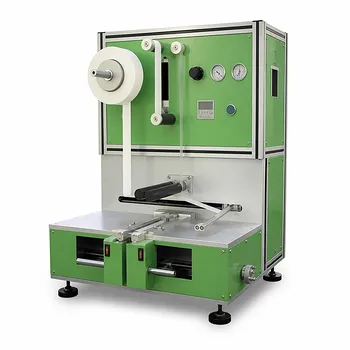
Lithium Ion Battery Z Type Semi Automatic Stacking Machine
Lithium ion battery Z type semi automatic stacking machine combines controlled separator tension, foot pedal operation, precise alignment, and digital timing for efficient research sample preparation and small batch cell prototyping.
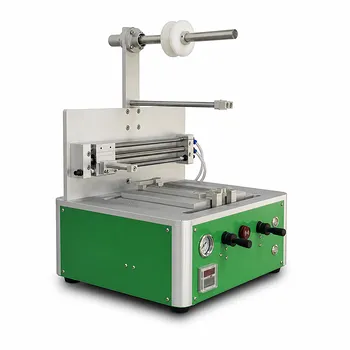
Z Type Semi Automatic Battery Electrode Stacking Machine
Z type semi automatic battery electrode stacking machine delivers controlled separator guided layering, wide electrode compatibility, foot pedal pneumatic operation, and digital counting for efficient laboratory cell fabrication workflows across research and pilot production environments with straightforward setup in compact installations.
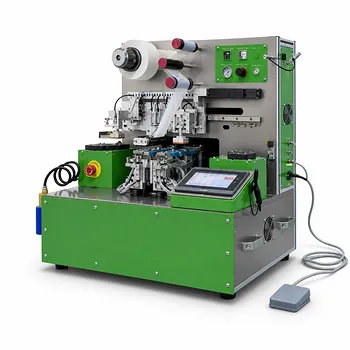
Z Shaped Semi Automatic Stacking Machine
Z shaped semi automatic stacking machine for lithium ion cell research delivers automated electrode alignment controlled separator tension and accurate programmable Z stacking for flexible prototype assembly in glovebox compatible laboratory workflows with adjustable fixtures vacuum pickup HMI operation.
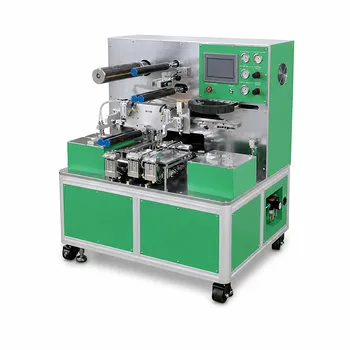
Lithium Ion Battery Semi Automatic Stacking Machine
Semi automatic lithium ion battery stacking machine delivers precise Z folding electrode and separator assembly with automatic alignment tension control and programmable layers for flexible cell research sample fabrication in advanced laboratory development workflows and pilot production tasks.
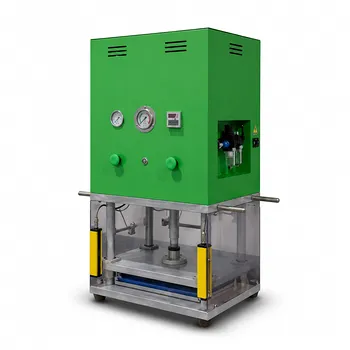
Semi Automatic Pouch Cell Electrode Sheet Die Cutting Machine
Semi-automatic pouch cell electrode die cutting machine with infrared positioning, adjustable 3T or 5T force, +/-0.1 mm precision, 800-2000 pieces per hour, clean edges, and safe light curtain protection for reliable battery research and scalable laboratory production workflows.
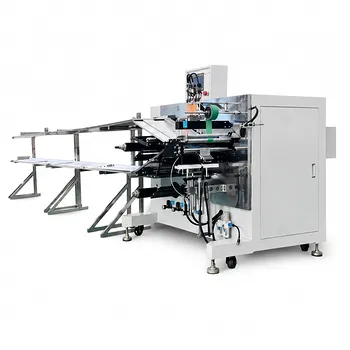
Semi Automatic Cylindrical Battery Winding Machine
Semi automatic cylindrical battery winding machine for lithium ion cell production with precision alignment adjustable winding speed automatic termination tape application active diaphragm tension control dust removal and reliable unloading for consistent high yield performance in demanding research environments.
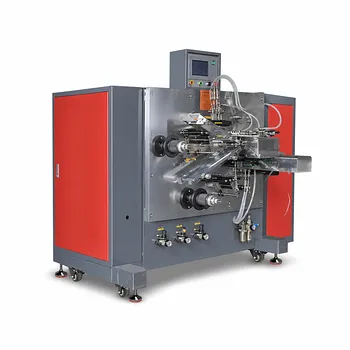
Semi Automatic Cylindrical Lithium Battery Winding Machine
Precision semi-automatic cylindrical lithium battery winding machine for consistent cell assembly, adjustable winding speed, controlled diaphragm tension, accurate alignment, reliable tape application, automatic needle exchange, and efficient unloading across battery research and advanced materials manufacturing workflows with repeatable results.
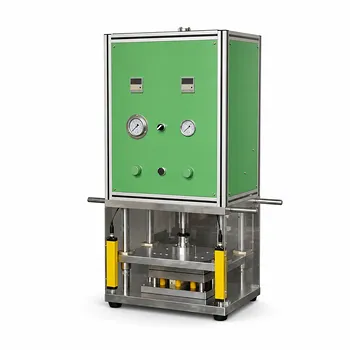
Semi Automatic Aluminum Plastic Film Forming Machine for Polymer Lithium Batteries
Semi automatic aluminum plastic film forming machine for polymer lithium batteries delivers stable deep pocket forming, precise dimensions, wrinkle controlled PP layers, rapid tooling changes, and safeguarded operation in compact battery production environments.
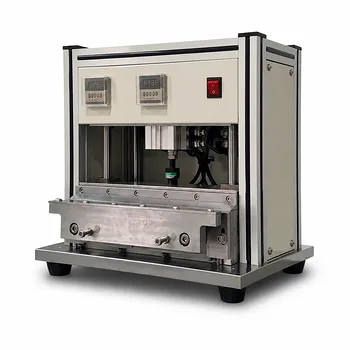
300mm Wide Polymer Pouch Battery Manual Edge Folding Machine
300mm wide polymer pouch battery manual edge folding machine with adjustable 2–6mm folding width, foot pedal control, pneumatic operation, and 300mm folding length for consistent final sealing edge processing in laboratory battery assembly and advanced materials research environments.
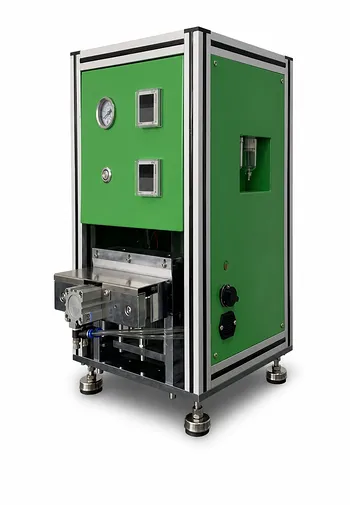
200mm Pneumatic Battery Edge Folding Machine for Laboratory Use
Laboratory 200mm pneumatic battery edge folding machine forms adjustable pouch cell aluminum plastic film edges with configurable pressure and speed for reliable lithium battery research and pilot production workflows.
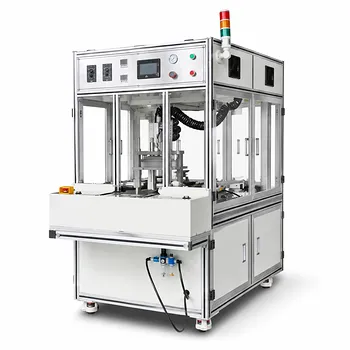
Pouch Cell Edge Cutting Folding and Heat Sealing Forming Machine
Pouch cell edge cutting folding and heat sealing forming machine delivers adjustable PLC controlled processing for lithium battery cells, combining precise trimming, formed edge sealing, flexible changeover, and stable production consistency with touchscreen operation for reliable manufacturing workflows.
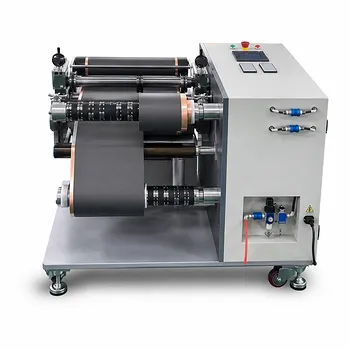
Roll to Roll Continuous Slitting Machine
Precision roll to roll continuous slitting machine for battery foil metal foil optical film and functional film converting delivers adjustable tension accurate widths low burr quality and PLC controlled operation with durable tungsten carbide circular blades and servo-driven unwinding rewinding.
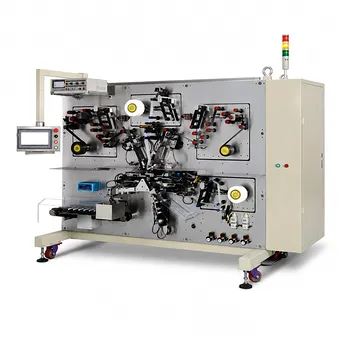
Fully Automatic Cylindrical Lithium Battery Winding Machine
Fully automatic cylindrical lithium battery winding machine delivers servo indexed positioning dual half pin winding automatic tension control edge correction short circuit testing defect rejection and gentle cell transfer for consistent high efficiency cylindrical cell production across laboratory and industrial workflows.
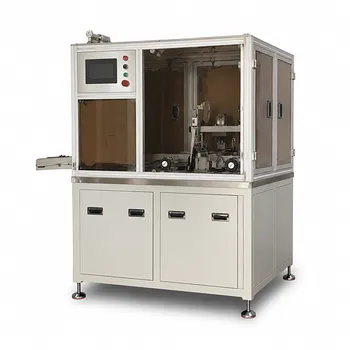
Fully Automatic Mechanical Battery Sealing Machine
Fully automatic mechanical battery sealing machine automates first second third and height-setting seals for liquid-filled cylindrical cells, delivering at least 45PPM throughput with 99% equipment-related yield, 98% equipment uptime, pneumatic height control, and corrosion-resistant industrial construction for production lines.
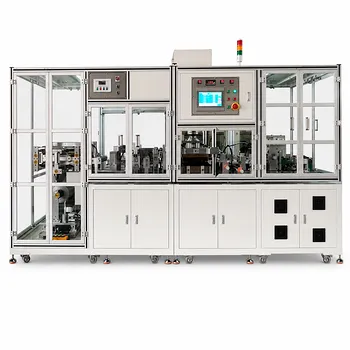
Polymer Battery Aluminum Alloy Composite Film Automatic Pouch Case Forming Machine
Automated polymer battery aluminum alloy composite film pouch case forming machine integrates web alignment, cleaning, static removal, preheating, forming, trimming, cutting, and separated collection for controlled laminated-film cell packaging production with tension control and servo material feeding on continuous rolls.
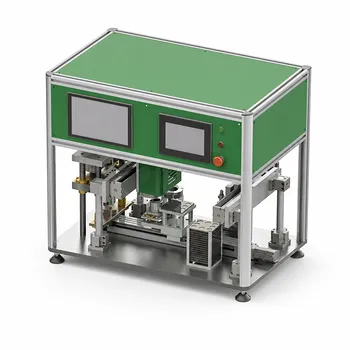
Automated Coin Cell Assembly Machine with Precision Electrolyte Filling and CCD Inspection
Automated coin cell assembly machine for 20 and 24 series batteries, featuring precision electrolyte filling, automatic material handling, tray switching, sealing, CCD inspection, PLC control, and glovebox-compatible operation for consistent laboratory cell fabrication and advanced battery research workflows.
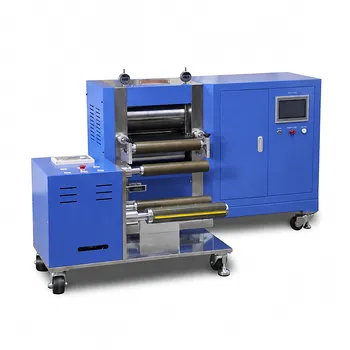
Automatic Laboratory Unwind Rewind Machine and Unwind Rewind Device for Battery Electrodes Optical Films and Functional Materials
Automatic laboratory unwind rewind machine with servo tension control optical web guiding and split structure for lithium battery electrodes optical films and functional roll materials delivering accurate continuous rewinding and slitting performance for demanding research and production workflows.
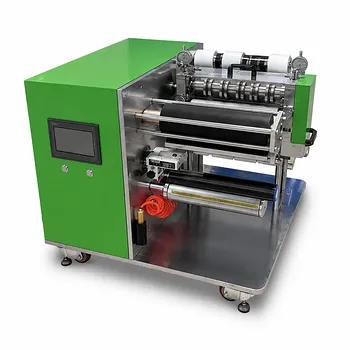
Lithium Battery Electrode Roll to Roll Slitting Machine
Precision roll to roll slitting machine for lithium battery electrode sheets delivers burr controlled foil cutting adjustable widths automatic winding tension and PLC operated production consistency across thin coated materials and functional film converting lines with tungsten carbide blades.
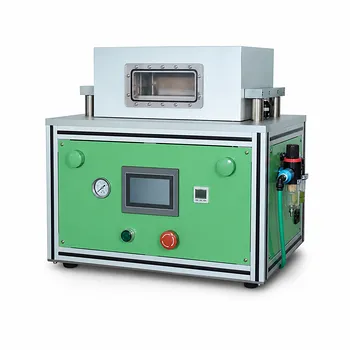
Pouch Cell Secondary Vacuum Sealing Machine with Automatic Puncture
Pouch cell secondary vacuum sealing machine with automatic puncture, adjustable temperature, pressure, sealing time, compact construction, and precise battery packaging performance
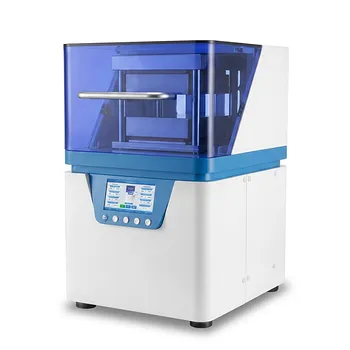
Automatic Hydraulic Heat Press Machine with Multi Stage Programmable Control and Integrated Water Cooling Plate Size 180x180mm
Achieve unparalleled precision with this automatic hydraulic heat press featuring a 180x180mm plate and multi-stage programmable control. Perfect for material research and industrial testing, it ensures consistent results with integrated water cooling and robust safety protocols.