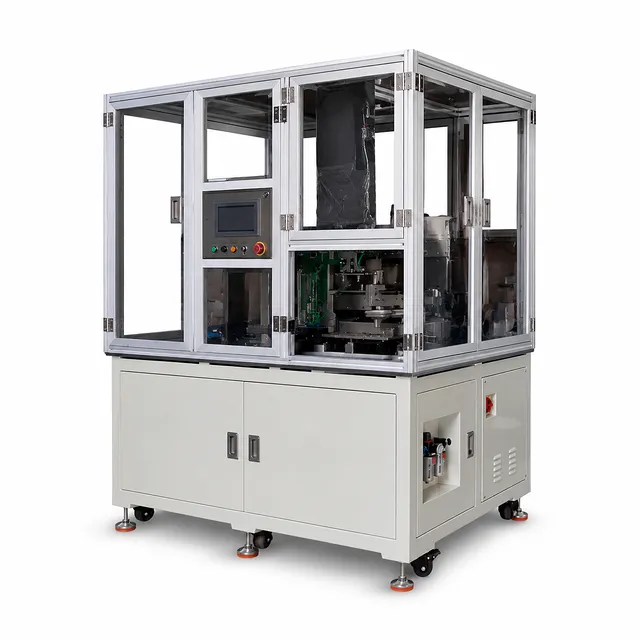
Prismatic Cell Equipment
Semi Automatic Z Fold Stacking Machine for Prismatic Lithium Ion Battery Cells
Item Number : FX04
Price varies based on specs and customizations
- Stacking Speed
- 1.3-1.6 s/pcs
- Overall Electrode Alignment Accuracy
- <=+/-0.3 mm
- Supported Cell Thickness
- 5-20 mm

Shipping:
Contact us to get shipping details Enjoy On-time Dispatch Guarantee.
Why Choose Us
Easy ordering process, quality products, and dedicated support for your business success.
Product Overview
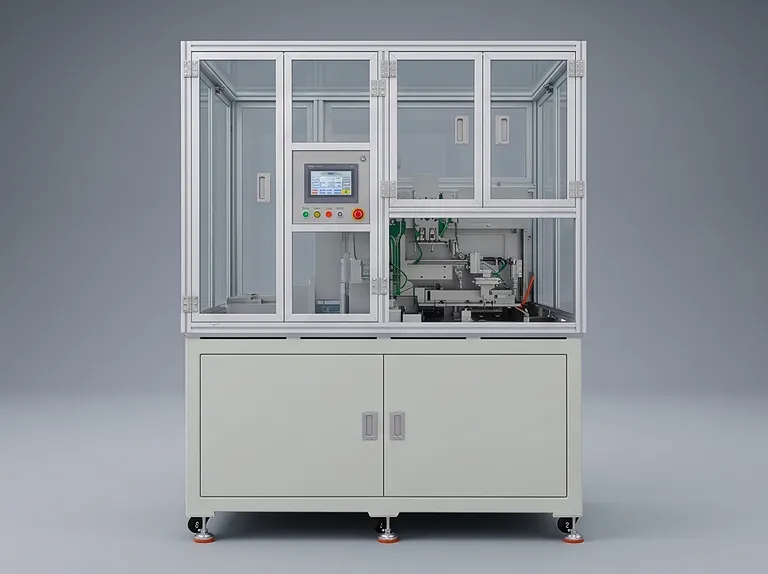
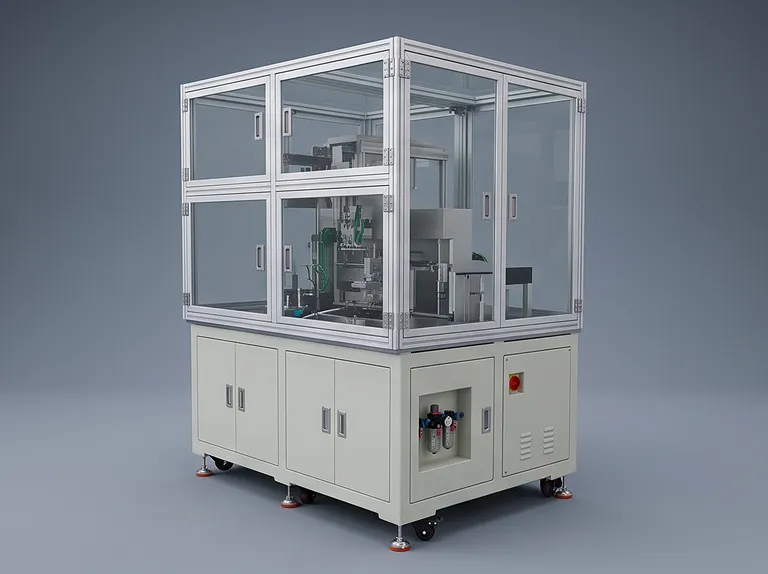
This semi-automatic stacking system is engineered for the Z-fold stacking process used in prismatic lithium-ion power battery cells. It actively unwinds the separator, controls web tension, corrects web position, precisely picks positive and negative electrodes, and builds the stack on a dedicated stacking platform. Four interleaved pressing-blade mechanisms compact the electrode assembly before separator cutting and cell transfer.
The equipment supports battery R&D, pilot lines, and production environments handling rectangular lithium-ion cells. It is suited to manufacturers developing power batteries, laboratories validating electrode and separator formats, and advanced-materials teams requiring repeatable multilayer cell assembly. Configurable stack layer counts within the supported cell-thickness range allow the system to accommodate process-specific layer designs.
Designed around positioning control, contamination management, and handling stability, this unit addresses the process details that affect cell consistency. Active separator unwinding with tension control and web guiding supports alignment throughout the cycle, while secondary electrode positioning and controlled pressing help maintain the specified stack geometry under demanding operating conditions.
Key Features
-
Z-Fold Stacking Architecture: The system uses a Z-fold separator process for prismatic lithium-ion battery cells. During reciprocating motion, the handling mechanism shifts the separator from side to side while alternately placing positive and negative electrode sheets onto the stacking platform.
-
Active Separator Unwinding: A motor-driven unwinding arrangement feeds separator material from the roll rather than relying on passive payout. This controlled feed supports stable separator delivery into the tension-control and web-guiding stages.
-
Continuous Tension and Web Correction: The separator passes through a tension mechanism and a correction mechanism before reaching the stacking platform. This arrangement is designed to support separator alignment and contributes to the specified end-face alignment capability.
-
Precise Secondary Electrode Positioning: Positive and negative electrodes are removed from their respective material boxes by vacuum-cup handling mechanisms and positioned again on a secondary positioning platform before stacking. The two-stage approach supports controlled electrode placement at the assembly point.
-
Four Interleaved Pressing Blades: Four pressing-blade mechanisms operate in a cross-action sequence on the stacking platform to compact the electrode sheets. This controlled action helps retain the assembled layer arrangement before the separator is cut.
-
Electrode-Safe Blade Retraction: Before a pressing blade withdraws, its buffering mechanism raises it slightly to disengage from the electrode sheet. This sequence is intended to prevent electrode pulling and reduce the risk of surface damage during pressing-blade retraction.
-
Multi-Measure Sheet Handling Control: Material-box air blowing, sheet-separating brushes, and an external vacuum-cup handler shaking action work together to control multiple-sheet pickup and missed-sheet conditions. These measures target stable single-sheet handling during repeated stacking cycles.
-
Integrated Dust Extraction Points: Effective dust-extraction provisions are installed at both the material boxes and the secondary positioning station. Localized extraction supports cleaner electrode handling where sheets are separated, picked, and aligned.
-
Semi-Automatic Cell Discharge Workflow: After stacking, the separator is cut and a cell transfer mechanism removes the cell from the stacking platform. The operator applies tape and removes the completed cell while the system begins automatic stacking of the next cell, supporting a practical semi-automatic production sequence.
-
Defined Process Performance: The equipment is specified for a stacking speed of 1.3-1.6 s/pcs, with auxiliary time of no more than 15 s. Machine-caused qualified rate and operational availability are specified at at least 98% and at least 95%, respectively.
Applications
| Application | Description | Key Benefit |
|---|---|---|
| Prismatic power battery pilot production | Builds Z-fold electrode and separator assemblies for rectangular lithium-ion power cells within the supported cell dimensions. | Enables controlled transition from electrode-sheet preparation to assembled cell stacks. |
| Battery R&D cell prototyping | Supports development teams evaluating electrode sizes, separator materials, layer counts, and same-side tab configurations. | Adjustable layer count within the thickness range supports process experimentation. |
| Electrode and separator process validation | Repeats controlled unwinding, tensioning, web correction, pickup, secondary positioning, and pressing operations. | Provides defined alignment targets for evaluating stack-formation capability. |
| Quality-focused cell assembly | Applies air blowing, brush separation, handler shaking, and dust extraction at critical material-handling locations. | Helps control multiple-sheet pickup, missed sheets, and dust during assembly. |
| Scale-up from manual stacking | Integrates electrode pickup, positioning, separator shifting, pressing, cutting, and transfer into one equipment sequence. | Reduces dependence on fully manual layer placement while retaining operator tape application and cell removal. |
| Battery manufacturing process engineering | Allows teams to assess cycle timing, separator wrap allowance, manual tail handling, and transfer workflow for a defined cell format. | Makes operational interfaces and machine-controlled process steps clear for line planning. |
| Materials research laboratories | Assembles multilayer cells using electrode sheets and separator rolls that meet the stated incoming-material requirements. | Supports repeatable stacking studies across compatible sheet and separator dimensions. |
Technical Specifications
| Parameter | Specification |
|---|---|
| Site-facing identifier | FX04 |
| Stacking method | Z-fold stacking |
| Applicable cell type | Prismatic lithium-ion power battery cell |
| Separator feed | Motor-driven active unwinding |
| Separator process controls | Tension control and web correction throughout the process |
| Electrode pickup | Vacuum-cup handling mechanism picks positive and negative electrode sheets from material boxes |
| Electrode positioning | Secondary positioning platform before stacking |
| Pressing arrangement | Four pressing-blade mechanisms with cross action |
| Blade retraction function | Blade lifts slightly before withdrawal to disengage from electrode sheet and prevent pulling damage |
| Multiple-sheet and missed-sheet controls | Material-box air blowing, sheet-separating brushes, external vacuum-cup handler shaking action |
| Dust extraction | Installed at material boxes and secondary positioning station |
| Stacking completion | Separator cutting followed by cell transfer from stacking platform |
| Post-stack handling | Manual tape application and manual cell removal |
| Next-cell operation | Automatic stacking of the next cell begins while post-stack handling is performed |
| Separator outer wrap | Machine reserves separator during empty stacking; manual tail winding and manual tape application |
| Stacking speed | 1.3-1.6 s/pcs |
| Auxiliary time | <=15 s |
| Electrode-to-separator alignment accuracy | Center deviation <=+/-0.4 mm |
| Separator end-face alignment accuracy | <=+/-0.3 mm |
| Adjacent electrode alignment accuracy | <=+/-0.2 mm |
| Overall electrode alignment accuracy | <=+/-0.3 mm |
| Stack layer count | Settable within the applicable thickness range |
| Qualified rate | >=98% (defects caused by this equipment only) |
| Availability | >=95% (failures caused by this equipment only) |
| Power | 2 kW |
Incoming Material Specifications
| Material | Incoming form | Length (mm) | Width (mm) | Thickness (mm) | Inner diameter (mm) | Maximum outer diameter (mm) |
|---|---|---|---|---|---|---|
| Electrode sheet | Sheet | 50-150 | 30-90 | 0.07-0.25 | ---- | ---- |
| Electrode tab | ---- | 8-20 | 8-20 | ---- | ---- | ---- |
| Separator | Roll | ---- | 50-200 | 0.02-0.04 | phi76.2 | phi300 |
Supported Cell Specifications
| Cell parameter | Specification |
|---|---|
| Thickness H (mm) | 5-20 |
| Width W (mm) | 30-90 |
| Length L (mm) | 50-150 |
| Tab length Q (mm) | Q<=20 |
| Tab width (mm) | <=20 |
| Tab direction | Same side |
Incoming Material Conditions
| Requirement | Specification |
|---|---|
| Electrode length definition | Dimension in the electrode-tab direction, excluding tab length |
| Electrode powder shedding | No obvious powder shedding |
| Electrode edge condition | No obvious wavy edge |
| Burr perpendicular to electrode direction | Less than 15 um |
| Die-cutting error | Less than 0.2 mm |
| Electrode flatness and deformation | Incoming electrodes shall have no obvious warpage or deformation |
| Electrode adhesion | Incoming electrodes shall have no obvious adhesion |
| Separator serpentine bending error | +/-0.2 mm/1000 mm |
Why Choose This Product
-
Process-Controlled Stack Formation: Active separator feed, tension control, web correction, secondary electrode positioning, and cross-action pressing combine to address the critical operations in a Z-fold stacking cycle.
-
Alignment-Focused Engineering: Defined accuracy targets cover electrode-to-separator center deviation, separator end-face alignment, adjacent-electrode alignment, and overall electrode alignment, giving procurement and process teams clear performance criteria.
-
Built for Repeated Material Handling: The equipment incorporates dedicated measures for sheet separation, multiple-sheet and missed-sheet control, controlled blade withdrawal, and localized dust extraction at key handling points.
-
Practical Semi-Automatic Throughput: Automated stacking proceeds in parallel with the operator's tape application and cell removal steps, while the specified 1.3-1.6 s/pcs stacking speed supports disciplined workflow planning.
-
Clear Format Compatibility: Supported electrode, separator, tab, and cell dimensions are explicitly defined, allowing teams to evaluate fit with incoming materials and target prismatic-cell designs before purchase.
Contact us for a quote or to discuss a cell-stacking solution matched to your electrode format, separator roll, and process requirements.
Trusted by Industry Leaders

REQUEST A QUOTE
Our professional team will reply to you within one business day. Please feel free to contact us!
Related Products
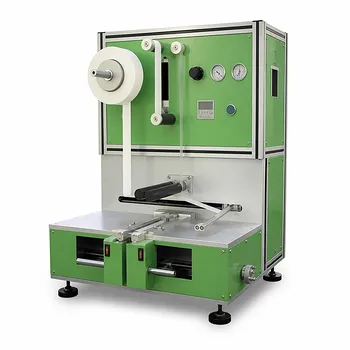
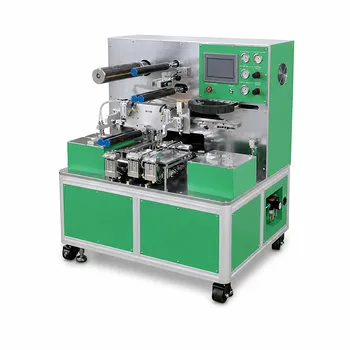
Lithium Ion Battery Z Type Semi Automatic Stacking Machine
Lithium ion battery Z type semi automatic stacking machine combines controlled separator tension, foot pedal operation, precise alignment, and digital timing for efficient research sample preparation and small batch cell prototyping.
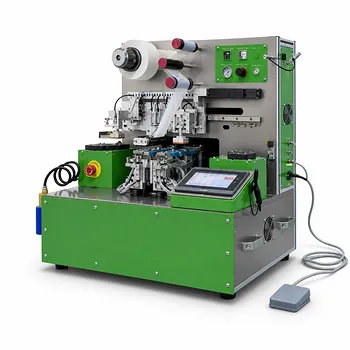
Lithium Ion Battery Semi Automatic Stacking Machine
Semi automatic lithium ion battery stacking machine delivers precise Z folding electrode and separator assembly with automatic alignment tension control and programmable layers for flexible cell research sample fabrication in advanced laboratory development workflows and pilot production tasks.
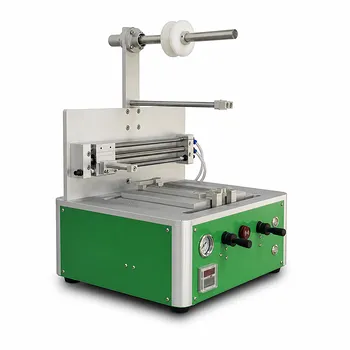
Z Shaped Semi Automatic Stacking Machine
Z shaped semi automatic stacking machine for lithium ion cell research delivers automated electrode alignment controlled separator tension and accurate programmable Z stacking for flexible prototype assembly in glovebox compatible laboratory workflows with adjustable fixtures vacuum pickup HMI operation.
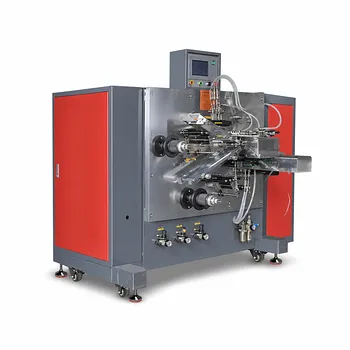
Z Type Semi Automatic Battery Electrode Stacking Machine
Z type semi automatic battery electrode stacking machine delivers controlled separator guided layering, wide electrode compatibility, foot pedal pneumatic operation, and digital counting for efficient laboratory cell fabrication workflows across research and pilot production environments with straightforward setup in compact installations.
Semi Automatic Cylindrical Lithium Battery Winding Machine
Precision semi-automatic cylindrical lithium battery winding machine for consistent cell assembly, adjustable winding speed, controlled diaphragm tension, accurate alignment, reliable tape application, automatic needle exchange, and efficient unloading across battery research and advanced materials manufacturing workflows with repeatable results.
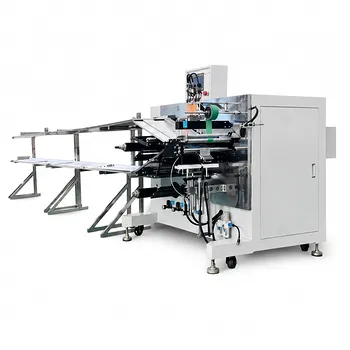
Semi Automatic Cylindrical Battery Winding Machine
Semi automatic cylindrical battery winding machine for lithium ion cell production with precision alignment adjustable winding speed automatic termination tape application active diaphragm tension control dust removal and reliable unloading for consistent high yield performance in demanding research environments.
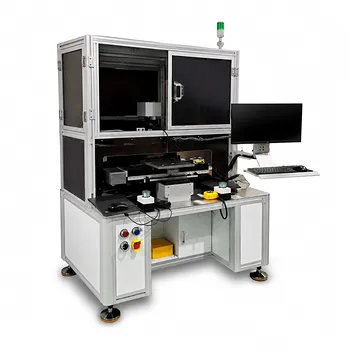
Semi Automatic Electrode Laser Cutting Machine
Semi automatic electrode laser cutting machine for lithium ion battery pilot lines delivers fast precision cutting clean dust control reliable handling and consistent production performance with simple software rapid changeover stable fiber laser and high yield results for advanced research
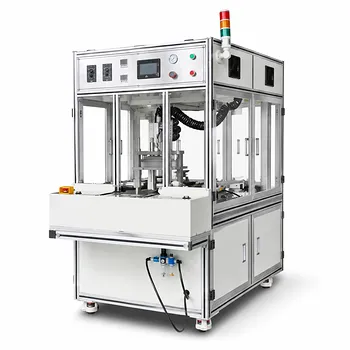
Pouch Cell Edge Cutting Folding and Heat Sealing Forming Machine
Pouch cell edge cutting folding and heat sealing forming machine delivers adjustable PLC controlled processing for lithium battery cells, combining precise trimming, formed edge sealing, flexible changeover, and stable production consistency with touchscreen operation for reliable manufacturing workflows.
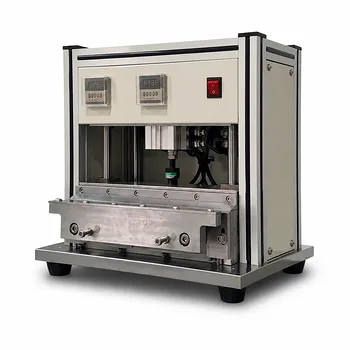
300mm Wide Polymer Pouch Battery Manual Edge Folding Machine
300mm wide polymer pouch battery manual edge folding machine with adjustable 2–6mm folding width, foot pedal control, pneumatic operation, and 300mm folding length for consistent final sealing edge processing in laboratory battery assembly and advanced materials research environments.
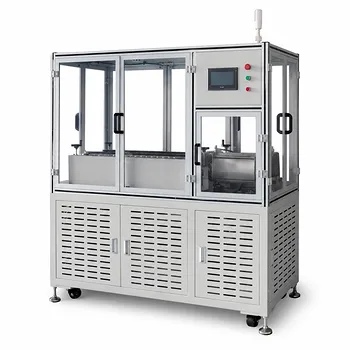
Horizontal Hot Press Formation Machine for Pouch Lithium Ion Batteries
Horizontal hot press formation equipment for pouch lithium ion batteries combines 32-point clamping, 6A charge-discharge capability, controlled heating, and pneumatic pressure for efficient, flat, stable cell activation with reduced handling and shorter manufacturing cycles for manufacturers.
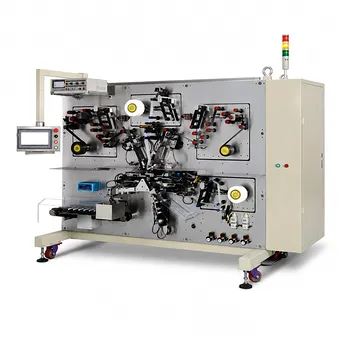
Fully Automatic Cylindrical Lithium Battery Winding Machine
Fully automatic cylindrical lithium battery winding machine delivers servo indexed positioning dual half pin winding automatic tension control edge correction short circuit testing defect rejection and gentle cell transfer for consistent high efficiency cylindrical cell production across laboratory and industrial workflows.
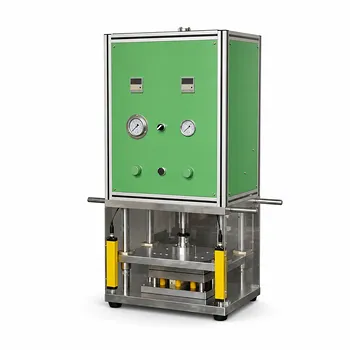
Semi Automatic Aluminum Plastic Film Forming Machine for Polymer Lithium Batteries
Semi automatic aluminum plastic film forming machine for polymer lithium batteries delivers stable deep pocket forming, precise dimensions, wrinkle controlled PP layers, rapid tooling changes, and safeguarded operation in compact battery production environments.
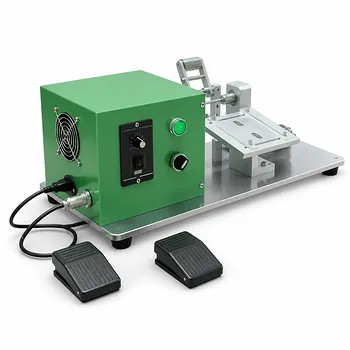
Manual Lithium Battery Electrode Sheet Winding Machine
Manual lithium battery electrode sheet winding machine for supercapacitor cylindrical and pouch cell fabrication featuring adjustable guides bidirectional variable speed winding support rollers and compact foot-pedal operation for dependable laboratory electrode assembly and repeatable cell winding workflows.
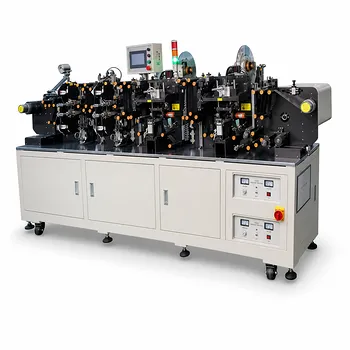
Fully Automatic Lithium Battery Positive and Negative Electrode Sheet Making Machine with Tab Welding and Automatic Rewinding
Fully automatic lithium battery electrode sheet making machine integrates ultrasonic tab welding protective tape application inspection dust collection and precision rewinding for positive and negative electrode production with reliable alignment high yield and consistent cell manufacturing performance.
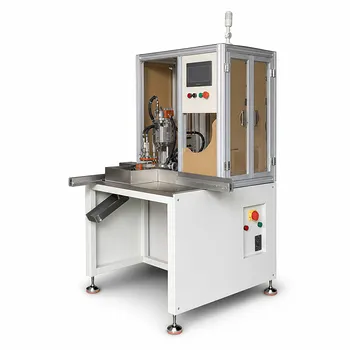
Semi Automatic Bottom Spot Welding and Groove Rolling Machine for Cylindrical Batteries
Semi automatic bottom spot welding and groove rolling machine for cylindrical battery production with adjustable tooling consistent dimensions production counting safety protection and efficient operation for reliable 21700 processing and flexible 18650 workflow integration across demanding manufacturing environments.
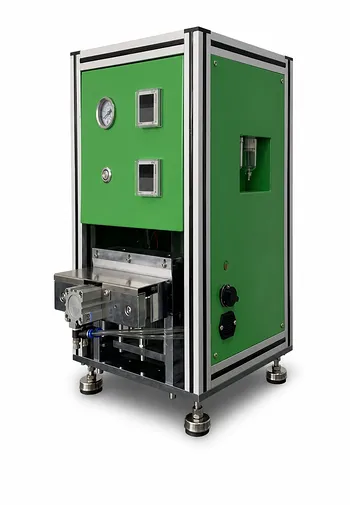
200mm Pneumatic Battery Edge Folding Machine for Laboratory Use
Laboratory 200mm pneumatic battery edge folding machine forms adjustable pouch cell aluminum plastic film edges with configurable pressure and speed for reliable lithium battery research and pilot production workflows.
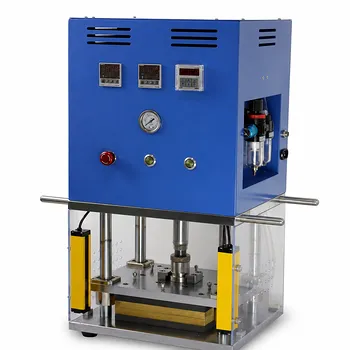
Manual Battery Cell Hot Press Flattening Shaping Machine
Manual battery cell hot press flattening shaping machine delivers adjustable 1T pressure and 250°C heating for consistent wound cell thickness reduced rebound safer casing insertion and reliable lithium battery production.
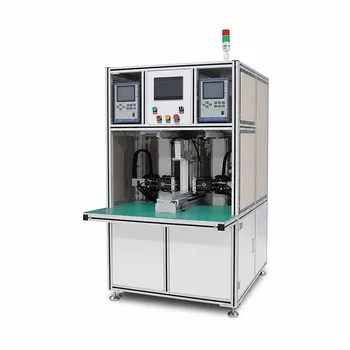
Five Axis Double Sided Automatic Servo Spot Welding Machine
Five axis double sided automatic servo spot welding machine delivers monitored high speed welding for lithium battery packs with programmable points arrays and graphic import supporting 18650 21700 26650 and 32650 cells plus configurable 5000A 6000A or 8000A transistor power.
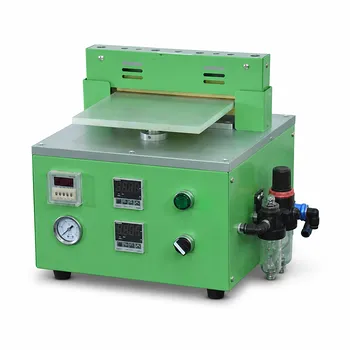
Top Side Sealing Machine for Pouch Lithium Battery Packaging
Top side sealing machine for pouch lithium batteries delivers adjustable temperature pressure and timing with copper heat heads for clean consistent aluminum plastic film seals in laboratory cell manufacturing workflows.
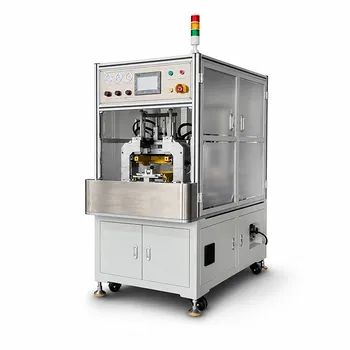
Linear Top and Side Sealing Machine for Pouch Lithium Battery Packaging
Linear top and side sealing machine for dual-tab pouch lithium batteries, combining servo fixture transfer, adjustable temperature control, precision sealing, automated safety protection, and 4 PPM output for repeatable packaging operations.