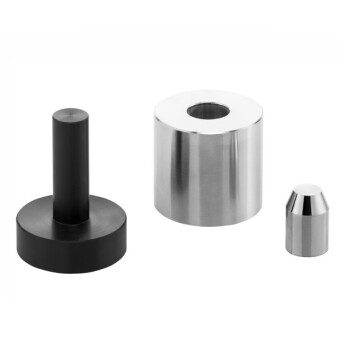
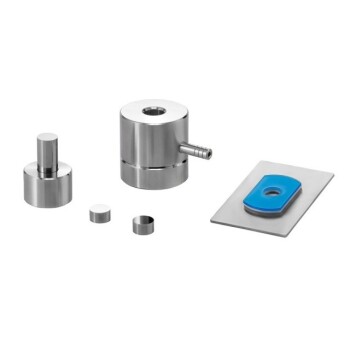
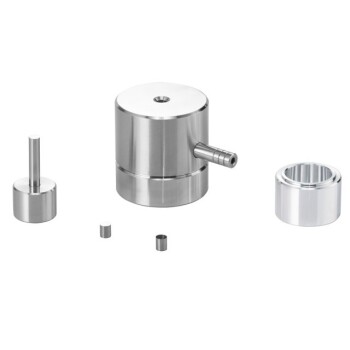
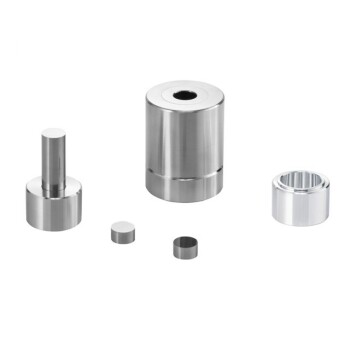
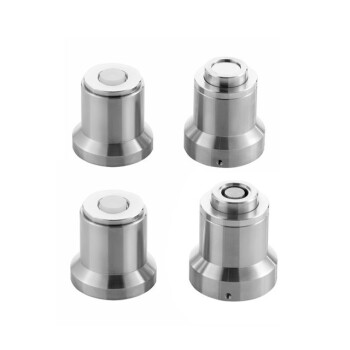
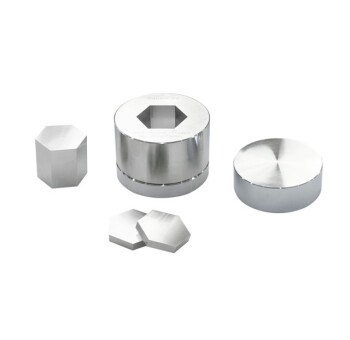
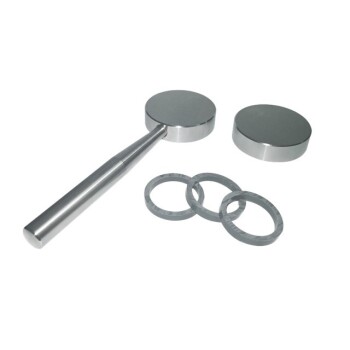
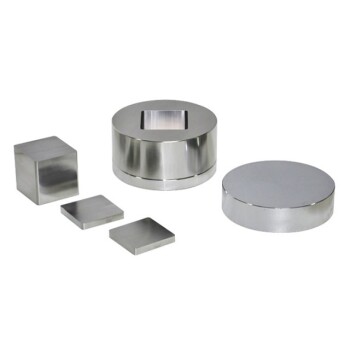
The design of precision molds is the decisive factor in establishing the geometric accuracy and structural cohesion of nickel-iron cement-based batteries. During the forming stage, these molds define the exact dimensions of the electrolyte and electrode layers, ensuring a tight, uniform fit that minimizes internal resistance and prevents short circuits. By facilitating high-pressure consolidation, precision molds create the dense solid-solid interfaces required for stable electrochemical cycling and high energy density.
Precision molds act as the structural architect for the battery, transforming raw materials into a highly integrated, multi-layer system. Their design directly dictates the efficiency of ion transport and the mechanical durability of the cell under operational stress.
Defining Geometric Dimensions and Layered Architecture
Eliminating Thickness Variations
Precision molds ensure that the electrolyte layer serves as a uniform separator between the electrode layers. By maintaining a constant thickness across the entire surface, the mold prevents "hot spots" where uneven current distribution could lead to premature failure.
Preventing Edge Overflow
The tight tolerances of a high-precision mold, such as a 10mm diameter die, minimize material leakage during the compression phase. This reduction in edge overflow is critical for maintaining the intended mass balance between the cathode and anode.
Facilitating Multi-Layer Compositing
Using a layered casting process, these molds assist in the precise stacking of ultra-thin material layers. This architectural control allows for the minimization of electrolyte thickness while maintaining high cathode loading.
Enhancing Electrochemical Pathways
Reducing Interfacial Resistance
High-pressure molding (often exceeding 200 to 300 MPa) is required to overcome contact resistance between solid particles. The mold design allows this pressure to be applied evenly, forcing the formation of a dense solid-solid interface that is essential for ion conductivity.
Maximizing Specific Energy
By enabling the formation of ultra-thin layers within very small dimensions, precision molds help the battery meet aggressive technical targets. This structural optimization is a key driver in achieving energy densities that can exceed 500 Wh/kg.
Ensuring Uniform Force Distribution
Molds made from high-precision stainless steel (SUS) distribute mechanical pressure equally across the battery's surface. This uniformity eliminates density variations within the "green body," preventing the degradation of rate performance caused by poor material contact.
Mechanical Reliability and Process Stability
Surface Finish and Demolding
High-strength die materials with smooth internal walls are essential for reducing friction during the demolding process. This design feature prevents surface delamination or dimensional deviations that could occur when the pressed battery is removed from the mold.
Structural Integrity Under Pressure
Precision molds must withstand several tons of pressure without deforming. Their superior compressive strength ensures that the battery components retain highly regular geometric dimensions throughout the entire forming stage.
Support for In-Situ Analysis
The physical conditions established by precision molding—specifically the tight integration of layers—are necessary for acquiring high-quality in-situ spectroscopic data. This allows researchers to accurately monitor the battery's internal behavior during operation.
Understanding the Trade-offs
Pressure vs. Material Fatigue
While higher molding pressures (above 300 MPa) improve interface contact, they significantly increase the wear and tear on the mold. Over time, this can lead to microscopic surface degradation, which increases friction and the likelihood of sample cracking during demolding.
Precision vs. Manufacturing Throughput
The requirement for extreme geometric precision often necessitates slower, more controlled casting and pressing cycles. Achieving a perfect surface finish and micron-level tolerances can limit the speed of the forming stage compared to less precise, high-volume manufacturing methods.
Material Selection Constraints
Using high-hardness materials like hardened stainless steel ensures mold longevity but can make the molds more difficult and expensive to machine. Choosing a softer material might reduce initial costs but risks deformation under the extreme assembly pressures required for cement-based solid-state structures.
Applying Mold Design to Your Battery Project
Recommendations for Success
To optimize the performance of nickel-iron cement-based batteries, the mold design must align with your specific research or production goals.
- If your primary focus is maximizing energy density: Prioritize a mold design that supports ultra-thin electrolyte layers and high-pressure consolidation to reduce dead weight and volume.
- If your primary focus is cycle life and stability: Invest in high-precision SUS molds with superior surface finishes to ensure perfectly uniform force distribution and prevent internal delamination.
- If your primary focus is high-rate performance: Focus on mold tolerances that eliminate density non-uniformity, as consistent material density is critical for rapid ion transport.
The precision of the mold is the foundation upon which the electrochemical success of the nickel-iron cement-based battery is built.
Summary Table:
| Feature of Mold Design | Impact on Battery Performance | Key Technical Benefit |
|---|---|---|
| Geometric Accuracy | Eliminates thickness variations | Prevents "hot spots" and short circuits |
| High-Pressure (200-300 MPa) | Forces dense solid-solid interfaces | Maximizes ion conductivity and rate performance |
| Surface Finish (SUS) | Reduces friction during demolding | Prevents surface delamination and cracking |
| Multi-Layer Stacking | Supports ultra-thin material layers | Enables energy densities exceeding 500 Wh/kg |
Elevate Your Battery Research with KINTEK
Precision is the foundation of high-performance battery development. KINTEK specializes in comprehensive laboratory pressing solutions designed to meet the rigorous demands of nickel-iron cement-based battery manufacturing. Whether you require manual, automatic, heated, multifunctional, or glovebox-compatible models, or advanced cold and warm isostatic presses, our equipment ensures the uniform force distribution and geometric tolerances your research deserves.
Ready to optimize your forming stage? Contact us today to discover how our high-precision pressing technology can enhance your cell stability and energy density.
References
- Dandan Yin, Lin Li. A Rechargeable Nickel-Iron Cement-Based Battery Utilizing Ion-Exchange Fiber Cementitious Composite as a Solid-State Electrolyte. DOI: 10.2139/ssrn.5354975
This article is also based on technical information from Kintek Solution Knowledge Base .
Related Products
- Lab Button Battery Tablet Press Sealing Mold
- Lab Infrared Press Mold for Laboratory Applications
- Lab Cylindrical Press Mold for Laboratory Use
- Carbide Lab Press Mold for Laboratory Sample Preparation
- Lab Button Battery Disassembly and Sealing Mold
People Also Ask
- How does a sealed battery mold facilitate the assembly and testing of asymmetric supercapacitors using VO2?
- Why use standardized CR2032 components & high-precision presses? Ensure reliability in lithium metal battery research.
- Why is a laboratory battery sealing press essential for desolvation energy testing? Ensure Reliable Kinetic Data
- What is the function of specialized battery molds and sealing consumables? Optimize Your In-situ XRD Testing Today
- What role does a laboratory sealing press play in thermal analysis of solid dispersion films? Ensure Data Integrity