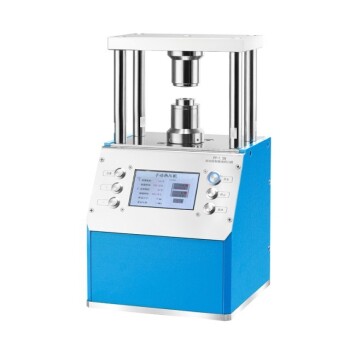
The essential technical requirement for a battery crimper using Quasi-Solid-State Polymer Electrolytes (QSPE) is the delivery of high, uniform, and stable mechanical pressure. Because QSPE lacks the natural flowability of liquid electrolytes, the crimper must exert enough force to manually establish intimate contact between the electrolyte and the electrode surfaces. This mechanical compression is the only way to exclude residual air and ensure a low-impedance electrochemical pathway.
Core Takeaway: For QSPE-based cells, the crimper acts as more than a sealing tool; it is a critical instrument for creating the solid-to-solid interface. The device must provide precise, repeatable pressure to minimize contact resistance and ensure a hermetic seal against environmental contaminants.
Overcoming Interface Challenges in Solid-State Systems
Managing Low Flowability
Unlike traditional liquid electrolytes that flow into the microscopic pores of an electrode, QSPE remains relatively stationary. The crimper must provide sufficient force to physically press the polymer matrix against the active materials to facilitate ion transport.
Eliminating Internal Air Pockets
Residual air trapped between the solid electrolyte and the electrode can lead to localized "dead zones" and inconsistent cycling. Uniform sealing pressure is required to purge these air gaps during the encapsulation process, ensuring the entire surface area of the electrode is active.
Establishing Solid-to-Solid Contact
The performance of a quasi-solid-state cell is dictated by the quality of the physical interface. High-pressure mechanical sealing forces the electrodes, electrolytes, and current collectors into tight contact, which is the primary method for establishing reliable electrochemical connections in the absence of a liquid medium.
Engineering the Electrochemical Environment
Minimizing Interfacial Impedance
High interfacial resistance is a common failure point in solid-state battery research. A high-quality crimper reduces this impedance by maintaining continuous and appropriate contact pressure across the internal layers of the coin cell.
Ensuring Hermetic Sealing
QSPE and many solid-state components are highly sensitive to moisture and oxygen from the external environment. The crimper must utilize high-pressure mechanical sealing technology to deform the battery gasket perfectly, creating an airtight barrier that prevents electrolyte degradation during long-term testing.
Maintaining Structural Integrity
The internal assembly, including the spring and spacer, must be compressed to a specific tolerance to maintain internal tension. The crimper must be capable of consistent pressure application to ensure that this internal tension remains stable throughout the expansion and contraction of battery cycling.
Understanding the Trade-offs and Pitfalls
The Risk of Excessive Pressure
While high pressure is necessary for QSPE contact, applying too much force can lead to internal short circuits. Excessive pressure can cause the electrodes to pierce the polymer electrolyte or deform the gasket to the point of mechanical failure.
The Danger of Insufficient Pressure
If the pressure is too low, the cell will suffer from high internal resistance and poor rate performance. Furthermore, an inadequate seal allows the ingress of ambient air, which can react with the lithium or sodium metal often used in these high-energy-density systems.
Mechanical Consistency Issues
Non-uniform pressure across the face of the coin cell can cause "edge effects" where the cell performs inconsistently. Using a crimper with misaligned dies or an unstable base will lead to biased electrochemical data and non-reproducible research results.
Selecting the Right Crimper for Your Application
To ensure the success of your QSPE assembly, the tool must match your specific research or production goals.
- If your primary focus is Data Reproducibility: Invest in a crimper with a digital pressure gauge to ensure every cell is sealed with the exact same force.
- If your primary focus is All-Solid-State Scalability: Prioritize a model that utilizes high-pressure mechanical sealing technology rated for the higher forces required by denser solid electrolytes.
- If your primary focus is Moisture-Sensitive Chemistry: Select a compact, low-maintenance crimper specifically designed for operation inside an argon-filled glovebox.
Properly executed mechanical crimping is the bridge between a theoretical solid-state design and a functional, high-performance electrochemical cell.
Summary Table:
| Technical Requirement | Importance for QSPE/Solid-State Cells | Research Risk (If Not Met) |
|---|---|---|
| High Contact Pressure | Establishes critical solid-to-solid interface contact. | High interfacial impedance & dead zones. |
| Pressure Uniformity | Eliminates air pockets and ensures active surface area. | Inconsistent cycling & biased data results. |
| Hermetic Sealing | Creates airtight barrier against moisture and oxygen. | Electrolyte degradation & material oxidation. |
| Precision Control | Maintains internal tension within specific tolerances. | Internal short circuits or mechanical failure. |
| Glovebox Compatibility | Enables operation in inert argon-filled environments. | Contamination of moisture-sensitive chemistries. |
Optimize Your Solid-State Battery Research with KINTEK
Bridge the gap between theoretical design and high-performance electrochemical cells. KINTEK specializes in comprehensive laboratory pressing solutions designed to meet the rigorous demands of next-generation battery research.
From establishing low-impedance interfaces to ensuring hermetic seals, our equipment provides the precision your data depends on. Our specialized range includes:
- Manual & Automatic Crimpers: For high-pressure, repeatable coin cell assembly.
- Heated & Multifunctional Models: Ideal for specialized QSPE and solid-state applications.
- Glovebox-Compatible Systems: Compact designs for inert environment integration.
- Cold & Warm Isostatic Presses: Essential for achieving high-density solid-state pellets.
Ready to enhance your lab's efficiency and data reproducibility? Contact us today to find your perfect pressing solution!
References
- Nicola Boaretto, María Martínez‐Ibáñez. Quasi-solid polymer electrolytes with binary and ternary salt mixtures for high-voltage lithium metal batteries. DOI: 10.20517/energymater.2024.203
This article is also based on technical information from Kintek Solution Knowledge Base .
Related Products
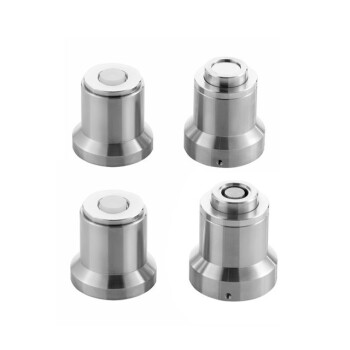
- Lab Button Battery Disassembly and Sealing Mold
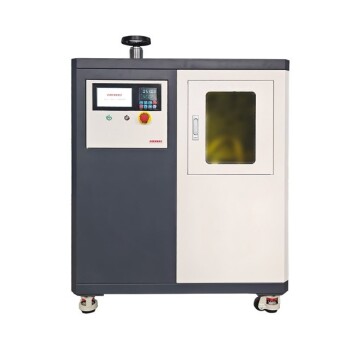
- Warm Isostatic Press for Solid State Battery Research Warm Isostatic Press
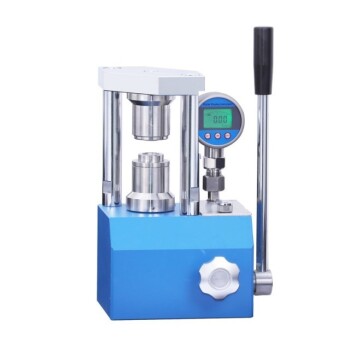
- Button Battery Sealing Machine for Button Batteries
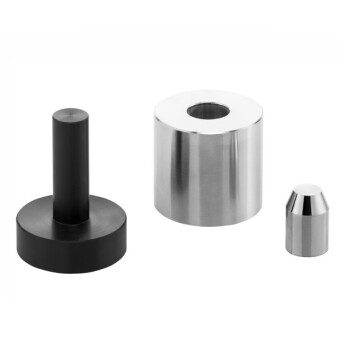
- Lab Button Battery Tablet Press Sealing Mold
- Button Battery Sealing Press Machine for Lab
People Also Ask
- How does a sealed battery mold facilitate the assembly and testing of asymmetric supercapacitors using VO2?
- What is the function of specialized battery molds and sealing consumables? Optimize Your In-situ XRD Testing Today
- How does the geometry of laboratory molds influence mycelium-based composites? Optimize Density and Strength
- Why are specialized battery test molds used? Ensure Peak Performance for All-Solid-State Sodium Batteries (ASSIBs)
- What role do battery testing molds play in electrolyte performance? Exploring Pressure vs. Viscoelasticity