All Questions
What Are The Primary Mechanisms Of Electrolyte Leakage In Cylindrical Alkaline Battery Cells? Discover Key Design And Seal Strategies To Prevent Leaks.
Learn how mechanical defects and alkali creeping cause leakage, plus design tips for grommet compression, coatings, and oxygen control.
What Material Characteristics And Mechanical Properties Are Required For Separators Used In Cylindrical Alkaline Battery R&D? Optimize Performance With Robust, Ion-Conductive Separators
Learn the essential mechanical and chemical properties of separators for cylindrical alkaline batteries, ensuring safety, longevity, and efficiency in R&D.
How Do Digital Data Acquisition And Quality Flow Models Balance Productivity And Quality? Optimize Battery Cell Assembly
Learn how digital data acquisition and quality flow models balance productivity and quality in battery cell assembly for optimal output.
How Does Cathode Volume Expansion During Discharge Influence Mechanical Cell Assembly Design In Alkaline Batteries? Key Insights For Engineers
Learn how cathode expansion impacts alkaline battery design—explore pellet density, compliance, and assembly trade-offs.
How Does Zinc Corrosion Cause Gassing And Leakage In Alkaline Battery Cells, And What Material Formulation Strategies Are Used To Mitigate It In Lab Cell Research?
Learn about zinc corrosion causing gassing and leakage in alkaline batteries and explore lab strategies to mitigate it.
How Does Using Flexible Polymer Film Enclosures Instead Of Rigid Metal Cans Affect Lithium-Ion Battery Energy Density, And What Laboratory Equipment Is Required For Pouch Cell Fabrication?
Learn how pouch packaging boosts energy density and discover essential equipment for lab-scale pouch cell fabrication.
What Are The Structural And Performance Advantages Of Precision Molded Plastic Seals Compared To Asphalt Pitch Seals In Primary Cell Construction? Discover Enhanced Reliability, Gas Management, And Extended Shelf Life.
Learn how precision molded plastic seals outperform asphalt pitch in primary cells: better volume use, venting, moisture retention, and corrosion prevention.
What Chemical Interaction Considerations Influence The Choice Of Cell Container Materials, And How Does Cell Assembly Equipment Help Maintain Cell Stability? Key Factors And Solutions
Learn how electrolyte chemistry and assembly equipment affect cell stability. Discover key material selection criteria and process controls.
Why Do Titanium-Based Solid Ceramic Electrolytes Require Polymer Encapsulation When Paired With Lithium Metal Anodes? Key Insights For Stable Interfaces
Learn why polymer encapsulation prevents Ti⁴⁺ reduction, how pressing equipment improves contact, and lowers impedance.
What Structural Role Does The Polymer Matrix Play In Ceramic-Rich Solid-State Electrolytes, And Why Is Precision Pressing Equipment Critical For Solid Cell Assembly? Discover Key Insights For Solid-State Battery R&D
Explore how polymer matrices enhance ceramic electrolytes and why precision pressing is vital for dense solid cell assembly.
What Are The Advantages And Operational Risks Of Using Dme And Dol Solvent Mixtures In Lithium-Sulfur Battery R&D, And Why Is Precision Cell Crimping Critical?
Explore DME/DOL electrolyte benefits, risks, and the critical role of precise cell crimping in Li-S battery research.
What Are The Primary Performance Advantages And Manufacturing Considerations Of Solid-Electrolyte Primary Batteries? Achieve Reliable Long-Term Power With Precision Manufacturing
Discover the key benefits of solid-electrolyte primary batteries: exceptional shelf life, safety, and stability, plus manufacturing insights for optimal performance.
What Are The Primary Operational Challenges When Implementing Full Component-Level Traceability Across Lithium-Ion Battery Cell Manufacturing Systems? Discover Key Solutions
Learn about speed, material identity shifts, and non-invasive marking hurdles in battery cell traceability, and how to overcome them.
What Hazards Are Associated With Reversed Cell Placement In Series/Parallel Battery Configurations, And How Can Contact Design Mitigate These Risks? Learn Fail-Safe Protection Strategies.
Discover the dangers of reversed cells in battery packs and how polarized contacts prevent thermal runaway, venting, and rupture.
What Design Considerations Are Required For Battery Encapsulation And Enclosure Safety When Working With Pouch And Cylindrical Cells? Optimize Your Battery Pack Design.
Learn key safety design considerations for pouch and cylindrical cell enclosures, including venting, expansion, and material selection.
How Does Nanostructured Carbon Encapsulation Mitigate Capacity Fading In Lithium-Sulfur Battery Cathodes, And What Equipment Is Essential? Discover Key Solutions For Stable Performance.
Learn how carbon encapsulation reduces polysulfide shuttling and find essential electrode preparation equipment for sulfur composite cathodes.
How Do 1D Tube-In-Tube Carbon Nanostructures (Ttcn) Enhance Sulfur Cathodes In Li-S Batteries And Why Are Additional Encapsulation Strategies Needed?
TTCN improves sulfur cathodes via conductivity and confinement, but additional encapsulation is needed for long-term cycling stability.
Why Must Process Requirements For Specialized Battery Pressing And Cell Assembly Equipment Be Integrated Into Building Design During Early Factory Planning Stages? Optimize Your Factory Layout For Efficiency
Learn why integrating battery pressing and cell assembly equipment requirements early in factory design prevents costly retrofits and enhances performance.
How Does A Carbon Paper Interlayer Improve Lithium-Sulfur Cell Longevity? Unlock Longer Cycle Life With Precision Assembly
Learn how carbon paper interlayers and precision assembly equipment enhance lithium-sulfur cell longevity.
What Structural Design And Testing Standards Are Required To Prevent Thermal Runaway Propagation In High-Density Lithium-Ion Battery Pack Assemblies?
Learn essential design features and testing standards (RTCA DO-311A, UL 9540A, etc.) to stop thermal runaway propagation in battery packs.
What Passive Material Mechanism Can Be Implemented During Battery Cell Assembly To Prevent Thermal Runaway Propagation? Discover The Chemically Bound-Water Thermal Barrier
Learn how a passive chemically bound-water cell wrap absorbs heat to stop thermal runaway propagation in battery modules.
How Does Cell Format (Cylindrical Vs. Pouch) Impact Structural Mass And Thermal Safety? Optimize Your Battery Pack Design For Safety And Performance.
Discover how cylindrical and pouch cells differ in structural mass, thermal safety, and pack-level energy density for R&D and assembly.
How Do Pouch Cell Assembly And Precision Pressing Equipment Help Reduce Inactive Mass Penalties In Advanced Battery Research? Boost Energy Density Now
Discover how pouch cells and precision pressing cut inactive mass, boosting cell-level energy density for advanced battery prototypes.
What Safety And Testing Considerations Are Critical During Battery Cell Assembly When Evaluating Module Cooling Methods And Cell Balance Requirements? Key Tips For Safe, Reliable Modules
Learn critical safety and testing factors for battery cell assembly: cooling trade-offs, cell matching, leak prevention, and BMS verification for reliable modules.
Why Is Precise Control In Battery Cell Assembly And Laboratory Pressing Equipment Essential For Minimizing Energy Density Loss Across Cylindrical, Prismatic, And Pouch Cell Formats? Optimize Active Material Utilization
Learn how precision pressing and assembly reduce energy density loss in battery cells by optimizing density, porosity, and interface contact across all formats.
How Does A High-Temperature Rotary Furnace Function In The Pyrometallurgical Recovery Of Metals From Battery Waste, And What Key Operating Conditions Are Required? Optimize Metal Recovery With Precise Control
Learn how rotary furnaces recover metals from battery waste, key operating conditions, and best practices for efficiency.
Why Is Controlled-Atmosphere Vacuum Processing Necessary For Safely Reclaiming Nickel From Nimh Batteries? Discover Key Safety Steps
Learn why vacuum processing is vital for safe NiMH battery breakdown and nickel recovery, controlling hydrogen risks and ensuring safety.
How Do Material Composition Changes Impact Battery Cell Fabrication And Recycling Strategies? Discover Key Insights
Explore how lower cobalt content alters cell fabrication needs and recycling economics. Learn precision strategies for lab-scale validation.
What Key Electrocatalytic Requirements Must Heteroatom-Doped Graphene Air Cathodes Meet For High-Performance Lithium-Air Batteries (Labs), And How Does Cell Preparation Equipment Affect These Properties?
Discover the essential electrocatalytic properties of doped graphene cathodes and how electrode fabrication equipment impacts battery performance.
What Deaeration Equipment And Techniques Are Recommended To Prevent Dissolved Oxygen Interference When Testing Air-Sensitive Materials In Electrochemical Cells?
Learn how to prevent dissolved oxygen interference with recommended deaeration techniques: inert-gas purging, freeze-pump-thaw, and glove box methods.
What Are The Core Components Of An Electrochemical Cell, And How Do They Influence The Setup Of Laboratory Cell Assembly Equipment For Battery Research? Key Insights
Learn how anode, cathode, electrolyte, and separator shape lab cell assembly equipment for reliable battery research.
What Are The Structural Features Of High-Temperature Primary Lithium Cells Such As Li-(Cf)N And Li-Socl2, And What Laboratory Cell Assembly Equipment Is Required To Fabricate Them For Testing?
Explore the structural features and assembly equipment needed for high-temperature primary lithium cells, from material selection to hermetic sealing.
What Are The Key Operational And Shelf-Life Differences Between Crimp Sealing And Laser Sealing In Primary Lithium Battery Assembly? Achieve Superior Battery Performance With The Right Sealing Solution
Discover the differences between crimp and laser sealing, including leakage rates, self-discharge, and operating ranges for primary lithium batteries.
Why Are Cylindrical Stainless Steel Casings With Hermetic Seals Required For Li-So2 Battery Cell Encapsulation Equipment? Ensure Safe, Reliable High-Pressure Battery Sealing
Discover why Li-SO2 batteries need pressure-resistant cylindrical casings and hermetic welding for safe, leak-proof encapsulation.
Why Do Lithium-Ion Battery Cell Assembly Processes Strictly Require Moisture-Free Handling Environments, And How Do Emerging Aqueous Sodium-Ion Chemistries Simplify Cell Fabrication Equipment Requirements?
Discover why lithium-ion assembly demands dry rooms and how aqueous sodium-ion simplifies fabrication, reducing costs and equipment needs.
How Do Cathode Design Configurations (Bobbin Vs. Spirally Wound) Influence The Load Capacity And Energy Density Of Primary Lithium Batteries?
Explore how bobbin and spirally wound cathode designs impact battery energy density and load capacity, and how to choose the right one.
What Container Sealing Techniques And Safety Mechanisms Are Essential During Primary Lithium Cell Assembly And Packaging? Discover Keys To Safe, Reliable Cells
Learn essential sealing techniques and safety mechanisms for primary lithium cell assembly, ensuring reliability and preventing hazards.
What Structural And Assembly Factors Must Be Considered During Prototype Battery Cell Fabrication To Prevent Mechanical Failure And Chemical Leakage? Key Design Strategies
Learn how to prevent mechanical failure and electrolyte leakage in prototype battery cells through proper alignment, pressure control, sealing, and fault containment.
Why Are Gel Polymer Electrolytes (Gpes) Utilized In Flexible Aluminum-Air Battery Design? Key Materials And Processing Steps Explained
Gel polymer electrolytes (GPEs) enable safe, flexible aluminum-air batteries. Learn key materials, processing steps, and performance trade-offs.
How Do Ambient Air Contaminants Affect Nonaqueous Metal-Air Battery Performance, And Why Is Controlled Cell Assembly Equipment Necessary During R&D? Key Insights For Reliable Testing
Discover how moisture, CO2, and N2 impact metal-air batteries and why controlled assembly is crucial for accurate R&D results.
How Do Solid-State Ceramic Electrolytes Function As Mediator-Ion Separators In Dual-Electrolyte Metal-Air Batteries? Pressing Tips For Defect-Free Membranes.
Learn how ceramic membranes work as ion bridges, and get critical pressing requirements for dense, defect-free laboratory samples.
What Laboratory Assembly And Mechanical Testing Equipment Is Required To Evaluate Flexible Pouch Cells Utilizing Functionalized Gel Polymer Electrolytes? Build Reliable Flexible Pouch Cells With Precise Assembly And Synchronized Electrochemical-Mechanical Testing.
Discover essential equipment for assembling flexible pouch cells with gel electrolytes, plus testing for cycling, bending, and safety.
What Structural Features And Material Properties Are Required For Separators To Prevent Short Circuits And Dendrite Perforation In Alkaline Zinc-Air Battery Research? Key Requirements And Trade-Offs
Discover the essential separator properties for alkaline zinc-air batteries: mechanical toughness, chemical stability, low electronic conductivity, and high ionic permeability to prevent dendrite short circuits.
How Do Structural Modification Techniques Enhance Polymer Separator Performance In High-Safety Lithium-Ion Battery Assembly? Discover Key Methods For Safer Cells
Explore structural modification techniques that boost polymer separators for safer, high-performance lithium-ion batteries. Learn about coatings, blending, and more.
What Mechanical Assembly Stresses Can Lead To Structural Container Failure In Valve-Regulated Battery Cells, And How Can Battery Assembly Processes Mitigate These Risks?
Learn how to prevent container cracks and electrolyte leaks by controlling mechanical stress during battery assembly.
How Does Pole Sealing Integrity Affect Internal Electrochemical Balance During Valve-Regulated Lead-Acid Cell Assembly? Key Testing Features Explained
Learn how pole sealing integrity impacts VRLA cell balance and explore key testing features for reliable assembly.
How Do Pan Separators Perform In Advanced Batteries? Key Advantages And Processing Challenges
Explore the performance of PAN separators in batteries, their electrochemical benefits, and the processing challenges for scalable manufacturing.
Why Must Custom Battery Enclosures Avoid Hermetic Sealing? Safety Factors For Confined Test Spaces
Learn why hermetic sealing is dangerous for battery enclosures and how to apply safety factors (5 or 10) in ventilation design for safe testing.
What Cell Fabrication Parameters Must Be Controlled During Laboratory Assembly When Pairing Graphite Or Silicon Anodes With Lithiated Cathodes In Li–S Research? Key Controls For N/P, E/S, Loading, And Sealing
Learn to control N/P ratio, E/S ratio, electrode loading, and mechanical assembly for reliable Li–S cells with graphite or silicon anodes.
In Lithium-Sulfur Battery Cathode Research, Why Are Carbon-Metal Oxide Nanocomposites Preferred Over Standalone Graphene Or Carbon Nanotube Hosts? Achieve High-Performance Li-S Batteries With Hybrid Cathode Architectures
Discover why carbon-metal oxide nanocomposites outperform standalone carbon hosts, with better polysulfide trapping, conductivity, and cycling stability.
How Does Thermogravimetric Analysis (Tga) Aid In Setting Thermal Processing Parameters For Battery Electrolytes? Tga Helps Define Safe Drying And Processing Conditions.
Learn how TGA identifies safe drying temperatures, decomposition limits, and processing windows for battery electrolyte materials
Why Is Reduced-Pressure Vacuum Drying Equipment Necessary When Preparing Hydrated Lithium Salt Additives Like Litdi For Lithium-Ion Battery Electrolytes? Achieve Safe, Anhydrous Litdi For Stable Batteries
Discover why vacuum drying is essential for LiTDI to remove bound water without decomposition, ensuring high-purity electrolytes and reliable battery performance.
What Are The Primary Performance Trade-Offs Between Gelled Electrolytes And Agm Separators Regarding Internal Resistance, Recombining Capacity, And Thermal Runaway Risk During Battery Design?
Compare AGM vs gel: internal resistance, recombination rate, and thermal runaway risk to optimize battery design.
Why Do Agm Separators Use Coarse And Fine Glass Fibers? Unlocking Vrla Cell Performance
Discover how a blend of coarse and fine fibers optimizes electrolyte retention, oxygen recombination, and mechanical stability in VRLA batteries.
What Primary Heat Transfer Pathways Dictate Cooling Efficiency In Cell Packaging Design, And How Should Lab Testing Setups Account For Them? Optimize Your Thermal Management With Kintek
Learn how side-wall conduction, radiation, and medium-based transport determine cell cooling efficiency, and design lab tests that faithfully reproduce real thermal boundaries.
What Benefits Do Inorganic Ceramic Coatings Provide For Polyolefin Battery Separators, And What Coating Formulations Optimize Performance?
Inorganic ceramic coatings like SiO2 and Al2O3 improve separator safety and electrolyte compatibility. A 9:1 SiO2-to-PVDF-HFP ratio balances performance.
How Do Polyimide-Based Porous Membranes Improve The Thermal Safety Of Lithium-Ion Battery Separators, And How Are Their Nanoporous Structures Synthesized For Battery Research?
Discover how polyimide separators enhance thermal stability and how LiBr templating creates nanopores for safer batteries.
What Are The Limitations Of Conventional Polypropylene (Pp) Separators In High-Performance Battery Assembly, And What Alternative Polymer Film Materials Are Used In Laboratory Cell Fabrication?
Discover PP separator limitations and alternative polymer films for lab battery assembly, enhancing thermal stability and ionic transport.
Why Can Standard Coin-Cell Assembly Setups Yield Misleading Performance Data During Lithium-Sulfur Battery R&D, And Why Is Precision Pouch Cell Fabrication Equipment Necessary For Accurate Evaluation?
Discover how precision pouch cell fabrication prevents misleading Li-S performance data from coin cells by controlling electrolyte, loading, and pressure.
Why Is High-Temperature Thermal Treatment Necessary During Cathode Material Separation In Battery Recycling? Optimize Recovery With Thermal Processing Equipment
Discover why thermal treatment at 500–700°C is crucial for removing binders and improving metal leaching in battery recycling, and the role of furnaces.
What Passive Safety Mechanisms Are Integrated Into Cylindrical Li-Ion Battery Cell Caps, And How Do They Mitigate Thermal And Pressure Hazards?
Learn how PTC and CID devices in cylindrical cell caps prevent overheating, overcurrent, and pressure buildup, reducing thermal runaway risk.
What Are The Primary Structural Formats Of Lithium-Ion Battery Cells? Choose The Right Design For Lab Assembly And Packaging
Explore cylindrical, pouch, and prismatic cell formats, their design impact on lab assembly, and packaging trade-offs.
What Are The Primary Functional Requirements For Battery Separators, And How Do Agm Separators Work In Vrla?
Learn key functions of battery separators and how AGM technology enables efficient VRLA operation.
How Does A Laboratory Hydraulic Sealing Machine Benefit The Assembly Of Lithium-Ion Coin Cells Using Solid Electrolytes?
Discover how laboratory hydraulic sealing machines optimize solid-state battery assembly by reducing interfacial resistance and ensuring hermetic seals.
What Are The Technical Requirements For A Battery Crimper For Qspe Cells? Achieve Superior Solid-State Interfaces
Learn the essential crimper requirements for QSPE battery assembly: uniform pressure, low impedance, and hermetic sealing for reliable research.
Purpose Of 30 Mpa In Cr2032 Sealing? Achieve Superior Interfacial Contact & Airtight Seals For Solid-State Batteries
Learn why 30 MPa pressure is critical for CR2032 coin cells in solid-state battery research to minimize resistance and ensure hermetic seals.
Why Is A High-Precision Laboratory Pressing Machine Required For 1.6 Ah Pouch Cells? Boost Battery Energy & Safety
Discover how precision pressing optimizes 1.6 Ah pouch cell assembly by reducing impedance, eliminating voids, and ensuring electrochemical safety.
What Are The Advantages Of Using A Precision Laboratory Press For The Encapsulation Of Anode-Free Solid-State Batteries?
Learn how precision laboratory presses optimize anode-free solid-state batteries by reducing resistance, managing expansion, and inhibiting dendrites.
Why Is High-Pressure Molding Necessary For All-Solid-State Battery Assembly? Achieve Optimal Ion Transport & Density
Learn why high-pressure molding is vital for solid-state batteries, from reducing contact resistance to enabling efficient lithium-ion transport.
How Are Hydraulic Presses Used In Powder Metallurgy And Composite Material Preparation? Master Advanced Densification
Learn how hydraulic presses drive powder metallurgy and composite manufacturing through precise compression, heat, and densification processes.
What Tasks Are Hydraulic Presses Used For In Industrial Settings? Unlocking Massive Force And Precision
Explore the diverse industrial uses of hydraulic presses, from scrap metal baling and powder metallurgy to precision material testing and forming.
What Is The Specific Function Of Hydraulic Presses In Preparing Samples For Spectroscopy? Achieve Data Accuracy
Learn how hydraulic presses create homogenous KBr pellets and XRF discs to eliminate light scattering and ensure precise spectroscopic analysis.
How Are Hydraulic Presses Used For Sample Preparation? Achieve Precision In Spectroscopy And Material Testing
Learn how laboratory hydraulic presses prepare samples for FTIR, XRF, and mechanical testing by ensuring uniform density and optical clarity.
How Is The Vulcanization Motor Controlled In A Hydraulic Press? Master Precision Curing With Electro-Hydraulic Systems
Learn how electro-hydraulic drives and automatic pressure compensation control vulcanization motors for precise, energy-efficient rubber curing.
Why Are Cleanliness And Lubrication Important For A Hydraulic System In A Lab Press? Maximize Lifespan & Precision
Learn why lubrication and cleanliness are vital for hydraulic lab presses to reduce friction, prevent wear, and ensure long-term reliability.
What Are The Characteristics Of Hydraulic Oil Used In Presses? Maintain Precision And Protect Your Lab Equipment
Learn why hydraulic oil stability matters and why regular changes are vital to prevent moisture buildup and ensure press accuracy and longevity.
What Is The Working Principle And Advantage Of A Plate Vulcanizing Machine's Frame Structure? Superior Press Precision
Learn how the frame structure of plate vulcanizing machines enhances rubber quality through hydraulic pressure, heat, and mechanical rigidity.
How Should The Power Supply Of A Rubber Laboratory Press Be Operated? Safe And Efficient Startup Procedures
Master the correct sequence for operating your rubber laboratory press, from hydraulic prep to motor activation, ensuring equipment longevity.
How Should The Hydraulic Oil And Lubrication Be Inspected In A Rubber Laboratory Press? Proactive Maintenance Tips
Learn the essential steps to inspect hydraulic oil levels and mechanical lubrication to ensure your 25-ton laboratory press runs smoothly.
What Functionalities Does The Molded Board Division Of A Laboratory Platen Press Offer? Versatile Sample Prep Guide
Discover how laboratory platen presses facilitate molded board R&D through versatile material switching and precise sample preparation for testing.
Why Is Applying Sufficient Pressure Crucial When Using A Laboratory Press? Ensure Sample Integrity And Data Validity
Learn why optimal pressure is vital for material density, eliminating defects, and ensuring reproducibility in laboratory sample preparation.
What Role Does The Hydraulic Cylinder Play In A Laboratory Press? Master Precision Force And Sample Integrity
Learn how hydraulic cylinders use Pascal’s Law to apply uniform pressure, eliminate defects, and ensure reproducible laboratory results.
What Is A Laboratory Press And What Are Its Common Applications? Versatile Solutions For R&D And Material Testing
Learn how laboratory presses work and their roles in R&D, spectroscopy, and pharmaceutical prototyping with our comprehensive guide.
For Which Applications Are Benchtop Hydraulic Presses Suitable? Precision Solutions For Lab And Research Needs
Discover why benchtop hydraulic presses are essential for spectroscopy sample prep, material testing, and fluid extraction in compact lab spaces.
What Are The Characteristics Of Powered Hydraulic Presses? Enhance Your Lab’s High-Throughput Consistency
Explore the key characteristics of powered hydraulic presses, from automated electric motors and programmable logic to auto top-up load features.
How Is A Hydraulic Press Used In Spectroscopy And Compositional Determination? Enhance Your Analytical Precision
Learn how hydraulic presses transform powders into transparent KBr pellets and dense XRF discs for accurate spectroscopic analysis.
What Are The Common Uses Of A Laboratory Hydraulic Press? Precision Solutions For Materials Testing And R&D
Explore the diverse uses of laboratory hydraulic presses, from FTIR sample prep and powder compaction to material strength testing and pharma R&D.
What Are The Industrial Applications Of A Hydraulic Press? Versatile Solutions For Modern Manufacturing
Explore the diverse industrial applications of hydraulic presses, from metal forging and plastic molding to precision assembly and testing.
What Are The Primary Components Of A Hydraulic Press? Build Power And Precision In Your Lab
Learn about the essential parts of a hydraulic press, from the mainframe and cylinder to pumps and control valves, and how they generate force.
What Is The Function Of A Laboratory Press Or Coin Cell Crimper In Hard Carbon Sodium-Ion Half-Cell Preparation?
Learn how laboratory presses and coin cell crimpers ensure physical contact and airtight seals for sodium-ion battery research and data integrity.
Why Is A Pouch Cell And Pressure Device Preferred For Lithium Anode Research? Achieve Industrial Fidelity
Learn why pouch cells with precision pressure devices outperform coin cells in lithium metal battery research for uniform deposition and accurate data.
How Do Laboratory Battery Sealing Machines Ensure Performance Consistency? Master Your Lithium And Lfp Battery Assembly
Learn how precision laboratory presses and sealing machines optimize electrode interfaces and ensure hermetic stability in LFP and gel batteries.
How Do Steel Molds And Copper Gaskets Work Together To Prevent Leakage In A Wip System? Achieve Hermetic Reliability
Learn how induced plastic deformation between copper gaskets and steel molds creates leak-proof seals in Warm Isostatic Press (WIP) systems.
What Functions Do Metal Bellows Or Cans Serve During Hip Of Zirconolite? 3 Critical Roles Explained
Learn how metal containers enable hermetic sealing, pressure transmission, and chemical control during the HIP of zirconolite ceramics.
What Is The Role Of An Isostatic Press In The Packaging Of Sulfide Dry Film Solid-State Batteries?
Learn how isostatic pressing enables high-performance sulfide dry film solid-state batteries by ensuring densification and low contact resistance.
How Does The Precision Of A Coin Cell Crimper Influence The Cycle Life Of Silicon Anode Batteries? Key Assembly Secrets
Learn how crimping precision affects silicon anode cycle life through uniform pressure, impedance stability, and hermetic sealing for battery research.
Why Are High-Quality Coin Cell Components And A Precision Sealing Machine Required? Ensure Zn-Ion Battery Stability
Learn why precision sealing and quality components are essential for MnCl₂N₄-CFs zinc-ion batteries to prevent leaks and ensure data integrity.
How Does Battery Sealing Equipment Ensure Pouch Cell Safety? Key Insights For Battery Research
Learn how precision sealing equipment prevents electrolyte leakage and environmental ingress to ensure pouch cell safety and performance.
How Can Hip Alter Mgb2 Synthesis? Achieve Superior Superconductivity Through Solid-State Reaction Control
Learn how Hot Isostatic Press (HIP) technology elevates the melting point of magnesium to create high-performance MgB2 with refined microstructures.
How Do Packaging Processes And Electrolyte Properties Influence The Safety Of Pouch Cells? Enhance Battery Resilience
Learn how aluminum-plastic packaging and PNF solid-state electrolytes prevent thermal runaway and maintain stability in pouch cells during testing.
Related Products

Battery Tester Internal Resistance Voltage Temperature Measurement

Battery Alligator Clips and Kelvin Test Clamps for Laboratory Cell Testing
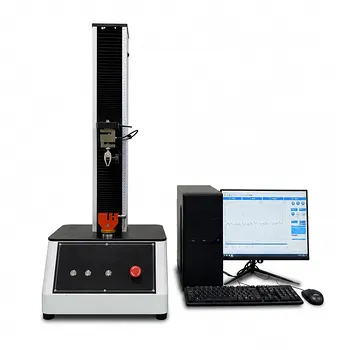
Battery Separator Tensile and Puncture Testing Machine
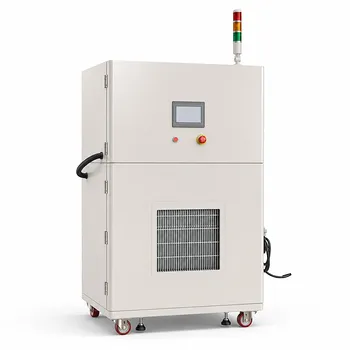
Battery Combustion Test Machine for Constant Temperature Battery Burning Tests
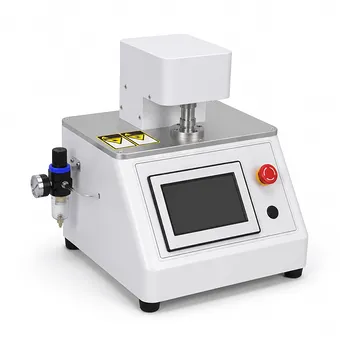
Battery Separator Air Permeability Tester Gurley Densitometer