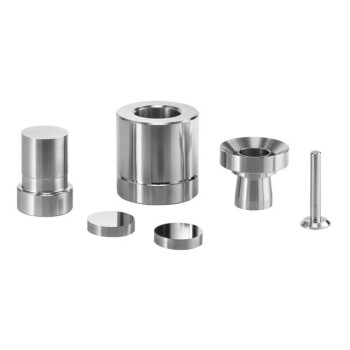
High-purity Potassium Bromide (KBr) powder acts as an infrared-transparent carrier and matrix during sample preparation. In the context of starch analysis, KBr is mixed with the starch sample and compressed into a thin, transparent pellet. This medium allows infrared radiation to penetrate the sample effectively, ensuring that the characteristic molecular vibrations of the starch are captured without background interference from the matrix itself.
Core Takeaway: KBr serves as a chemically inert, infrared-neutral medium that enables the creation of a stable, light-transmitting pellet. This preparation is essential for achieving high-resolution spectra and identifying the specific functional groups within a starch molecular framework.
The Fundamental Roles of KBr in Spectral Analysis
High Infrared Transparency
KBr is utilized primarily because it is highly transparent across the mid-infrared region. This transparency ensures that the infrared beam passes through the sample pellet to the detector without being absorbed by the carrier material. Consequently, the resulting spectrum reflects only the molecular vibrations of the starch, rather than the matrix holding it.
Effective Sample Dispersion and Dilution
Starch samples are often too dense or opaque to be analyzed in their pure form. KBr acts as a diluent, allowing the starch particles to be evenly dispersed throughout the matrix. This uniform distribution ensures that the infrared light interacts consistently with the sample molecules, preventing "saturated" peaks that would otherwise obscure data.
Chemical Inertness and Stability
KBr is chemically inert, meaning it does not react with the starch or other functional groups during the mixing or pressing process. This stability is critical for maintaining the chemical integrity of the sample. By remaining unreactive, KBr ensures that the spectral peaks observed are a true representation of the starch’s original structure.
Enhancing Spectral Resolution and Accuracy
Minimizing Light Scattering
When a sample is pressed into a KBr pellet, the powder undergoes plastic flow under high pressure. This process encapsulates the starch particles within a solid, dense disk that reduces light scattering. Reducing scattering is vital for improving the signal-to-noise ratio, which leads to sharper, more defined spectral peaks.
Protecting Sample Integrity
In some instances, the KBr matrix can provide a level of protection for the sample against atmospheric influences. For sensitive samples, the dense pellet structure can help shield the internal chemistry from atmospheric moisture or oxidation during the measurement window. This ensures the structural stability of the delivery system or molecular framework being analyzed.
Accurate Identification of Functional Groups
Because KBr provides a clear, "blank" background, researchers can accurately identify specific vibration frequencies. For starch, this includes critical bonds such as hydroxyl (O-H) and carbon-hydrogen (C-H) groups. This precision is necessary to verify chemical adsorption mechanisms or the success of cross-linking in modified starches.
Understanding the Trade-offs and Pitfalls
The Challenge of Hygroscopicity
The most significant drawback of KBr is that it is highly hygroscopic, meaning it readily absorbs moisture from the air. If the KBr powder is not kept perfectly dry, water peaks will appear in the spectrum, potentially overlapping with the hydroxyl (O-H) bonds of the starch. This can lead to misleading data regarding the sample's hydration or chemical composition.
Pressure-Induced Sample Alterations
The high pressure required to create a transparent pellet (often several tons) can occasionally alter the physical state of a sample. While starch is generally robust, extreme pressure can sometimes induce phase changes or affect the crystallinity of certain polymers. Users must balance the need for pellet transparency with the physical sensitivity of the material being tested.
How to Apply This to Your Analysis
Making the Right Choice for Your Goal
- If your primary focus is Peak Clarity: Ensure the KBr-to-sample ratio is approximately 100:1 to avoid overly intense or distorted absorption peaks.
- If your primary focus is Moisture Sensitivity: Always pre-dry your KBr powder in an oven and perform the mixing and pressing in a temperature-controlled, low-humidity environment.
- If your primary focus is Quantitative Accuracy: Use a consistent mass of both KBr and starch for every pellet to ensure that pathlength and concentration remain comparable across different tests.
Mastering the use of KBr as a matrix allows for the definitive molecular characterization of starch, providing the clarity needed to confirm complex chemical structures.
Summary Table:
| Role of KBr | Function in Preparation | Impact on Results |
|---|---|---|
| IR Transparency | Non-absorptive matrix | Captures clear molecular vibrations |
| Sample Dilution | Uniform particle dispersion | Prevents saturated absorption peaks |
| Chemical Inertness | Stable carrier medium | Maintains starch chemical integrity |
| Plastic Flow | Solid pellet formation | Minimizes scattering for high resolution |
Achieve Precision with KINTEK Laboratory Pressing Solutions
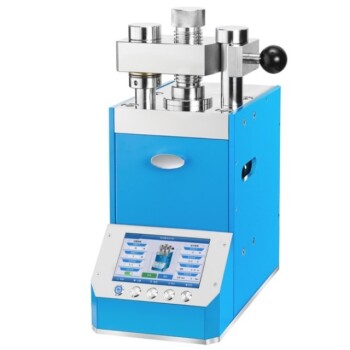
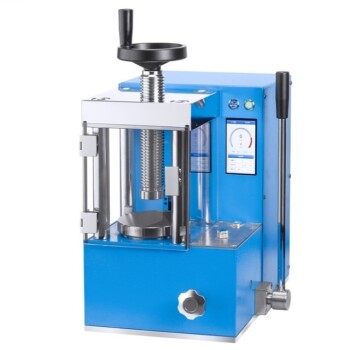
High-resolution FTIR starch analysis relies on perfect KBr pellet preparation. KINTEK specializes in comprehensive laboratory pressing solutions, offering manual, automatic, heated, multifunctional, and glovebox-compatible models, as well as cold and warm isostatic presses widely applied in battery research. Our precision tools ensure the transparency and consistency needed for superior data. Contact KINTEK today to find the right press for your laboratory!
References
- Mehdi Bahrami, Mohammad Javad Nematollahi. Cross-Linked Starch as Media for Crystal Violet Elimination from Water: Modeling Batch Adsorption with Fuzzy Regression. DOI: 10.3390/molecules29163894
This article is also based on technical information from Kintek Solution Knowledge Base .
Related Products
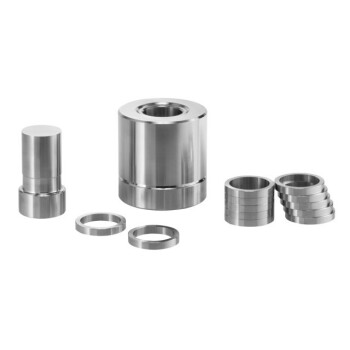
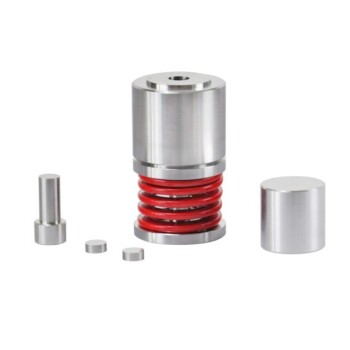
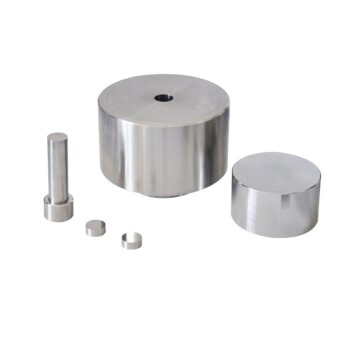
- XRF KBR Steel Ring Lab Powder Pellet Pressing Mold for FTIR
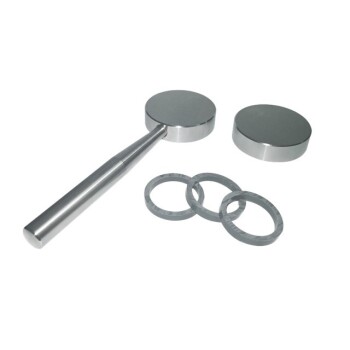
- XRF KBR Plastic Ring Lab Powder Pellet Pressing Mold for FTIR
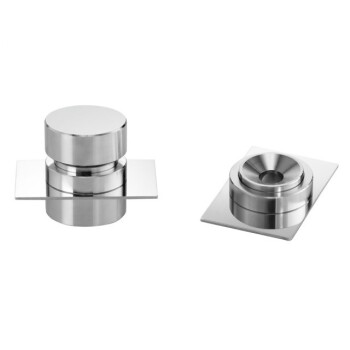
- Lab Infrared Press Mold for No Demolding
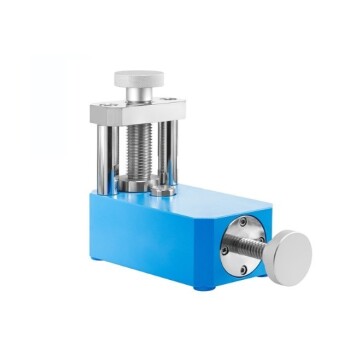
- Laboratory Hydraulic Press 2T Lab Pellet Press for KBR FTIR
- Automatic Laboratory Hydraulic Press for XRF and KBR Pellet Pressing
People Also Ask
- What considerations are important regarding the die size of an XRF pellet press? Optimize for Your XRF Spectrometer and Sample
- Why are pellets used in XRF analysis, and what is their limitation? Boost Accuracy and Speed in Your Lab
- What is the general process for preparing a sample pellet for XRF? Master Consistency for Accurate Analysis
- What are the differences between manual and automatic XRF pellet presses? Choose the Right Press for Your Lab's Needs
- What are the main methods for preparing XRF pellets? Boost Accuracy and Efficiency in Your Lab