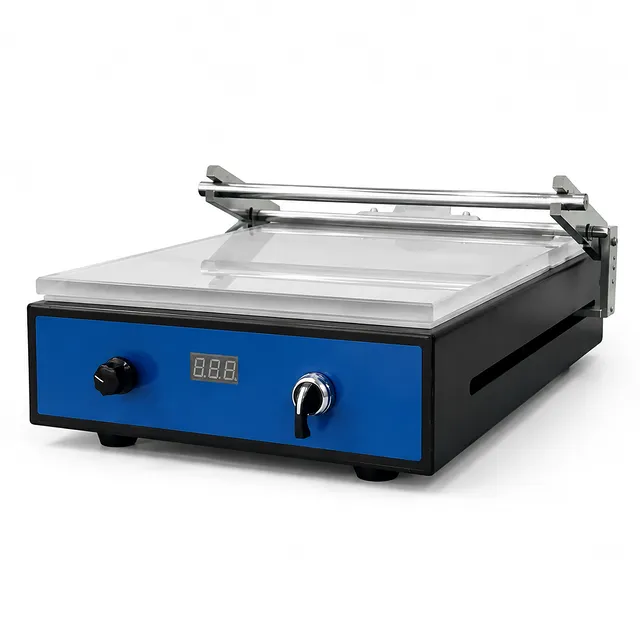
Laboratory Coating Machine
Small Continuous Laboratory Coating Machine for Precise Wet Film Application
Item Number : TB12
Price varies based on specs and customizations
- Coating Speed
- 0-250 cm/min; stepless speed adjustment
- Effective Coating Width
- 30 cm
- Main Power Supply
- 220 V / 50 Hz

Shipping:
Contact us to get shipping details Enjoy On-time Dispatch Guarantee.
Why Choose Us
Easy ordering process, quality products, and dedicated support for your business success.
Product Overview
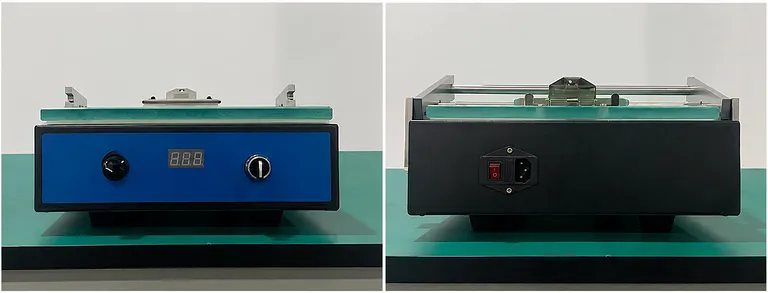
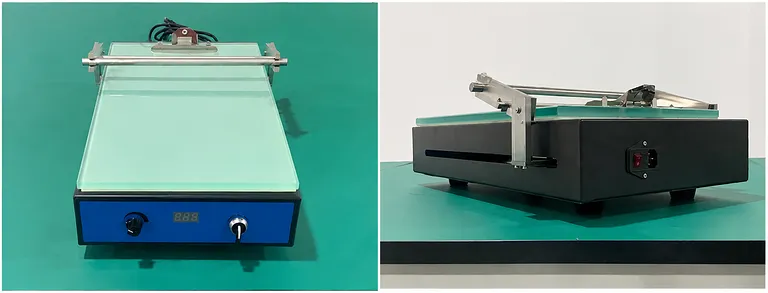
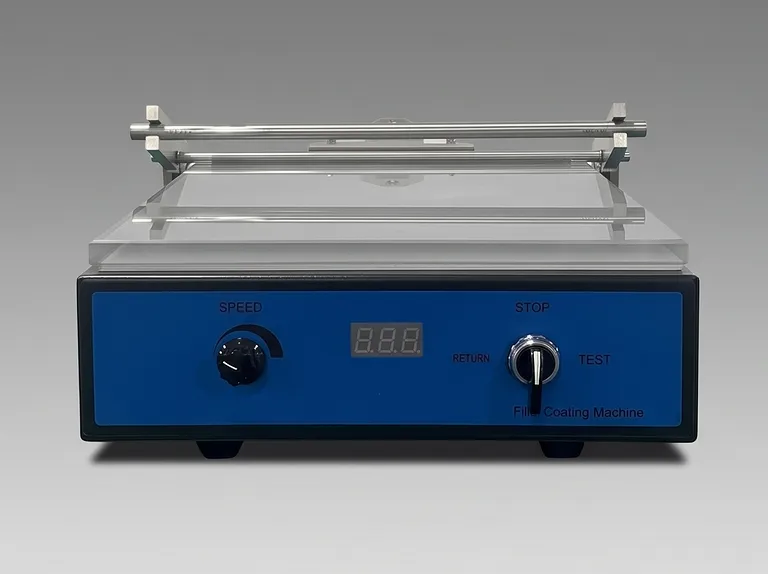
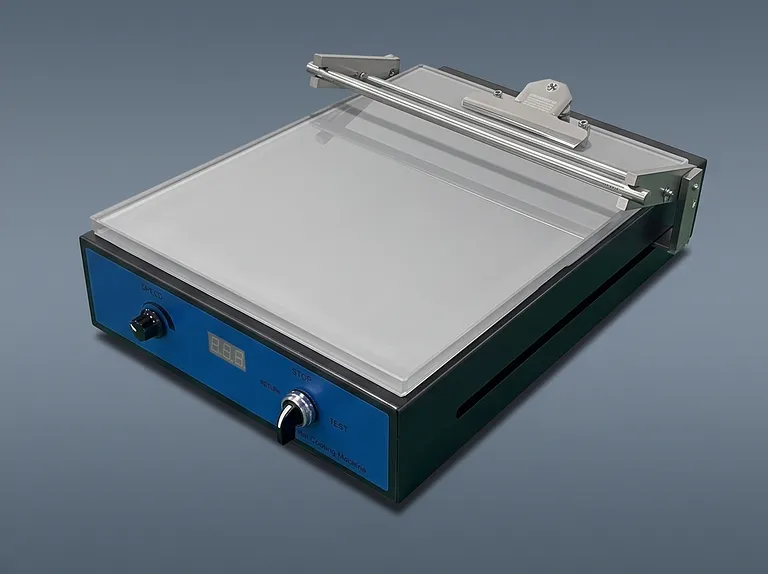
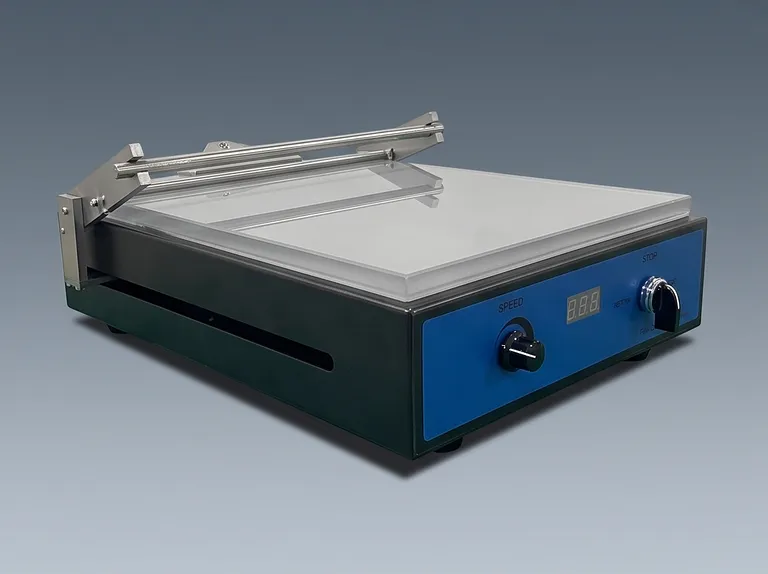
This small continuous laboratory coating machine is designed to produce precise, repeatable wet films on controlled substrates. Manual coating often varies with operator technique, coating speed, and pressure applied to the coating rod, making it difficult to compare samples reliably. This system provides a controlled mechanical coating motion that improves wet-film consistency and reduces variation between operators.
The equipment is suitable for laboratory production trials involving adhesives, paper, films, and related coating materials. Its 30 cm effective coating width and 40 cm coating length support practical sample preparation while maintaining a compact footprint for laboratory benches and pilot-scale development areas. It is useful for coating process development, sample evaluation, formulation comparison, and small-batch production studies across coating and converting applications.
A variable-speed drive allows operators to select a suitable coating rate for the material and substrate under evaluation. The rigid base, glass coating bed, clamping arrangement, and adjustable bed support help maintain stable contact between the substrate and coating rod. With correct installation, cleaning, and alignment, the equipment provides dependable operation for repeated testing under demanding laboratory conditions.
Key Features
-
Controlled Continuous Coating Motion: Motorized movement provides a consistent coating stroke, reducing the operator-to-operator differences associated with manual application and improving the repeatability of wet-film samples.
-
Adjustable Coating Speed: The drive operates from 0 to 250 cm/min with stepless speed adjustment, allowing users to match the coating rate to adhesive, paper, film, and other process materials. Custom speed configurations can also be requested when a specific development process requires them.
-
30 cm Effective Working Width: The coating area provides a 30 cm effective coating width across a 40 cm coating length. This format supports representative laboratory samples without requiring the space or material consumption of full production equipment.
-
Dedicated Coating Rod: The supplied coating rod is 10 mm in diameter and 40 cm long, with a 30 cm effective coating section. Its defined geometry supports controlled contact across the working area.
-
Stable Glass Coating Bed: The glass coating bed provides a smooth, level support surface for substrates. Keeping the bed clean and free from debris helps preserve flatness and supports consistent coating results from one test to the next.
-
Secure Substrate Clamping: Clips hold the selected substrate firmly on the coating bed. This reduces substrate movement during the coating stroke and improves sample quality, especially when working with thin paper or flexible films.
-
Adjustable Bed Parallelism: The coating bed support feet can be adjusted to align the bed parallel with the coating rod. A feeler gauge can be used to check the gap, enabling fine adjustment for more uniform coating contact.
-
Practical Sample Handling: The front-mounted coating control supports straightforward testing, while the waste collection tray makes it easier to remove residual material after the coating cycle. Finished samples can be removed promptly for inspection or further testing.
-
Compact Laboratory Construction: Measuring 580 x 340 x 180 mm and weighing 20 kg, the unit fits efficiently into laboratory work areas while providing a stable platform for repeatable coating trials.
Applications
| Application | Description | Key Benefit |
|---|---|---|
| Adhesive formulation development | Apply controlled wet films of adhesive formulations to paper, films, or other compatible substrates for screening and comparison. | Reduces application variation and makes formulation performance easier to compare. |
| Paper coating trials | Produce laboratory samples for evaluating coating coverage, surface appearance, absorption, and process behavior on paper-based materials. | Provides repeatable samples while using less material than production-scale equipment. |
| Flexible film coating | Coat polymer films and other thin flexible substrates during material development or process optimization. | Secure clamping and controlled motion help limit substrate movement during application. |
| Coating process development | Investigate the influence of coating speed and application conditions on wet-film quality and sample consistency. | Stepless speed control supports systematic process experiments. |
| Paint and surface-finishing research | Prepare controlled coated panels for laboratory evaluation of related paints, finishes, and surface-treatment materials. | Improves the consistency of test panels used for visual and performance assessment. |
| Pilot production evaluation | Create small representative samples before transferring a formulation or coating method to larger production equipment. | Supports lower-risk scale-up decisions with practical process data. |
| Comparative quality testing | Prepare multiple samples under consistent coating conditions for comparing raw materials, formulations, or substrate lots. | Improves test validity by minimizing differences caused by manual operation. |
Technical Specifications
| Parameter | Specification |
|---|---|
| Model | TB12 |
| Equipment type | Small continuous laboratory coating machine |
| Machine dimensions L x W x H | 580 x 340 x 180 mm |
| Coating speed | 0-250 cm/min; stepless speed adjustment; custom configuration available according to customer requirements |
| Coating area | 30 cm width x 40 cm length |
| Coating rod diameter | 10 mm |
| Coating rod length | 40 cm |
| Effective coating width | 30 cm |
| Main power supply | 220 V / 50 Hz |
| Weight | 20 kg |
| Compatible trial materials | Adhesives, paper, films, and other related coating materials |
| Substrate support | Glass coating bed |
| Substrate retention | Clips used to secure the substrate on the coating bed |
| Coating-bed alignment | Adjustable support feet allow the glass bed to be aligned parallel with the coating rod |
| Alignment verification | Feeler gauge may be used to check the gap during adjustment |
| Waste handling | Residual coating material is removed into a waste collection tray after coating |
| Installation location | A location without vibration sources is recommended |
| Installation foundation | Flat and firm foundation required |
| Initial installation check | Inspect packaging for damage before opening; inspect the equipment after unpacking and verify contents against the packing list |
| Electrical start-up requirement | Close the main power switch before energizing the equipment |
| Glass-bed positioning | Place the glass coating bed between the two swing arms, with the rear of the bed flush with the rear of the coating machine |
| Operating sequence | Connect power; place and clamp the substrate; return the push rod with the coating knob in the RETURN position; install the coating rod; select coating speed; place coating material in front of the rod; set the coating knob to TEST; remove remaining material after coating stops |
| Coating-bed cleanliness | Keep the bed clean and free of debris; immediately clean spilled coating material to preserve bed flatness |
| Substrate preparation | Select the substrate size and secure it with clips before coating |
| Post-use maintenance | Clean residual material from the waste collection area after every use |
| Glass-bed support adjustment | Support feet are generally not fixed to the glass bed at shipment; users may bond them in place according to their requirements |
| No-motion troubleshooting | Check the power connection, main switch, and power indicator; confirm that the speed control is not at the minimum setting; verify that the coating control is set in the correct direction |
The equipment should be unpacked at or near its installation location whenever possible. Before opening the package, inspect the external packaging for visible damage. After unpacking, check the condition of the unit and compare the contents with the packing list. Any damage or shortage should be documented and reported in writing immediately.
Before operation, place the machine on a firm, level foundation in an area isolated from vibration. Install the glass coating bed centrally between the two swing arms, ensuring that its rear edge is flush with the rear of the machine. The bed and coating rod must remain parallel. If adjustment is required, use a feeler gauge to identify the gap and place an appropriate shim beneath the relevant support foot. The supports are normally supplied unfixed so that users can adapt the positioning to their specific requirements; they may be bonded after the correct alignment has been established.
For each coating run, place the selected substrate flat on the glass bed and secure it with clips. Return the push rod before installing the coating rod, then select the required speed using the stepless control. Position the required amount of coating material directly in front of the rod and select the TEST position to begin the coating stroke. When the stroke is complete, scrape remaining material into the waste collection tray and remove the finished sample.
Cleaning is important for maintaining coating accuracy. Debris or dried material on the glass bed can change the bed flatness and affect the next coating result. Any spilled material should be removed promptly, and waste should be cleaned after every use. If the main unit does not move, first verify the power supply, switch position, and indicator status. Then check that the speed control is not at its minimum setting and confirm that the coating control is oriented correctly.
Why Choose This Product
-
Improved Test Reproducibility: Controlled coating speed and stable mechanical movement reduce the variability that commonly occurs when samples are prepared manually.
-
Efficient Laboratory Footprint: The compact 580 x 340 x 180 mm format and 20 kg weight make the unit practical for laboratory benches, development rooms, and pilot-process workstations.
-
Precision-Oriented Construction: A glass coating bed, defined coating rod geometry, substrate clips, and adjustable support feet provide the alignment and stability needed for dependable sample preparation.
-
Flexible Process Development: Stepless operation from 0 to 250 cm/min supports different coating materials and experimental conditions, with custom speed configurations available according to customer requirements.
-
Straightforward Ownership: Clear installation, alignment, operating, cleaning, and troubleshooting procedures help users establish consistent daily workflows and protect long-term performance.
Contact us for a quotation, application review, or custom coating configuration matched to your substrate, material, and laboratory process requirements.
Trusted by Industry Leaders

REQUEST A QUOTE
Our professional team will reply to you within one business day. Please feel free to contact us!
Related Products

Laboratory Hydraulic Press Lab Pellet Press Machine for Glove Box
Precision lab press for glove boxes: Compact, leak-proof design with digital pressure control. Ideal for inert atmosphere material processing. Explore now!

Automatic Laboratory Hydraulic Press Lab Pellet Press Machine
Upgrade your lab with KINTEK's Automatic Lab Press – precision, efficiency, and versatility for superior sample preparation. Explore models now!

Automatic Heated Hydraulic Press Machine with Hot Plates for Laboratory
KINTEK Automatic Lab Heat Press: Precision heating, programmable control, and rapid cooling for efficient sample preparation. Enhance lab productivity today!

Laboratory Hydraulic Pellet Press for XRF KBR FTIR Lab Press
KINTEK Lab Press Machines: Precision hydraulic presses for sample prep. Automatic, heated, and isostatic models for research labs. Get expert advice now!

Electric Split Lab Cold Isostatic Pressing CIP Machine
KINTEK Lab Electric Cold Isostatic Press ensures precise sample preparation with uniform pressure. Ideal for material science, pharmaceuticals, and electronics. Explore models now!

Automatic Laboratory Hydraulic Press for XRF and KBR Pellet Pressing
KinTek XRF Pellet Press: Automated sample prep for precise XRF/IR analysis. High-quality pellets, programmable pressure, durable design. Boost lab efficiency today!

Manual Laboratory Hydraulic Press Lab Pellet Press
KINTEK's Protective Manual Lab Hydraulic Press ensures safe, precise sample preparation with durable construction, versatile applications, and advanced safety features. Ideal for labs.
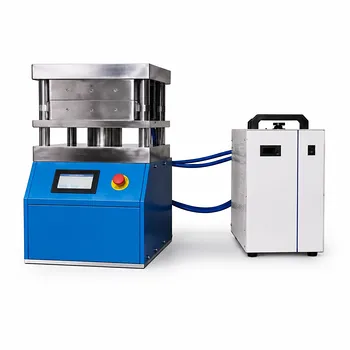
25 Ton Automatic Laboratory Hot Press Machine 300x300mm Dual Heated Platens Rapid Cooling CE Certified
The 25-ton automatic laboratory hot press offers 300x300mm dual heated platens, rapid cooling, and CE certification. Achieve uniform heating up to 300°C with closed-loop pressure control. Ideal for advanced materials research. Contact us for a competitive quote and custom solutions.
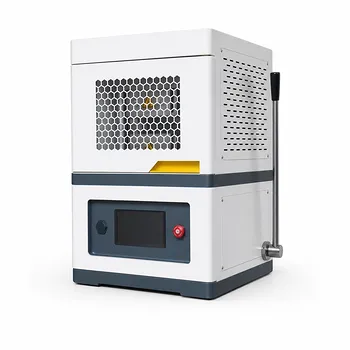
Solid-State Battery Research Laboratory Hydraulic Hot Press Machine
Compact laboratory hydraulic hot press with independent dual-platen heating up to 300°C, programmable temperature-pressure profiles, active water cooling, and automated pressure maintenance, providing repeatable thermal pressing for solid-state battery research, electrode lamination, and polymer electrolyte preparation in university and industrial labs.
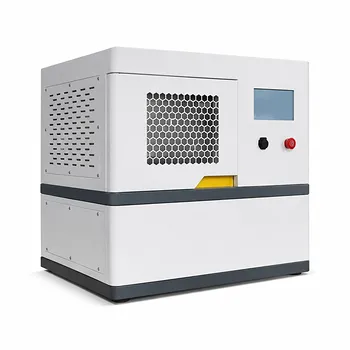
Solid State Battery Laboratory Hydraulic Hot Press
Benchtop laboratory hot press for precise thermo-compression of advanced materials. Features dual-zone independent programmable heating, servo-driven force control, and 7-inch touchscreen interface for repeatable solid-state battery research, electrode fabrication, and composite lamination with built-in over-temperature and over-pressure protection.
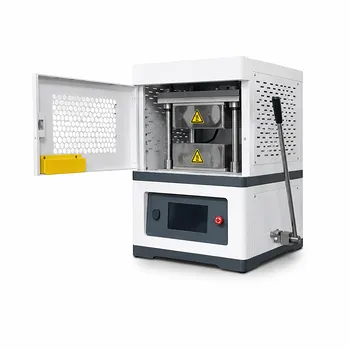
Solid-State Battery Laboratory Hydraulic Hot Press
The benchtop hydraulic hot press for solid-state battery labs delivers independent dual-platen heating up to 300°C, 10-ton force, and rapid water cooling for precise material consolidation, thermal laminating, and sample preparation. Ideal for solid-state electrolyte pressing and composite laminating.
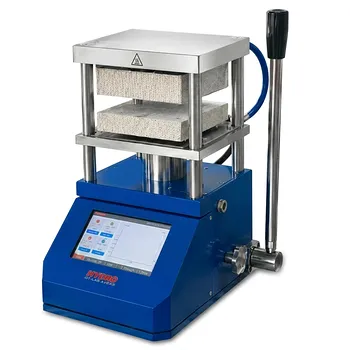
Integrated Manual Heated Plate Hydraulic Press for Laboratory
The integrated manual heated plate lab press provides 0-40 tons, 300°C, 200x200mm platens, 7-inch touchscreen, and water cooling. Perfect for polymers, ceramics, and battery research. Achieve precise, consistent sample preparation with advanced over-temperature protection. Request a quote today.
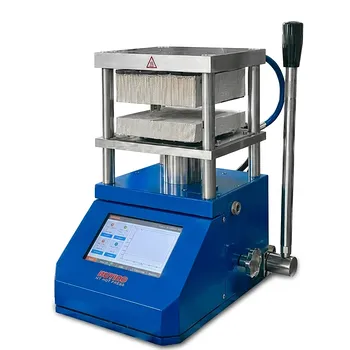
Manual Hot Press Digital Dual-Zone Heating Precision Laboratory Press
Discover our manual hot press with digital dual-zone heating up to 300°C and 5-ton force. Compact design, monoblock leak-proof hydraulic system, and 7-inch touchscreen control for precise laboratory pressing applications. Request a quote today.
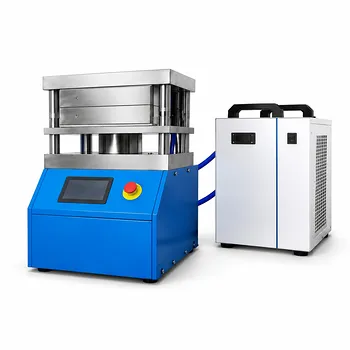
Automatic Large Area Laboratory Hot Press Laminator 15 Ton 500x500mm Heated Platens Data Logging CE Certified
Automatic large-area laboratory hot press laminator with 500x500mm heated platens, 15-ton force, programmable PID control, data logging and USB export, CE certified. Designed for composites, PCBs, flexible electronics. Ensure reproducibility in your lamination processes. Ideal for research and pilot production.

Lab Double Plate Heating Mold for Laboratory Use
Precision Double Plate Heating Mold for labs, featuring dual-zone temperature control, rapid cooling, and uniform heating. Ideal for material testing and sample preparation.

Assemble Square Lab Press Mold for Laboratory Use
KINTEK's Assemble Lab Press Mold ensures precise sample prep for delicate materials, preventing damage with quick-disassembly design. Ideal for thin strips & reliable demolding.
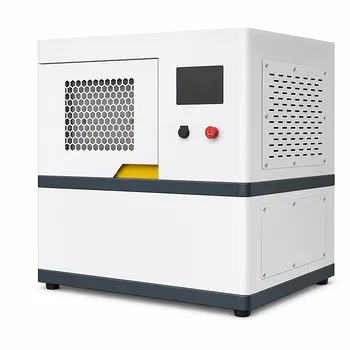
Laboratory Hydraulic Hot Press for Solid-State Battery and Polymer Composite Research
Compact benchtop hydraulic hot press for solid-state battery electrolyte compaction, polymer membrane lamination, and composite curing. Features programmable PID heating up to 200°C, precise hydraulic pressure up to 90 tons, and automated pressure maintenance. Ideal for material science labs.

Split Automatic Heated Hydraulic Press Machine with Heated Plates
KINTEK Split Automatic Heated Lab Press: Precision hydraulic press with 300°C heating for efficient sample preparation. Ideal for research labs.
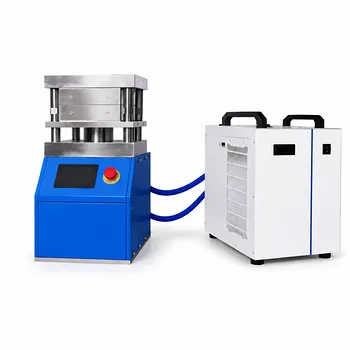
Automatic Large-Format Heated Laboratory Press with Dual-Zone PID Control and Integrated Water Cooling
KINTEK's automatic large-format heated lab press with 5-ton force, 330x330mm platens, dual-zone PID heating, and water cooling. Ideal for polymer films, lamination, composite curing. CE certified. Get a quote.
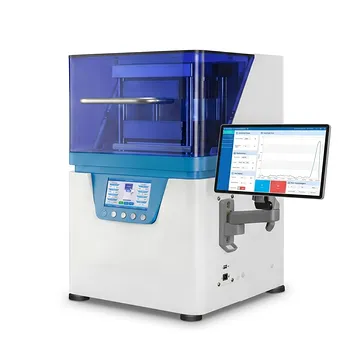
Automatic Heated Hydraulic Lab Press with Programmable Touch Screen Controls and Precision Temperature Regulation
Streamline material research with this advanced automatic heated hydraulic press featuring precision heating plates, programmable multi-stage pressure cycles, and integrated safety systems for consistent laboratory sample preparation and high-performance industrial material testing applications.