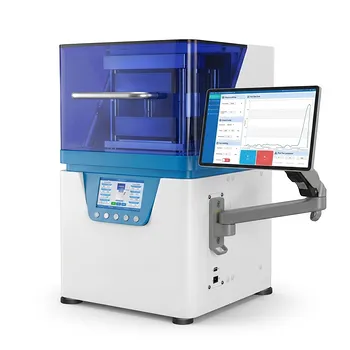
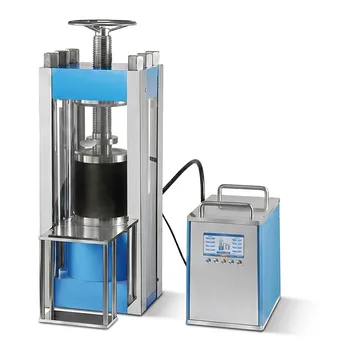
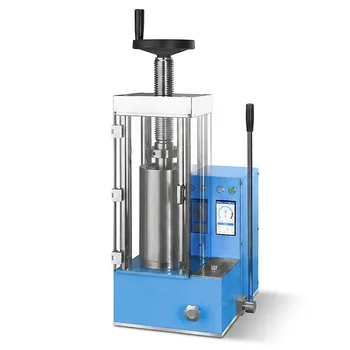
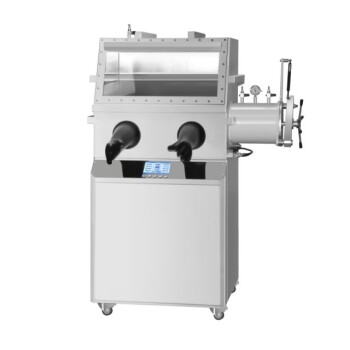
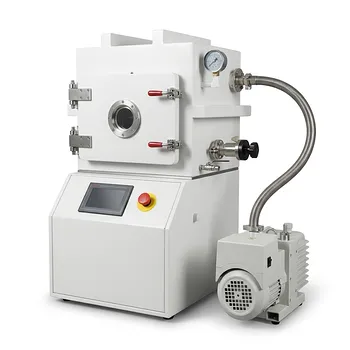
In oxide glass processing, a large high-pressure apparatus serves as the critical driver for permanent structural transformation. By applying pressures reaching several Gigapascals (GPa) in tandem with extreme heat, these machines precisely manipulate atomic spacing and bonding patterns. This process induces a state of permanent densification that remains stable even after the glass is returned to ambient conditions, unlocking material properties that are impossible to achieve through traditional thermal cooling or chemical composition changes.
The primary role of a high-pressure apparatus is to provide an "extra degree of freedom" in materials synthesis, allowing for the fundamental rearrangement of atomic structures to create permanently densified glasses with superior mechanical and thermal characteristics.
The Mechanics of Structural Modification
Manipulating Atomic Spacing and Bonding
The apparatus generates extreme force to compress the atomic lattice of the oxide glass. This force is sufficient to break existing chemical bonds and force atoms into more compact configurations than occur in nature.
Introducing New Degrees of Freedom
In traditional glassmaking, researchers are limited to adjusting temperature and chemical composition. High-pressure processing adds pressure as a third variable, allowing scientists to bypass the standard limitations of the glass-forming liquid's cooling rate.
Simulating Extreme Environments
By utilizing massive hydraulic systems and tungsten carbide anvils, these machines recreate the physical conditions of the Earth’s mantle. This environment is essential for synthesizing materials that require dense atomic packing, such as superhard glasses or synthetic diamonds.
Achieving Permanent Densification
Overcoming Compositional Limits
Standard glass properties are often restricted by the chemistry of the raw materials. High-pressure processing allows the glass to reach higher density levels without adding new chemical agents, maintaining the purity of the sample while enhancing its physical performance.
Formation of High-Coordination States
In materials like silica glass, pressure between 2 and 16 GPa can trigger the formation of five-coordinated silicon atoms. This shift in coordination leads to a significant increase in the material's elastic modulus and thermal conductivity.
Stabilization for Ambient Use
The high-temperature component of the process allows the structural changes to "set." Once the material cools and pressure is released, the glass remains in its densified state, making it a viable material for industrial and experimental applications.
Understanding the Trade-offs
Equipment Wear and Mechanical Stress
The extreme force required to process oxide glass places immense strain on the tungsten carbide anvils and hydraulic seals. Over time, the repeated cycling between ambient and high-pressure states can lead to material fatigue or component failure.
Chamber Volume vs. Pressure Magnitude
There is a direct trade-off between the size of the glass sample and the maximum pressure achievable. Large Volume Presses (LVP) offer more space for complex experimental components but may struggle to reach the ultra-high GPa levels possible in smaller, specialized diamond-anvil cells.
Maintaining Isotropic Pressure
Ensuring the pressure is highly uniform (isotropic) across the entire sample is a significant technical challenge. If the pressure is uneven, the resulting glass may have internal stresses or inconsistent density, leading to structural fragility.
Applying High-Pressure Processing to Material Design
Making the Right Choice for Your Goal
The use of a high-pressure apparatus depends on the specific performance benchmarks required for the final glass product.
- If your primary focus is increasing mechanical hardness: Use high-pressure densification to force atoms into higher coordination states, which significantly raises the elastic modulus.
- If your primary focus is thermal management: Leverage the increased density provided by the HPHT process to improve the thermal conductivity of oxide glasses for electronic applications.
- If your primary focus is structural stability: Focus on the precise calibration of the cooling cycle under pressure to ensure the densified state remains permanent at room temperature.
By mastering the variables of pressure and temperature, researchers can transcend the traditional boundaries of glass science to create a new generation of high-performance materials.
Summary Table:
| Feature | Impact on Oxide Glass | Key Material Benefit |
|---|---|---|
| Extreme Pressure (GPa) | Compresses atomic lattice and breaks/reforms chemical bonds. | Permanent densification and higher density levels. |
| High Temperature | Allows new structural configurations to "set" and stabilize. | Thermal and structural stability at ambient conditions. |
| Coordination States | Increases atomic coordination (e.g., five-coordinated silicon). | Significantly higher elastic modulus and hardness. |
| Extra Degree of Freedom | Bypasses limitations of traditional cooling rates and chemistry. | Creation of superhard glasses and synthetic materials. |
Elevate Your Material Research with KINTEK Precision
Unlock the full potential of high-pressure synthesis with KINTEK’s comprehensive laboratory pressing solutions. Whether you are pioneering breakthroughs in battery research or developing next-generation oxide glasses, our advanced equipment provides the control you need for permanent structural transformation.
We offer a versatile range of models tailored to your specific research environment:
- Manual & Automatic Presses for reliable sample preparation.
- Heated & Multifunctional Models for complex HPHT processing.
- Glovebox-Compatible Systems for air-sensitive material handling.
- Cold and Warm Isostatic Presses (CIP/WIP) for uniform material densification.
Ready to enhance your lab's capabilities? Contact KINTEK today to discover how our high-pressure solutions can drive your innovation forward.
References
- Saurabh Kapoor, Morten M. Smedskjær. Pressure-Induced Densification of Oxide Glasses at the Glass Transition. DOI: 10.3389/fmats.2017.00001
This article is also based on technical information from Kintek Solution Knowledge Base .
Related Products
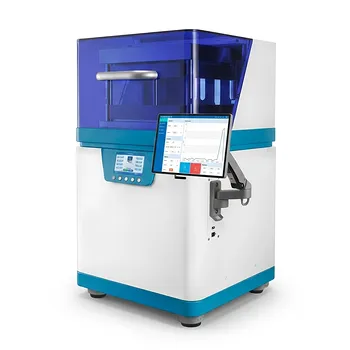
- Automatic Hydraulic Hot Press with Large Plate and Precision Temperature Control for Advanced Material Sample Preparation and Industrial Research
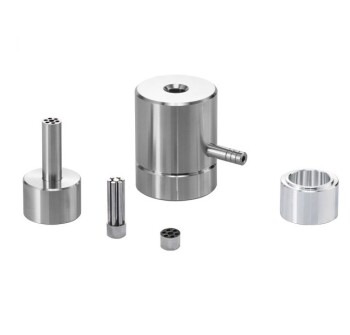
- Special Shape Lab Press Mold for Laboratory Applications
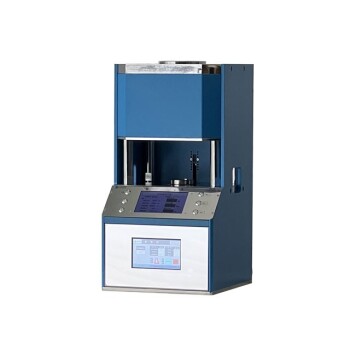
- Automatic High Temperature Heated Hydraulic Press Machine with Heated Plates for Lab
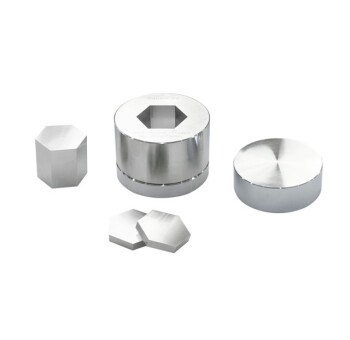
- Lab Polygon Press Mold
- Automatic Large Format Laboratory Heated Hydraulic Press 400x400mm Plate Capacity
People Also Ask
- What are the specific features and applications of hydraulic hot press machines? Precision Solutions for Modern Labs
- How does an automatic hydraulic press operate? Achieve Precision and Consistency in Lab Pelleting
- What are the advantages and common applications of an automatic hydraulic press? Elevate Your Lab's Precision
- What is the technical significance of setting a precise dwell time? Achieve Peak Material Density and Stability
- When is an automatic hydraulic press more suitable than a manual press? Scale Your Lab with Precision & Speed