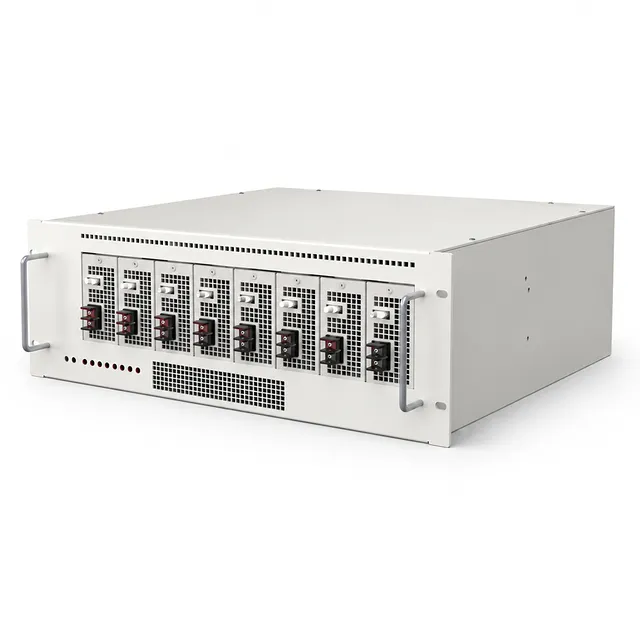
Battery Testing Equipment
5V 30A Battery Tester with Host Computer Connection
Item Number : DC08
Price varies based on specs and customizations
- Channels
- 8 independent channels
- Voltage Control Range
- 0.025V~5V
- Output Current Range per Channel
- 0.03A~6A; 6A~30A

Shipping:
Contact us to get shipping details Enjoy On-time Dispatch Guarantee.
Why Choose Us
Easy ordering process, quality products, and dedicated support for your business success.
Product Overview
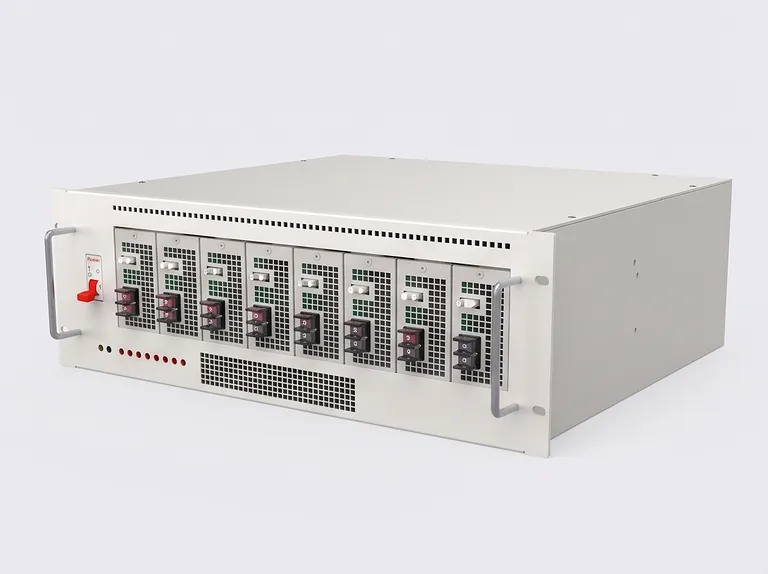
This system is an eight-channel battery testing platform engineered for controlled charge, discharge, cycling, pulse, and DCIR evaluation of laboratory cells. Its 5 V operating window, dual current ranges from 0.03 A to 30 A, and 150 W maximum output per channel support detailed electrical characterization across low- and higher-current test duties. Independent channel control enables multiple test profiles to run simultaneously without compromising channel-level control.
The equipment is suited to battery R&D laboratories, cell development teams, materials research groups, and quality-focused evaluation workflows that require host computer connectivity and centralized test-data management. It supports constant-current, constant-voltage, constant-power, and constant-resistance operating modes, allowing researchers to define practical protocols for charge acceptance, discharge behavior, cycle life, pulse response, and internal-resistance analysis.
Built around 16-bit AD and DA resolution, four-wire voltage and current sensing, and dual closed-loop constant-current and constant-voltage source architecture, this unit is designed for repeatable testing under demanding laboratory schedules. Configurable safety limits, reverse-connection protection, power-loss data protection, and offline testing capability help protect test continuity while maintaining disciplined control of each connected cell.
Key Features
-
Independent Eight-Channel Control: Each of the eight channels operates independently, allowing different voltage, current, time, capacity, and cycling programs to run in parallel. This improves bench utilization when evaluating cells at different stages of development or under different test conditions.
-
Dual-Range 30 A Current Capability: The equipment provides a 0.03 A to 6 A range and a 6 A to 30 A range on every channel. This arrangement supports controlled testing from lower-current characterization through higher-current charge and discharge procedures while retaining stated full-scale accuracy and stability.
-
Precision Four-Wire Measurement: Four-wire connection for voltage and current detection reduces the influence of lead resistance on measurements. Combined with 16-bit AD and DA resolution, the system supports reliable capture of cell behavior for comparative R&D and process evaluation.
-
Dual Closed-Loop Source Design: Constant-current and constant-voltage sources use a dual closed-loop structure. This architecture is intended to maintain controlled output behavior during transitions and extended test programs, supporting consistent execution of defined electrical profiles.
-
Versatile Charge and Discharge Programs: Constant-current, constant-voltage, constant-current/constant-voltage, and constant-power charging are available. Constant-current, constant-power, constant-resistance, and constant-voltage discharge modes broaden the ability to match test methods to cell design and evaluation objectives.
-
Pulse and DCIR Test Support: Charge and discharge pulse modes support constant-current or constant-power operation, with a minimum pulse width of 500 ms. A pulse step can include 32 different pulses and continuously change from charging to discharging; custom sampling points are supported for DCIR calculation.
-
Long-Duration Cycling Control: The unit supports 1 to 65,535 cycles, up to 254 steps in a single cycle, and nesting to three levels. A per-step duration of up to 365 x 24 hours allows extended protocols to be programmed without manual intervention.
-
High-Frequency Data Capture: Test data can be recorded at a minimum 100 ms interval, equivalent to 10 Hz recording frequency. Voltage and current change thresholds can also be used to capture meaningful electrical events while maintaining organized test records.
-
Centralized Network Data Management: TCP/IP communication and a centrally managed MySQL database provide a structured basis for host computer-connected testing. Data can be exported in EXCEL2003, 2010, or TXT formats for downstream analysis and reporting.
-
Configurable Protection and Test Continuity: The system provides programmable upper and lower voltage and current limits plus delay time, reverse-connection protection, power-loss data protection, and offline testing capability. These functions help laboratories maintain controlled operation through routine test interruptions and connection risks.
Applications
| Application | Description | Key Benefit |
|---|---|---|
| Lithium-ion cell charge-discharge characterization | Run independent constant-current, constant-voltage, constant-power, or constant-resistance profiles on multiple cells to assess charge and discharge response. | Eight independently controlled channels increase parallel laboratory throughput. |
| Cycle-life evaluation | Program repeated charge and discharge sequences using up to 65,535 cycles, 254 steps per cycle, and up to three nested cycle layers. | Supports long-duration life studies with structured, repeatable test logic. |
| DCIR measurement | Define custom data-sampling points during pulse testing to calculate DCIR under selected current and timing conditions. | Provides a configurable method for resistance analysis within the test workflow. |
| Pulse-power response testing | Apply constant-current or constant-power charge and discharge pulses with widths from 500 ms and up to 32 different pulses in one pulse step. | Captures transient cell response and enables controlled charge-to-discharge switching. |
| Battery R&D protocol development | Compare multiple cell designs, materials sets, or operating conditions using separate channel programs and detailed 10 Hz data recording. | Enables concurrent method development without requiring identical channel schedules. |
| Materials and electrode research | Evaluate electrochemical performance of research cells through controlled voltage, current, capacity, and relative-time cutoffs. | Helps relate formulation or processing changes to measured electrical behavior. |
| BMS communication studies | Use the optional CAN communication module to communicate with a BMS and acquire BMS data during testing. | Adds a path for correlating tester records with available BMS information. |
| Laboratory data consolidation | Store test data in the centralized MySQL database and export results for analysis on supported Windows-based server environments. | Improves traceability and accessibility of multi-channel test results. |
Technical Specifications
| Parameter | Specification |
|---|---|
| Site-facing identifier | DC08 |
| Input power supply | AC 220V ±10% / 50Hz |
| Input active power | 1.71 KW |
| Total channels | 8 |
| AD resolution | 16bit |
| DA resolution | 16bit |
| Input impedance | ≥100kΩ |
| Constant-voltage control range | 0.025V~5V |
| Minimum discharge voltage | 0V |
| Voltage accuracy | ± 0.05% of FS |
| Voltage stability | ± 0.05% of FS |
| Output current range per channel, range 1 | 0.03A~6A |
| Output current range per channel, range 2 | 6A~30A |
| Current accuracy | ± 0.05% of FS |
| Constant-voltage cutoff current, range 1 | 0.012A |
| Constant-voltage cutoff current, range 2 | 0.06A |
| Current stability | ± 0.05% of FS |
| Maximum output power per channel | 150 W |
| Power accuracy | ±0.1% of FS |
| Power stability | ±0.1% of FS |
| Maximum current rise time | 20ms (10% to 90% or 90% to 10%) |
| Step time range | ≤(365*24) hours/step |
| Time format | 00:00:00 (h, min, s) |
| Minimum data-recording time interval | 100ms (recording frequency 10Hz) |
| Minimum voltage recording interval | 10mV |
| Minimum current recording interval, range 1 | 0.012A |
| Minimum current recording interval, range 2 | 0.06A |
| Charge modes | Constant-current charging, constant-voltage charging, constant-current constant-voltage charging, constant-power charging |
| Charge cutoff conditions | Main channel: voltage, current, relative time, capacity, -△V |
| Discharge modes | Constant-current discharge, constant-power discharge, constant-resistance discharge, constant-voltage discharge |
| Discharge cutoff conditions | Main channel: voltage, current, relative time, capacity |
| Pulse charge modes | Constant-current mode, constant-power mode |
| Pulse discharge modes | Constant-current mode, constant-power mode |
| Minimum pulse width | 500ms |
| Pulses per pulse step | A single pulse step supports 32 different pulses |
| Charge-discharge switching | One pulse step can continuously switch from charging to discharging |
| Pulse cutoff conditions | Voltage, relative time |
| DCIR test | Supports customized sampling points for DCIR calculation |
| Channel paralleling | Up to 4 adjacent channels can be paralleled; pulse testing is not supported after paralleling |
| Cycle test range | 1~65535 times |
| Steps per single cycle | 254 |
| Cycle nesting | ≤3 layers |
| Power-loss data protection | Offline testing function available |
| Configurable safety protection | Upper voltage limit, lower voltage limit, upper current limit, lower current limit, delay time |
| Reverse-connection protection | Available |
| Energy-saving efficiency | >65% (compared with conventional equipment) |
| IP protection rating | IP20 |
| Channel architecture | Constant-current source and constant-voltage source use a dual closed-loop structure |
| Channel control mode | Independent control |
| Voltage and current detection sampling | Four-wire connection |
| Noise | <75dB (measured at 1m) |
| Database | MySQL database for centralized management of test data |
| Host computer communication | Based on TCP/IP protocol |
| Server disk configuration | 500GB |
| Data output | EXCEL2003, 2010, TXT |
| Server operating systems | Windows 7, Windows10 |
| Communication interfaces | Network port; optional CAN communication module supports BMS communication and BMS data acquisition |
| Operating temperature range | 0℃~40℃ (within 25±5℃, measurement accuracy is guaranteed: accuracy drift 0.005% of FS /℃) |
| Storage temperature range | -10℃~50℃ |
| Operating relative humidity range | ≤70% RH (no water vapor condensation) |
| Storage relative humidity range | ≤80% RH (no water vapor condensation) |
| Fixture type | Optional |
| Available fixture examples | Polymer fixture; terminal lug fixture; select one fixture; images are for reference only and the actual product prevails |
| Compatibility note | Not compatible with batteries using protection boards with soft-start function |
Why Choose This Product
-
Controlled Multi-Channel Testing: Eight independent channels, each with dual current ranges and a 150 W maximum output, provide a disciplined platform for running parallel evaluation programs without forcing all cells into the same schedule.
-
Measurement-Focused Electrical Design: The combination of 16-bit conversion, four-wire sensing, stated full-scale accuracy, and dual closed-loop control is suited to laboratories where consistent electrical control and comparable datasets matter.
-
Protocol Depth for Serious Evaluation: Charge, discharge, pulse, DCIR, cycling, capacity, time, current, and voltage functions allow the equipment to support both routine characterization and more involved test development within one system.
-
Operational Safeguards Built In: Programmable limits, reverse-connection protection, offline testing, and power-loss data protection help maintain testing continuity and protect work in progress during demanding laboratory operation.
-
Connected Data Workflow: TCP/IP host computer communication, centralized MySQL management, supported Windows server environments, and common export formats make the system practical for organized test-data review and retention.
Contact us for a quote or a custom testing solution configured around your cell format, fixture requirement, channel-paralleling needs, and BMS communication objectives.
Trusted by Industry Leaders

REQUEST A QUOTE
Our professional team will reply to you within one business day. Please feel free to contact us!
Related Products
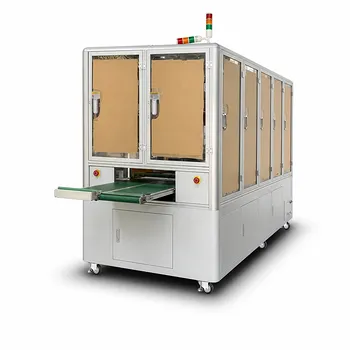
Pouch Prismatic Battery OCV DCIR Testing Machine with Barcode Scanning and Inkjet Coding
Automated pouch prismatic battery OCV and DCIR testing machine with barcode scanning, voltage resistance measurement, data traceability, and OK NG sorting for high throughput cell production across pouch cell manufacturing lines with reliable server integration
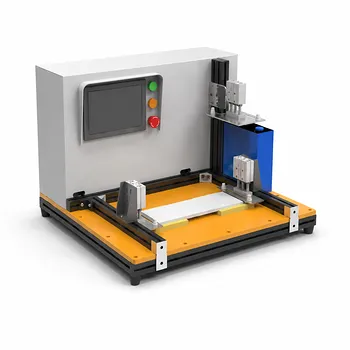
Prismatic Battery Automatic Testing and Sorting Equipment
Prismatic battery automatic testing and sorting equipment measures open circuit voltage and AC internal resistance, automatically pairs up to eight grades, supports traceable database management, and processes approximately 600 cells per hour for consistent pack quality in lithium battery production.
Rechargeable Zinc Air Electrolytic Cell Zinc Air Cycling Test Device Metal Fuel Cell Reactor
Rechargeable zinc air electrolytic cell cycling test device with modular PP reactor, 1 to 4.5 cm² reaction areas, circulating electrolyte, forced oxygen supply, leak resistant sealing, and customizable gas connections for metal fuel cell research and advanced materials laboratories.
Quick Change Zinc Plate Large Capacity Zinc Air Test Cell
Quick change zinc plate zinc air test cell with transparent PMMA housing rapid anode replacement 30ml electrolyte capacity adjustable reaction areas and precise electrode spacing for reliable laboratory battery research and advanced materials evaluation under controlled experimental conditions
Manual OCV Multifunction Test Sorting Machine
Manual OCV multifunction test sorting machine for pouch lithium ion prismatic cells combines voltage and internal resistance grading data binding database storage and operator guided handling for controlled battery production inspection with computer display and configurable audible grade notification.
Aqueous Battery Testing Fixture for Laboratory Cell Evaluation
Aqueous battery testing fixture for cells up to 20 mm internal diameter and 4 mm thickness, featuring a 50 mm diameter clamp, PI film window, PEEK insulation, and high-purity titanium metal components for adaptable laboratory evaluation of aqueous battery performance.
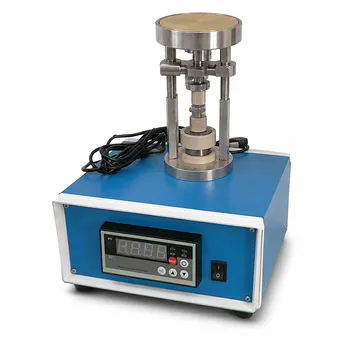
CT Testing Solid State Battery Device
CT testing solid state battery device for compact cell fixture evaluation with 2 mm inner diameter, optional display, external fixture, and 2 ton sensor integration for laboratory research workflows.
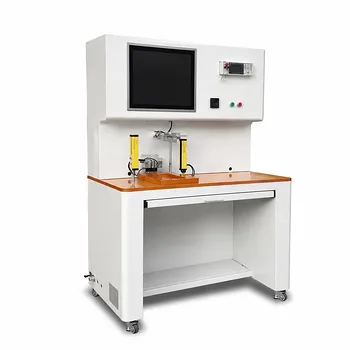
Manual Multifunctional OCV Sorting Machine for Pouch Lithium Ion Cells
Manual multifunctional OCV sorting machine for pouch lithium ion cells, combining voltage and internal resistance testing, data binding, software grading, voice notification, and flexible cell compatibility.
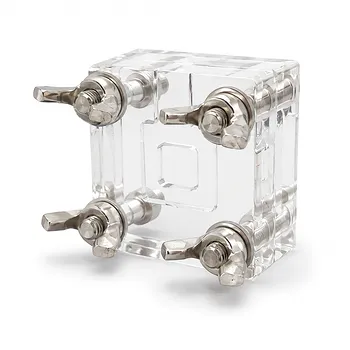
Solid State Zinc Air Battery Test Fixture Flexible Zinc Air Mold
Transparent solid state zinc air battery test fixture with flexible zinc air mold design, compact assembly, 1 to 4 cm² reaction areas, 0.2 cm electrode spacing, customizable construction, and clear observation for zinc air battery research and practical laboratory evaluation.
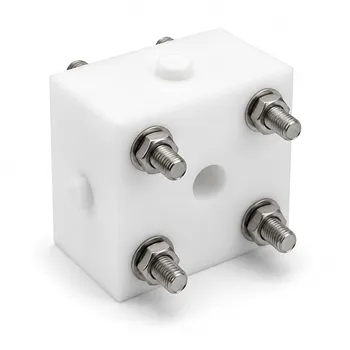
Secondary Zinc Air Reactor Metal Fuel Cell Test Apparatus
Secondary zinc air reactor metal fuel cell test apparatus with leak resistant polypropylene construction, defined electrode spacing, selectable reaction areas, and controlled electrolyte volume for reliable laboratory evaluation of electrochemical performance, cathode behavior, anode response, and repeatable experimental workflows
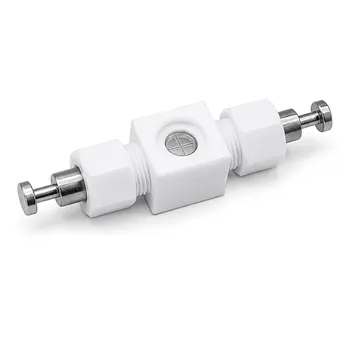
Optical Testing Cross Section Aqueous Battery Device for Microscopy Raman and Infrared Analysis
Optical testing cross section aqueous battery device for microscopy Raman infrared analysis dendrite observation and conductivity measurement in advanced battery research applications
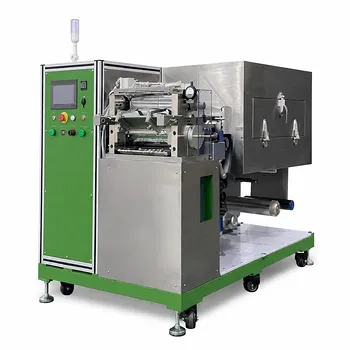
Continuous Intermittent Battery Laboratory Coating Machine
Continuous intermittent battery laboratory coating machine combines stable web tension correction precision comma blade metering three roll transfer coating and dual sided hot air drying for dependable electrode process development with PLC touch screen operation and optional solvent recovery handling.
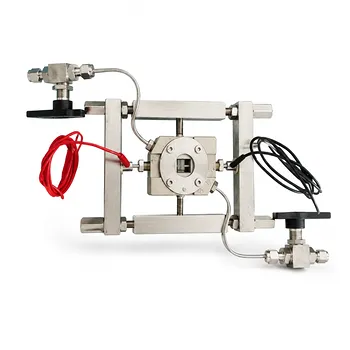
Optical Testing Solid State Battery Device for Microscopy Raman and Infrared Cross Section Analysis
Optical testing solid state battery device with compact fixtures for microscope, Raman, and infrared cross section analysis, including venting configuration for advanced battery research. Supports precise laboratory characterization, flexible sample dimensions, and controlled access for materials science and cell development.
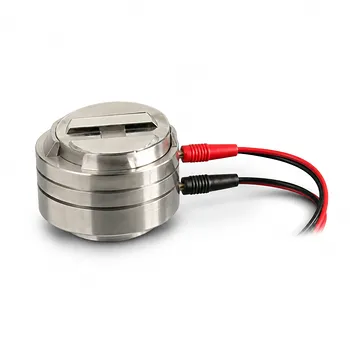
XRD Testing Solid State Battery Device for Electrolyte Pellet Analysis
XRD testing solid-state battery device for 16mm battery samples supports 0-6mm thickness and a 50mm fixture diameter with adaptable mounting for laboratory diffraction workflows. Designed for electrolyte pellet preparation and adaptable laboratory platform integration.
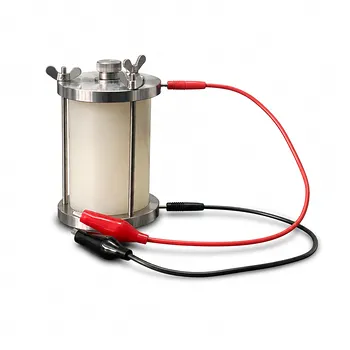
4680 Cylindrical Battery Detachable Split Test Kit
Detachable split test kit for 4680 cylindrical battery research with corrosion resistant sealing, stainless steel end caps, PTFE insulation, and secure spring loaded cell fastening for repeatable laboratory testing and flexible advanced materials workflows
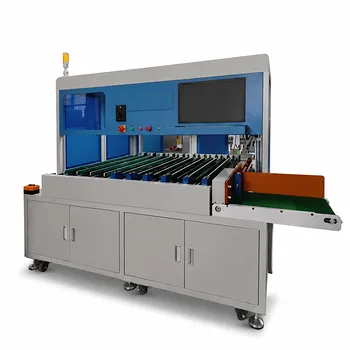
Prismatic Aluminum Shell Cell Automatic Sorting Machine
Automated prismatic aluminum shell cell sorting machine combines barcode traceability, precision voltage and internal resistance testing, and ten-grade classification to raise throughput, pairing consistency, and data control for battery manufacturing operations with reliable PLC handling, alarming, and local production records.
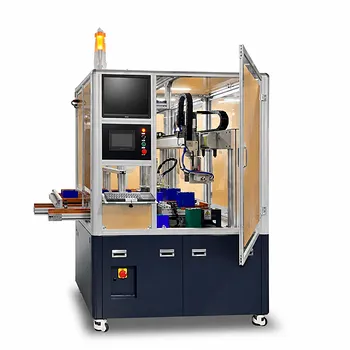
Prismatic Battery Barcode Scanning Inspection Eight Bin Sorting Machine
Prismatic battery barcode scanning inspection and eight bin sorting equipment combines OCV voltage and internal resistance testing with database upload MES connectivity and reliable automated classification for aluminum shell cell production lines requiring accurate traceable quality decisions at scale.
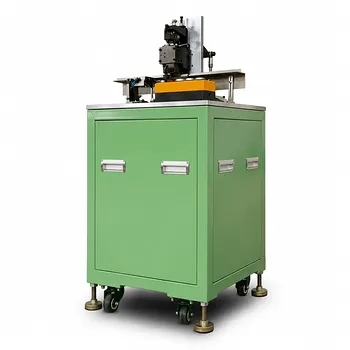
Manual Lead Tab Riveting Machine for Supercapacitor and Cylindrical Capacitor Battery Electrode Sheets
Manual lead tab riveting machine for cylindrical capacitors supercapacitors and battery electrode sheets delivers adjustable electrode width stable 500W operation and straightforward maintenance for dependable laboratory and production assembly workflows requiring clean controlled installation environments and pneumatic supply.
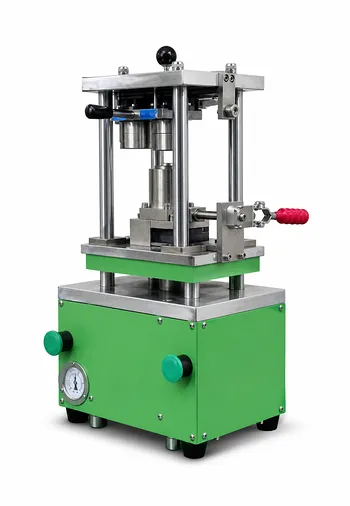
Pneumatic Cylindrical Battery Sealing Machine for Laboratory Cell Research
Pneumatic cylindrical battery sealing machine for 18650 cells delivers two station precision sealing, adjustable 0.4 to 0.5 MPa operation, inert gas compatibility, external exhaust, low gas consumption, compact construction, and reliable laboratory sample preparation for battery and capacitor research.
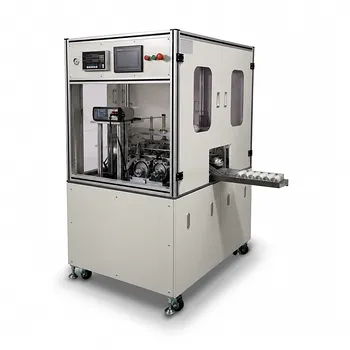
Precision Digital Battery Cell Shaping Machine Supercapacitor Cell Flattening Machine
Precision digital cell shaping machine for battery and supercapacitor cells, delivering four-station foil forming, short-circuit screening, accurate length adjustment, PLC control, and repeatable preparation for dependable collector-tab laser welding in demanding manufacturing environments.