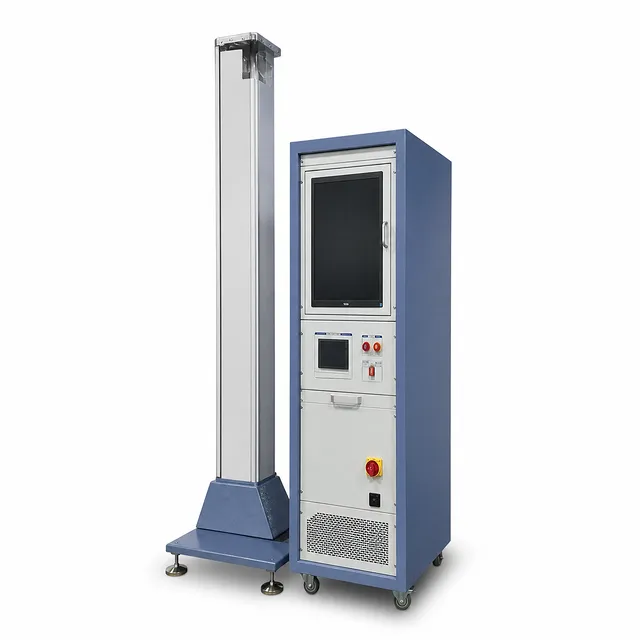
Battery Safety Testing Equipment
Impact Testing Machine for Electronic Aerospace Battery and Automotive Components
Item Number : DA14
Price varies based on specs and customizations
- Peak Acceleration
- 20---2000 G
- Pulse Duration
- 0.2---18 ms
- Maximum Load
- 10 kg

Shipping:
Contact us to get shipping details Enjoy On-time Dispatch Guarantee.
Why Choose Us
Easy ordering process, quality products, and dedicated support for your business success.
Product Overview
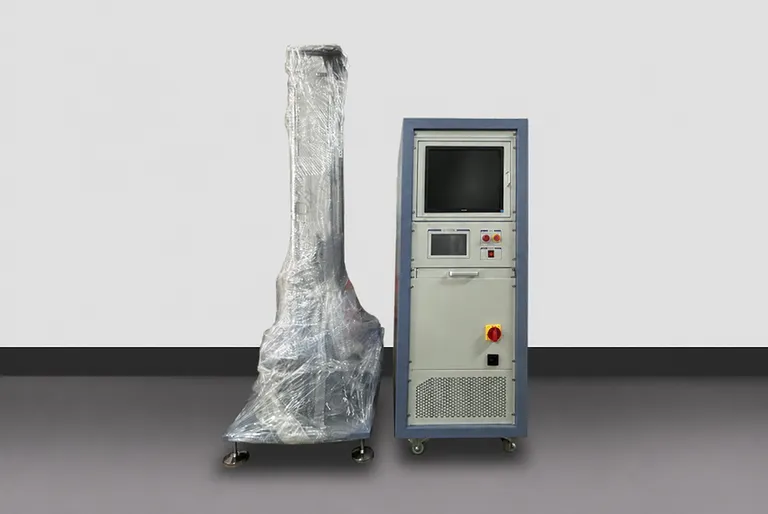
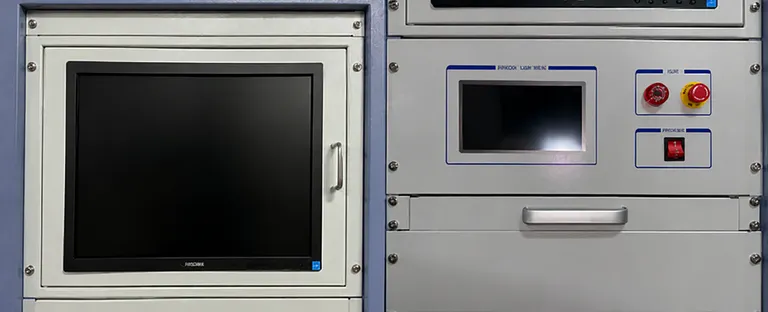
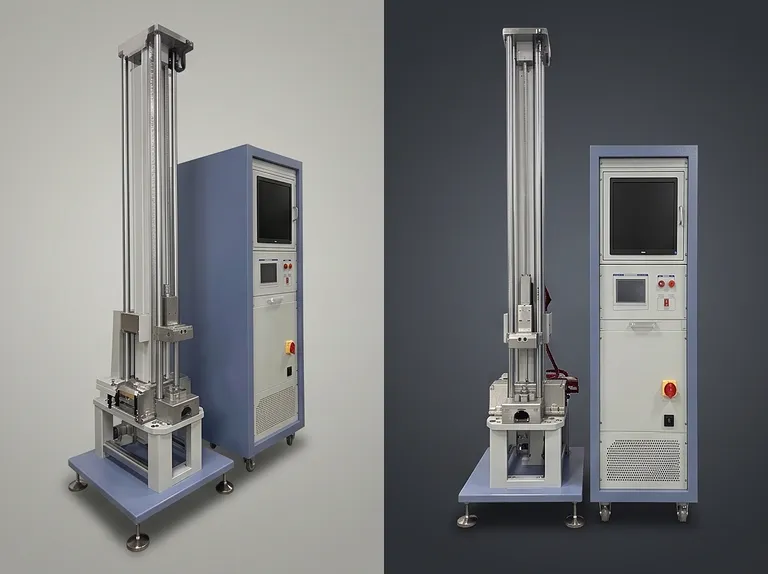
This impact testing machine is a laboratory shock-test system for evaluating how products, assemblies, and components respond to defined mechanical impact events. It provides a 200 x 250 mm working platform, a maximum 10 kg load capacity, peak acceleration from 20 to 2000 G, and pulse durations from 0.2 to 18 ms. The equipment supports impact-force requirements from 500 to 155000 N, giving test teams a clearly specified operating envelope for controlled evaluation work.
The system is suited to electronic products, aerospace equipment, ships, military products, batteries, automotive parts, and transportation-related components. By selecting the appropriate waveform generator, users can conduct half-sine, post-peak sawtooth, or square-wave impact tests. This makes the unit relevant where a test program needs to match a defined shock waveform instead of relying on a single generic impact condition.
For laboratories operating demanding verification schedules, reliability is addressed through a stated cumulative mean trouble-free operating time of at least 5000 hours. The half-sine waveform generator is specified for no fewer than 10000 consecutive impacts. Acceleration amplitude, pulse width, uniformity, and transverse motion ratio meet the requirements of JJG541-88, supporting disciplined measurement and repeatable test execution.
Key Features
-
Selectable Shock Waveforms: The equipment can use half-sine, post-peak sawtooth, or square-wave waveform generators. This allows the test setup to reflect different shock-event profiles within the stated acceleration and pulse-duration capability.
-
Broad Peak Acceleration Range: Peak acceleration is specified from 20 to 2000 G. The range supports test planning across lower and higher shock-severity conditions without changing the fundamental test platform.
-
Short-Pulse Test Capability: Pulse duration spans 0.2 to 18 ms. This defined timing range enables laboratories to select impact events according to the pulse-width requirements of their product or component evaluation program.
-
Specified Force Capacity: The unit covers an impact-force range of 500 to 155000 N. Buyers can assess fixture, sample, and test-condition requirements against a stated force envelope before integrating the system into a laboratory workflow.
-
Practical Test Platform: A 200 x 250 mm working platform and 10 kg maximum load provide a compact, defined interface for electronic assemblies, battery-related items, automotive components, and other test specimens within the supported capacity.
-
Verification-Oriented Performance: Acceleration amplitude, pulse width, uniformity, and transverse motion ratio satisfy JJG541-88 requirements. These parameters are central to confirming that the delivered shock event aligns with the intended test condition.
-
Documented Endurance Expectations: The stated cumulative mean trouble-free operating time is at least 5000 hours. In addition, the half-sine waveform generator is rated for at least 10000 continuous impacts, helping teams evaluate equipment suitability for repeated shock-test work.
-
Laboratory-Compatible Electrical Supply: The system operates from 220VAC +/-10% at 50Hz with a 2kVA power requirement. Defined power and environmental requirements simplify facility planning for installation and routine operation.
Applications
| Application | Description | Key Benefit |
|---|---|---|
| Electronic product shock evaluation | Test electronic products for response to selected half-sine, post-peak sawtooth, or square-wave impacts. | Waveform selection helps align the applied shock event with the product test plan. |
| Aerospace equipment testing | Evaluate aerospace equipment and associated components under controlled mechanical impact conditions. | Peak acceleration from 20 to 2000 G provides a defined shock-test range for laboratory assessment. |
| Marine and shipboard component assessment | Perform impact testing of products intended for ship-related applications. | The specified force range of 500 to 155000 N supports clear test-condition planning. |
| Military product impact verification | Apply selectable shock waveforms to military products requiring resistance-to-impact evaluation. | Measurement parameters meet JJG541-88 requirements for acceleration amplitude, pulse width, uniformity, and transverse motion ratio. |
| Battery product testing | Assess batteries and battery-related assemblies for their response to controlled mechanical shock. | A 10 kg maximum load and compact working platform support defined specimen handling limits. |
| Automotive component shock testing | Test automotive parts exposed to impact events during product development or verification. | The 0.2 to 18 ms pulse-duration range supports adjustment to specified pulse widths. |
| Transportation equipment component testing | Evaluate components used in transportation applications for resistance to mechanical impact. | Repeat-impact endurance of the half-sine waveform generator supports ongoing test schedules. |
Technical Specifications
| Parameter | Specification |
|---|---|
| Product Item Number | DA14 |
| Product Type | Impact testing machine |
| Working Platform | 200x250 mm |
| Maximum Load | 10 kg |
| Peak Acceleration | 20---2000 G |
| Pulse Duration | 0.2---18 ms |
| Impact Force Range | 500~155000 N |
| Available Impact Waveforms | Half-sine wave, post-peak sawtooth wave, square wave |
| Unit Dimensions (LxWxH) | 660x700x2380 mm |
| Total Equipment Mass | Approximately 820 kg |
| Power Supply | 220VAC +/-10% 50Hz, 2kVA |
| Environmental Temperature | 0~40 degrees C |
| Environmental Humidity (25 degrees C) | 0~90RH% |
| Reliability | Cumulative mean trouble-free operating time >=5000H |
| Half-Sine Waveform Generator Endurance | Continuous impact count not less than 10000 times |
| Verification Standard | Acceleration amplitude, pulse width, uniformity, and transverse motion ratio meet the requirements of JJG541-88 |
The specification set should be used as the basis for sample, fixture, facility, and test-program planning. The working platform establishes the available specimen interface at 200 x 250 mm, while the maximum load establishes the supported specimen mass. These two values should be considered together: a specimen may be below the load limit yet still require a fixture arrangement that fits the available platform area. Conversely, a fixture that fits the platform must be assessed as part of the total applied load.
Acceleration, pulse duration, and force are also interdependent considerations during test definition. The stated peak acceleration range is 20 to 2000 G, the pulse-duration range is 0.2 to 18 ms, and the impact-force range is 500 to 155000 N. Procurement and test-engineering teams can use these boundaries to compare required impact conditions with the unit's published capability. The waveform generator selected for the test should correspond to the required half-sine, post-peak sawtooth, or square-wave profile.
Installation planning should account for the full unit dimensions of 660 x 700 x 2380 mm and an approximate total equipment mass of 820 kg. The stated electrical requirement is 220VAC +/-10% at 50Hz and 2kVA. The specified operating environment is 0 to 40 degrees C and 0 to 90RH% at 25 degrees C. Confirming these site conditions in advance supports orderly commissioning and helps maintain the intended operating environment.
For test-quality review, the referenced verification requirement is particularly important. The specification identifies acceleration amplitude, pulse width, uniformity, and transverse motion ratio as meeting JJG541-88 requirements. These are the relevant performance items for evaluating the applied impact event, not merely the nominal machine setting. A laboratory can therefore structure its acceptance and periodic verification discussion around the parameters explicitly identified in the technical data.
Why Choose This Product
-
Defined performance envelope: Buyers receive published limits for platform size, load, peak acceleration, pulse duration, and impact force. This makes technical comparison and test-program matching more direct than relying on general shock-test descriptions.
-
Waveform flexibility for relevant test conditions: Half-sine, post-peak sawtooth, and square-wave impact testing are available through waveform-generator selection. The equipment can therefore support distinct impact profiles across electronics, aerospace, marine, military, battery, automotive, and transportation applications.
-
Reliability data for repeated use: A cumulative mean trouble-free operating time of at least 5000 hours and at least 10000 continuous impacts for the half-sine waveform generator provide concrete endurance information for laboratories planning repeated test activity.
-
Verification-focused specification: Conformance of acceleration amplitude, pulse width, uniformity, and transverse motion ratio to JJG541-88 requirements places emphasis on the measurable qualities that affect shock-test consistency.
-
Straightforward facility integration: Defined dimensions, approximate equipment mass, 220VAC power requirement, and environmental limits give procurement, laboratory management, and facilities teams the information needed to assess installation readiness.
Contact us for a quote or a custom solution matched to your specimen, waveform, loading, installation, and impact-test requirements.
Trusted by Industry Leaders
REQUEST A QUOTE
Our professional team will reply to you within one business day. Please feel free to contact us!
Related Products
Pouch Prismatic Battery OCV DCIR Testing Machine with Barcode Scanning and Inkjet Coding
Automated pouch prismatic battery OCV and DCIR testing machine with barcode scanning, voltage resistance measurement, data traceability, and OK NG sorting for high throughput cell production across pouch cell manufacturing lines with reliable server integration
Desktop Continuous Film Coating Testing Machine for 18650 Cylindrical Batteries
Desktop continuous coating machine for lithium battery electrodes 18650 cylindrical cell research ceramic films crystal films and nanofilms offering adjustable coating width precise thickness control automatic rewinding and independent PID oven temperature regulation for university laboratories and small scale production
Prismatic Battery Automatic Testing and Sorting Equipment
Prismatic battery automatic testing and sorting equipment measures open circuit voltage and AC internal resistance, automatically pairs up to eight grades, supports traceable database management, and processes approximately 600 cells per hour for consistent pack quality in lithium battery production.
Manual OCV Multifunction Test Sorting Machine
Manual OCV multifunction test sorting machine for pouch lithium ion prismatic cells combines voltage and internal resistance grading data binding database storage and operator guided handling for controlled battery production inspection with computer display and configurable audible grade notification.
Manual Multifunctional OCV Sorting Machine for Pouch Lithium Ion Cells
Manual multifunctional OCV sorting machine for pouch lithium ion cells, combining voltage and internal resistance testing, data binding, software grading, voice notification, and flexible cell compatibility.

Lab Anti-Cracking Press Mold
Precision Anti-Cracking Press Mold for lab use. Durable Cr12MoV steel, high-pressure resistant, customizable sizes. Ideal for material testing. Get yours now!
CT Testing Solid State Battery Device
CT testing solid state battery device for compact cell fixture evaluation with 2 mm inner diameter, optional display, external fixture, and 2 ton sensor integration for laboratory research workflows.
Manual Heating Press with Precision Temperature Control and Hydraulic Pressure
Discover our manual heating press with precise temperature control up to 300°C, hydraulic pressure up to 24 tons, water cooling, and touchscreen interface for consistent lab pressing applications including battery research and material testing. Request a quote today!

Automatic Laboratory Hydraulic Press Lab Pellet Press Machine
Upgrade your lab with KINTEK's Automatic Lab Press – precision, efficiency, and versatility for superior sample preparation. Explore models now!
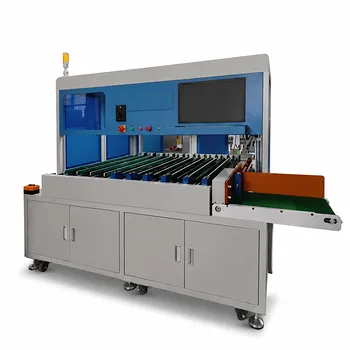
Prismatic Aluminum Shell Cell Automatic Sorting Machine
Automated prismatic aluminum shell cell sorting machine combines barcode traceability, precision voltage and internal resistance testing, and ten-grade classification to raise throughput, pairing consistency, and data control for battery manufacturing operations with reliable PLC handling, alarming, and local production records.

Laboratory Hydraulic Pellet Press for XRF KBR FTIR Lab Press
KINTEK Lab Press Machines: Precision hydraulic presses for sample prep. Automatic, heated, and isostatic models for research labs. Get expert advice now!
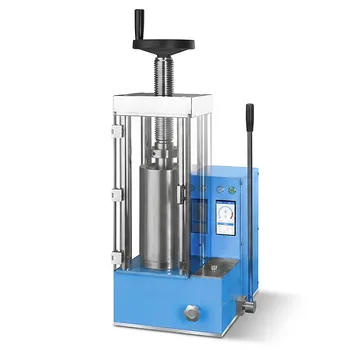
Electric Isostatic Pressing Machine 40 Tons Automatic Laboratory Powder Compacting Press
Optimize materials research with this premium electric isostatic pressing machine for laboratory powder compaction featuring a smart touch screen control and integrated safety shield for consistent high density specimen fabrication across diverse industrial sectors and advanced academic research environments.
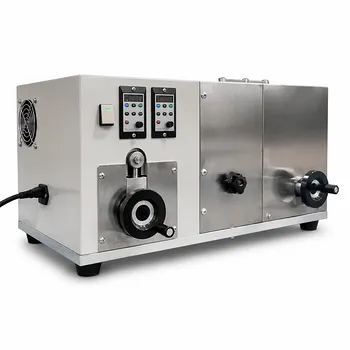
18650 21700 Series Laboratory Cylindrical Battery Case Opening Machine
Precision 18650 and 21700 cylindrical battery case opening machine with interchangeable tooling, tungsten carbide blade, accurate disassembly, compact design, and safe operation for laboratory research validation in advanced battery development environments with consistent results
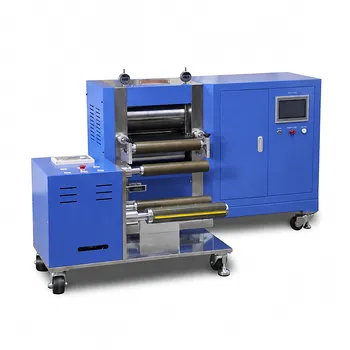
Automatic Laboratory Unwind Rewind Machine and Unwind Rewind Device for Battery Electrodes Optical Films and Functional Materials
Automatic laboratory unwind rewind machine with servo tension control optical web guiding and split structure for lithium battery electrodes optical films and functional roll materials delivering accurate continuous rewinding and slitting performance for demanding research and production workflows.

Automatic Heated Hydraulic Press Machine with Hot Plates for Laboratory
KINTEK Automatic Lab Heat Press: Precision heating, programmable control, and rapid cooling for efficient sample preparation. Enhance lab productivity today!

Manual Heated Hydraulic Lab Press with Integrated Hot Plates Hydraulic Press Machine
KINTEK's precision lab presses offer efficient, high-temperature sample prep for material research, pharmacy, and ceramics. Explore models now!
Laboratory Hydraulic Hot Press for Solid-State Battery and Polymer Electrolyte Research
Compact benchtop hydraulic hot press for solid-state battery and polymer electrolyte research with dual-zone heating, automatic pressure compensation, and active cooling system, ensuring uniform temperature up to 300°C and stable load for extended tests with CE certification and safety features.

Laboratory Hydraulic Split Electric Lab Pellet Press
KINTEK Split Electric Lab Press: Precision sample preparation for research. Compact, versatile, with advanced pressure control. Ideal for material studies.

Manual Laboratory Hydraulic Press Lab Pellet Press
KINTEK's Protective Manual Lab Hydraulic Press ensures safe, precise sample preparation with durable construction, versatile applications, and advanced safety features. Ideal for labs.
Laboratory Hydraulic Hot Press for Solid-State Battery and Polymer Composite Research
Compact benchtop hydraulic hot press for solid-state battery electrolyte compaction, polymer membrane lamination, and composite curing. Features programmable PID heating up to 200°C, precise hydraulic pressure up to 90 tons, and automated pressure maintenance. Ideal for material science labs.