All Questions
What Is The Critical Function Of A Laboratory Hydraulic Press In Nano-Electrode Molding? Optimize Battery Density
Learn how laboratory hydraulic presses optimize electrode density, reduce resistance, and enhance lithium-ion battery electrochemical performance.
What Is The Primary Role Of A Laboratory Press Machine In V-Sse Film Prep? Precision Extrusion For Battery Research
Learn how laboratory presses use stable micro-pressure (<0.1 MPa) to transform PEG-based composites into uniform viscoelastic electrolyte films.
How Does A Laboratory Hydraulic Press Function In Nmc811 Cathode Preparation? Optimize Battery Energy & Density
Learn how hydraulic pressing and calendering optimize NMC811 cathode density, conductivity, and porosity for superior battery performance.
What Role Does A Laboratory Hydraulic Press Play In Validating Lithium Cathode Powders? Elevate Battery R&D Accuracy
Learn how laboratory hydraulic presses standardize electrode structures, optimize conductivity, and ensure accurate lithium battery validation.
How Does A Laboratory Press Affect Lmo-Sh Electrode Performance? Optimize Energy Density & Stability
Learn how laboratory press compaction enhances LMO-SH electrode conductivity, stabilizes oxygen redox, and boosts volumetric energy density.
Why Is It Necessary To Use Specialized Pressure Test Fixtures For Sulfide Eis? Ensure Accurate Ionic Measurements
Learn why specialized pressure fixtures are essential for sulfide solid electrolytes to minimize contact resistance and ensure accurate EIS data.
What Is The Function Of A Laboratory Press In Battery Testing? Optimize Compaction For Li-Ion/Na-Ion Electrodes
Learn how laboratory presses optimize electrode compaction density, connectivity, and stability for reliable Lithium and Sodium-ion battery research.
What Is The Role Of A High-Pressure Laboratory Press In The Assembly Of All-Solid-State Batteries?
Learn how high-pressure laboratory presses eliminate voids and ensure ionic conductivity in all-solid-state battery research and assembly.
Why Is A Laboratory Press Used To Pelletize Coated Cathode Powders Before Annealing? Optimize Solid-State Battery Cei
Learn how laboratory presses maximize contact density and solid-state diffusion to create uniform, thickness-controlled CEI layers in batteries.
What Is The Impact Of Mechanical Pressure On Sse Dense Films? Optimize Your Battery Research With Precision Pressing
Learn how mechanical pressure from a laboratory hydraulic press enhances ionic conductivity and structural integrity in solid-state electrolytes.
How Is A Manual Lab Press Utilized In Cof Ionic Conductivity Testing? Achieve Dense Samples For Accurate Eis Data
Learn how a manual lab press uses 2 metric tons of pressure to densify COF powders for reliable ionic conductivity and EIS measurements.
What Role Does A Laboratory Press Play In Assembling 2025 Coin Cells For Li-O2 Batteries? Achieve Hermetic Precision.
Learn how laboratory presses ensure hermetic seals and reduce impedance in light-assisted lithium-oxygen battery assembly.
Why Is Precise Pressure Control In Testing Fixtures Necessary For Eis On Solid Electrolytes? Ensure Data Accuracy
Learn why stable pressure control is vital for EIS on solid electrolytes to eliminate contact resistance and ensure accurate material data.
Why Use High-Precision Pressure For Solid-State Battery Tests? Maintain Stable Interfaces & Cycling Performance
Learn why constant external pressure is vital for solid-state batteries to prevent interface separation and ensure reliable cycling data.
How Does The Use Of A Laboratory Press Affect Ssb Testing Results? Ensure Data Reliability In Battery Research
Discover how laboratory presses reduce contact resistance, enhance material density, and suppress dendrites for accurate solid-state battery testing.
What Is The Critical Use Of A High-Precision Multi-Channel Battery Test System In Sio/C Testing? | Kintek
Learn how high-precision systems synchronize electrochemical and volume expansion data to model physical stress in SiO/C battery research.
What Core Function Does A Heated Lab Press Perform For Anti-Dendrite Separators? Enhance Your Battery Material Research
Learn how a heated lab press acts as a synchronized reactor to facilitate in-situ MOF growth and strengthen separator fiber bonding for batteries.
What Are The Process Advantages Of Using A Cold Isostatic Press (Cip) In Pouch-Type All-Solid-State Batteries?
Discover how Cold Isostatic Pressing (CIP) enhances all-solid-state battery density, interfacial contact, and durability through uniform pressure.
What Role Does An Inert Gas Glove Box Play In Battery Material Testing? Ensure Data Integrity With <1 Ppm Control
Learn how inert gas glove boxes protect battery materials from electrolyte hydrolysis and acidic impurities by maintaining <1 ppm oxygen and moisture.
What Are The Advantages Of Using Standard Battery Test Cells With Nickel-Plated Stainless Steel Electrodes? | Kintek
Discover how standard battery test cells with nickel-plated electrodes provide stability, reproducibility, and precision for polymer membrane testing.
What Is The Primary Function Of Peek Insulating Sleeves? Secure Your All-Solid-State Battery Assembly Success
Learn how PEEK insulating sleeves provide mechanical strength, electrical insulation, and chemical stability in solid-state battery assembly.
Why Is A High-Precision Pressure Sensor Essential For Thermal Runaway Experiments? Quantify Battery Explosion Hazards
Learn how high-precision pressure sensors in constant-volume chambers capture real-time gas release data to quantify battery failure risks.
Why Is A Precision Pressure Control Device Necessary For Peis Testing? Achieve Scientific Accuracy In Security Materials
Learn why precise pressure control and lab presses are vital for accurate PEIS testing by eliminating contact resistance and air gaps.
Why Is An Argon Glovebox Environment Mandatory During The Electrical Performance Evaluation Of Solid-State Batteries?
Learn why an argon glovebox is vital for solid-state battery testing to prevent lithium oxidation and ensure accurate electrochemical data.
What Is The Significance Of Using An In-Situ Mechanical Expansion Testing System? Monitor Lifepo4 Battery Health
Learn how in-situ mechanical expansion testing tracks battery thickness to diagnose phase transitions, gas generation, and structural damage.
What Role Does Constant Temperature Control Play In Lifepo4 Battery Aging? Speed Up Your Battery Reliability Research
Learn how constant temperature control accelerates LiFePO4 battery aging tests, simulating years of degradation in weeks via precise thermal stress.
How Does The Thickness Of The Positive Plate Affect Lead-Acid Battery Lifespan? Maximize Cycle Life And Durability
Learn how thicker positive plates extend lead-acid battery lifespan by providing a material buffer against shedding and chemical corrosion.
What Is The Importance Of Using Laboratory Assembly Equipment With Precision Pressure Control For Solid-State Battery Testing? Enhance Interface Integrity
Learn why precision pressure control is vital for solid-state battery testing to reduce impedance, manage volume expansion, and ensure stability.
What Is The Function Of A Laboratory Hydraulic Press In Battery Research? Optimize Your Test Cell Performance
Learn how laboratory hydraulic presses enhance battery research through powder consolidation, density control, and solid-state electrolyte bonding.
Why Is A Laboratory Hydraulic Press Essential For Solid-State Electrolyte Testing? Achieve High Densification
Learn how laboratory hydraulic presses provide the high-force compression needed for accurate mechanical and electrochemical testing of electrolytes.
Why Is A Laboratory Hydraulic Press Essential For Li8Sise6? Optimize Your Fast Ion Conductor Measurements
Learn why high-density pellet preparation is critical for measuring ionic conductivity and minimizing grain boundary resistance in electrolytes.
How Does A Precision Pressure Monitoring Device Assist In Preventing Mechanical Failure During Solid-State Battery Analysis?
Learn how precision pressure monitoring prevents delamination and mechanical failure in solid-state batteries through real-time stress mapping.
What Are The Advantages Of A Split-Cell Testing Unit With Automated Pressure Control? Achieve Superior Data Precision
Discover how automated pressure control in split-cells eliminates human error, ensures reproducibility, and enables dynamic electrochemical analysis.
How Is A High Vacuum Oven Used For Infrared Detection In Battery Research? Perfecting The Electrode-Fiber Interface
Learn how high vacuum ovens enable precise solvent removal and solid-solid contact for high-fidelity infrared signal sampling in battery research.
How Does A Manual Laboratory Hydraulic Press Prepare Supercapacitor Electrodes? Enhance Energy Density & Esr
Learn how manual hydraulic presses densify supercapacitor materials to minimize ESR, improve rate performance, and ensure structural stability.
What Advantages Does An Isostatic Press Provide For Sodium Metal Half-Cells? Achieve Atomic-Level Contact In Battery Research
Learn how isostatic pressing eliminates contact voids and lowers impedance in sodium metal half-cell assembly for precise EIS analysis.
What Role Does A High-Precision Laboratory Press Play In Carbon-Based Anode Preparation? Optimize Battery Performance
Learn how precision laboratory presses optimize electrode density, reduce resistance, and ensure data reliability for carbon-based anode research.
In Li2S Electrode Validation, What Role Does A Hydraulic Press Serve? Achieve Ideal Sample Density And Conductivity
Learn how laboratory hydraulic presses standardize Li2S electrode density and reduce resistance to validate theoretical reaction kinetics.
What Are The Advantages Of An Isostatic Press For Chloride Solid Electrolytes? Achieve Superior Battery Consistency
Discover why isostatic pressing outperforms dry pressing by eliminating density gradients and preventing dendrites in chloride solid electrolytes.
What Is The Function Of Constant High Pressure In Solid-State Li-S Battery Testing? Ensure Interfacial Stability
Learn how high pressure (20–100 MPa) manages sulfur volume expansion and reduces interfacial resistance in all-solid-state lithium-sulfur batteries.
Why Must All-Solid-State Batteries Be Assembled In A Glove Box? Ensure Material Integrity And Safety
Learn why < 0.1 ppm moisture/oxygen levels are critical to prevent toxic H2S gas and anode oxidation during solid-state battery assembly.
What Is The Role Of Embedded Pressure Sensors In The Study Of Silicon-Anode All-Solid-State Batteries?
Learn how embedded pressure sensors monitor volume strain, quantify mechanical stress, and validate anode integrity in solid-state battery research.
Why Must The Assembly Of Coin Cells For Mos2 Supercapacitors Be In An Argon Glove Box? Ensure Precise Testing Results
Learn why an argon glove box is essential for MoS2 coin cell assembly to prevent oxidation, protect electrolytes, and ensure data integrity.
How Is A Heated Lab Press Used For Solid-State Batteries? Master Thermal-Mechanical Coupling For Battery Research
Learn how heated lab presses optimize solid-state battery performance by reducing interfacial resistance and enabling solvent-free film fabrication.
Why Is A Laboratory Hydraulic Press Necessary For Supercapacitor Electrodes? Enhance Conductivity And Energy Density
Learn how a laboratory hydraulic press optimizes carbon powder compaction to reduce resistance and maximize supercapacitor energy density.
How Does A High-Precision Laboratory Press Contribute To Soec Research? Enhance Structural Integrity & Reproducibility
Learn how precision pressing optimizes SOEC ceramic electrolytes by preventing micro-cracks, ensuring density, and reducing interface impedance.
What Are The Primary Applications Of Laboratory Hydraulic Presses In Green Hydrogen R&D? Optimize Your Mea & Electrolyzer
Learn how laboratory hydraulic presses enhance PEM and SOEC development through precise MEA hot-pressing and ceramic electrolyte compaction.
What Is The Role Of High-Precision Lab Presses In All-Solid-State Batteries? Achieve Stable Cycling And Density
Learn how high-precision lab presses eliminate voids and minimize impedance to ensure cycling stability in all-solid-state battery separators.
How Does A Lab Press Improve Bap Carbon Electrodes? Maximize Energy Density And Ion Transport
Learn how laboratory press machines enhance BAP-derived carbon electrodes by reducing resistance and optimizing pore density for energy storage.
What Are The Key Functions Of A Laboratory Hydraulic Press In Se-Span Cathode Lamination? Achieve Superior Battery Performance
Learn how laboratory hydraulic presses optimize Se-SPAN cathode lamination through precise bonding, symmetry, and mechanical integrity for pouch cells.
What Role Does A Ptfe Liner Play In Li-S Battery Cv Testing? Ensure Accurate Electrochemical Data With Kintek
Learn how PTFE liners stabilize Li-S battery CV testing by preventing polysulfide adsorption and ensuring chemical inertness for reliable data.
Why Must Lithium-Ion Battery Test Units Be Assembled Inside An Argon-Protected Glove Box? Ensure Precise Battery Data
Learn why argon-protected glove boxes are essential for lithium-ion battery assembly to prevent electrolyte degradation and lithium oxidation.
How Can Precision Laboratory Pressing Equipment Be Used To Improve The Stability Of High-Voltage Cathodes?
Learn how precision pressing stabilizes sulfide electrolytes via multi-layer composites, uniform barriers, and high-density particle contact.
What Is The Primary Purpose Of A Laboratory Hydraulic Press In Anode Sheet Preparation? Optimize Battery Performance
Learn how laboratory hydraulic presses enhance anode density, reduce contact resistance, and balance porosity for superior electrochemical testing.
Why Is A Laboratory Press Essential For Evaluating Recycled Cathode Powders? Standardize Your Battery Research
Learn how laboratory presses enable precise electrode density control, reduce resistance, and ensure accurate testing for recycled battery materials.
Why Is A High-Precision Laboratory Hydraulic Press Essential For Assb Assembly? Maximize Energy Storage Efficiency
Learn how high-precision hydraulic presses eliminate internal voids and reduce interfacial impedance in All-Solid-State Battery research.
Why Is A High-Precision Laboratory Pressing Process Essential For Peo Solid Electrolyte Membranes? Boost Conductivity
Learn why precision pressing is vital for PEO electrolytes to eliminate voids, reduce impedance, and enhance ionic conductivity in battery research.
What Is The Role Of A Hydraulic Press In Sulfide-Based Battery Prep? Achieving 1250 Mpa For Peak Performance
Learn how high-pressure hydraulic presses eliminate voids and reduce interfacial resistance in sulfide-based all-solid-state battery electrodes.
Why Is A Laboratory Hydraulic Press Essential For Solid Electrolyte Membranes? Key For High-Performance Batteries
Learn how laboratory hydraulic presses create dense, self-supporting solid electrolyte membranes for battery research and ion transport.
Why Is A Laboratory Press Required When Assembling Graphite Test Batteries? Ensure Precision For Battery Research
Learn why uniform pressure from a laboratory press is vital for graphite test batteries to prevent local polarization and ensure data integrity.
Why Is An Argon-Filled Glove Box Necessary For The Failure Analysis Of Aged Graphite Electrodes? Ensure Data Integrity
Learn why argon-filled glove boxes are essential for battery failure analysis to prevent oxidation and maintain sample chemical integrity.
Why Is An Inert Atmosphere Glove Box Essential For Testing 3D Printed Electrolytes Containing Lithium Metal Anodes?
Learn why inert atmosphere glove boxes are critical for lithium metal anode testing and how to prevent electrolyte hydrolysis and oxidation.
Why Are A Laboratory Hydraulic Press And Its Pressure Control System Essential For Testing Icr? Ensure Precision Measurements.
Learn how laboratory hydraulic presses simulate fuel cell stack environments to provide precise ICR measurements for bipolar plate validation.
What Are The Technical Advantages Of Using An Isostatic Press With Heating Capabilities? Efficiency & Material Mastery
Learn how combining heat and pressure in isostatic pressing enables processing of tough materials at lower pressures with superior uniformity.
Why Is A Cold Isostatic Press (Cip) Used For Titanium Green Bodies? Ensure Structural Integrity & Strength
Learn why CIP is essential for titanium-camphene green bodies: providing uniform compaction, increasing density, and preventing structural collapse.
How Do Precision Laboratory Dies And Lab Presses Contribute To The Study Of Molding Pressure? Enhancing Sse Research
Learn how precision dies and hydraulic presses optimize solid-state electrolyte density and ionic conductivity for superior battery research.
What Are The Advantages Of Using A Cold Isostatic Press (Cip) Over A Uniaxial Press? Achieve Uniform Film Densification.
Learn why Cold Isostatic Pressing (CIP) is superior to uniaxial pressing for densifying sulfide solid-state electrolytes with 16% lower porosity.
What Is The Function Of A Cold Isostatic Press (Cip) In Ce-Tzp/Al2O3 Nanocomposites? Achieve Maximum Material Strength
Learn how Cold Isostatic Pressing (CIP) ensures uniform density and prevents cracking in Ce-TZP/Al2O3 nanocomposites for superior mechanical strength.
What Are The Technical Advantages Of High-Pressure Thermal (Hpt) Systems? Elevate Sterilization And Food Quality
Learn how HPT systems leverage adiabatic heating to achieve rapid sterilization, preserving nutrition and flavor better than traditional methods.
What Are The Advantages Of Using A Cold Isostatic Press (Cip)? Achieve High-Density 50Bzt-50Bct Ceramic Green Bodies
Learn why CIP surpasses dry pressing for 50BZT-50BCT ceramics by providing uniform density, eliminating pores, and preventing sintering defects.
What Role Does A High-Precision Laboratory Heated Press Play In Pa6 Sample Preparation? Ensure Accurate Ptz Modeling
Learn how precision heated presses eliminate residual stress and ensure high densification in PA6 samples for reliable viscoelastic testing.
What Is The Primary Function Of A Laboratory Hydraulic Press For Activated Carbon Electrodes? Optimize Energy Density
Learn how laboratory hydraulic presses compact activated carbon to reduce resistance, ensure conductivity, and enhance battery energy density.
Why Are Graphite Molds Selected For Hot Pressing Bcp Ceramics? Enhance Your Sintering With Superior Thermal Performance
Discover why graphite molds are essential for BCP ceramics, offering 25 MPa pressure resistance and uniform heat transfer for rapid densification.
What Are The Advantages Of Using A Hot Isostatic Press (Hip) For Ods Iron Alloys? Achieve Near-Theoretical Density
Compare HIP vs. hot pressing for ODS iron alloys. Learn how isostatic pressure eliminates porosity and boosts yield strength to 674 MPa.
What Are The Benefits Of Using High-Purity Graphite Molds For Ods Alloy Consolidation? Optimize Density & Stability
Learn how high-purity, high-strength graphite molds enhance ODS iron alloy consolidation through superior degassing and thermal stability.
What Function Does A Laboratory Vacuum Hot Press Serve In Ods Iron Alloy Consolidation? Optimize Density & Integrity
Learn how laboratory vacuum hot presses consolidate ODS iron alloys using high heat and axial pressure to ensure microstructural integrity.
How Does Controlled Pressure Affect High-Voltage Peo-Based Solid-State Lithium Batteries? Unlock Peak Performance
Learn how controlled pressure reduces impedance, suppresses dendrites, and ensures stable interfaces in solid-state lithium battery assembly.
How Does A Cold Isostatic Press (Cip) Improve Sic And Yag Properties? Achieve Superior Density And Uniformity
Learn how Cold Isostatic Pressing eliminates density gradients and micro-voids in SiC and YAG green bodies for superior ceramic performance.
What Is The Purpose Of Using High-Sealing Stainless Steel Test Cells For Evaluating The Thermal Shutdown Of Batteries?
Learn how high-sealing stainless steel test cells ensure data integrity and safety during battery thermal shutdown and pressure evaluations.
Why Is Specific External Pressure Applied To Lithium-Ion Pouch Cells? Ensure Accurate Thermal Runaway Research
Learn why precise external pressure is vital for pouch cell assembly to minimize contact resistance and ensure reliable thermal runaway data.
Why Is A High-Precision Laboratory Press Necessary For Ls@Pa Composite Anodes? Optimize Battery Structural Integrity
Learn how high-precision presses eliminate voids and enable polymer integration to suppress silicon expansion in LS@PA composite battery anodes.
How Does A Laboratory High-Pressure Pellet Press Affect The Ionic Conductivity Of Sulfide Electrolyte Pellets?
Learn how high-pressure pellet presses enhance sulfide electrolyte ionic conductivity by maximizing densification and reducing resistance.
Why Is A Laboratory Hydraulic Press Essential For The Pre-Lithiation Process Of Aluminum Foil Anodes?
Discover how laboratory hydraulic presses enable solid-state mechanical alloying and accelerate diffusion for high-performance Li-Al anodes.
Why Is A High-Precision Laboratory Press Required For Measuring The Ionic Conductivity Of Nasicon-Type Solid Electrolytes Such As Latp? Ensure Data Accuracy
Learn why precision pressing is essential for NASICON electrolytes to minimize grain boundary resistance and ensure accurate ionic conductivity.
What Is The Function Of A High-Precision Lab Press In Magnesium-Based Biocomposites? Achieve 650 Mpa Densification
Learn how high-precision lab presses eliminate voids, ensure structural integrity, and create high-density green compacts for magnesium composites.
How Does Lab Pressure Equipment Facilitate Mint Pressure Sensing? Master Self-Stabilizing Lithium Deposition
Learn how industrial-grade laboratory pressure equipment acts as an actuator for feedback control in MINT pressure sensing experiments.
Why Are High-Precision Laboratory Presses Necessary For Solid-State Batteries? Achieve Atomic-Level Contact Today
Learn why precision pressure is critical for solid-state batteries to eliminate voids, reduce resistance, and prevent lithium dendrite growth.
Why Is A High-Precision Laboratory Press Necessary For Thin-Film Model Batteries? Ensure Valid In-Situ Analysis Data
Learn how high-precision laboratory presses eliminate interfacial resistance and ensure data integrity for in-situ battery research and analysis.
How Does The Pressure Provided By A Laboratory Hydraulic Press Affect The Properties Of Ga-Doped Llzo Green Bodies?
Learn how hydraulic pressure optimizes particle packing, sintering efficiency, and ionic conductivity in Ga-doped LLZO solid-state electrolytes.
Why Are Peek Cells Used As Sample Holders For Solid Electrolyte Pellets? Ensure Precision In Electrical Testing
Discover why PEEK cells are essential for solid electrolyte testing, offering electrical isolation, pressure resistance, and chemical durability.
How Does Using A Lab Press To Apply 360 Mpa Of Pressure Affect Ionic Conductivity? Optimize Your Solid Electrolyte Data
Learn how 360 MPa of pressure minimizes grain boundary resistance and eliminates voids to reveal the intrinsic conductivity of solid electrolytes.
How Does The Operation Of A Battery Crimper Affect Electrochemical Testing Results? Optimize Your Coin-Cell Data
Learn how precision crimping reduces interfacial resistance, prevents electrolyte leakage, and ensures repeatable electrochemical data in lab research.
Why Is A Laboratory Press Machine Essential For Battery Electrodes? Unlock High Energy Density & Stability
Learn how laboratory presses and roller presses optimize electrode density, electrical pathways, and cycling stability in battery fabrication.
Why Is A Controlled Battery Testing Frame Critical For Solid-State Batteries? Ensure High Interfacial Integrity
Learn why stack pressure is vital for solid-state batteries to prevent delamination and ensure accurate electrochemical data collection.
What Are The Advantages Of Using An Isostatic Press For Limnfepo4? Achieve Unmatched Data Precision In Battery Research
Unlock superior electrochemical data for LiMnFePO4 materials with isostatic pressing—ensuring uniform density and reduced internal resistance.
Why Is An Eis Testing System Required For Dense Cathodes? Unlock Real-Time Interface & Resistance Diagnostics
Learn why Electrochemical Impedance Spectroscopy (EIS) is essential for diagnosing interface delamination and resistance in dense cathodes.
Why Is Maintaining A Constant Stack Pressure With A Press Necessary For All-Solid-State Battery Cycling?
Learn why constant stack pressure is vital for all-solid-state batteries to prevent delamination and ensure electrochemical stability.
How Do Laboratory Hydraulic Press Machines And Sealing Machines Contribute To The Accuracy Of Electrochemical Testing?
Optimize cobalt-free cathode testing with precise electrode compaction and hermetic sealing for repeatable, high-accuracy electrochemical data.
What Are The Benefits Of Fused Silica Discs In Battery Stress Testing? Achieve Zero-Noise Data Accuracy
Learn why fused silica discs outperform polymers as insulating spacers by eliminating parasitic stress signals and ensuring thermal stability.
What Is The Purpose Of Integrating High-Precision Force Sensors In Assb Experiments? Enhance Stress Monitoring Accuracy
Learn how high-precision sensors and rigid frames isolate chemo-mechanical stress in all-solid-state batteries for precise interface analysis.
Related Products

Battery Testing Temperature Control System
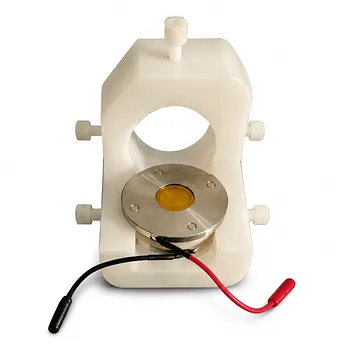
Aqueous Battery Testing Fixture for Laboratory Cell Evaluation

20V 10A Battery Testing Equipment
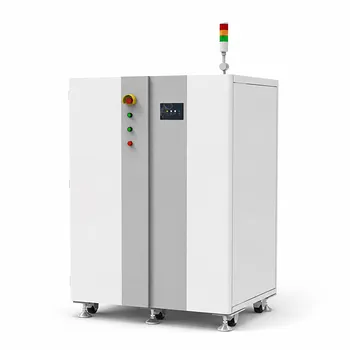
20V 10A Battery Tester Battery Testing Equipment

5V 5A Lithium Ion Battery Testing Equipment Battery Tester