All Questions
What Pressure Management Strategies Are Required For Ultra-Thin Lithium Anodes? Master Precise Load Control (<30Μm)
Learn why ultra-thin lithium anodes require specialized pressure management to prevent electrolyte failure and ensure battery stability.
Why Is High-Precision Pressure Control Equipment Necessary For Lithium Creep Evaluation? Ensure Precise Data Accuracy
Learn why precision pressure control is vital for evaluating lithium layer creep behavior and how to isolate geometric factors from material data.
What Is The Primary Function Of Stack Pressure? Mastering Interface Stability In Solid-State Battery Research
Learn how stack pressure stabilizes interfaces, induces lithium creep, and prevents dendrite growth in all-solid-state lithium batteries.
Why Is It Necessary To Conduct Cycle Tests For Quasi-Solid-State Battery Systems Within A Controlled Pressure Environment?
Learn why controlled pressure is vital for quasi-solid-state battery testing to manage volume expansion and ensure stable interface contact.
What Is The Primary Function Of Professional Electrochemical Test Cell Devices? Precision In Battery Research
Learn how professional test cells stabilize pressure and electrode area to ensure accurate performance evaluation of quasi-solid-state batteries.
How Does A Coin Cell Crimper Affect The Accuracy Of Electrochemical Testing For Spinel-Structured Heo? Ensure Precision
Learn how coin cell crimpers ensure electrochemical accuracy for HEOs by stabilizing contact resistance and providing airtight encapsulation.
Why Is A Laboratory Press Used For Membrane Stacks? Ensure Precision And Sealing In Electrochemical Cells
Learn how a laboratory press ensures hermetic seals and minimizes contact resistance in four-compartment electrochemical test cell assembly.
Why Is A Hydraulic Press With Pressure Monitoring Required For All-Solid-State Batteries? Achieve Optimal Performance
Learn why precise pressure monitoring is critical for solid-state battery assembly to reduce impedance, ensure ion flow, and prevent cell failure.
Why Is A Precision Pellet Press Necessary For Forming Solid Electrolyte Layers? Powering Solid-State Battery Research
Learn why precision pellet presses are critical for densifying Li6PS5Cl and Li3InCl6 powders to enable ion transport in solid-state batteries.
What Is The Function Of A Laboratory Hydraulic Press For Li21Si5/Si–Li21Si5 Anodes? Optimize Cold-Sintered Networks
Learn how laboratory hydraulic presses enable cold-pressed sintering to create self-supporting, conductive networks in Li21Si5/Si bilayer anodes.
What Is The Role Of A Laboratory Sealing Press In Coin Cell Assembly? Ensure Precision Electrochemical Testing
Learn how laboratory sealing presses minimize contact resistance and ensure hermetic seals for accurate coin cell battery testing and data.
What Is The Function Of A Laboratory Hydraulic Press In Spv R&D? Optimize Battery & Solar Cell Efficiency
Learn how laboratory hydraulic presses densify solid-state electrolytes and perovskite films to maximize energy density for solar-powered vehicles.
How Does The Precision Of Pressure Control In A Laboratory Hydraulic Press Affect The Quality Of Navalnb/C Electrode Discs?
Discover how precise pressure control optimizes NaVAlNb/C electrode density, conductivity, and porosity for superior battery performance.
What Is The Function Of A Laboratory Hydraulic Press In Al-Ion Battery Prep? Master Electrode Precision
Learn how laboratory hydraulic presses optimize electrode density, porosity, and interfacial contact for high-performance aluminum-ion batteries.
What Is The Function Of Standard Laboratory Environment Control During Battery Capacity Calibration Experiments? | Data Integrity
Learn how environmental control eliminates kinetic noise and establishes a unified baseline for accurate battery capacity calibration and research.
What Is The Importance Of Laboratory Analytical Precision Molds? Ensure High-Accuracy Cathode Performance Evaluation
Learn how precision molds safeguard electrochemical data by preventing contamination and ensuring uniform electrode density for cathode research.
Why Must An Argon-Filled Glove Box Be Used When Handling Desodiated Na2/3Nio2 Samples? Protect Your Battery Research
Learn why argon-filled glove boxes are essential for handling desodiated Na2/3NiO2 to prevent degradation and ensure data integrity.
Why Is It Necessary To Assemble Cc-Tio2 Sodium-Ion Half-Cells Inside A High-Purity Argon Glove Box? Ensure Data Accuracy
Learn why high-purity argon glove boxes are essential for sodium-ion half-cell assembly to protect sodium anodes and prevent electrolyte degradation.
What Is The Significance Of Using A Laboratory Press For Cc-Tio2 Electrodes? Optimize Battery Performance Today
Learn how laboratory presses enhance CC-TiO2 electrodes by increasing contact density, reducing resistance, and improving adhesion for batteries.
How Is A Laboratory Hydraulic Press Used For Hap Composite Gels? Master Mineral Substrate Standardization
Learn how laboratory hydraulic presses standardize HAP mineral substrates for protein-like composites by optimizing density and surface uniformity.
Why Must A Laboratory Hydraulic Press Feature Precise Loading Rate Control For Rcc Compressive Strength Tests?
Learn why precise loading rate control is critical for RCC testing to eliminate impact loads and ensure accurate ultimate load-bearing data.
How Does A Laboratory Hydraulic Press Assist In The Assembly Of Solid-State Lithium-Oxygen Batteries (Sslobs)?
Learn how laboratory hydraulic presses eliminate interfacial impedance and ensure structural integrity in PILS-based solid-state batteries.
Why Is A Laboratory Hydraulic Press Used To Co-Press Graphite Disks? Ensure Optimal Interface For Na3Sbs4 Measurements
Learn how a hydraulic press creates the essential electrode-electrolyte interface for Sodium Tetrathioantimonate (Na3SbS4) and EIS data quality.
How Does A Laboratory Hydraulic Press Contribute To Testing Na3Sbs4? Optimize Sodium Tetrathioantimonate Characterization
Learn how 660 MPa of pressure from a laboratory hydraulic press eliminates porosity and contact resistance in Na3SbS4 solid electrolyte samples.
What Are The Primary Applications For A High-Performance Laboratory Hydraulic Press In Perovskite Research?
Learn how high-performance laboratory hydraulic presses standardize perovskite samples, ensuring data accuracy in conductivity and XRD analysis.
Why Is A High-Precision Laboratory Hydraulic Press Essential? Secrets To Perfect Material Sample Preparation
Learn how high-precision laboratory hydraulic presses eliminate density gradients and prevent cracking during sintering for better sample quality.
What Are The Primary Applications Of A Laboratory Press In Flexible Solid-State Battery R&D? Optimize Your Prototypes
Learn how laboratory presses optimize solid-state battery performance by eliminating interfacial gaps and enhancing ion transport efficiency.
What Role Does A Laboratory Press Machine Play In Lprgb Preparation? Engineering High-Density Geochemical Barriers
Learn how laboratory presses enable the fabrication of LPRGBs by achieving precision compaction and reducing porosity for contaminant containment.
What Are The Pressure Control Requirements For Using A High-Precision Laboratory Press Machine To Fabricate Coin Cell Electrode Sheets? Master Precision For Superior Battery Data
Learn the critical pressure requirements for coin cell electrodes: achieve optimal density, reduce resistance, and ensure material adhesion.
Why Is A High-Precision Laboratory Press Machine Required For Iwswn-Spe-Based Lithium Metal Pouch Cells?
Learn why precise mechanical compression is essential for IWSWN-SPE lithium metal pouch cells to optimize interfaces and ensure cycling stability.
What Is The Role Of A Laboratory Die Press In Shaping Gd2O3 Ceramics? Optimize Green Body Consolidation
Learn how laboratory die presses transform Gd2O3 powder into green bodies by applying precise pressure for structural stability and density.
What Is The Primary Function Of A Laboratory Hydraulic Press? Essential Sample Preparation For Chemical Research
Learn how laboratory hydraulic presses transform powders into dense pellets for FTIR, XRF, and electrochemical testing with high precision.
Why Does Pressing Composite Cathode Layers Require Higher Pressure? Achieve High-Density Solid-State Battery Cathodes
Learn why composite cathodes need pressures exceeding 350 MPa to ensure ion/electron transport and how to optimize your laboratory press settings.
What Role Does A Laboratory Hydraulic Press Play In Forming Electrolyte Layers? Optimize All-Solid-State Batteries
Learn how laboratory hydraulic presses use high pressure to densify electrolytes, eliminate pores, and ensure low-impedance pathways for batteries.
How Does A High-Precision Servo Electronic Press Contribute To Cee? Enhance Material Strength Via Precise Control
Learn how high-precision servo presses enable cyclic expansion extrusion (CEE) through load control, constant speed, and severe plastic deformation.
What Role Does A High-Precision Laboratory Hydraulic Press Play In Battery Research? Optimize Solid-State Cell Performance
Learn how precision hydraulic presses solve the solid-solid contact problem, reduce resistance, and boost density in solid-state battery research.
What Is The Function Of A Laboratory Lab Press In Mea Construction? Optimize Hydrogen Peroxide Synthesis Performance
Learn how laboratory hot presses fuse MEA layers to reduce resistance and optimize ion pathways for efficient hydrogen peroxide synthesis.
What Is The Significance Of Precision Displacement Resolution In Tim Extrusion? Master Bond Line Thickness Control
Learn how precision displacement resolution prevents exponential pressure spikes and protects battery cells during TIM extrusion research.
How Does The Use Of A Precision Disc Puncher Contribute To The Consistency Of Battery Testing Results? Ensure Accuracy
Learn how precision disc punchers standardize electrode geometry, mass loading, and current density to ensure reliable battery testing results.
Why Combine Dems And Atr-Seiras For Battery Analysis? Bridge Gas And Surface Data For Complete Insights
Learn why combining DEMS and ATR-SEIRAS is essential for real-time monitoring of gas-phase evolution and surface reaction intermediates in batteries.
Why Are Precise Capillary Compression Or Mechanical Pressing Processes Necessary For Nanoporous Electrodes?
Learn how precise mechanical pressing regulates interlayer spacing and mass loading to optimize electrochemical performance in nanoporous electrodes.
How Does A High-Precision Laboratory Press Affect Zn-Mno2 Batteries? Optimize Your Cell Performance And Reliability
Learn how high-precision assembly equipment reduces contact resistance and ensures long-term cycling stability in Zn-MnO2 batteries.
How Is A Laboratory Hydraulic Press Utilized In Experiments Involving Aluminum As An Energy Carrier? Optimize H2 Yield
Discover how hydraulic presses standardize aluminum pellets for hydrogen research, optimizing reaction rates and energy density for better H2 yield.
What Dual Functions Do Specialized Stainless Steel Current Collectors Serve In In-Situ Scanning Saxs/Waxs Experiments?
Learn how specialized current collectors combine electrical conductivity with X-ray transparency for precise layer-by-layer battery analysis.
How Does A Spring Cup Assembly Contribute To Pressure Uniformity In A Solid-State Battery? Precision Pressing Solutions
Learn how spring cup assemblies ensure linear force transmission, minimize friction, and prevent short circuits in solid-state battery stacks.
What Is The Function Of Viton O-Rings In In-Situ Battery Units? Achieve <0.1 Ppm Sealing For Precise Testing
Learn how Viton O-rings maintain <0.1 ppm H2O and O2 levels in in-situ units to protect sensitive sulfide electrolytes and lithium anodes.
What Role Does A Compression Spring Play In In-Situ Electrochemical Cell Design? Ensure All-Solid-State Stability
Learn how compression springs maintain constant pressure and interface integrity in all-solid-state battery cells during volume fluctuations.
What Is The Purpose Of Using A Dedicated Stainless Steel Forming Press? Achieve Optimal Density In Solid-State Cells
Learn why pre-pressing with stainless steel is essential for solid-state batteries to overcome PEEK hardware limits and improve cell performance.
What Impact Does A Manual Or Automatic Crimping Press Have On A-Co2P/Pcnf Battery Performance? Maximize Your Lab Results
Learn how precision crimping presses optimize A-Co2P/PCNF electrodes by minimizing resistance and suppressing the polysulfide shuttle effect.
How Is A Laboratory Hydraulic Press Utilized In The Assembly Of A-Co2P/Pcnf Films? Optimize Li-S Battery Performance
Learn how laboratory hydraulic presses optimize A-Co2P/PCNF films by controlling porosity and enhancing conductivity for lithium-sulfur batteries.
How Does A Laboratory Hydraulic Press Ensure Mos2 Electrode Performance? Optimize 2D Material Densification
Learn how precision laboratory hydraulic presses densify MoS2 coatings to minimize resistance and enhance sodium-ion battery cycling stability.
Why Are Laboratory Presses Or Precision Rolling Mills Required For Zn-Bio Composite Electrodes? Optimize Battery Performance
Learn why laboratory presses and rolling mills are essential for Zn-BiO electrodes to enhance conductivity, density, and electrochemical stability.
How Does A High-Purity Argon Glove Box Ensure The Objectivity Of Testing Results For High-Nickel Cathode Materials?
Learn how high-purity argon glove boxes protect high-nickel cathode materials from moisture and CO2 to ensure accurate, objective testing data.
What Is The Design Logic Behind The Splitting Tensile Testing Of Lwscc? Master Stress Conversion Mechanics
Learn how the splitting tensile testing apparatus converts compressive force into tensile stress for LWSCC crack resistance analysis.
What Is The Function Of A Laboratory Hydraulic Press In Zinc-Air Battery Testing? Optimize Cell Performance
Learn how laboratory hydraulic presses reduce contact resistance and stabilize interfaces to ensure reliable zinc-air battery testing data.
Why Monitor Stack Pressure In All-Solid-State Lithium Metal Batteries? Optimize Charging With Precise Regulation
Learn why real-time pressure regulation is vital for managing 60%+ volume expansion and ensuring battery stability in solid-state lithium systems.
Why Are Precision Pressure Testing And Control Devices Necessary For Maintaining Stack Pressure In Solid-State Batteries?
Learn how precision pressure devices prevent interface delamination, reduce impedance, and inhibit dendrites in solid-state battery development.
What Are The Primary Uses Of An Industrial Heating Furnace For Electrode Testing? Master Smelting Simulation
Learn how industrial furnaces simulate smelting conditions (700°C–1650°C) to test electrode erosion, spalling, and shape retention.
Why Is A High-Precision Laboratory Hydraulic Press Required For Llzo Ceramic Pellets? Enhance Battery Conductivity
Learn why precision laboratory hydraulic presses are vital for LLZO pellet density, preventing sintering defects and maximizing ionic conductivity.
How Does A Laboratory Hydraulic Press Ensure The Interfacial Integrity Of Button Cells For Solid-State Batteries?
Learn how laboratory hydraulic presses eliminate voids and reduce resistance in solid-state batteries through precise mechanical force and bonding.
What Critical Function Does A Laboratory Hydraulic Press Serve In The Assembly Of All-Solid-State Batteries? Key Benefits
Learn how laboratory hydraulic presses enable ionic conductivity and eliminate interfacial impedance in all-solid-state battery assembly.
How Does A Laboratory Press Machine Contribute To Improving The Performance Of Quasi-Solid-State Supercapacitors?
Learn how precision lab presses optimize supercapacitor performance by reducing resistance, enhancing wetting, and ensuring cycling stability.
How Does The Use Of A Manual Or Automatic Laboratory Press Affect The Testing Accuracy Of All-Solid-State Lithium Battery Cells?
Learn how laboratory presses improve solid-state battery testing by optimizing density, interface contact, and suppressing dendrite growth.
Why Is A Laboratory Hydraulic Press Required For Cold Pressing Rare Earth Halide Powders? | Essential Prep For Battery Research
Learn why hydraulic pressing is critical for rare earth halides to eliminate porosity and ensure accurate ionic conductivity measurements.
Why Is A Laboratory Hydraulic Press Required For The Preparation Of Bulk Oxide Electrodes? | Optimize Oer Activity
Learn how a laboratory hydraulic press eliminates contact resistance and ensures accurate OER catalytic data through high-density electrode formation.
How Does An Industrial-Grade Hydraulic Testing Machine Ensure The Accuracy Of Strength Test Results? Precision Control
Learn how high-precision sensors and constant loading rates ensure accurate flexural and compressive testing for Gypsum/HDPE composites.
How Do Laboratory Hydraulic Presses And Precision Dies Ensure The Standardization Of Cathode Testing? Expert Insights
Learn how laboratory hydraulic presses and precision dies standardize zinc-ion battery cathode testing through uniform density and low resistance.
What Advantages Do Compression Cells Offer For Aluminum-Ion Battery Research? Enhance Data Accuracy And Stability
Learn how compression-style test cells improve aluminum-ion battery research through superior mechanical stability and leak-proof sealing.
Why Are Laboratory Constant Temperature Environments Required For Silicon-Air Battery Stability? Ensure Precise Testing
Learn why FeMo-NC catalysts and gel electrolytes in silicon-air batteries require controlled thermal environments for accurate stability testing.
How Do High-Purity Cathode Materials Contribute To Nca Lithium-Ion Battery Rul Data Stability? Ensure Accurate Results
Learn how high-purity NCA cathode materials minimize side reactions and provide stable data for validating battery RUL prediction algorithms.
How Does The Use Of An Isostatic Press Facilitate An Ideal Lithium/Electrolyte Interface? Optimize Battery Performance
Learn how isostatic pressing uses plastic deformation to create pore-free, atomic-level bonds between lithium metal and solid-state electrolytes.
Why Are Lithium-Ion Battery Systems Consisting Of Nca Cathodes And Graphite Anodes Used In Degradation Modeling Research?
Learn why NCA/Graphite is the standard for battery degradation research, offering predictable data for SEI growth and high-energy density modeling.
What Function Does A Constant Stack Pressure Device Serve In Solid-State Battery Cycling? Optimize Cycle Stability
Learn how constant stack pressure devices manage volume expansion and maintain low-impedance interfaces in solid-state battery research.
Which Core Functions Does A High-Performance Battery Testing System Provide For Composite Anode Evaluation?
Learn how high-performance battery testing systems quantify electrochemical performance, structural stability, and rate performance for composite anodes.
What Are The Advantages Of Selecting Glass Fiber Separators For Assembling Swagelok-Type Laboratory Test Cells?
Discover why glass fiber separators are the premier choice for Swagelok-type test cells, ensuring data integrity and superior ion transport.
Why Must The Electrochemical Testing Of Fe2O3/Tio2/Rgo Anodes Be Conducted Within An Argon-Filled Glove Box?
Learn why an argon-filled glove box is essential for testing Fe2O3/TiO2/rGO anodes to prevent lithium oxidation and electrolyte hydrolysis.
Why Is A Four-Decimal Place Analytical Balance Required When Assembling Battery Half-Cells? Achieve Precision In Mah/G
Learn why 0.0001g precision is critical for battery assembly, specific capacity calculations, and objective material ratio analysis.
Why Must The Specific Surface Area Of Carbon Additives Be Considered In Assb? Optimize Stability And Conductivity
Learn how controlling carbon additive surface area prevents sulfide electrolyte decomposition and enhances stability in All-Solid-State Batteries.
Why Is Continuous Stack Pressure Required For Iron Fluoride (Fefx) Assb Testing? Ensure Interface Stability
Learn why conversion-type cathodes like Iron Fluoride require dynamic, continuous pressure to maintain solid-solid contact in ASSB research.
Why Must The Assembly Of Sodium-Ion Button Cells Be Conducted In An Argon-Filled Glove Box? Expert Lab Insights
Learn why ultra-low oxygen and moisture levels (<0.01 ppm) are critical for sodium-ion battery assembly to ensure safety and data integrity.
Why Must The Assembly Of Single-Crystal Linio2 (Lno) Coin Cells Be Performed In A High-Purity Argon-Filled Glovebox?
Learn why high-purity argon gloveboxes are critical for LNO coin cell assembly to prevent chemical degradation and ensure accurate research data.
Why Must The Post-Mortem Analysis Of Cycled Solid-State Batteries Be Performed Inside A High-Performance Glove Box?
Learn why sub-1ppm glove box environments are critical for preserving lithium anodes and solid electrolytes during post-mortem battery analysis.
What Is The Core Value Of A High-Precision Battery Testing System? Master Icrfb Performance And Material Validation
Unlock the true potential of Iron-Chromium Redox Flow Batteries with high-precision testing to validate capacity gains and long-term durability.
Why Are Stainless Steel Pressure Plates Used For Solid-State Batteries? Achieve 2 Mpa Stability In Battery Cycling
Learn how 2 MPa of external pressure from stainless steel plates prevents layer detachment and lithium dendrites in all-solid-state batteries.
How Does The Sealing Quality Of A Coin Cell Crimper Affect Battery Testing? Ensure Data Accuracy With Precise Seals
Learn how coin cell crimper sealing quality impacts impedance, cycle life, and electrolyte stability in battery research and electrochemical testing.
How Do Pressure Fixtures Assist In Managing The Pressure-Performance Relationship? Optimize Solid-State Battery Testing
Learn how pressure fixtures stabilize interfaces, suppress voids, and validate performance metrics in solid-state battery pilot production.
Why Is An Isostatic Press Considered A Superior Choice? Elevate Ceramics And Solid-State Electrolyte Quality
Discover why isostatic pressing is the gold standard for uniform density, complex shapes, and superior performance in ceramic and battery research.
What Is The Necessity Of An Ionic Conductivity Tester For Prelithiation? Optimize Your Battery Research Efficiency
Discover why ionic conductivity testers are essential for prelithiation: quantify electrolyte viscosity, speed, and uniformity with data-driven insights.
How Does A Precision Disc Puncher Ensure Experimental Accuracy? Standardize Your Battery Research Samples
Learn how precision disc punchers eliminate geometric variables to ensure accurate current density and mass calculations in battery testing.
Why Must The Prelithiation Process Be Conducted Within An Argon Glovebox? Ensure High-Purity Battery Research
Learn why an argon glovebox and vacuum sealer are critical for prelithiation to prevent lithium oxidation and ensure electrochemical consistency.
What Is The Purpose Of Glass Plate Fixtures And Stainless Steel Clips In Prelithiation? Ensure Uniform Anode Contact
Learn how glass plates and stainless steel clips create the ideal pressure system for efficient lithium-ion migration in battery research.
Why Is Specific Thickness Lithium Metal Foil Preferred Over Lithium Metal Powder? Optimize Your Prelithiation Efficiency
Discover why lithium foil outperforms powder in prelithiation, offering uniform coverage, precise thickness, and simpler manufacturing.
Why Is A Laboratory Hydraulic Press Used For Ncm Composite Electrode Sheets? Optimize Battery Energy & Power Density
Learn how laboratory hydraulic presses enhance NCM electrode performance by increasing compaction density and minimizing internal resistance.
What Is The Technical Value Of Load Monitoring In Battery Fire Research? Defining Critical Mechanical Safety Thresholds
Discover how load monitoring quantifies the force required to trigger battery failure, ensuring safer module design and recycling processes.
What Is The Primary Function Of A High-Precision Laboratory Press Machine In The Safety Assessment Of Lithium-Ion Battery Recycling?
Learn how high-precision laboratory presses simulate mechanical crushing to identify battery failure points and improve recycling safety protocols.
What Physical Protection Does A Compression-Type Two-Electrode Unit Provide? Secure Your Supercapacitor Data
Learn how compression-type units protect supercapacitor tests via hermetic seals and constant pressure to prevent evaporation and resistance spikes.
Why Is Precise Control Of Sample Thickness And Area Critical? Optimize Smof Proton Conductivity Testing
Learn why precise sample geometry is vital for SMOF proton conductivity calculations and how a lab press ensures accurate EIS results.
What Is The Role Of A Laboratory Press In Testing Smof Conductivity? Enhance Specimen Density And Measurement Accuracy
Learn how laboratory presses ensure accurate conductivity measurements for SMOF materials by eliminating voids and ensuring geometric precision.
Why Use A Hydraulic Press For Lithium Symmetric Batteries? Optimize Assembly & Research Accuracy
Discover how laboratory hydraulic presses enhance lithium battery performance by minimizing contact resistance and ensuring uniform pressure.
How Is A Laboratory Press Machine Utilized In The Preparation Of Electrode Materials For Electrochemical Testing?
Learn how laboratory presses optimize electrode density, reduce contact resistance, and enhance electrochemical testing accuracy for batteries.
Related Products

Battery Testing Temperature Control System
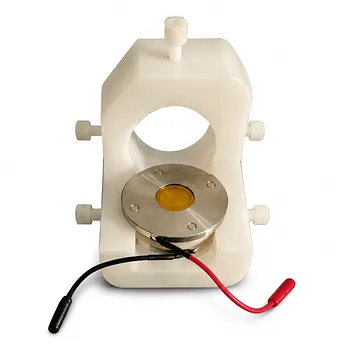
Aqueous Battery Testing Fixture for Laboratory Cell Evaluation

20V 10A Battery Testing Equipment
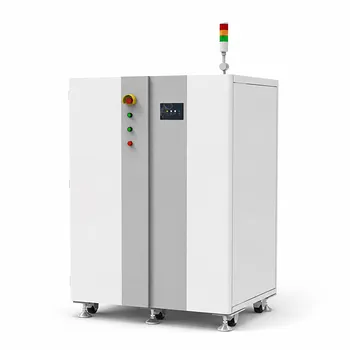
20V 10A Battery Tester Battery Testing Equipment

5V 5A Lithium Ion Battery Testing Equipment Battery Tester