All Questions
How Does A Laboratory High-Precision Hydraulic Press Contribute To The Performance Of Li-S Pouch Cells? Expert Guide
Learn how high-precision hydraulic presses optimize Li-S pouch cell performance by enhancing contact, density, and lean electrolyte distribution.
Why Is A Standardized Cylindrical Mold Necessary When Testing Electrode Materials? Ensure Data Precision & Consistency
Learn why standardized cylindrical molds are essential for accurate stress calculation and data integrity in electrode material mechanical testing.
What Is The Purpose Of Applying 0.1 Mpa During Pouch Cell Testing? Optimize Interface Stability & Cycle Life
Learn why 0.1 MPa pressure is vital for quasi-solid-state pouch cells: it reduces resistance, manages expansion, and inhibits lithium dendrites.
Why Are High-Precision Pressure Sensors Required For Battery Gas Testing? Expert Guide To Range Optimization
Learn why matching sensor range to battery capacity (3 Ah to 230 Ah) is vital for accurate gas analysis and capturing thermal runaway data.
What Is The Primary Function Of A Customized Pressure Vessel In Battery Failure Studies? Quantifying Gas Release
Learn how customized pressure vessels enable precise calculation of gas volume during lithium-ion battery failure using the ideal gas law.
Why Are High-Pressure Battery Fixtures Necessary? Optimize Lithium Metal Pouch Cell Testing Performance
Learn how high-pressure fixtures suppress lithium anode expansion, prevent 'dead lithium,' and reduce interfacial resistance in pouch cells.
How Is A Hollow Ptfe Spacer Used To Study Lithium Deposition Morphology? Uncover Natural Dendrite Growth Patterns
Learn how hollow PTFE spacers simulate low-pressure environments to test lithium deposition and validate battery charging protocols effectively.
What Are The Advantages Of A High-Precision Digital Lab Press For Cathode Volume Effects? Master Battery Breathing Data
Learn how high-precision digital presses monitor micron-level expansion and mechanical stability in cathode materials during electrochemical cycling.
How Does Maintaining A Constant Axial Stack Pressure Benefit All-Solid-State Batteries? Optimize Your Cycle Testing
Learn how constant axial pressure prevents mechanical decoupling, manages volume changes, and extends cycle life in all-solid-state batteries.
What Are The Advantages Of Spm Platforms In Argon Gloveboxes For Battery Research? Enhance Sodium-Ion Analysis Fidelity
Learn how integrating SPM in argon-filled gloveboxes protects SEI films and preserves material integrity for advanced sodium-ion battery research.
Why Is Eis Necessary For Measuring Pda(Cu) Separators? Unlock High-Rate Battery Performance Data
Learn how EIS quantifies ionic conductivity (5.02 x 10^-4 S/cm) in PDA(Cu) separators to validate wettability and 10 C high-rate battery capability.
How Do Pda(Cu) Modified Separators Inhibit Lithium Dendrites? Advanced Interfacial Engineering For Battery Longevity
Learn how PDA(Cu) coatings use polar catechol groups to ensure uniform lithium deposition and extend battery cycle life to over 900 hours.
What Is The Purpose Of A Spring-Loaded Constant Pressure Device? Optimize Your Solid-State Battery Testing
Learn how spring-loaded constant pressure devices stabilize interfaces and manage lithium volume changes in solid-state battery testing.
Why Is A Coin Cell Crimping Machine Essential For Cr2032 Assembly? Ensure Precision In Electrochemical Testing
Learn how a coin cell crimper ensures hermetic sealing, reduces resistance, and provides data reproducibility for battery research.
Why Is It Necessary To Apply A Controlled External Pressure Environment To A Battery Pack During Cycling Studies?
Understand why controlled pressure is essential for all-solid-state batteries to prevent delamination and ensure ion transport during cycling.
Why Must A Specific Static Pressure Be Maintained During All-Solid-State Battery Testing? Optimize Interface Contact
Learn why static pressure is critical for solid-state battery testing to manage volume changes, reduce impedance, and ensure data accuracy.
How Do Laboratory Hydraulic And Isostatic Presses Support Carbonaceous Material Development? Standardize Your Samples
Learn how hydraulic and isostatic presses standardize density and create high-strength green bodies for advanced carbonaceous material research.
How Does Secondary Cold Pressing Improve Sintered Aluminum Nanocomposites? Achieve 99% Density And Peak Hardness
Learn how secondary cold pressing enhances sintered aluminum nanocomposites by eliminating porosity and inducing strain hardening for 99% density.
Why Use Laboratory Pressing For R2032 Coin Cells? Ensure Precision Assembly & Valid Battery Test Results
Learn why dedicated laboratory pressing and sealing equipment is critical for R2032 coin cell assembly to ensure seal integrity and data accuracy.
Why Is A Laboratory Press Required To Prepare M5Ysi4O12 Samples? Ensure Precision In Electrochemical Window Testing
Learn why high-precision laboratory presses are essential for densifying M5YSi4O12 electrolytes to ensure accurate electrochemical data.
Why Is A Vacuum Drying Oven Required Before Morphological Observations On Failed Solid-State Batteries?
Learn why vacuum drying is essential for solid-state battery failure analysis to preserve active lithium and ensure accurate SEM imaging results.
Why Must The Assembly And Testing Of Sulfide Solid-State Batteries Be Conducted Within An Argon-Filled Glove Box?
Learn why argon-filled glove boxes are essential for sulfide solid-state battery assembly to prevent toxic H2S gas and ensure high performance.
What Critical Data Does An Industrial Pressure Testing Machine Provide? Evaluating Cement-Based Electrolyte Strength
Learn how industrial pressure testing determines the compressive strength of cement-based electrolytes at 3 and 28 days for structural integration.
Why Do Solid-State Electrolyte Batteries Require A Constant Temperature Environment For Testing? | Kintek Solution
Learn why thermal stability is vital for solid-state battery testing, from Arrhenius dependency to polymer chain mobility and data accuracy.
What Is The Role Of Peg In Ceramic Processing? Master Complex Geometries In Isostatic Pressing
Learn how Polyethylene Glycol (PEG) prevents collapse and ensures geometric fidelity in complex ceramic parts during isostatic pressing.
Why Is A Cold Isostatic Press (Cip) Essential For Porous Titanium? Achieve Perfect Structural Integrity In Every Mold.
Learn how Cold Isostatic Pressing eliminates density gradients and ensures structural integrity in porous titanium manufacturing.
What Role Does A Heated Laboratory Press Play In Interface Fusion? Enhance Your Solid-State Battery Research
Learn how heated laboratory presses overcome solid-solid interface resistance through thermal energy and mechanical pressure for battery research.
What Are The Advantages Of Isostatic Pressing For All-Solid-State Battery Cathodes? Achieve Superior Density & Performance
Learn how isostatic pressing outperforms uniaxial methods in solid-state battery cathode prep by ensuring uniform density and ion transport.
How Are Hydraulic And Isostatic Presses Used In Zirconia Research? Creating The Benchmark For Ceramic Excellence
Learn how laboratory presses establish the 'gold standard' baseline for density and strength in zirconia ceramic comparative research.
What Critical Role Does Cold Isostatic Pressing (Cip) Play For Ynto Ceramics? Achieve Defect-Free Density
Learn how 200 MPa Cold Isostatic Pressing eliminates density gradients and prevents warping during the sintering of YNTO ceramic components.
Why Is A Cold Isostatic Press (Cip) Necessary For Perovskite Ceramic Membranes? Achieve Peak Co2 Reduction Efficiency
Learn how Cold Isostatic Pressing (CIP) ensures 90%+ density and gas-tightness in perovskite ceramic membranes for CO2 reduction.
How Does Molding Pressure Control Affect Tmd Thermal Runaway Evaluation? Precision Pressing For Battery Safety
Learn how high-precision molding pressure ensures uniform density and accurate thermal runaway risk assessment in transition metal chalcogenides.
What Is The Significance Of A Pressure-Adjustable Test Cell For Solid-State Battery Performance? Optimize Ssb Stability
Learn how pressure-adjustable test cells prevent interfacial failure, suppress dendrites, and optimize solid-state battery (SSB) cycle life.
What Are The Functions Of Stainless Steel Plungers In Eis Testing? Beyond Pressure For Solid-State Battery Precision.
Learn how stainless steel plungers act as electrical bridges and current collectors to ensure chemical stability and accurate EIS data for batteries.
Why Is A High-Pressure Cold Isostatic Press Selected For Hap/Fe3O4 Composites? Unlock 90% Green Density & Uniformity
Learn why CIP is essential for HAP/Fe3O4 composites, offering 300 MPa of uniform pressure to eliminate porosity and ensure defect-free sintering.
What Are The Advantages Of Using A Cold Isostatic Press (Cip)? Achieve Uniform Density For Complex Precision Powders
Learn how Cold Isostatic Pressing (CIP) eliminates density gradients and warping to produce high-integrity, complex geometric parts.
What Role Does The Cold Isostatic Press (Cip) Play In Nb3Sn Synthesis? Master Bulk Superconductor Prep
Learn how Cold Isostatic Pressing (CIP) creates high-density green bodies essential for crack-free Nb3Sn superconducting material synthesis.
Why Is The Dwell Time Significant During The Cold Isostatic Pressing (Cip) Of Ceramic Materials? Enhance Green Density
Learn why dwell time is crucial in Cold Isostatic Pressing (CIP) to ensure uniform density, prevent cracks, and optimize ceramic material strength.
What Is The Benefit Of Applying Cip To Bscf Ceramic Rods? Achieve Uniform Density And Crack-Free Sintering
Learn how Cold Isostatic Pressing (CIP) eliminates density gradients in BSCF rods to prevent cracking and warping during the sintering process.
How Does The Pressing Pressure Of An Isostatic Press Affect Zta Ceramic Green Bodies? Optimize Your Material Density
Discover how isostatic pressing pressure (80-150 MPa) optimizes ZTA ceramic green density, reduces sintering shrinkage, and enhances final hardness.
How Do High-Purity Graphite Plates And Graphite Felt Function Together? Optimize Your Single-Cell Test Performance
Learn how graphite plates, felt, and laboratory presses collaborate to minimize resistance and maximize voltage efficiency in battery research.
Why Is A Cold Isostatic Pressing (Cip) Machine Essential For Al2O3/Cu Composite Billets? Achieve Uniform Green Bodies
Learn how Cold Isostatic Pressing (CIP) eliminates density gradients and prevents cracks in Al2O3/Cu composite billets through uniform pressure.
Why Is Precise Pressure Control From A Laboratory Cold Press Required For Monc(Li) Pellets? Optimize Conductivity
Learn why 10 MPa precise pressure control is vital for MONC(Li) electrolyte pellets to eliminate voids and ensure accurate ionic conductivity data.
What Are The Advantages Of Using A Cold Isostatic Press? Enhance Solid-State Battery Anode Density & Performance
Learn how Cold Isostatic Pressing (CIP) eliminates density gradients and micro-pores to improve ion conduction in solid-state lithium batteries.
What Is The Value Of A Lab Press For Battery Black Mass? Ensure Precision In Elemental Analysis
Learn how high-precision hydraulic presses standardize black mass density, eliminating XRF errors and securing value in battery recycling.
How Does A Laboratory Hydraulic Battery Crimping Machine Influence Performance? Precision Sealing For Peak Battery Life
Learn how precise hydraulic crimping reduces resistance, prevents leakage, and ensures reproducible data in coin cell battery research.
How Does A Laboratory Coin Cell Sealing Machine Ensure The Reliability Of Sodium-Ion Battery Testing Results?
Learn how precision sealing machines eliminate assembly variables and optimize electrical contact for accurate sodium-ion battery research data.
What Is The Function Of An Isostatic Press In The Preparation Of Aluminum Foam? Optimize Your Powder Metallurgy Results
Learn how isostatic pressing eliminates density gradients and ensures uniform precursors for high-quality aluminum foam production.
What Is The Role Of A Cold Isostatic Press (Cip) For Crsi2? Boost Density And Preserve Texture Structure
Learn how Cold Isostatic Pressing (CIP) stabilizes textured CrSi2 green bodies, increases density to 394 MPa, and prevents sintering defects.
What Role Does A Laboratory Press Play In High-Loading Sulfur Cathode Prep? Optimize Battery Density And Performance
Learn how laboratory presses optimize sulfur cathode microstructure, reduce resistance, and enhance tap density for advanced battery research.
Why Is A Laboratory Press Indispensable For Sulfide All-Solid-State Batteries? Achieve Peak Ionic Conductivity
Learn how laboratory presses enable sulfide all-solid-state battery construction through powder densification and interface optimization.
What Is The Function Of A Laboratory Hydraulic Press In La1-X-Ycaxsrycro3 Ceramic Forming? Optimize Sintering Efficiency
Learn how laboratory hydraulic presses consolidate powder into green bodies, reduce activation energy, and facilitate solid-phase diffusion.
What Is The Function Of A Lab Press In The Final Assembly Of Cr2032 Button Cell Batteries For Hard Carbon Testing?
Learn how a lab press ensures hermetic sealing and internal integrity in CR2032 battery assembly for reliable hard carbon performance data.
How Does A Lab Press Machine Contribute To The Electrochemical Performance Of Hard Carbon Anodes? Boost Battery Density
Learn how lab press machines optimize compaction density, shorten diffusion paths, and enhance conductivity for high-performance hard carbon anodes.
What Is The Purpose Of Using A Laboratory Press For Mineral Smelting? Optimize Density & Reaction Efficiency
Learn how laboratory presses improve mineral smelting experiments by maximizing reactant contact and ensuring uniform heating through pelletization.
Why Is A Laboratory Hydraulic Press Essential For Preparing Dsc Test Samples? Master Composite Powder Analysis
Learn how a laboratory hydraulic press ensures accurate DSC data for composite powders by enabling atomic diffusion and simulating consolidation.
How Is A Laboratory Press Machine Utilized In The Ft-Ir Analysis Of Ceo2? Enhance Sample Clarity & Precision
Learn how laboratory presses create translucent KBr pellets for CeO2 FT-IR analysis, enabling precise detection of Ce-O bonds and functional groups.
What Role Does A Lab Press Machine Play In The Preparation Of Granite Residual Soil Samples? Expert Compaction Guide
Learn how lab press machines ensure precision static compaction, density control, and structural homogeneity for granite residual soil research.
Why Is A Laboratory Press Necessary For Silver Nanowire (Agnw) Electrodes? Optimize Your Conductive Network
Learn how mechanical pressure technology reduces contact resistance and improves adhesion in AgNW electrode crossover nodes for better conductivity.
What Is The Function Of A Laboratory Hydraulic Press? Optimize Your Chemical Powder Sample Pre-Treatment
Learn how laboratory hydraulic presses transform loose powders into dense pellets to ensure data reproducibility and accurate analytical results.
Why Is It Necessary To Use A Laboratory Press To Compact Bain1-Xmxo3-Delta Powders? Expert Sintering Guide
Learn why high-density compaction of BaIn1-xMxO3-delta powders via laboratory press is essential for solid-state diffusion and perovskite formation.
What Is The Function Of Polyoxyethylene-Based Additives In Cip? Enhance Density And Release Efficiency
Learn how polyoxyethylene-based additives act as lubricants and release agents to improve density uniformity in Cold Isostatic Pressing.
Why Is A Long Decompression Time Necessary For Cold Isostatic Pressing? Ensuring Integrity Of Large Alumina Ceramics
Learn why slow decompression is vital in CIP for large alumina parts to prevent internal fractures, manage elastic recovery, and evacuate air.
What Critical Role Does A Lab Press Machine Play In The Preparation Of Li7La3Zr2O12? Achieve High-Density Electrolytes
Learn how lab presses ensure density consistency, prevent cracking, and maximize ionic conductivity in LLZO solid-state electrolyte green bodies.
What Role Does A Laboratory Hydraulic Press Play In Optimizing All-Solid-State Lithium Batteries? | Kintek Solutions
Learn how laboratory hydraulic presses eliminate voids and reduce impedance to optimize solid-state battery interfaces and suppress dendrite growth.
Why Is Dry Pressing Used For Laser Ceramic Green Bodies? Essential Pre-Compaction Steps Explained
Learn why dry pressing with a laboratory hydraulic press is critical for consolidating ceramic powder and creating strong, dense green bodies.
What Is The Primary Application Of A High-Performance Laboratory Press? Master Composite Research & Sample Preparation
Learn how high-performance lab presses ensure uniform density and precise curing for composite research, laminates, and powder compaction.
What Role Does A Laboratory Press Machine Play In Near-Net Shape (Nns) R&D? Optimize Your Manufacturing Process
Learn how laboratory presses bridge the gap between material science and NNS production by validating densification and optimizing pressure curves.
What Role Does High-Precision Pressure Equipment Play In Nns Manufacturing? Optimize Material Efficiency & Reduce Waste
Learn how high-precision pressure processing reduces raw material waste in Near-Net Shape manufacturing by minimizing secondary machining.
How Does A Precision Press Ensure Accurate Vda 238-100 Bending Tests? Achieve Reliable Material Failure Data
Learn how high-rigidity presses and integrated sensors eliminate equipment deformation to ensure precise VDA 238-100 bending angle results.
What Is The Role Of A High-Range Laboratory Hydraulic Testing Machine In Assessing The Strength Of Aged Limestone?
Learn how high-range laboratory hydraulic testing machines quantify structural decay and safety reserves in aged limestone like Alpinina and Lioz.
What Is The Impact Of Using A Laboratory Press Machine On Electrode Material Tests? Ensure Precise Battery Data
Learn how laboratory press machines standardize electrode structures, minimize resistance, and optimize density for reliable electrochemical data.
Why Is A High-Precision Rolling Press Essential For Regenerated Lfp Electrodes? Master Your Battery Microstructure
Learn how high-precision rolling optimizes porosity and density in regenerated LFP electrodes to maximize battery energy and performance.
What Is The Role Of Laboratory Press Machines In V2O3/C Battery Testing? Master Precision Coin Cell Assembly
Learn how laboratory press machines and coin cell assembly equipment ensure the mechanical integrity and electrochemical accuracy of V2O3/C batteries.
What Is The Role Of A Hydraulic Press In Mil-91(Al) Battery Assembly? Optimize Lithium-Selenium Performance
Learn how precision hydraulic presses and coin cell crimpers reduce resistance and ensure uniform current in MIL-91(Al) lithium-selenium batteries.
What Role Does A Laboratory Press Machine Play In Evaluating The Electrical Conductivity Of Activated Carbon?
Learn how laboratory presses eliminate air gaps and porosity to ensure accurate electrical conductivity measurements for activated carbon samples.
How Does A Laboratory Hydraulic Press Function In Solid-State Cell Assembly? Optimize Interfacial Contact & Performance
Learn how laboratory hydraulic presses eliminate voids, reduce impedance, and suppress dendrites in solid-state lithium metal battery assembly.
Why Use A Stainless Steel Blocking Electrode Cell With Precise Pressure For Li21Ge8P3S34 Electronic Conductivity?
Learn how precise pressure and stainless steel blocking electrodes isolate electronic leakage in Li21Ge8P3S34 for accurate electrolyte testing.
What Role Does A Laboratory Hydraulic Press Play In Evaluating Li21Ge8P3S34 Electrolytes? Optimize Ionic Conductivity
Learn how laboratory hydraulic presses transform Li21Ge8P3S34 powder into dense solids to ensure accurate EIS testing and ionic conductivity.
How Does Applying 1000 Psi Pressure Affect Lithium Symmetric Batteries? Optimize Your Battery Research Performance
Learn how 1000 psi pressure reduces interfacial impedance and stabilizes current distribution in lithium symmetric batteries for better cycling.
Why Must The Assembly And Electrochemical Testing Of Llzo Solid-State Batteries Be Performed In An Argon-Atmosphere Glovebox?
Learn why LLZO batteries require argon gloveboxes to prevent Li2CO3 formation, anode oxidation, and interface resistance for accurate test results.
How Does Pressure Coupling In Electrolyte Models Assist In Evaluating The Mechanical Reliability Of A Battery?
Learn how pressure coupling models translate electrostatic potential into physical force to predict battery stress and ensure structural integrity.
How Do Dedicated Battery Fixtures With Constant Axial Pressure Contribute To Sulfide All-Solid-State Battery Testing?
Learn how constant axial pressure fixtures stabilize solid-solid interfaces, prevent delamination, and suppress dendrites in sulfide batteries.
Why Is High-Pressure Hydraulic Molding Essential For The Preparation Of Sulfide-Based Composite Cathodes?
Learn how high-pressure hydraulic molding eliminates voids and induces plastic deformation to optimize sulfide-based composite cathode performance.
What Is The Function Of A Laboratory Press In Li-S Battery Cathode Prep? Optimize Conductivity & Density
Learn how a lab press regulates porosity and contact tightness to maximize electronic conductivity in lithium-sulfur battery cathode research.
What Is The Role Of A Laboratory Hydraulic Press In Lithium Metal Electrode Integration? Optimize Battery Stability
Learn how laboratory hydraulic presses use uniform pressure and heat to laminate protective layers onto lithium anodes for enhanced battery performance.
What Advantages Does An Automatic Laboratory Hydraulic Press Offer Over Manual Equipment? Precision For Battery Research
Unlock superior consistency in solid-state battery research by choosing automatic presses for precise pellet density and repeatable results.
What Is The Necessity Of Using A Laboratory Hydraulic Press For Asc Electrodes? Achieve Peak Battery Performance
Learn why hydraulic presses are essential for ASC electrode fabrication, optimizing resistance, ion transport, and structural integrity.
What Is The Significance Of Precise Pressure Control Provided By A Laboratory Press? Achieve Optimal Battery Density
Learn how precise pressure control in laboratory presses optimizes electrode microstructure, reduces resistance, and ensures structural integrity.
Why Is A Laboratory Hydraulic Press Necessary For Catalyst Electrodes? Ensure Precision In Electrochemical Testing
Learn why hydraulic presses are vital for creating stable, conductive catalyst-coated electrodes with minimal resistance and high reproducibility.
What Is The Significance Of Maintaining Constant Stack Pressure With A Laboratory Press? Ensure Valid Lithium Cell Data
Learn why constant stack pressure is essential for lithium symmetric cell testing to prevent interface gaps and ensure accurate CCD measurements.
Why Is A Laboratory Hydraulic Press Required For Solid Electrolyte Pellets? Key To Solid-State Battery Success
Learn why a hydraulic press is essential for densifying solid electrolytes, reducing resistance, and preventing battery short circuits.
Why Is A High-Precision Laboratory Hydraulic Press Necessary For Si/Cnt Electrode Preparation? Master Battery Architecture
Learn how high-precision hydraulic presses optimize Si/CNT electrode density, reduce resistance, and enhance mechanical stability in battery research.
What Are The Advantages Of Using Large-Area Pouch Cell Testing? Optimize Battery Pressure And Lithium Morphology
Learn why pouch cell testing outperforms coin cells for battery pressure control, dense lithium deposition, and commercial viability testing.
What Is The Significance Of Uniaxial Pressure Control For Bismuth-Based Solid Electrolyte Pellets? Boost Lab Accuracy
Learn how precise uniaxial pressure control optimizes green density, minimizes impedance, and prevents defects in bismuth-based solid electrolytes.
Why Is A Stack Pressure Control Mechanism Within A Micro-Battery Fixture Essential? Optimize Operando Sem Imaging
Learn why precise stack pressure control is vital for operando SEM imaging to ensure electrical contact and simulate real-world battery behavior.
Why Is Precise Pressure Control From A Laboratory Hydraulic Press Necessary For Lithium-Solid Electrolyte Interfaces?
Learn why precise pressure is vital for lithium-metal batteries to ensure low interface resistance and prevent electrolyte fracture.
What Is The Primary Function Of A High-Pressure Laboratory Hydraulic Press? Enhancing Solid-State Battery Performance
Learn how high-pressure hydraulic presses eliminate porosity and maximize ionic conductivity in sulfide electrolyte pellets for solid-state batteries.
What Is The Significance Of A Laboratory Hydraulic Press For Zinc-Ion Batteries? Maximize Density And Performance
Learn how laboratory hydraulic presses enhance zinc-ion battery energy density by optimizing electrode microstructure and interfacial performance.
Why Is Precise Pressure Critical For Battery Samples? Optimize Ternary Lithium And Lmfp Energy Density
Learn how precise pressure application optimizes electrode architecture, improves conductivity, and breaks energy density bottlenecks in batteries.
Related Products

Battery Testing Temperature Control System
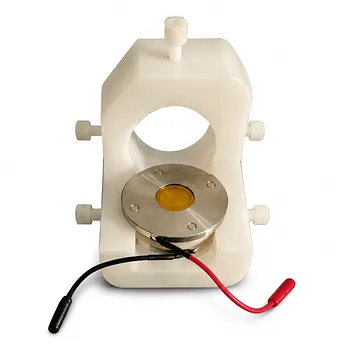
Aqueous Battery Testing Fixture for Laboratory Cell Evaluation

20V 10A Battery Testing Equipment
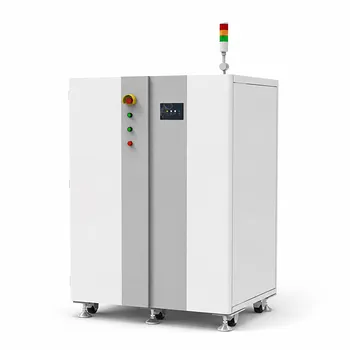
20V 10A Battery Tester Battery Testing Equipment

5V 5A Lithium Ion Battery Testing Equipment Battery Tester