All Questions
What Is The Role Of High-Precision Laboratory Hydraulic Presses In Solid-State Battery R&D? Optimize Your Interface
Learn how high-precision hydraulic presses reduce interface impedance and eliminate voids in next-generation all-solid-state battery research.
What Is The Function Of A Laboratory Hydraulic Press In Solid Electrolyte Pellet Preparation? Optimize Battery Testing
Learn how high-precision laboratory hydraulic presses eliminate voids and reduce grain boundary resistance to ensure accurate conductivity testing.
Why Is A Laboratory Press Machine Necessary For High Mass Loading Cathode Sheets? Optimize Battery Energy Density
Learn why laboratory presses are essential for high-loading electrodes to increase density, reduce resistance, and ensure structural integrity.
What Role Does A Compression-Type Battery Test Cell Play In Ps-B-Poegma Characterization? Enhance Electrolyte Accuracy
Learn how compression-type battery test cells eliminate interfacial resistance and ensure accurate data for PS-b-POEGMA solid-state electrolytes.
Why Must Battery Casings Be Equipped With A Peek Window For Operando Xas? Enhance Signal Clarity & Chemical Resistance
Learn why PEEK is the essential window material for Operando XAS, balancing low X-ray attenuation with superior resistance to alkaline electrolytes.
How Does Laboratory Hydraulic Assembly Equipment Ensure Accuracy In Silicon Anode Testing? Master Cell Standardization
Learn how hydraulic assembly equipment eliminates mechanical variables to ensure accurate testing of porous silicon anode coin cells.
Why Use A Precision Press For Pefc Assembly? Ensure Uniform Pressure For Accurate Pem Fuel Cell Testing
Learn why laboratory precision presses are essential for PEFC assembly to ensure gas tightness, thermal conductivity, and repeatable test data.
Why Is The Use Of A High-Precision Laboratory Press Machine Critical When Processing Electrodes? Optimize Li-S Batteries
Learn how precision pressing optimizes thick Li-S electrodes by enhancing conductivity, reducing porosity, and ensuring mechanical stability.
What Challenges Do Laboratory Hydraulic Presses Address In Slmb Assembly? Optimize Solid-State Battery Interfaces
Learn how laboratory hydraulic presses solve interfacial impedance and wetting issues in all-solid-state lithium metal battery assembly.
How Does A Laboratory Hydraulic Press Facilitate Accurate Powder Resistivity Measurement For Battery Materials Like Zn-Ml?
Learn how laboratory hydraulic presses eliminate insulating voids and ensure uniform density for accurate battery powder resistivity testing.
Why Is A Laboratory Press Required For Lzon Powder? Achieve High-Density Pellets For Lithium-Ion Testing
Learn how laboratory presses eliminate voids and reduce grain boundary resistance in LZON powder to ensure accurate ionic conductivity testing.
What Are The Primary Applications Of A Laboratory Hydraulic Press In The Characterization Of Li-Rich Cathode Materials?
Learn how hydraulic presses optimize XRD, XPS, and electrochemical testing for Lithium-rich Manganese cathodes through precision sample preparation.
What Is The Role Of A Laboratory Hydraulic Press In Llzto Preparation? Optimize Solid-State Electrolyte Density
Learn how laboratory hydraulic presses ensure high-density LLZTO green bodies, minimize porosity, and enhance ionic conductivity for batteries.
How Does A Hydraulic Press Affect Anthraquinone Oligomer Electrodes? Optimize Density For Peak Battery Performance
Learn how laboratory pressure equipment regulates porosity and bonding to enhance the discharge capacity of anthraquinone oligomer electrodes.
Why Is A High-Precision Laboratory Press Considered Essential For Borohydride Batteries? Unlock Solid-State Potential
Learn how high-precision presses eliminate voids, reduce impedance, and prevent dendrites in borohydride-based all-solid-state battery assembly.
How Do Laboratory Press Machines Ensure Test Consistency? Standardize Zinc-Iodine Pouch Battery Assembly
Learn how laboratory presses eliminate voids and reduce impedance to ensure repeatable results in skin-QSSE zinc-iodine pouch battery research.
What Role Does A Laboratory Hydraulic Press Play In Measuring Li6Ps5Cl1-Xix Conductivity? Key For Solid Electrolytes
Learn how hydraulic presses densify Li6PS5Cl1-xIx powder into pellets, eliminating grain boundary resistance for accurate conductivity measurement.
What Are The Advantages Of An Automatic Laboratory Hydraulic Press For Electrolyte Evaluation? Ensure Consistency
Learn how automatic hydraulic presses eliminate human error and ensure reproducibility in electrolyte formulation and battery research.
Why Is It Necessary To Evaluate Penetration Resistance Of Solid-State Electrolytes? Ensure Safe Battery Research
Learn why specialized testing and high-density pellets are critical to suppressing lithium dendrites and preventing short circuits in SSB research.
How Does High-Precision Pressure Control Equipment Assist In Reducing Interface Resistance? | Solid-State Battery Guide
Learn how precision pressure eliminates voids, ensures atomic-level contact, and boosts ion flow to lower resistance in solid-state batteries.
What Role Does A Laboratory Hydraulic Press Play In Solid-State Electrolytes? Master High-Density Sse Preparation
Learn how laboratory hydraulic presses enhance ion transport, reduce grain boundary resistance, and prevent dendrites in solid-state electrolytes.
What Is The Primary Function Of A Laboratory Hydraulic Press For Anthraquinone Salt Electrodes? Optimize Battery R&D
Learn how laboratory hydraulic presses provide critical compaction to increase contact density and reduce resistance in organic battery electrodes.
What Is The Purpose Of Using A Thermoplastic Separator? Ensure Precise Geometry In Ionic Conductivity Testing
Learn how thermoplastic separators enforce electrode distance and seal samples to ensure accurate ionic conductivity measurements.
Why Are High-Precision Force Sensors Essential For Battery Performance? Key Insights For Testing Success
Learn how high-precision force sensors capture real-time data to analyze battery mechanical stress, failure thresholds, and structural integrity.
Why Are Spring-Loaded Measurement Cells Essential For Solid-State Battery Characterization? Ensure Stable Data.
Learn how spring-loaded cells maintain constant pressure and compensate for thermal expansion in solid-state battery material testing.
Why Are Pack-Admissible Pressure Fixtures (<1 Mpa) Required For Solid-State Battery Pilot-Line Verification?
Learn why low-pressure verification (<1 MPa) is essential for solid-state batteries to bridge the gap between lab tests and commercial reality.
Why Is A Specialized Pressure Fixture Necessary For Lithium Metal Pouch Cell Tests? Enhance Battery Stability
Learn how specialized pressure fixtures manage volume changes and suppress lithium dendrites to ensure accurate battery cycling data.
What Is The Primary Role Of A Laboratory Manual Hydraulic Press In Solid-State Battery Assembly? Expert Insights
Learn how laboratory manual hydraulic presses enable solid-state battery assembly through densification, void elimination, and interfacial contact.
Why Is Testing Transitioned From Laboratory Coin Cells To 1-Ah Pouch Cells? Validating Li-S Battery Commercial Success
Learn why 1-Ah pouch cell testing is vital for Li-S batteries to expose failure modes like gas generation and electrolyte consumption at scale.
Why Is A Laboratory Hydraulic Press Essential For Bzcyyb Proton Ceramic Pellets? Achieve Perfect Sintering Success
Learn why a laboratory hydraulic press is critical for BZCYYb electrolyte preparation, from maximizing packing density to preventing micro-cracks.
What Role Do Electrochemical Molds With Spring-Loading Systems Play? Ensuring Accuracy In Li3-3Xscxsb Eis Testing
Learn how spring-loaded electrochemical molds stabilize interfaces and eliminate contact resistance to ensure accurate EIS data for electrolytes.
How Does A Laboratory Hydraulic Press Contribute To The Preparation Of Li3-3Xscxsb Samples? Optimize Ionic Conductivity
Learn how laboratory hydraulic presses prepare Li3-3xScxSb solid-state electrolytes by achieving 85–90% density for accurate conductivity testing.
What Is The Specific Purpose Of The Cold Press Molding Process? Essential Guide For Cd-Cof-Li Electrolyte Membranes
Learn how cold press molding transforms powders into 1.14mm CD-COF-Li electrolyte membranes for lithium-oxygen batteries without thermal damage.
Why Is A Laboratory Hydraulic Press Considered Essential For Cof Solid-State Electrolyte R&D? Optimize Ion Transport
Learn how laboratory hydraulic presses enable COF electrolyte research by densifying powders, reducing impedance, and ensuring accurate EIS data.
Why Apply 10 Mpa To Nfm’pm20 Powders? Master Sintering & Phase Purity With Lab Presses
Learn why 10 MPa compaction is vital for NFM’PM20 precursors to ensure atomic diffusion, monoclinic phase purity, and structural integrity.
How Does The Application Of A Hydraulic Press Or Rolling Process During The Fabrication Of Electrode Sheets Contribute To Battery Performance?
Learn how hydraulic and rolling presses optimize electrode density, electronic conductivity, and ionic transport for superior battery performance.
Why Use A Laboratory Pellet Press For Pxrd Anode Material Prep? Standardize Samples For Precise Analysis
Learn how laboratory pellet presses improve PXRD accuracy by ensuring geometric consistency and signal integrity for anode material research.
Why Is A Laboratory Hydraulic Press Or Battery Sealing Machine Essential? Ensure Coin Cell Data Integrity
Learn how laboratory hydraulic presses and sealing machines optimize electrical contact and hermetic sealing for precise coin cell testing.
Why Is A Laboratory Press Machine Indispensable For Metal-Ion Capacitor Electrode Sheets? Optimize Density & Stability
Learn how laboratory press machines maximize energy density and minimize resistance in metal-ion capacitor electrodes through precise compaction.
What Is The Function Of A High-Precision Lab Press In Assembly Of Batteries Using Mof-Based Separators?
Learn how high-precision lab presses standardize battery assembly, reduce interfacial resistance, and validate MOF-based separator performance.
What Is The Function Of A Specialized Peek Mold In Eis Testing? Ensure Precision In Solid-State Electrolyte Research
Learn how PEEK molds provide electrical insulation and mechanical stability to ensure accurate EIS data for solid-state electrolyte testing.
How Does A Laboratory High-Pressure Hydraulic Press Contribute To The Fabrication Of Solid-State Battery Cells?
Learn how laboratory hydraulic presses overcome interfacial impedance in solid-state batteries by ensuring high-density ion transport paths.
Why Is A High-Precision Laboratory Press Required For Composite Solid-State Electrolytes (Sse) Optimization?
Learn how high-precision laboratory presses optimize SSE performance by eliminating pores, reducing resistance, and blocking lithium dendrites.
What Is The Function Of Laboratory High-Pressure Forming Equipment In Sslb Cathode Prep? Optimize Solid Interfaces
Learn how high-pressure forming equipment eliminates voids and enables ion transport in all-solid-state lithium battery (SSLB) composite cathodes.
What Is The Function Of A Lab Press Machine In Nfipm Synthesis? Optimize Solid-State Battery Research
Learn how lab presses facilitate atomic diffusion and phase purity in NaFe2-xInx(PO4)(MoO4)2 cathode synthesis through high-density compaction.
How Does Laboratory Pressure Testing Equipment Simulate Actual Working Conditions For Aqueous Battery Safety Research?
Learn how laboratory pressure testing mimics stack pressure and mechanical stress to optimize aqueous battery safety and interface stability.
How Does Mechanical Pressing Assist In Managing Volume Fluctuations In Porous Li-Al Anodes? Engineering Stability
Learn how mechanical pressing controls porosity in Li-Al anodes to create a buffer zone, reduce stress, and prevent battery failure.
What Is The Function Of Laboratory Pressure Testing Equipment In Sulfide Battery Failure Analysis? Find The Optimal Window
Learn how laboratory pressure testing identifies the critical balance between interface contact and lithium shorting in sulfide-based batteries.
What Is The Importance Of Using A Precision Pellet Pressing Die? Ensure Accuracy In Polypyrrole Conductivity Testing
Learn why precision pellet pressing dies are critical for standardizing geometry and ensuring accurate conductivity data for polypyrrole samples.
Why Must The Assembly Of Lithium-Metal Symmetric Cells And Full Cells Be Performed In An Argon-Filled Glove Box?
Learn why argon glove boxes are essential for lithium-metal battery assembly to prevent oxidation, moisture damage, and ensure data integrity.
What Is The Necessity Of Using A High-Purity Argon Glove Box For Hard Carbon Anodes? Ensure Reliable Battery Testing
Learn why a high-purity argon glove box (<0.3 ppm O2/H2O) is vital for assembling hard carbon anodes and preventing sodium and electrolyte decay.
What Is The Significance Of Using An Argon-Filled Glove Box For The Assembly Of Coin Cells? Ensure Battery Data Integrity
Learn why argon-filled glove boxes are essential for NCM811 coin cell assembly to prevent lithium oxidation and electrolyte hydrolysis.
Why Is Maintaining Constant Stack Pressure Critical For Solid Electrolyte Eis Testing? Achieve High Data Accuracy
Learn why constant stack pressure is essential for valid EIS testing of solid electrolytes by minimizing resistance and ensuring contact integrity.
What Is The Primary Function Of A Pressure Enhancement Device In Lithium-Ion Battery Ae Monitoring? Ensure Signal Integrity
Learn how laboratory pressing fixtures enable precise Acoustic Emission monitoring by ensuring mechanical coupling and reducing signal attenuation.
How Do Precision Temperature-Controlled Heating Plates Function In Electrolyte Thermal Stability Storage Experiments?
Learn how integrated thermocouples and heating plates provide the thermal stability needed to analyze battery electrolyte decomposition kinetics.
How Do High-Frequency Data Acquisition Systems And Differential Processing Algorithms Facilitate Dp/Dqn Analysis?
Learn how high-frequency data and dP/dQN algorithms create a mechanical fingerprint to detect lithium dendrites and gas production in batteries.
What Is The Purpose Of Vacuum Sealers And Aluminum-Plastic Films In Battery Testing? Enhance Test Data Fidelity
Learn how vacuum sealers and aluminum-plastic films replicate real-world pouch cell environments for accurate wet battery mechanical testing.
What Are The Practical Benefits Of Using A Separator Wrapping Process? Achieve Reliable Battery Mechanical Testing
Learn how separator wrapping prevents electrode tearing and material shedding to ensure accurate battery stack compression data.
What Role Does A Constant Temperature Chamber Play In Shielding Interference During Battery Cycle Aging? | Kintek
Learn how constant temperature chambers eliminate thermal noise and expansion interference for accurate battery pressure and aging analysis.
How Do High-Strength Fastening Bolts Ensure The Standardization Of Battery Pressure Testing Systems?
Learn how high-strength bolts and relaxation protocols standardize battery pressure tests by ensuring precise initial loads and data integrity.
Why Are High-Precision Industrial Pressure Sensors Required For Monitoring The Long-Term Pressure Of Prismatic Batteries?
Learn how high-precision sensors detect reversible fluctuations and irreversible decay to diagnose battery State of Health (SOH) non-destructively.
What Is The Role Of A Customized In-Situ Pressure Measurement Fixture? Achieve Precise Battery Swelling Analysis
Learn how in-situ pressure fixtures simulate real-world module constraints to accurately monitor LFP prismatic battery mechanical degradation.
Why Is A High-Precision Hot Press Necessary For M-N-C Catalyst Mea Integration? Unlock Peak Fuel Cell Performance
Learn how high-precision hot pressing optimizes M-N-C catalyst MEAs by reducing resistance, preventing delamination, and ensuring structural integrity.
Why Must The Assembly Of Lithium-Ion Half-Cells Be Conducted Inside An Argon-Filled Glove Box? Ensure Research Integrity
Learn why an argon-filled glove box is essential for lithium-ion half-cell assembly to prevent material oxidation and electrolyte hydrolysis.
Why Are Specialized Molds Used With A Laboratory Press For Tpv Electrolytes? Ensure Accurate Tensile Test Results
Learn how specialized molds and laboratory presses eliminate stress concentrations to provide accurate TPV electrolyte data.
What Is The Function Of A Vacuum Drying Oven In Battery-Grade Silicon Purity Analysis? Ensure Ultra-Pure Sample Prep
Learn how vacuum drying ovens remove chemically adsorbed water at 120°C to prevent TGA interference in battery silicon analysis.
What Are The Functions Of High-Strength Insulating Ceramic Molds? Essential Tools For All-Solid-State Battery Testing
Learn how high-strength ceramic molds provide mechanical integrity, electrical isolation, and chemical purity for solid-state battery research.
What Role Does Constant Stack Pressure Play In All-Solid-State Battery Testing? Optimize Interfacial Integrity
Learn how constant stack pressure (20-100 MPa) prevents delamination and stabilizes ion transport in all-solid-state battery (ASSB) cycle testing.
Why Is Precise High-Pressure Control Critical For Yagg:ce Ceramic Green Bodies? Optimize Your Packing Density
Learn how 250 MPa precision pressing minimizes shrinkage and porosity to create high-density YAGG:Ce ceramic green bodies.
How Does A Precision Pressure Control System Assist In Simulating The Lipid Absorption Process In Ancient Pottery?
Learn how precision pressure systems overcome capillary resistance to simulate deep-matrix lipid impregnation in ancient ceramic artifacts.
Why Is A Laboratory Hydraulic Press Necessary For Ancient Bone Infrared Spectroscopy? Achieve Optical Transparency
Learn how a laboratory hydraulic press transforms opaque bone powder into transparent pellets for accurate infrared spectroscopy and data fidelity.
What Is The Role Of A Laboratory Press In The Preparation Of Carbon Dots Via Laser Ablation? Optimize Target Density
Learn how a laboratory press ensures target densification and structural integrity for superior carbon dot synthesis via laser ablation.
What Is The Role Of A Large-Tonnage Lab Press In Bee Brick Shear Tests? Validating Eco-Friendly Masonry Strength
Learn how 3000 kN electro-hydraulic servo lab presses evaluate structural integrity and bond strength in eco-friendly masonry bee brick specimens.
How Is A Lab Press Used To Evaluate Bee Bricks? Test Structural Limits For Eco-Friendly Masonry
Learn how high-precision lab presses evaluate bee brick performance through uniaxial loading, stress-strain analysis, and compressive strength tests.
What Role Does The Press Forming Process Play In The Production Of Low-Alloy Steel Automotive Brackets? Expert Insights
Learn how press forming enables high-speed mass production of automotive brackets while maintaining structural integrity and cost efficiency.
What Is The Purpose Of Using A Laboratory Hydraulic Press For Lithium Manganese Iron Phosphate? Optimize Sintering Results
Learn how laboratory hydraulic presses enhance packing density and electrical conductivity of Lithium Manganese Iron Phosphate before sintering.
What Is The Role Of A Laboratory Uniaxial Hydraulic Press In Cu-Swcnt Pellet Formation? Key Consolidation Steps
Learn how uniaxial hydraulic presses transform Cu-SWCNT powders into stable green bodies through mechanical interlocking and particle rearrangement.
What Is The Primary Function Of High-Precision Hydraulic Loading Equipment? Master Hm Coupling Experiments
Learn how high-precision hydraulic loading equipment simulates deep underground stress to analyze fracture closure and fluid permeability.
What Is The Function Of A Benchtop Lab Hydraulic Press? Optimize Bioactive Glass Analysis Via Kbr Pelleting
Learn how benchtop hydraulic presses transform bioactive glass powders into transparent pellets for high-clarity infrared spectroscopy results.
What Is The Function Of A Laboratory Hydraulic Press For Boron Carbide? Expert Green Body Formation Guide
Learn how laboratory hydraulic presses transform Boron Carbide powder into stable green bodies through uniaxial compaction and density optimization.
What Is The Role Of A Laboratory Press In (1-X)Bnt-Xbzt Ceramic Models? Optimize Multilayer & Thin Film Fabrication
Learn how hydraulic and isostatic pressing ensure structural integrity and high performance in (1-x)BNT-xBZT multilayer ceramics and thin films.
What Is The Function Of A Manual Lab Press In Ftir? Create Perfect Kbr Pellets For Accurate Analysis
Learn how manual lab presses transform opaque powders into transparent KBr pellets for FTIR spectroscopy by inducing plastic flow and transparency.
How Do Laboratory High-Precision Presses Assist In Evaluating Mechanoluminescent Phosphors? Precision Load Calibration
Learn how high-precision presses enable quantitative mechanoluminescent research through controlled stress and conversion efficiency measurement.
How Is A Laboratory Press Machine Utilized To Evaluate Gecsgr? Testing Mechanical Properties For Dam Infrastructure
Learn how laboratory presses evaluate the compressive and flexural strength of Gas-Entrained Cemented Sand and Gravel with Rich Slurry (GECSGR).
How Do Laboratory Press Machines Support The Preparation Of Sodium Sulfide (Na2S) Materials? Solve Lattice Distortion
Learn how high-precision laboratory presses stabilize Na2S materials affected by lattice distortion through uniform densification and stress balance.
What Is The Function Of Laboratory Compaction Equipment In Asphalt Mix Design? Optimize Your Oil-To-Stone Ratio
Learn how laboratory compaction equipment simulates real-world construction to determine the optimal asphalt content for road stability and longevity.
What Role Does A Laboratory Press Play In Ultra-Low Carbon Mgo Refractory Molding? Enhance Your Densification Process
Learn how laboratory presses drive densification, particle packing, and green body integrity for ultra-low carbon magnesium oxide refractories.
What Key Role Does A Laboratory Hydraulic Press Play In Ucs Specimen Preparation? Ensure Precision In Material Testing
Learn how laboratory hydraulic presses transform soil mixtures into standardized specimens for accurate UCS testing and field simulation.
Why Is A Laboratory Hydraulic Press Necessary For Electrochemical Test Samples? Ensure Data Precision & Flatness
Learn how laboratory hydraulic presses optimize solid polymer films by ensuring surface integrity, uniform density, and valid electrochemical data.
Why Is A Laboratory Hydraulic Press Used For Pelletizing Nife2O4/Tio2? Achieve Precise Dielectric Testing Results
Learn how laboratory hydraulic presses eliminate porosity and standardize geometry in NiFe2O4/TiO2 nanocomposites for accurate dielectric analysis.
How Does A Laboratory Pellet Press Contribute To The Accuracy Of Dc Polarization Testing? Achieve Reliable Conductivity
Learn how a pellet press standardizes N-doped porous carbon samples to minimize contact resistance and ensure precise DC polarization results.
Why Is A Laboratory Hydraulic Press Essential For V2C Mxene? Optimize Samples For Characterization And Electrodes
Learn how a laboratory hydraulic press ensures densification, structural stability, and superior conductivity for V2C MXene sample preparation.
Why Is A High-Purity Argon Atmosphere Glove Box Required For Lithium-Ion Battery Electrolyte Corrosion Testing?
Learn why high-purity argon glove boxes are vital to prevent HF acid formation and oxidation during battery electrolyte corrosion testing.
How Do The Bulk And Shear Modulus Of Llzo Influence Laboratory Hydraulic Press Selection For Battery Research?
Learn how LLZO's bulk (141.43 GPa) and shear (76.43 GPa) moduli dictate pressure settings for dense, crack-free solid-state electrolyte pellets.
What Role Does A High-Precision Laboratory Press Machine Play In Lithium-Sulfur Battery Preparation? Expert Insights
Learn how high-precision presses optimize Li-S cathode porosity, thickness, and conductivity for superior battery research and data consistency.
What Are The Specific Functions Of Symmetric And Asymmetric Cells? Optimize Li-S Battery Anode Stability Research
Learn how symmetric and asymmetric cell configurations isolate anode performance to measure interface stability and Coulombic efficiency.
Why Is An Automatic Lab Press Necessary For Pressure-Based Numerical Modeling? Gain Precise Data For Accurate Simulation
Learn why automatic lab presses are essential for modeling rock mechanics, fracture dynamics, and porosity under subsurface stress conditions.
In What Way Is A Laboratory Press Used To Support High-Temperature Energy Conversion Technologies Like The Orc?
Learn how laboratory presses fabricate high-density, corrosion-resistant components essential for ORC energy conversion at 120°C.
How Can A Laboratory Press Assist In Fluid Circulation Research? Master Hydraulic Requirements For Fractured Networks
Learn how laboratory presses simulate subsurface dynamics to determine hydraulic gradients, size pumps, and maintain reservoir integrity.
What Is The Application Of Laboratory Pressing Technology In The Creation Of Thermal Energy Input Systems?
Learn how laboratory pressing technology creates dense ceramic and composite components for high-efficiency thermal energy storage and conversion.
Related Products

Battery Testing Temperature Control System
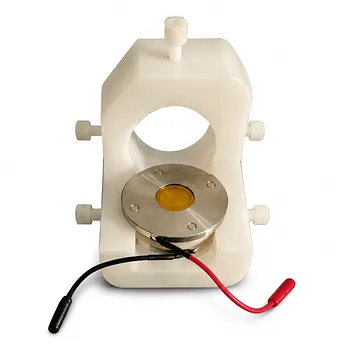
Aqueous Battery Testing Fixture for Laboratory Cell Evaluation

20V 10A Battery Testing Equipment
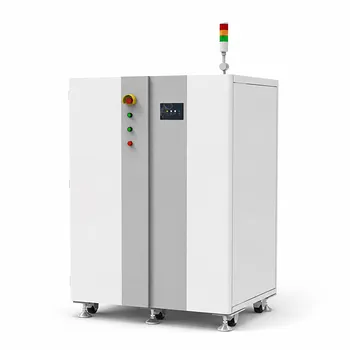
20V 10A Battery Tester Battery Testing Equipment

5V 5A Lithium Ion Battery Testing Equipment Battery Tester